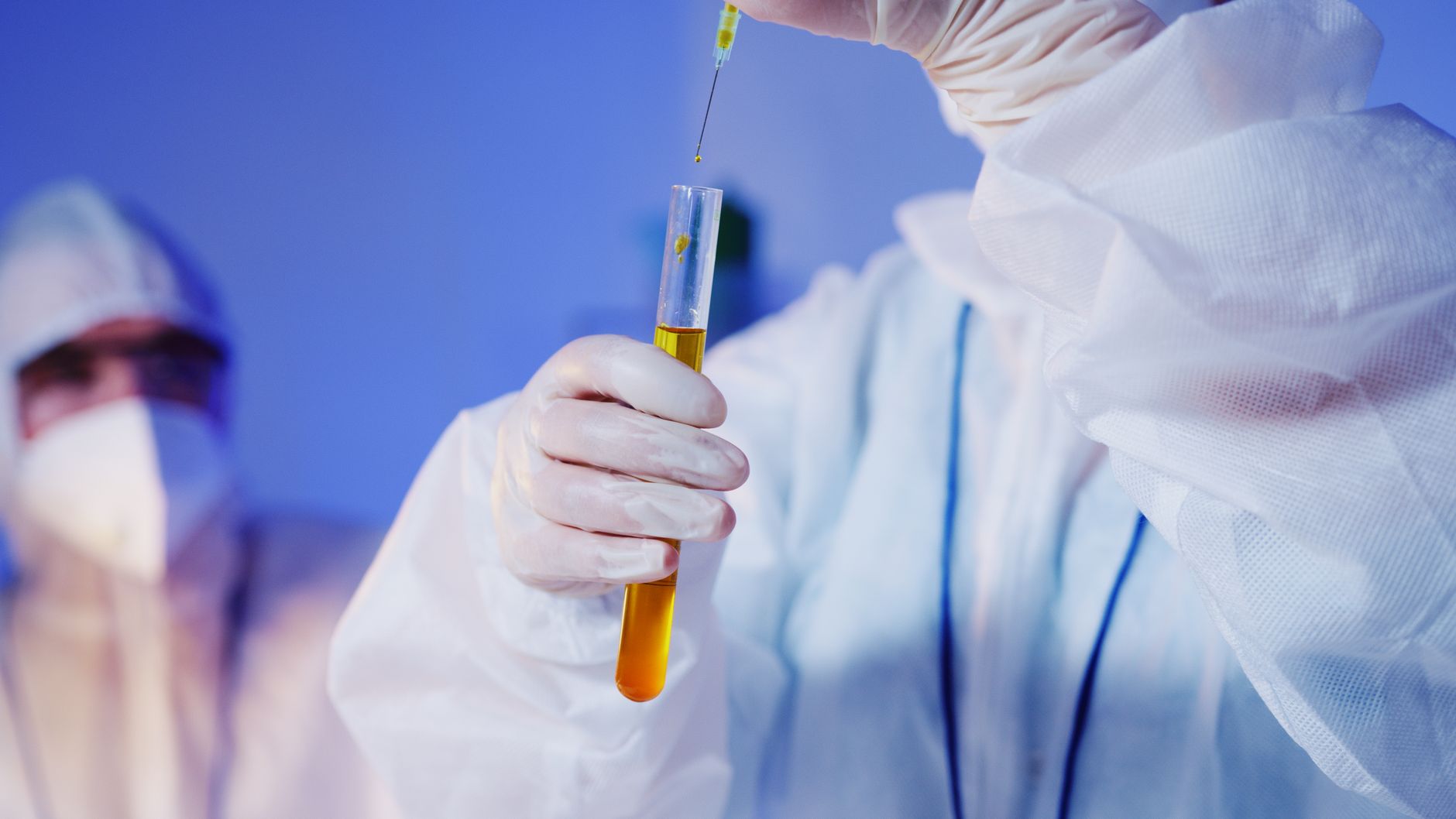
In a US criminal case, crime lab DNA results usually take weeks to months, and sometimes more than a year. Wisconsin’s state labs took a median of 86 days for DNA work in fiscal 2022-23. Colorado’s sexual assault cases averaged 190 days in January 2026. Rapid DNA at police booking takes one to two hours, but only for cheek swabs.
How long does DNA testing take in a crime lab?
Labs measure turnaround differently, so there is no single national figure. The National Institute of Justice defines turnaround as the days between a lab receiving a request and issuing its report. An item not completed within 30 days is generally counted as backlogged.
State audits give the clearest dated picture:
| Process or lab | Typical time | Period | Source |
|---|---|---|---|
| Rapid DNA at a booking station (cheek swab) | 1 to 2 hours | Current | FBI |
| Connecticut state lab, DNA cases | 27 days | Reported July 2025 | Stateline |
| Wisconsin state labs, DNA analysis (median) | 86 days | FY 2022-23 | Wisconsin Legislative Audit Bureau |
| Wisconsin, sexual assault kits sent to a private lab (median) | 292 days | FY 2019-20 to 2022-23 | Wisconsin Legislative Audit Bureau |
| Colorado CBI, sexual assault cases (average) | 450 days, falling to 190 days | June 2025 to January 2026 | Colorado State Auditor |
| Point at which a request counts as backlogged | 30 days | Standard definition | NIJ / BJS |
Wisconsin’s figures also show how much the median can swing. The Legislative Audit Bureau’s June 2024 report found median DNA turnaround of 65 days in FY 2019-20, 118 days in FY 2020-21 and 86 days in FY 2022-23.
How big is the DNA backlog in the US?
The Bureau of Justice Statistics’ latest census, published December 2023, counted 710,900 backlogged requests in publicly funded crime labs at yearend 2020. Of these, 126,100 were forensic biology casework, up 17% from 2014.
A May 2020 NIJ report found turnaround grew about 60% on average across disciplines between 2011 and 2017. Faster labs also attract more work: a 1% cut in DNA turnaround led to a 1.29% rise in cases submitted the next year.
Why do DNA results take so long?
Staffing and training
DNA analysts need specific coursework and supervised training before working cases alone. Our guide on how to become a forensic scientist explains the requirements. In Wisconsin, auditors found trace evidence turnaround jumped partly because that unit fell from two analysts to one.
Complex samples
NIJ notes that mixtures of several people’s DNA take longer to interpret. See our review of sexual assault forensic evidence.
Outsourcing and reviews
Outsourcing adds shipping and review steps. Colorado’s delays also grew in 2023 and 2024 after alleged misconduct by a former DNA scientist forced a large case review, according to the February 2026 state audit.
Funding
Stateline reported in July 2025 that the Debbie Smith DNA programme faced a proposed $120 million, below its $151 million authorised cap.
Does Rapid DNA speed things up?
For arrestees, yes. The Rapid DNA Act of 2017, signed in August 2017, let police booking stations run cheek swabs and search CODIS. The FBI says a profile is produced in one to two hours, without a lab. The arrestee is searched against all unsolved crimes within 24 hours.
Crime scene evidence is different. Modified Rapid DNA analysis needs review by a laboratory DNA analyst before any profile can be searched or uploaded to CODIS.
What happens after the lab produces a profile?
Eligible crime scene profiles go into CODIS, the FBI’s DNA database system. As of June 2026, the national index held over 20.3 million offender profiles, 6.4 million arrestee profiles and 1.49 million forensic profiles. CODIS has produced over 808,000 hits, aiding more than 784,000 investigations. Hits can solve decades-old cases, like this 1986 Baltimore killing.
What can defendants and victims do about delays?
Defendants should ask their lawyer when evidence was submitted and what testing was requested. Counsel can seek an independent expert. After a federal conviction, 18 U.S.C. § 3600 lets a prisoner claiming actual innocence apply for DNA testing if strict conditions are met.
Survivors of sexual assault have federal rights under 18 U.S.C. § 3772. These include a free forensic exam, preservation of the kit and the right to be told of results, including a DNA match. Some states set deadlines too. Wisconsin’s 2023 Act 58 requires kit processing within six months, and Colorado’s statute sets a 60-day goal.
Rulings on disputed DNA evidence appear in our Forensic Docket.
How does the UK compare?
The UK’s National DNA Database held 688,054 crime scene profiles and 7.2 million subject profile records at 31 March 2024. It produced 20,881 routine crime scene to subject matches in 2023/24. The annual report does not publish turnaround times.
Frequently asked questions
How long do DNA results take for a sexual assault kit?
It varies by state. Colorado averaged 190 days in January 2026, down from 450 days in June 2025. Wisconsin law now requires processing within six months.
Can DNA results come back in 24 hours?
Only through Rapid DNA at booking, which takes one to two hours for a cheek swab. Crime scene evidence still needs lab analyst review.
What counts as a DNA backlog?
NIJ and BJS treat a request as backlogged if the lab has not completed and reported it within 30 days of submission.
Why does my case’s DNA take longer than the lab average?
Averages hide wide ranges. In FY 2019-20, Wisconsin DNA assignments ran from 1 day to 1,228 days. Mixtures, multiple items and outsourcing all add time.
Can a defendant demand faster DNA testing?
There is no general right to a set turnaround. A defence lawyer can press the prosecution or raise speedy trial concerns.
Bottom line
Expect lab DNA results in weeks at best and many months at worst. Ask early about submission dates and testing status. For other evidence types, see how accurate fingerprint evidence is.
This article is general information, not legal or career advice. Figures are drawn from the sources listed.
Sources
- Wisconsin Legislative Audit Bureau, Report 24-6: Timeliness of State Crime Laboratories in Analyzing Evidence (June 2024): legis.wisconsin.gov
- Colorado Office of the State Auditor, Forensic Services Section DNA Evidence Testing, Report Highlights (February 2026): leg.colorado.gov
- National Institute of Justice, Needs Assessment of Forensic Laboratories and Medical Examiner/Coroner Offices, Report to Congress (May 2020): ojp.gov
- Bureau of Justice Statistics, Publicly Funded Forensic Crime Laboratories, 2020 (December 2023): bjs.ojp.gov
- FBI, Rapid DNA (accessed October 2026): le.fbi.gov
- FBI, CODIS-NDIS Statistics (as of June 2026): le.fbi.gov
- Office of Rep. Eric Swalwell, Bipartisan, bicameral Rapid DNA bill signed into law (August 2017): swalwell.house.gov
- Stateline, Forensic crime labs are buckling as new technology increases demand (21 July 2025): stateline.org
- 18 U.S.C. § 3600, DNA testing (Cornell LII): law.cornell.edu
- 18 U.S.C. § 3772, Sexual assault survivors’ rights (Cornell LII): law.cornell.edu
- Home Office, Forensic Information Databases annual report 2023 to 2024: gov.uk
Where the legal industry reads first.
Enjoyed this article? Get the biggest legal industry updates, deals, appointments, insights and expert interviews in your inbox, free.
No spam. Unsubscribe anytime.From Legal Desire
Is your firm the one being cited, or the one being skipped?
We ran the test. On several everyday legal questions, software companies are answering and law firms are not. We help firms fix that, and we build the technology behind the practice.
Lawyers and firms: get featured on Legal Desire
Share your deals, lateral moves, firm news and insights with 1M+ monthly readers: founders, law firm partners, general counsel and practising lawyers across the US, UK, EU and GCC.
Get featuredSubmit a press release