

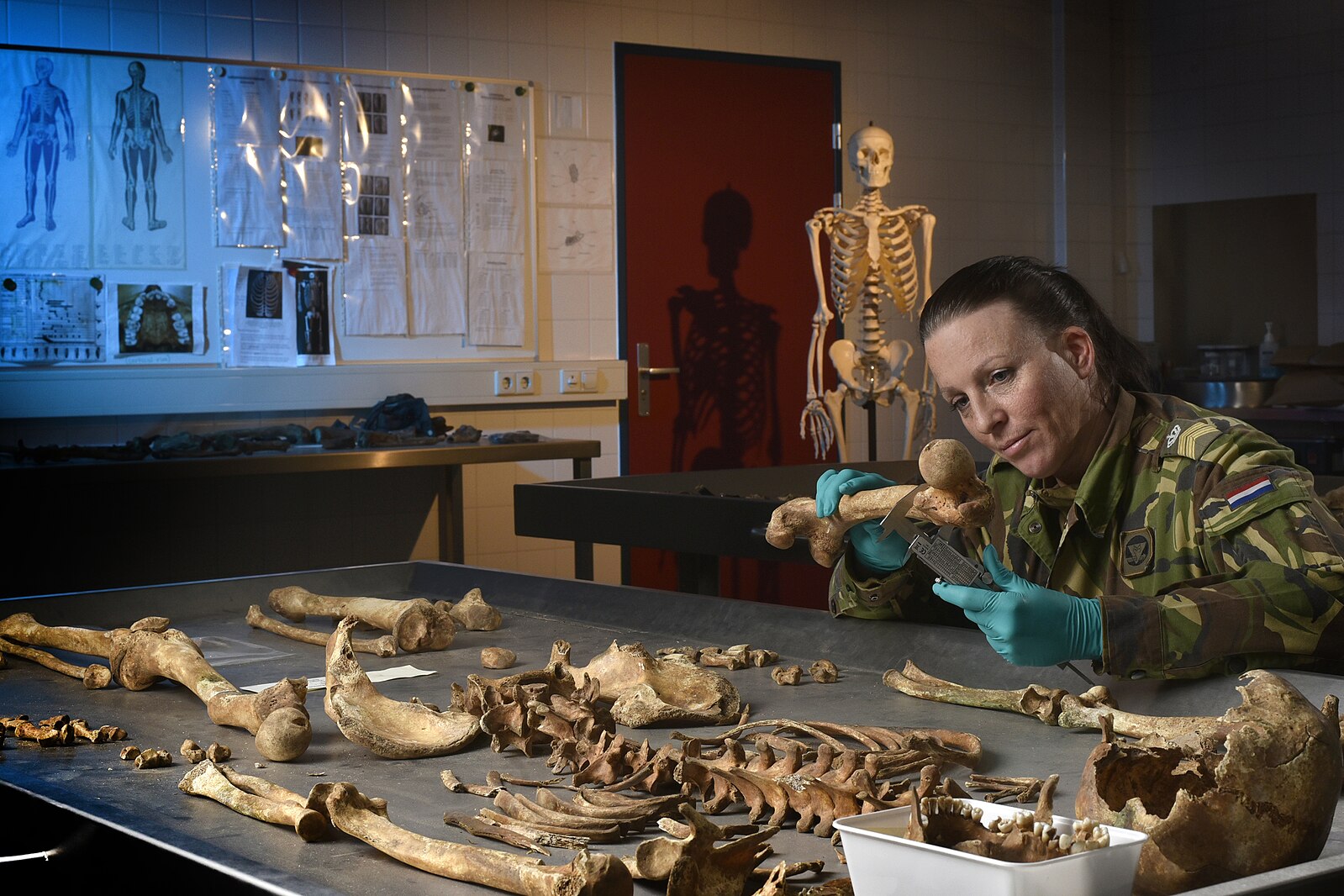
When a body is reduced to bones, most of the clues are gone. There is no face to recognize, no skin to show tattoos or scars and often no clothing or documents to help. The skeleton is far from silent. Bone records a person’s sex, approximate age, height, ancestry, habits, injuries and sometimes even the manner of death. Forensic anthropology is the discipline that reads this record. It applies the methods of anthropology and human osteology to legal questions, helping investigators to identify the dead and to understand what happened to them.
What Is Forensic Anthropology?
Forensic anthropology began with the study of how human skeletons differ from one another. In the United States, pioneers like T. Dale Stewart and Ellis Kerley played a role in making it a recognized field within forensic science. William Bass later started a research center at the University of Tennessee in 1981. That center was built to study how human bodies decompose. Today, forensic anthropologists are involved in parts of an investigation. They help. They recover remains, examine bones in a lab, figure out what kind of injuries occurred and give testimony in court as expert witnesses. Their work is most needed when human remains are bones. When they are burnt, broken, scattered or have decomposed so much that doctors can no longer use soft tissues to identify them.
Recovery: Where the Investigation Begins
The first task is to figure out if the bones are human in the first place. Animal bones are often confused with human bones, and a trained anthropologist can tell the difference by looking at size, shape and tiny details under a microscope. If the bones are human, the next step is to decide if they are important for a case or if they belong to an old burial site from an archaeological dig.
Recovery is done in a way that’s similar to an archaeological dig. The area is marked and checked in a grid pattern so soil is slowly taken away in layers. Each bone is passed through a sieve, and the exact place of every bone is written down before it is moved. This careful approach is important because how the remains are lying in the soil around them, insects, plant roots and other objects all give information. If the recovery is done quickly or without care, important clues can be lost forever and can never be found again.
The Biological Profile
Forensic anthropology is the field that builds a profile. This biological profile is the key to narrowing down the possible identities of the remains.
Forensic anthropology works with four estimates: sex, age at death, stature and ancestry.
Estimating Sex
The pelvis is a reliable indicator because it changes shape based on the needs of childbirth. A female pelvis is usually wider with a subpubic angle and a larger pelvic outlet. A male pelvis is narrower and stronger. The skull also gives clues, like the size of the brow ridge, the mastoid process, the chin shape and the nuchal crest at the back of the head. Long bones: the size of the femoral and humeral heads can help when the pelvis and skull are not available. The accuracy is highest in adults. It is much lower in children because their sex differences have not fully formed yet.
Estimating Age
In children and young adults, age is guessed by looking at how teeth have developed and by checking the stages at which the growing ends of bones called epiphyses join the parts of the bones. These changes happen in a predictable order. So if a skeleton still has a collarbone end, for example, it likely belongs to someone who is in their twenties or younger. In adults, age is estimated by studying signs of wear and tear over time. Anthropologists look at the symphysis, the auricular surface of the pelvis, the ends of the ribs and how the cranial sutures have closed. All of these features change slowly as a person gets older. Because ageing is different for everyone—affected by lifestyle, health and genetics—the age estimate is always given as a range, not a number.
Estimating Stature
Height is estimated by measuring bones, especially the femur, tibia and humerus and applying regression formulae. The equations used, derived from skeletal collections, are those of Mildred Trotter and Goldine Gleser, which relate bone length to living stature. A key principle is that such formulae must be population‑specific since body proportions differ between groups. Applying a formula developed on one population to another can introduce errors of centimetres, which is why researchers in India and elsewhere continue to develop regional standards.
Estimating Ancestry
Ancestry estimation looks at the skull, the face and the teeth. It uses both features and numbers from measurements. This part of the profile is often debated. That’s because human differences are not clear-cut. People don’t fit into groups. Modern methods see ancestry as a tool to help with identification in a situation. It’s not meant to say anything about race. These methods use databases and math-based tools. The goal is to cut down on opinion and make the results more reliable.
Reading Trauma in Bone
Bone is a living tissue that reacts differently to injury based on the force, speed and direction used. Forensic anthropologists sort trauma by when it happened. Injuries that happened long before death are called antemortem. They show signs of healing, like new bone forming. Injuries that happened close to the time of death are called perimortem. They happen when the bone is still wet and soft, usually showing clean, smooth breaks. Damage that happens after the bone is dry and hard is called postmortem. It creates rough breaks and often a different colour on the broken part. It is very important to identify these types of injuries because damage from a bulldozer or an animal must not be mixed up with a deadly hit.
The way a break looks can also show what caused it. Blunt force usually creates cracks that spread out and form circles. The order of skull breaks can be figured out using Puppets’ rule, which says that a break that happens later stops where it meets one. Sharp force leaves cuts whose size and shape show the type of blade. In cases of gunshots to the head, the bone slants out at the exit point and in at the entry point. This helps find out which way the bullet was going. This is a place where the work of anthropologists, pathologists and experts in ballistics all come together.
Taphonomy and Time Since Death
I have learned that taphonomy is the science that looks at what happens to remains after death. Temperature, humidity, soil chemistry, burial depth, water, scavengers, insects and plant roots all change a body in various ways. By looking at these changes, anthropologists can decide whether remains were moved, buried, exposed or burnt and can guess how long ago death happened. The time after death, called the postmortem interval, is very hard to find for remains, and the guess is usually wide. The anthropologist often works with entomologists and botanists whose clues, from insect succession and root growth, can make the timeline tighter.
From Skeleton to Identity
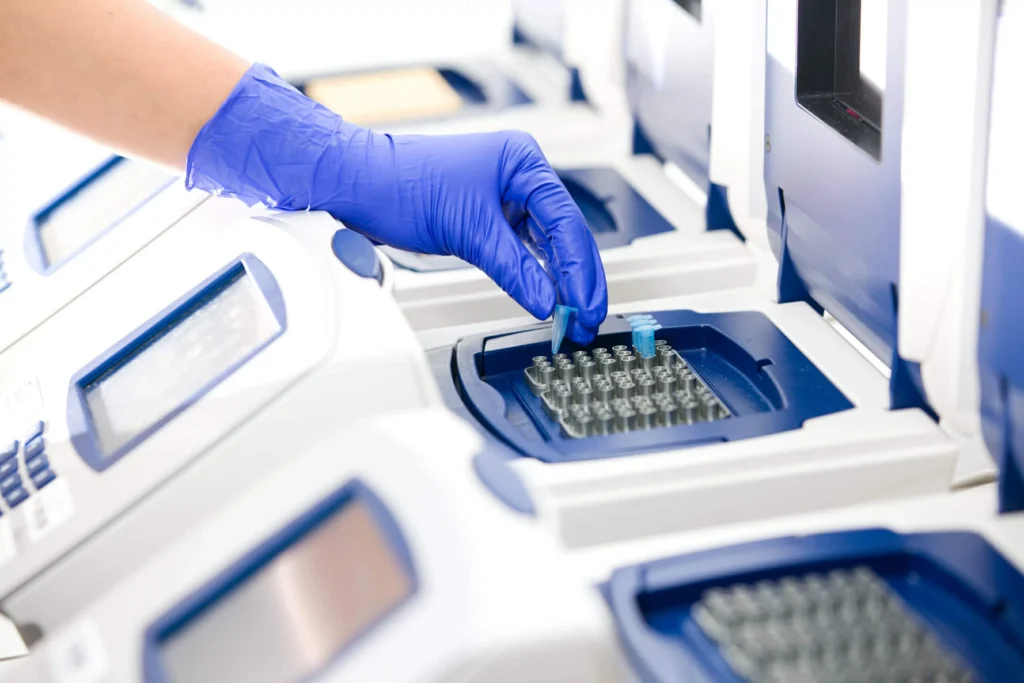
The biological profile only narrows the field. Positive identification still needs a comparison with a known person. Dental records are among the means. Teeth survive fire and decomposition. They carry unique fillings, restorations and patterns. Radiographic comparison is another tool. The shape of sinuses, old healed fractures, surgical plates and screws and even the trabecular pattern of bone can match a person’s medical X-rays. Serial numbers on implants can lead directly to a hospital record. DNA analysis, from teeth or dense bone, can link remains to relatives. When no leads exist, facial approximation can help. In approximation, the face is reconstructed over the skull using tissue‑depth data, and the result can be shared publicly. Craniofacial superimposition overlays a photograph on a skull. Craniofacial superimposition can exclude matches, although craniofacial superimposition is now used cautiously because of questions about its reliability.
Anthropology in Mass Disasters and Human Rights
Forensic anthropology goes beyond solving crimes. After disasters like plane crashes, earthquakes or floods, anthropologists step in to sort and identify mixed-up remains. They also help in human rights cases. The American anthropologist Clyde Snow taught a group of Argentinians in the 1980s. That group became the Argentine Forensic Anthropology Team. They dug up the remains of people who vanished during the dictatorship. Since then, similar teams have worked in Bosnia, Guatemala, Rwanda and Iraq. They identify victims of killings and give evidence to courts. In these cases, the skeleton becomes a voice for those who can no longer speak. It also helps bring missing loved ones to their families.
Limits and Challenges
The field is honest about its limits. Estimates are probabilistic. The accuracy of any method depends on how well the reference sample matches the person being examined. Skeletal collections have historically been drawn from populations, which can bias results. Fragmentary or burnt bones, which shrink and warp under heat, are especially difficult to analyse. The courts also demand rigour, so anthropologists must be able to state error rates to show that anthropologists’ methods are validated and avoid overstating certainty. Because bias can creep into judgments, many laboratories now use blind testing and standardised protocols.
The Future of the Discipline
New technology is making the field more objective. Computed tomography and three-dimensional surface scanning allow bones to be measured and shared digitally without handling them. Statistical software now produces probability-based estimates of sex, ancestry and stature from measurements, and machine learning is being trained to analyse features and even to assist in matching bones to X-rays. Stable isotope analysis of teeth and bone can indicate where a person grew up and what they ate, adding a dimension to the profile. With ancient and degraded DNA methods, these advances promise to extract more from ever smaller fragments.
Conclusion
Forensic anthropology shows that a skeleton is more than the remains of a person. It is a biological document. By recovering, measuring and interpreting bones, anthropologists can tell who someone was, how they lived and in many cases, how they died. Their work blends observation with statistical reasoning. It helps the courtroom. It brings answers to families waiting for closure. As long as bones last, they will keep speaking. Forensic anthropologists will keep listening.
Where the legal industry reads first.
Enjoyed this article? Get the biggest legal industry updates, deals, appointments, insights and expert interviews in your inbox, free.
No spam. Unsubscribe anytime.From Legal Desire
Is your firm the one being cited, or the one being skipped?
We ran the test. On several everyday legal questions, software companies are answering and law firms are not. We help firms fix that, and we build the technology behind the practice.
Lawyers and firms: get featured on Legal Desire
Share your deals, lateral moves, firm news and insights with 1M+ monthly readers: founders, law firm partners, general counsel and practising lawyers across the US, UK, EU and GCC.
Get featuredSubmit a press release