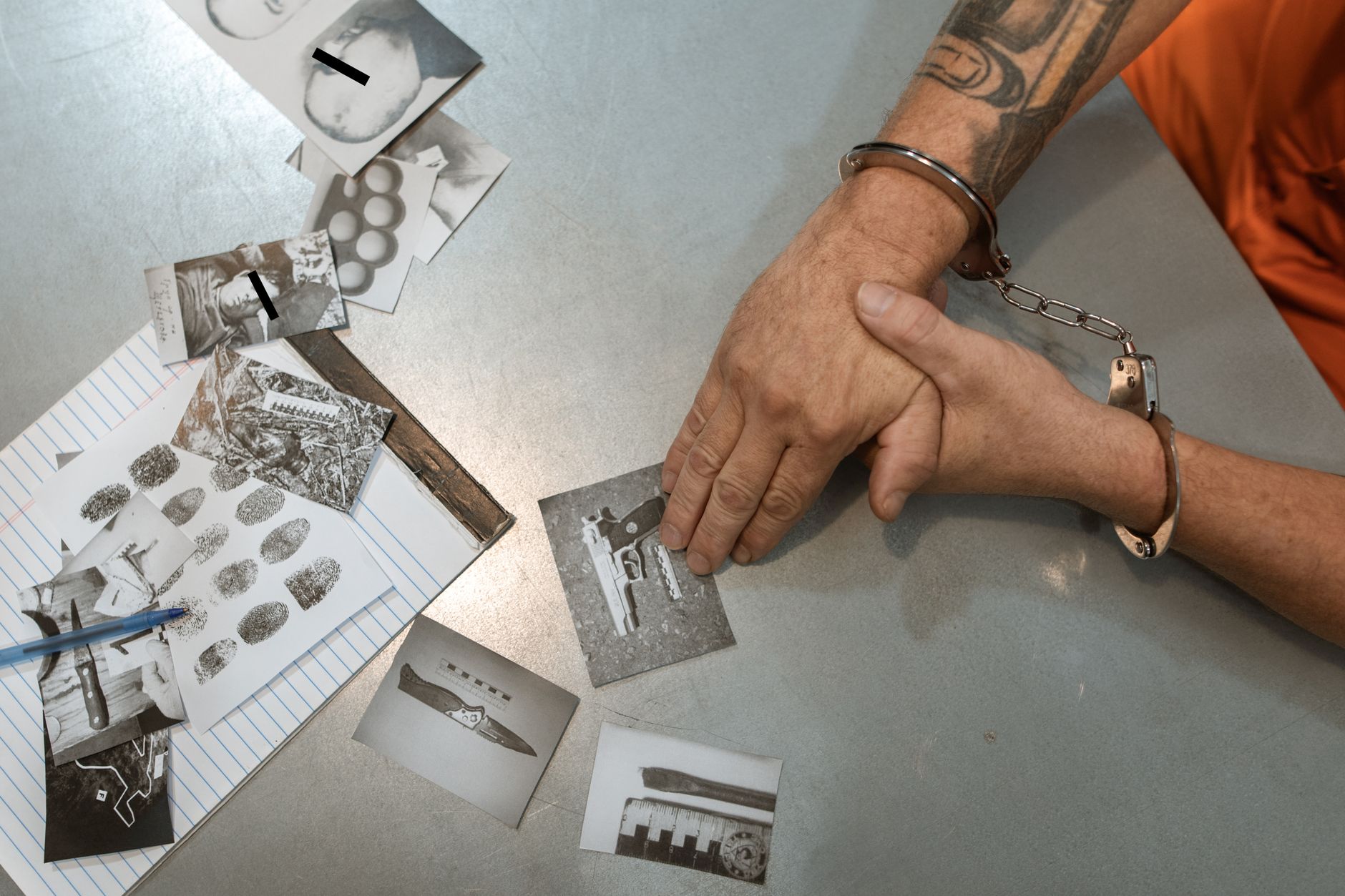
Fingerprint evidence is accurate most of the time, but it is not infallible. In the largest black-box study, run by the FBI and published in 2011, examiners made false identifications in 0.17% of conclusive comparisons, about 1 in 604. A 2014 Miami-Dade study found a far higher rate: about 1 in 24. Errors are rare, yet they happen at measurable rates.
How do fingerprint examiners reach a conclusion?
Most examiners follow ACE-V: Analysis, Comparison, Evaluation and Verification. The examiner assesses the crime scene mark (the “latent print”), compares it with a known print, decides whether they share a source, and a second examiner verifies the result.
Every step depends on human judgment, so two careful examiners can disagree.
What did the 2009 National Academy of Sciences report find?
In February 2009 the National Research Council published Strengthening Forensic Science in the United States: A Path Forward. It said claims of zero error rates “are not scientifically plausible.”
It added that ACE-V “is not specific enough to qualify as a validated method,” does not guard against bias, and “does not guarantee that two analysts following it will obtain the same results.”
What error rates have studies actually measured?
In September 2016 the President’s Council of Advisors on Science and Technology (PCAST) reviewed the evidence in its report on forensic feature-comparison methods. It found latent print analysis to be “a foundationally valid subjective methodology,” but with a false positive rate “likely to be higher than expected by many jurors.”
| Study | False positives / conclusive non-matches | Estimated rate | Upper bound |
|---|---|---|---|
| Ulery et al. 2011 (FBI black-box, 169 examiners) | 6 / 3,628 (0.17%) | 1 in 604 | 1 in 306 |
| Ulery et al. 2012 (FBI repeat test, 75 examiners) | 0 / 476 | None observed | 1 in 160 |
| Pacheco et al. 2014 (Miami-Dade) | 42 / 995 (4.2%) | 1 in 24 | 1 in 18 |
| Pacheco et al. 2014, excluding presumed clerical errors | 7 / 960 (0.7%) | 1 in 137 | 1 in 73 |
Source: PCAST (September 2016). Upper bound is the 95% confidence limit.
Missed matches are a separate problem. In the 2011 FBI study, examiners correctly identified 92.5% of true matching pairs.
What went wrong in the Brandon Mayfield case?
After the March 2004 Madrid train bombings, an FBI database search returned 20 candidate prints for a mark on a bag of detonators. On 19 March the FBI Laboratory identified the mark as belonging to Brandon Mayfield, an Oregon lawyer. Two more FBI examiners verified the match. A court-appointed independent expert also agreed.
All four were wrong. On 19 May the Spanish National Police told the FBI the print belonged to an Algerian national, Ouhnane Daoud. Mayfield was released on 20 May, and the FBI withdrew its identification on 24 May.
The US Department of Justice Inspector General’s March 2006 review blamed an “unusual similarity” between the two prints, bias from the known Mayfield prints, reliance on tiny Level 3 details, and a verification process in which the verifier already knew the first conclusion.
What happened in the Shirley McKie case in Scotland?
In 1997 a print found at the home of murder victim Marion Ross was attributed by the Scottish Criminal Record Office to Shirley McKie, a police officer. She insisted it was not hers, was accused of perjury, and was later cleared. In February 2006 she received a £750,000 settlement. The Fingerprint Inquiry, chaired by Sir Anthony Campbell, reported in December 2011. It found human error, not misconduct, and made 86 recommendations. The headline one: fingerprint evidence “should be recognised as opinion evidence, not fact.”
How do courts decide whether fingerprint evidence is admissible?
United States
Federal courts apply Daubert and Federal Rule of Evidence 702. An amendment in force from 1 December 2023 says the party offering an expert must show “more likely than not” that the rule’s tests are met, including that the opinion reflects a reliable application of the method. The committee note warns forensic experts to avoid claims of “absolute or one hundred percent certainty” where a method is subjective.
England and Wales
The Forensic Science Regulator’s statutory Code of Practice came into force on 2 October 2023. Under version 2 of the Code, in force from 2 October 2025, fingerprint bureaux comparing friction ridge detail must hold ISO/IEC 17025:2017 accreditation covering that work.
Follow how judges treat it in our Forensic Docket of court rulings on forensic science.
Frequently asked questions
Can two people have the same fingerprint?
The practical risk is not identical fingers but similar marks. A partial crime scene print can look very like the wrong person’s print. In the Mayfield case, the DOJ found the two men’s prints were not identical, yet shared an unusual constellation of 10 points that misled four examiners.
What is the false positive rate for fingerprint analysis?
The FBI’s 2011 black-box study measured 1 in 604, with an upper bound of 1 in 306. The 2014 Miami-Dade study measured 1 in 24, with an upper bound of 1 in 18. PCAST in 2016 said jurors should be told about both figures.
Does verification by a second examiner prevent errors?
It helps most when it is blind. In the Mayfield case the verifier knew a match had already been declared. PCAST said blind verification would likely cut errors, but no study had measured by how much.
Are fingerprints still used in court?
Yes, in both the US and UK. The change is in presentation: expert opinion with known limits, not absolute certainty.
Bottom line
Fingerprint comparison is valid and useful, with a real error rate. Lawyers should ask about print quality, blind verification and how strongly the conclusion is stated. Students can read our guide on how to become a forensic scientist and our explainer on how long DNA test results take. More is on the Legal Desire Forensics hub.
This article is general information, not legal or career advice. Figures are drawn from the sources listed.
Sources
- National Research Council, Strengthening Forensic Science in the United States: A Path Forward (February 2009): ojp.gov
- President’s Council of Advisors on Science and Technology, Forensic Science in Criminal Courts: Ensuring Scientific Validity of Feature-Comparison Methods (September 2016): obamawhitehouse.archives.gov
- US Department of Justice Office of the Inspector General, A Review of the FBI’s Handling of the Brandon Mayfield Case (March 2006): oig.justice.gov
- Federal Rule of Evidence 702 and 2023 committee note (accessed October 2026): law.cornell.edu
- Sidley Austin, An Amendment to Federal Rule of Evidence 702 Has Gone Into Effect in the U.S. (December 2023): sidley.com
- The Scotsman, Shirley McKie case: ‘Fingerprints are opinion not fact’ rules probe (December 2011): scotsman.com
- Forensic Science Regulator, Code of Practice Version 2 (May 2025): assets.publishing.service.gov.uk
- The Forensic Science Regulator Act 2021 (Commencement No. 2) Regulations 2023: legislation.gov.uk
Where the legal industry reads first.
Enjoyed this article? Get the biggest legal industry updates, deals, appointments, insights and expert interviews in your inbox, free.
No spam. Unsubscribe anytime.From Legal Desire
Is your firm the one being cited, or the one being skipped?
We ran the test. On several everyday legal questions, software companies are answering and law firms are not. We help firms fix that, and we build the technology behind the practice.
Lawyers and firms: get featured on Legal Desire
Share your deals, lateral moves, firm news and insights with 1M+ monthly readers: founders, law firm partners, general counsel and practising lawyers across the US, UK, EU and GCC.
Get featuredSubmit a press release