

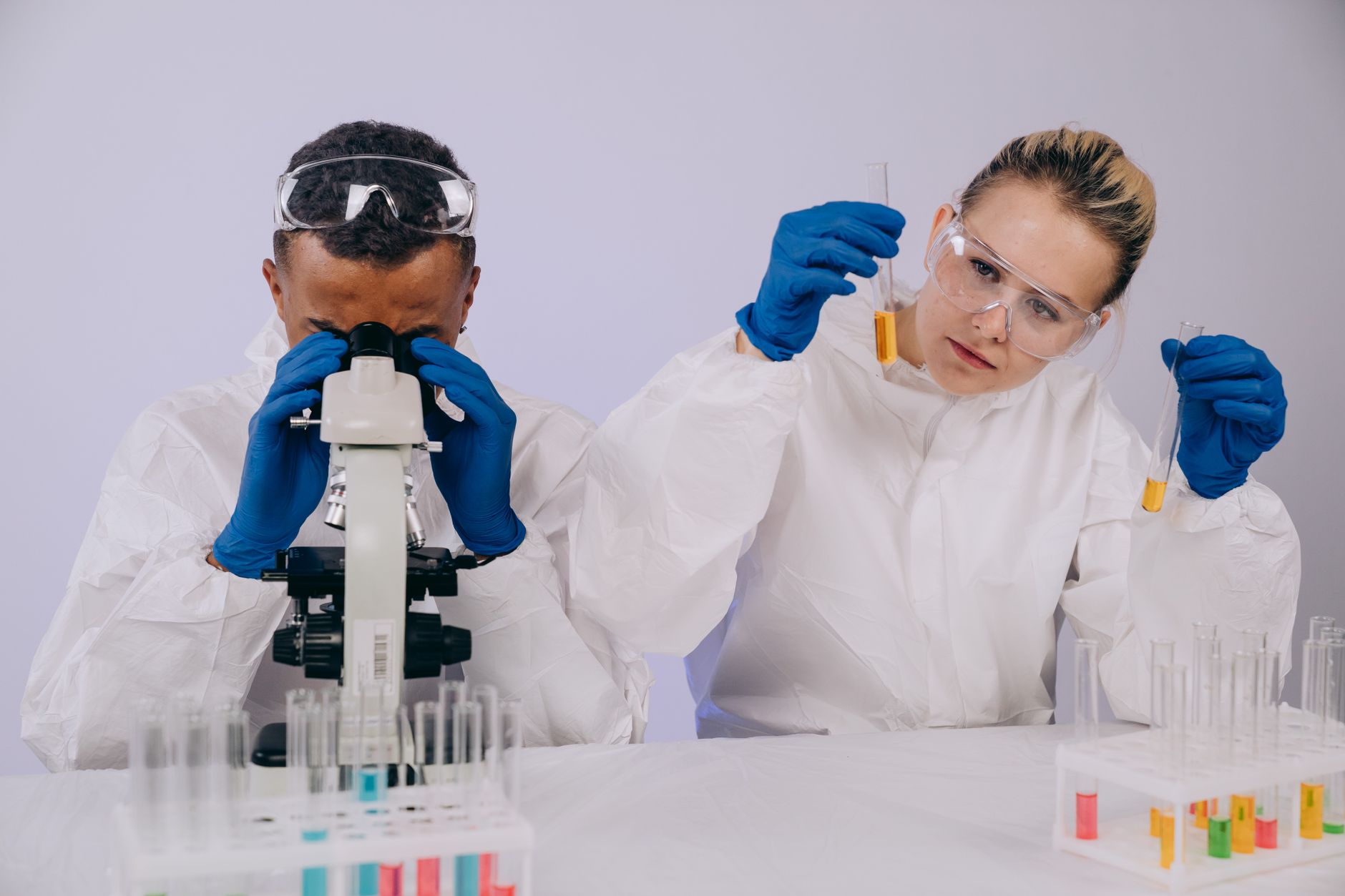
To become a forensic scientist in the US, you typically need a bachelor’s degree in a natural science or forensic science, followed by on-the-job training in a crime lab. The US Bureau of Labor Statistics puts median pay for forensic science technicians at $72,060 (May 2025), with 20,100 jobs and 13% projected growth from 2025 to 2035.
What does a forensic scientist actually do?
Forensic scientists analyse physical evidence for criminal investigations. Some recover evidence at crime scenes. Others test DNA, drugs or trace material in a lab, then write reports and testify in court.
Most jobs are in the public sector. According to the BLS Occupational Outlook Handbook, 64% of forensic science technicians work in local government and 27% in state government. Our Legal Desire Forensics hub covers the casework side.
What degree do you need to become a forensic scientist?
BLS says forensic science technicians “typically need at least a bachelor’s degree.” An associate’s degree may suffice for some posts. Chemistry, biology and forensic science are common majors.
Why FEPAC accreditation matters
The Forensic Science Education Programs Accreditation Commission (FEPAC), run by the American Academy of Forensic Sciences, accredits bachelor’s and master’s programmes. A 2020 National Institute of Justice report to Congress counted 47 FEPAC-accredited programmes as of 2019. Check the current list on the AAFS FEPAC page.
Coursework labs will check
Transcripts matter more than titles. The FBI’s Quality Assurance Standards for DNA labs require analysts to have completed biochemistry, genetics, molecular biology, and statistics or population genetics. Differently titled courses need syllabi or similar proof, per a 2022 SWGDAM notice. For seized drugs, the SWGDRUG recommendations require a natural or physical science degree with general, organic and analytical chemistry, including labs.
Which forensic specialism should you choose?
Your specialism shapes your degree choices early. Typical routes, based on each discipline’s standards bodies:
| Specialism | Typical degree route | Credential to aim for later |
|---|---|---|
| DNA analysis / forensic biology | Biology, biochemistry or forensic science, with biochemistry, genetics, molecular biology and statistics (FBI QAS) | ABC Forensic DNA or Biological Evidence Screening exam |
| Seized drug analysis | Natural or physical science degree with general, organic and analytical chemistry (SWGDRUG) | ABC Seized Drug Analysis exam |
| Forensic toxicology | Natural or life science degree; ABFT Fellow and Diplomate need 32 semester hours of chemistry | ABFT Analyst, Diplomate or Fellow |
| Crime scene investigation | Science or forensic science degree; BLS notes extensive supervised on-the-job training | Varies by employer and state |
| Latent prints | Varies by employer; science degree common | IAI Certified Latent Print Examiner |
Leaning towards fingerprints? Read how accurate fingerprint evidence is. Prefer computers or money trails? See recovering deleted digital evidence and what a forensic accountant does.
How much do forensic scientists make?
BLS reports a median annual wage of $72,060 for forensic science technicians in May 2025. The lowest 10% earned under $48,250 and the top 10% earned more than $117,250.
Employer type makes a difference. In May 2025, state government paid a median of $74,740 and local government $70,050. Educational services paid $61,680, and testing laboratories $49,600.
Do forensic scientists need certification?
Not to get hired. BLS says certifications “typically are not required to enter the occupation.” However, some technicians must pass a state proficiency exam before handling casework independently.
Once you are working, certification adds weight. The American Board of Criminalistics (ABC) offers exams in biological evidence screening, forensic DNA, foundational knowledge and seized drug analysis. The DNA exam, 75 scored questions, is for analysts already working in a DNA lab.
Students can sit ABC’s 200-question Forensic Science Assessment Test (FSAT) for a benchmark score.
Toxicologists use the American Board of Forensic Toxicology. Fellow and Diplomate need three years of full-time experience. The Analyst grade needs one year with a bachelor’s degree, or two with an associate degree.
How do you become a forensic scientist in the UK?
The UK route is similar: a science degree, then a trainee role. Prospects lists employers including Eurofins, Cellmark, Key Forensic Services, police forces and Forensic Science Northern Ireland.
The Chartered Society of Forensic Sciences accredits forensic science courses from level 4 to level 7. Founded in 1959, it received its Royal Charter in 2013. Prospects suggests choosing an accredited course.
Pay is lower than in the US. Prospects quotes around £20,000 at entry, £25,000 to £35,000 with experience and £50,000 or more at senior level. Labs in England and Wales also work under the Forensic Science Regulator’s statutory Code of Practice, in force since 2 October 2023.
Frequently asked questions
How long does it take to become a forensic scientist?
Most people spend four years on a bachelor’s degree, then train on the job. BLS says lab specialists typically train for less than a year before working cases independently, depending on the specialty.
Can you become a forensic scientist with a biology or chemistry degree?
Yes. BLS lists biology and physical science among useful majors. What counts is coursework: DNA labs need biochemistry, genetics, molecular biology and statistics, and drug labs need chemistry with labs.
Is forensic science a good career in 2026?
BLS projects 13% growth from 2025 to 2035, much faster than average. But the field is small, with about 2,800 openings a year.
Do forensic scientists need a master’s degree?
No. A bachelor’s degree is the usual US entry level. FEPAC also accredits master’s programmes, which suit graduates switching from another science.
Where do forensic scientists earn the most?
In May 2025, state government paid the highest median among the main employer types, at $74,740. The top 10% of forensic science technicians earned more than $117,250.
Bottom line
Pick a science degree that fits your specialism, ideally FEPAC-accredited (US) or CSoFS-accredited (UK). Check your transcript against FBI QAS or SWGDRUG rules, and certify once working. Then see how lab work plays out in court, starting with how long DNA test results take in a criminal case.
This article is general information, not legal or career advice. Figures are drawn from the sources listed.
Sources
- US Bureau of Labor Statistics, Occupational Outlook Handbook: Forensic Science Technicians (pay data May 2025, projections 2025 to 2035): bls.gov
- American Academy of Forensic Sciences, FEPAC overview (accessed October 2026): aafs.org
- National Institute of Justice, Needs Assessment of Forensic Laboratories and Medical Examiner/Coroner Offices, Report to Congress (May 2020): ojp.gov
- AAFS, SWGDAM Notice on QAS Educational Requirements (December 2022): aafs.org
- SWGDRUG, Recommendations Version 8 (September 2019): swgdrug.org
- American Board of Criminalistics, Certification, Forensic DNA examination and FSAT pages (accessed October 2026): criminalistics.com
- American Board of Forensic Toxicology, Certification Categories (accessed October 2026): abft.org
- International Association for Identification, Latent Print Certification (accessed October 2026): theiai.org
- Prospects, Forensic scientist job profile (accessed October 2026): prospects.ac.uk
- Chartered Society of Forensic Sciences, home page (accessed October 2026): csofs.org
- Wikipedia, Chartered Society of Forensic Sciences (founding and charter dates): wikipedia.org
- The Forensic Science Regulator Act 2021 (Commencement No. 2) Regulations 2023: legislation.gov.uk
Where the legal industry reads first.
Enjoyed this article? Get the biggest legal industry updates, deals, appointments, insights and expert interviews in your inbox, free.
No spam. Unsubscribe anytime.From Legal Desire
Is your firm the one being cited, or the one being skipped?
We ran the test. On several everyday legal questions, software companies are answering and law firms are not. We help firms fix that, and we build the technology behind the practice.
Lawyers and firms: get featured on Legal Desire
Share your deals, lateral moves, firm news and insights with 1M+ monthly readers: founders, law firm partners, general counsel and practising lawyers across the US, UK, EU and GCC.
Get featuredSubmit a press release