

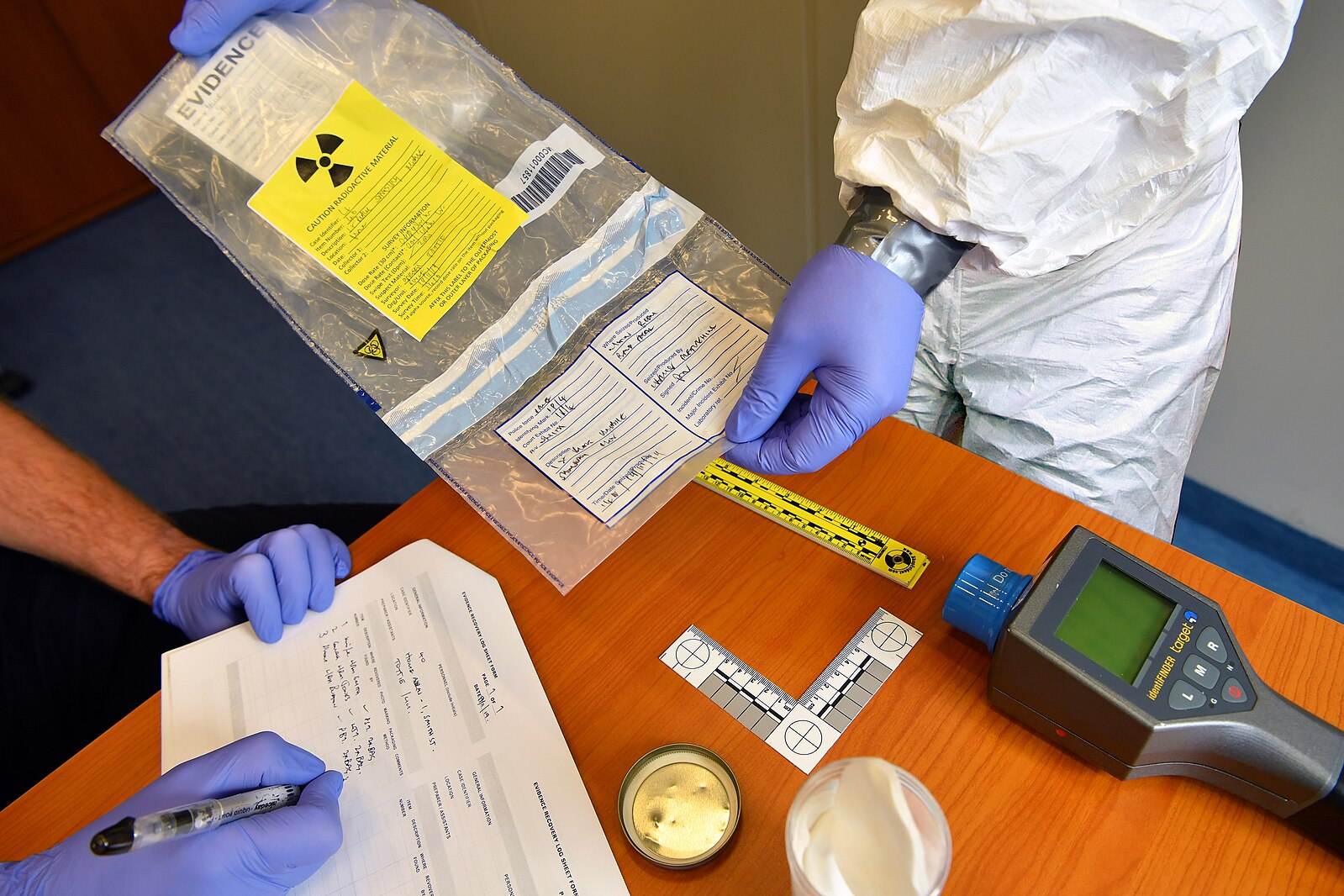
There are two roles of the forensic examination after sexual assault. It must be done while a person might be injured, frightened or drunk, and it must capture and keep records of evidence that could be used in court. The studies cited here indicate that these two roles often don’t get a fair balance and that the evidence we are using is less solid than the criminal justice system thinks. This review summarizes recent literature on care delivery, the evaluation of physical results, toxicology and DNA analysis.
Improved Access and Models of Care
When survivors make it to forensic care, it’s only effective if it exists. The scoping review of access to acute medical and forensic health services recently conducted by the authors of this paper separates the supply-side factors (what services provide) from the demand-side factors (what patients can perceive, seek and afford). It found that there are medical and forensic needs of the survivors, and that only small numbers of survivors seek help. If people do not present, even a perfectly executed exam could be of no use to them.
It is important that the examiner’s background is professional. A systematic review of the cost of services and the quality of clinical care from forensic nurse examiners versus doctors revealed that nurse-led services were more cost-effective and sometimes provided superior clinical care. However, the authors pointed out that the evidence was not robust and recommended future research using rigorous approaches, the authors concluded. Both of these reviews indicate that enhancing forensic practice in part depends on the design of the service, particularly who is examining, where they are based, and how easy it is for patients to access. It is a question of the laboratory but also of all of humanity.
Interpreting Physical Findings
In a series of recent meta-analyses, pooled studies over 30 years including over 3000 women compared injury following consensual intercourse to injury following sexual assault, both conducted using the same examination methods, and found no differences. More than half of all people who are injured are not injured at all, while over 70% of those who are injured do so when being assaulted. The authors, therefore, determined that no injury would mean no sexual violence and that nothing is more convincing as evidence of sexual violence than evidence of the absence of injury.
A separate meta-analysis that was confined to genital lacerations came to a similar, though more conservative, result. A relative risk of 1.26 (26% higher risk) was found after non-consensual penetration, with moderate-high heterogeneity (54%) (Crawford et al. 2025). They explained this variation as a result of training of examiners, visualization methods, patient characteristics, timing of the exam and documentation of the exam. They also identified a big methodological problem: it was almost never possible to blind the examiners whether the patients reported consensual or non-consensual intercourse, which risked confirmation bias.
When taken together, these studies convey a united message. The probative value of findings of injury is relatively low, and is diminished by the lack of uniformity in the methods used. Both groups of authors have called for uniform terminology, visualization and documentation and… both of them add that testimony of laceration should explicitly recognize these limitations. It’s a real practical issue, as a jury might otherwise assume that nothing happened if there was no injury.
Toxicology and Drug-Facilitated Sexual Assault
Drug-facilitated sexual assault (DFSA), on the other hand, poses a different challenge, namely that the evidence can disappear before anyone knows it’s being lost, and that analysis is particularly complicated if there is a delay between the assault and medical examination, he said, after reviewing 22 studies of toxicology results from several continents. The speed of the drug metabolizing system and the amnestic properties of many drugs often result in the sampling of many drug metabolites before they reach detectable levels.
When samples are collected, the information obtained is not necessarily easy to interpret; ethanol is frequently involved in drug-facilitated crime while published data is limited on other substances, he noted. They stated that being able to receive regular information regarding drug positivity is a very important resource for toxicologists, examiners and counsellors. A scoping review of 53 studies of ADSV also revealed that there are significant gaps in the knowledge around prevalence, contexts, the nature of the perpetrator, and the substances associated with ADSV.
All of the toxicology literature suggests two priorities. The sampling needs to be conducted as early as possible, depending on access barriers mentioned earlier. Laboratories need to ensure that their panels are also kept up to date because a negative result on an outdated panel can lead to a false sense of security that there was no drug involved.
Biological Evidence and the fate of the kit.
The most common aspect of the examination is the collection of biological evidence, but research indicates that this is not adequate. Thousands of kits were untested in Los Angeles, and a study by the National Institute of Justice (NIJ) revealed that investigators and prosecutors did not request testing, but were not overwhelmed (Peterson et al., 2012). This takes the problem from the laboratory to the stage of investigation.
There have been debates about the value of testing, and there is mixed evidence based on outcome. These two findings need not be contradictory in Detroit, where the 900 previously untested kits yielded 259 CODIS hits, 69 of which matched another sexual assault case, so untested kits can still identify serial offenders, while in the Los Angeles study, no new arrests were made, charges were filed in only one case, and there were two convictions in the first six months after 371 backlogged kits were tested. Investigative value, including the ability to connect cases, can occur prior to, or in addition to, short-term prosecution results; and outcomes are likely to be influenced by how well police and prosecutors respond to laboratory results.
Conclusion
The forensic examination must be seen as a source of careful, honestly qualified evidence, not a machine for producing evidence. Injuries could be there or not, drugs may not leave a trace if they are not collected before they are worn out, and a collected kit could be of no importance if it is not tested by someone and acted upon. The most consistent recommendations across the recent literature are for increased access, standardisation of practice and the maintenance of a focus on the care of the survivor.
References
- Campbell, R., Feeney, H., Pierce, S. J., Sharma, D. B., & Fehler-Cabral, G. (2018). Tested at last: How DNA evidence in untested rape kits can identify offenders and serial sexual assaults. Journal of Interpersonal Violence, 33(24), 3792–3814. https://doi.org/10.1177/0886260516639585
Free abstract: https://pubmed.ncbi.nlm.nih.gov/27021733/ - Crawford, L. S., Downing, N. R., Famurewa, A. D., Markowitz, J. R., & Han, G. (2025). Genital lacerations following sexual assault and consensual sexual intercourse: A systematic review and meta-analysis. Journal of Forensic Sciences, 70(1), 161–169. https://doi.org/10.1111/1556-4029.15666
Open access: https://pmc.ncbi.nlm.nih.gov/articles/PMC11693518/ - Hessler, M. R., Kacinko, S. L., & Logan, B. K. (2025). Drug-facilitated crime: A review of findings between 2019 and 2023. Journal of Forensic Sciences. https://doi.org/10.1111/1556-4029.70151
Open access: https://www.ncbi.nlm.nih.gov/pmc/articles/PMC12584120/ - Ison, J., Wilson, I., Forsdike, K., Theobald, J., Wilson, E., Laslett, A.-M., & Hooker, L. (2024). A scoping review of global literature on alcohol and other drug-facilitated sexual violence. Trauma, Violence, & Abuse. https://doi.org/10.1177/15248380241297349
Open access: https://www.ncbi.nlm.nih.gov/pmc/articles/PMC12569121/ - Naumann, D. N., Morris, L., Bowley, D. M., Appleyard, T.-L., Cumming, J., & Wardle, D. (2023). Anogenital injury following sexual assault and consensual sexual intercourse: A systematic review and meta-analysis. eClinicalMedicine, 65, Article 102266. https://doi.org/10.1016/j.eclinm.2023.102266
Open access: https://research.birmingham.ac.uk/en/publications/anogenital-injury-following-sexual-assault-and-consensual-sexual-/ - National Institute of Justice. (2016). Untested evidence in sexual assault cases. https://nij.ojp.gov/library/publications/untested-evidence-sexual-assault-cases-2016
- Peterson, J., Johnson, D., Herz, D., Graziano, L., & Oehler, T. (2012). Sexual assault kit backlog study (NIJ Document No. 238500). National Institute of Justice. https://www.ojp.gov/library/publications/sexual-assault-kit-backlog-study
- Rogers, J., Griffin, C., Bailie, J., Freedman, E., Stewart, M., & Edmiston, N. (2026). Access to acute medical and forensic care for adolescents and adults who have experienced sexual assault: A systematic scoping review. Sexual Health, 23, SH25180. https://doi.org/10.1071/SH25180
- Skov, K., Johansen, S. S., Linnet, K., & Nielsen, M. K. K. (2022). A review on the forensic toxicology of global drug-facilitated sexual assaults. European Review for Medical and Pharmacological Sciences, 26, 183–197. https://doi.org/10.26355/eurrev_202201_27767
Abstract: https://pubmed.ncbi.nlm.nih.gov/35048994/ - Toon, C., & Gurusamy, K. (2014). Forensic nurse examiners versus doctors for the forensic examination of rape and sexual assault complainants: A systematic review. Campbell Systematic Reviews, 10(1), 1–56. https://doi.org/10.4073/csr.2014.5
Where the legal industry reads first.
Enjoyed this article? Get the biggest legal industry updates, deals, appointments, insights and expert interviews in your inbox, free.
No spam. Unsubscribe anytime.From Legal Desire
Is your firm the one being cited, or the one being skipped?
We ran the test. On several everyday legal questions, software companies are answering and law firms are not. We help firms fix that, and we build the technology behind the practice.
Lawyers and firms: get featured on Legal Desire
Share your deals, lateral moves, firm news and insights with 1M+ monthly readers: founders, law firm partners, general counsel and practising lawyers across the US, UK, EU and GCC.
Get featuredSubmit a press release