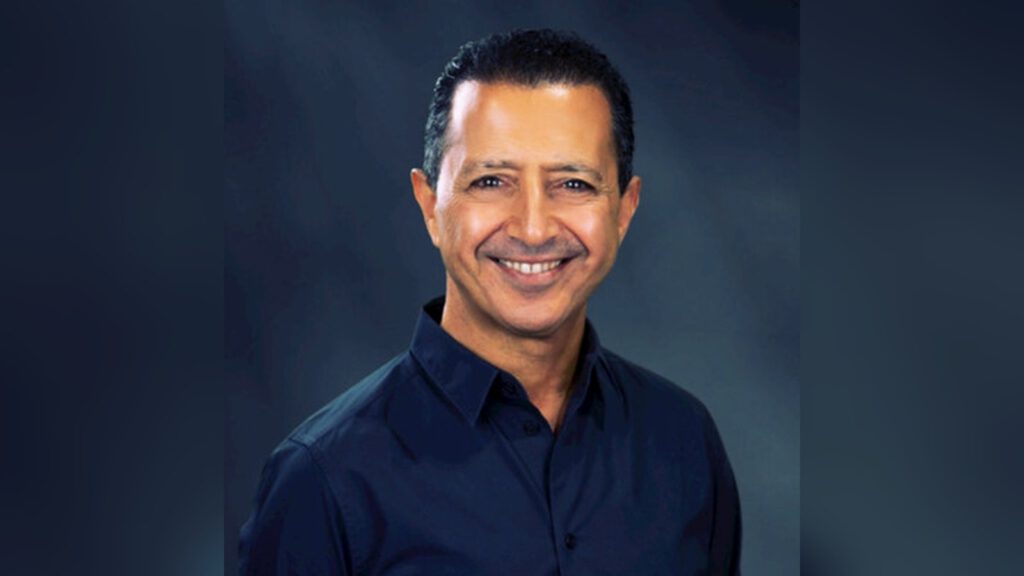



Zhicheng “Titus” Huang is qualified in both China and California and recently opened VopiVopi, P.C., a general practice firm in Riverside, California. Legal Desire asked him in writing about moving between the two legal systems, giving legal advice in government emergency work, and how he is using AI to turn California Proposition 65 matters into a standardised workflow.
His answers are published below.
You are qualified in both China and California. What does a lawyer trained in one of those systems notice first when they start working in the other?
The conventional answer is that a Chinese lawyer first encountering the US legal system thinks: “Wow, why are we being asked to study so many cases?”
In China, we tend to study how the different levels of written law fit together. National laws set the broad boundaries and direction, while regulations and local provisions add detail for different circumstances within that framework. Generally, when a Chinese lawyer receives a case, the first step is to look up the relevant provisions and put copies in the case file. From there, we work further down into the relevant provincial and municipal provisions, identify the law favourable to the client, and then build out the presentation of the facts and our arguments.
When first encountering the US system, we often start with the facts and look across similar cases, comparing their facts with ours. Statutes also come into the discussion to establish the boundaries.
So both approaches use statutes to define the framework. In China, we tend to keep working through more detailed provisions to put the law into practice; in the US, cases do more of that work. That is the general picture, with exceptions: some Chinese matters rely heavily on cases, while some US matters rely heavily on statutes and regulations.
That is the conventional explanation. Personally, I think the law is much the same. Ultimately, the purpose is to explain a matter clearly through different forms. There is not that much difference. Researching provisions or researching cases is simply a difference in method. Each has its strengths and shortcomings. Neither is perfect.
Perhaps law itself should not be perfect.
Government legal advice and emergency response work sit a long way from private practice. What did that teach you about legal judgment under time pressure that firm work does not?
In my experience, firm work usually gives you time to react. Before meeting a client, you can research and plan. The pressure often comes later, in court or when responding to an opposing party or government authority.
Emergency work can mean driving happily to work at nine in the morning, then receiving a call telling you to turn around and attend a meeting somewhere unfamiliar. You know neither the agenda nor the participants nor the purpose. You arrive and must give a legal assessment immediately, knowing it could affect many people. It is exciting, interesting, and a serious test of adaptability and resilience.
My guiding priorities are human life over property, private property over public property, and the interests of the many over those of the few. These are directions for judgment, not fixed rules. When interests overlap, I have to use my judgment and feel for the situation to find a balance.
Personally, I learned that professionalism requires courage: be willing to take responsibility, share it, and protect yourself within proper limits. By sharing responsibility, I mean that the final advice should ideally have been discussed, studied and agreed upon by several people.
In firm work, I represent the client’s interests. In government advisory work, I see my responsibility as serving the people’s interests, rather than simply the government’s. That changes how I think.
Reviewing law-enforcement case files is unusual exposure for a lawyer. Did it change how you read evidence afterwards?
Not really. In my view, lawyers generally examine evidence more carefully and responsibly than the police, prosecutors or courts already do. What reviewing those institutions’ files gave me was insight into their mistakes and how they exercise discretion. You can notice that some judges or prosecutors take a more lenient approach towards particular groups or facts. That knowledge can be extremely valuable.
It can inform tactics, such as choosing a court or seeking transfer to a court or division more favourable to your client, where procedural rules permit. I mean lawful procedural choices, not privately choosing the person handling a case.
I also think law-enforcement files should undergo annual, double-blind review by lawyers from a pool of firms. If you really want to find faults, you can always find something: typos, flawed logic, formatting. That alone could give officials quite a headache. But the important point would be to open a door for lawyers and government to communicate on equal terms, subject government work to lawyers’ scrutiny, and strengthen lawyers’ rights.
Of course, there is a cost. Officials facing that additional workload should be paid more, and lawyers should charge for the review. Government spending could rise considerably. Perhaps that money would be better spent building a road.
So the main benefit for me was understanding institutional errors and discretion, rather than changing my method of reading evidence.
You mention using AI beyond drafting. What are you actually using it for, and where has it turned out to be useless?
I am currently using Codex to break California Proposition 65 law and case-handling procedures into a complete workflow. AI has prepared a PDF intended for prospective clients, covering my company, Proposition 65, procedures, fees and possible outcomes. I am also developing engagement-agreement templates that anticipate negotiable points and offer choices upfront, alongside communication and litigation-document templates.
I divide a legal field into major stages, break those into smaller steps, and turn each step into something practical. Then I connect the steps back into stages and the stages into a clear legal roadmap. My aim is standardization: reduce the learning burden for clients and new lawyers, and reduce unnecessary variation between lawyers, clients and matters. Think of an assembly line: check each step, close it, then move on.
But the lawyer must supply the core views in legal advice and other key legal documents. In my view, AI will never have a lawyer’s legal judgment and ability to think. It can only assist the lawyer with legal processes and save time. AI can help with standardization, workflows and automation, but essential legal judgment, choices between competing values, and the balancing of risks can only be decided by human beings.
In specialized work, such as drafting intellectual-property applications, AI’s limitations may be even greater. The lawyer must control the scope and precise wording.
AI organizes the process, draws the map and provides navigation. The lawyer remains at the steering wheel, making the crucial judgment about direction when it matters most.
When a lawyer relies on an AI tool and the output is wrong, where does the responsibility sit? Is the answer different in China and the US?
My view is that the answer should be the same in China, the US or anywhere else: if a tool makes a mistake and the lawyer fails to notice and correct it promptly, the lawyer should and must take full responsibility. That should change only if AI becomes capable of bearing responsibility independently and thinking with the human judgment of a real lawyer.
At today’s level of AI, I believe that if a country or company allows responsibility to be shifted onto AI, it would undermine the entire judicial and legal system. Bad advice erodes people’s trust in law. If that trust collapses, people may start taking the law into their own hands, undermining the institutions of government.
A lawyer who hopes AI will take the blame disrespects their own livelihood, their colleagues, the legal system, their school, and their teachers and classmates. I think that is profoundly foolish.
I use AI, but I must accept full responsibility for any risks arising from my use of it. That is about accountability to myself and, more importantly, to the trust my clients place in me.
At the same time, lawyers should not fear AI or shut it out. Otherwise, we risk becoming like monkeys that never learned to use fire.
What is the first thing a lawyer qualified in one jurisdiction should do if they want to practise credibly in a second?
I hold valid lawyer licences in China and California.
In my view, too many so-called law clerks or legal support staff are doing lawyers’ work, even signing in their place, while the supervising lawyers provide no supervision at all. That can be harder to police than cross-jurisdictional practice.
For a short-term matter, my starting point is to ask whether my involvement is necessary and to work jointly with a lawyer authorized in the local jurisdiction, within the applicable admission and practice rules. Most importantly, explain the arrangement to the client: who is doing what, and what will happen to their case. Generally, I would recommend referring the matter directly to a locally authorized lawyer, with the client’s consent.
For someone developing a practice in another jurisdiction, compliance with admission and professional-conduct requirements is the baseline. Beyond that, learn the local profession’s customs. Join the local bar association where eligible, attend a meeting or two, perhaps join a committee, and get to know how local lawyers work. Look at the websites of the courts, government and other official institutions.
Much of that background research, including comparisons between legal systems, can be delegated to AI.
You run a general practice firm in Riverside while also holding a Chinese licence. What work actually walks through the door, and how much of it is US-China business rather than local matters?
We are currently working on California Proposition 65 matters, but we are a general practice firm: we do a broad range of legal work. Making full use of AI can substantially reduce a lawyer’s cost of learning a new field. The prerequisite, of course, is that you first use AI to draw the map of that field.
I am currently in China, communicating with Chinese law firms and working toward cooperation agreements. The idea is that we can cooperate in the future. If someone in the US needs a Chinese lawyer, we can refer the Chinese-law work to Chinese counsel, while we supervise and follow up on the US-law aspects. The same works in the other direction: when a Chinese client needs a US lawyer, we can handle the US-law work.
Overall, the firm opened only a little over a month ago. We are still at the beginning and have not yet developed a meaningful breakdown of cross-border versus local business.
Proposition 65 is an unusual field to turn into a workflow. Why that one first, and what does a client get from the standardised version that they would not get from a lawyer billing by the hour?
By turning the work into a process, I mean “drawing the map.”
With the map prepared in advance, we can immediately explain the overall route: procedures, timing, possible outcomes, and the work the lawyer and client each need to do. This makes the service open and transparent. It also helps lawyers who have never worked in that field handle a case step by step, following the map.
We design acceptance criteria at each key point to control the quality of the work. AI also prepares these in advance.
Some parts can be left entirely to clients, such as early evidence collection. If a step needs only brief legal advice or a final review, we recommend that clients do it themselves. They can pay by the hour or per task. For full representation, we also offer flat fees and hourly options. The client decides.
We disclose our AI-use terms and use AI only with the client’s agreement. If they decline, we explain that the cost will increase substantially. Again, the client decides.
Clients receive more complete, standardized legal work, a lawyer’s professional involvement at crucial points, more affordable prices and a more transparent process. Process standardization does not mean reducing professional quality. After the initial confusion, it should produce more efficient, higher-quality and less expensive legal services.
You are a firm building its own systems rather than buying them. For a lawyer opening a firm today, what is worth building yourself and what is worth paying for?
Apart from cybersecurity and payment systems, I believe all systems are worth developing within the firm, to create its own culture and style. Over time, this distinguishes the firm from others and builds its brand.
Of course, development needs people and money. Each firm should find its own balance. At the very least, website design should remain in the firm’s own hands, rather than be handed over to people outside the firm. This makes it easier to update the website whenever needed and control its style.
Developing a product is not as frightening as it sounds. A firm can divide development into stages and gradually launch the functions it needs, according to its needs and resources.
The systems most worth developing, in my view, are the firm’s website, its lawyer workspace, its client platform, and the connection between the lawyer and client platforms. These are places where a firm can create its brand and culture, catch people’s attention and attract clients.
These are also places where a hundred flowers should bloom. They should not all be uniform. Every firm should be different.
About the interviewee
Zhicheng “Titus” Huang is the founder and president of VopiVopi, P.C., a general practice law firm based in Riverside, California. Licensed in China and California, he works in Mandarin and English, with a focus on general practice and US-China business matters.
Where the legal industry reads first.
Enjoyed this article? Get the biggest legal industry updates, deals, appointments, insights and expert interviews in your inbox, free.
No spam. Unsubscribe anytime.From Legal Desire
Is your firm the one being cited, or the one being skipped?
We ran the test. On several everyday legal questions, software companies are answering and law firms are not. We help firms fix that, and we build the technology behind the practice.
Lawyers and firms: get featured on Legal Desire
Share your deals, lateral moves, firm news and insights with 1M+ monthly readers: founders, law firm partners, general counsel and practising lawyers across the US, UK, EU and GCC.
Get featuredSubmit a press release