
Most legal AI is built for lawyers. Vikk AI is built for the people on the other side of the desk: consumers who have a problem at work, with a landlord or after an accident, and no idea yet whether they need a lawyer at all.
Walid Romaya co-founded Vikk in 2019 with law professor Tabrez Ebrahim as a service connecting clients with lawyers. In 2023 they rebuilt it as an AI legal assistant. It stayed self-funded until a $4.2 million raise this year and, by Walid’s count, has passed 500,000 downloads across all 50 states.
For lawyers, firm partners and general counsel, the funding is the least interesting part. The questions that matter are where a consumer product draws the line between legal information and legal advice, how it lives with unauthorised practice rules that change at every state line, and what happens to a firm’s intake when clients arrive having already had a first pass from a chatbot. I put those questions to Walid.
In this conversation:
- Why a lawyer directory was the wrong model, and what replaced it
- Where Vikk draws the line between legal information and legal advice
- Unauthorised practice rules across 50 states
- What changes for a lawyer when the client has already asked an AI
- Why search-dependent law firm intake is at risk
Walid Romaya is Founder and CEO of Vikk AI and an enterprise product innovator with more than 25 years of experience building technology platforms and consumer marketplaces. Specializing in UI/UX and product development for the legal and real estate industries, he has spent his career creating technology that makes complex services more accessible and intuitive. At Vikk AI, Walid is leading the development of AI-powered legal solutions that help consumers navigate legal issues, connect with attorneys and access trusted legal guidance anytime.
Read the conversation between Anuj and Walid
Anuj: Vikk started in 2019 connecting clients with lawyers, and you rebuilt it in 2023 as an AI legal assistant. What did those first four years show you that made the original model the wrong one?
Walid: The first model assumed the consumer already understood enough about their problem to look for the right lawyer. We learned that was often the real point of failure. Someone may know something happened at work, with a landlord or after an accident, but they may not know what area of law applies, how serious the issue is or whether they need a lawyer at all. A directory does not solve that problem; it asks the consumer to diagnose the issue first.
AI changed what was possible. Instead of starting with “What kind of lawyer are you looking for?” we could start with “Tell me what happened.” That shifted Vikk from being primarily a marketplace to becoming the first layer of the legal journey: understanding the problem, organizing it and then connecting the person with professional help when appropriate.
Anuj: Where does Vikk draw the line between legal information and legal advice inside the product, and who inside the company decides where that line sits?
Walid: We draw the line around the role Vikk plays. Vikk is designed to help users understand legal information, documents, potential issues and possible next steps. It is not a law firm, does not create an attorney-client relationship and does not replace a licensed attorney’s judgment about a specific matter. Our terms are explicit about that distinction. The product can help someone become more informed, but when the issue requires individualized professional judgment or representation, the appropriate next step is a lawyer.
Internally, that is not a decision we treat as purely a product or engineering question. It has to involve legal, product and technical considerations together because the interface, model behavior and compliance framework all affect the answer. The goal is usefulness without pretending that an AI system occupies the same role as a lawyer.
Anuj: Unauthorised practice rules differ state by state. How do you handle that in one product, and has any state bar or regulator raised it with you?
Walid: We designed Vikk on the assumption that legal regulation is jurisdiction-specific rather than uniform nationally. The platform provides jurisdiction-specific legal assistance, while our terms consistently state that Vikk is not a law firm and that AI-generated content is informational rather than legal advice. On the lawyer side, our agreements also recognize that advertising, solicitation and professional-conduct requirements differ by jurisdiction, and attorneys remain responsible for complying with the rules where they are licensed.
You cannot build a national legal product responsibly by pretending fifty states operate under identical requirements. We designed the product and our compliance framework around those differences from the beginning. To date, we have not had any state bar contact us regarding the unauthorized practice of law.
Anuj: What happens when a user asks something Vikk should not answer? Take us through what the product actually does at that moment.
Walid: The principle is that Vikk should remain useful without pretending it can safely answer everything. If a question moves beyond what the system should handle, the experience should redirect the user rather than manufacture certainty. That can mean explaining the limitation, reframing the interaction around general information, asking for clarification or encouraging the user to speak with a qualified attorney when individualized professional judgment is appropriate.
Our terms specifically warn that AI-generated output may contain errors, misstatements or incomplete information and that users should consult a licensed attorney for advice about a specific problem. That limitation is part of the product philosophy, not simply fine print. A good legal AI system needs to recognize when confidence is inappropriate. In those moments, the most useful answer may be directing the consumer toward human legal judgment.
Anuj: People are nervous about telling a machine their legal problem. What changed that behaviour most in your data?
Walid: The biggest change was consumers becoming more comfortable with AI generally. When we started, one of our biggest questions was whether someone would actually discuss a family issue, employment dispute, injury or financial problem with an AI system. Over the last few years, people learned to use AI to understand complicated subjects, organize their thoughts and explore options, and that behavior carried into legal.
We saw the shift directly in adoption. After launching the AI assistant in January 2024, we reached roughly 28,000 active users and 36,000 legal cases processed within months, largely through word of mouth. Since then, Vikk has grown to more than 500,000 downloads across all 50 states. Once people experience immediate, conversational help that lets them explain a problem in their own words, the barrier becomes much lower.
Anuj: A client turns up at a lawyer having already had a first pass from Vikk. What does that change for the lawyer, and what are the lawyers on your referral side telling you?
Walid: Ideally, it means the prospect arrives more organized. Instead of spending the first part of an interaction figuring out what happened, what documents exist and what the person is trying to accomplish, the prospect may already have worked through many of those basic questions. Vikk can help users organize the issue, understand documents and create a summary before they decide to contact counsel. Vikk Ads can also provide an AI-generated case summary that the consumer reviews and confirms before submitting it.
That does not replace a lawyer’s intake process or independent judgment, but it can make the first conversation more productive. The opportunity for lawyers is not simply more leads; it is potentially better-informed prospects who understand why they are contacting a lawyer and can describe the issue with greater clarity.
Anuj: You expect AI to replace search for legal help. What breaks for firms whose intake depends on search traffic?
Walid: The biggest risk is that the entry point moves. For years, firms built intake strategies around a consumer typing a phrase into Google, clicking an advertisement or directory listing, visiting several websites and deciding whom to call. AI compresses that process. A consumer can describe the entire problem conversationally and receive context before ever reaching a traditional search-results page.
That means firms relying heavily on SEO or paid search may find that the traffic they compete for moves upstream into AI environments. I do not think lawyers disappear from the process; the discovery layer changes. Firms will need to think about how they become visible and relevant inside AI-driven experiences rather than only how they rank for keywords. That is a major reason we built Vikk Ads and our attorney discovery capabilities alongside the consumer assistant.
Anuj: If a user acts on Vikk’s output and it turns out to be wrong, where does responsibility sit, and how is that written into your terms?
Walid: We try to be very clear about the limits of the product before a user relies on it. Our terms state that Vikk is not a law firm, does not provide legal advice and does not create an attorney-client relationship. They also explain that AI-generated output may contain errors, misstatements or incomplete information and that it should not substitute for advice from a licensed attorney about a specific matter. That distinction matters because generative AI is probabilistic technology; no responsible provider should suggest otherwise.
At the same time, disclaimers are not a substitute for building a better product. Our responsibility as a technology company is to keep improving accuracy, safeguards, jurisdictional relevance and the points at which we encourage human legal involvement. Users also need to understand that important legal decisions warrant independent professional judgment rather than unquestioned reliance on AI output.
Anuj: You stayed self-funded until the $4.2 million this year. What did that discipline change about the product that funding would not have?
Walid: Being self-funded forced us to answer a basic question very early: will people actually use this? We could not hide behind a large budget or manufacture growth indefinitely. The product had to solve a real consumer problem. That discipline pushed us toward practical features, such as conversation, document analysis, document generation and lawyer discovery, and forced us to pay close attention to what users actually did rather than what we assumed they wanted.
We also grew largely through word of mouth in the early period, which was important validation. By the time we raised outside capital, we had already demonstrated consumer demand and had a much clearer view of the business model. The $4.2 million lets us accelerate engineering, attorney acquisition and products like Vikk Intelligence, but the underlying product thesis was developed before institutional-scale capital entered the equation.
Anuj: What is the one thing about consumer legal AI that you think lawyers get wrong?
Walid: I think the biggest misconception is that consumer legal AI is primarily about replacing lawyers. I see it much more as expanding the number of people who meaningfully engage with the legal system. There is an enormous category of legal problems that never reaches a lawyer because people do not know where to begin, cannot justify an initial cost or are not even sure they have a legal issue.
AI dramatically lowers the friction of that first step. A person can explain what happened, understand the context and make a more informed decision about what to do next. Sometimes that means handling a straightforward issue themselves. Sometimes it means realizing they need a lawyer. More informed consumers can actually create opportunities for attorneys because AI can surface legal needs that previously disappeared before anyone ever contacted a law firm.
Interviews on Legal Desire are editorial and unpaid. Figures on users, downloads and funding are as stated by Vikk AI.
Read more Legal Desire interviews and our LegalTech hub.
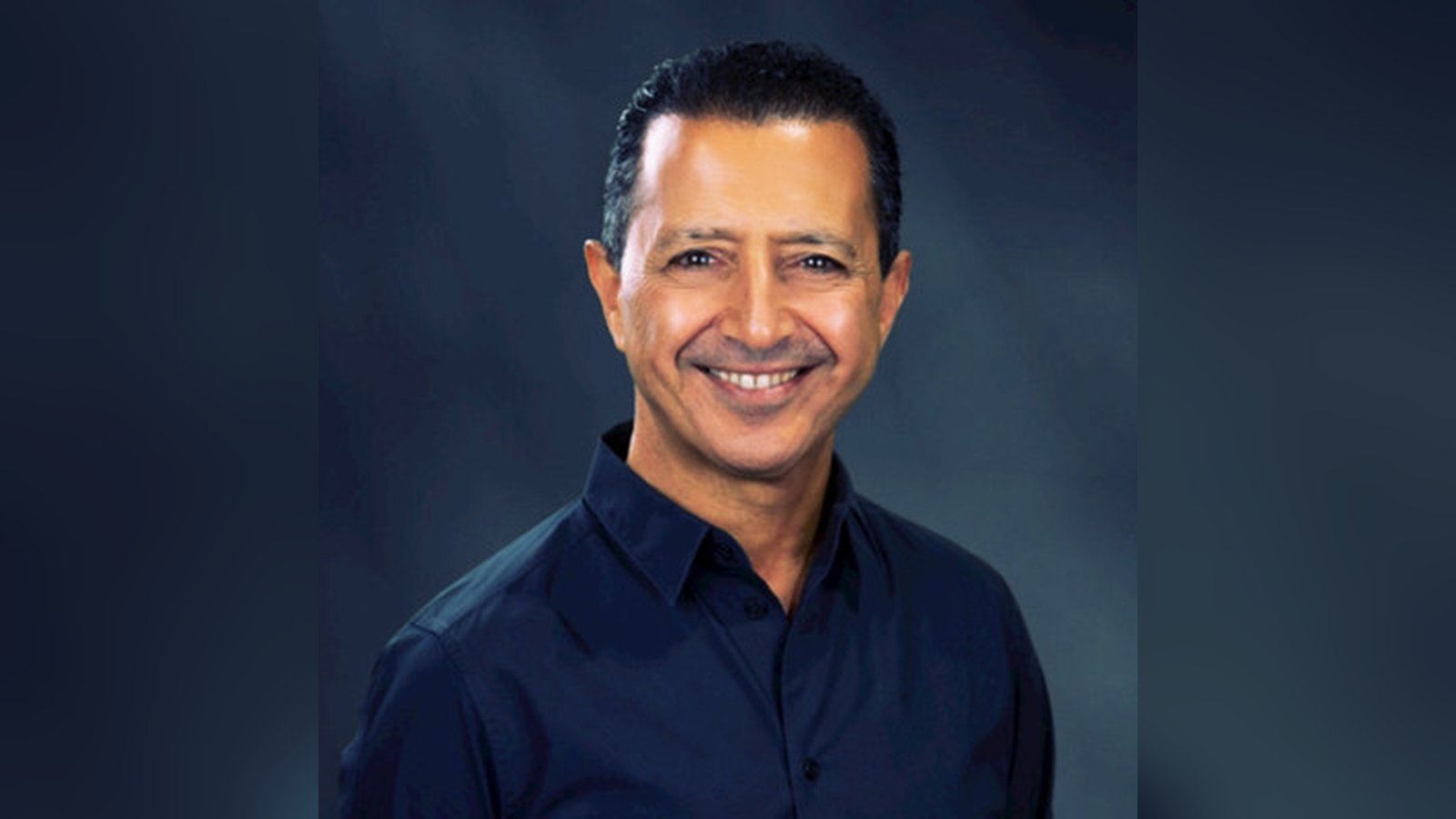
Featured image: Walid Romaya, Founder and CEO of Vikk AI. Photo courtesy of Vikk AI.
Where the legal industry reads first.
Enjoyed this article? Get the biggest legal industry updates, deals, appointments, insights and expert interviews in your inbox, free.
No spam. Unsubscribe anytime.From Legal Desire
Is your firm the one being cited, or the one being skipped?
We ran the test. On several everyday legal questions, software companies are answering and law firms are not. We help firms fix that, and we build the technology behind the practice.
Lawyers and firms: get featured on Legal Desire
Share your deals, lateral moves, firm news and insights with 1M+ monthly readers: founders, law firm partners, general counsel and practising lawyers across the US, UK, EU and GCC.
Get featuredSubmit a press release