
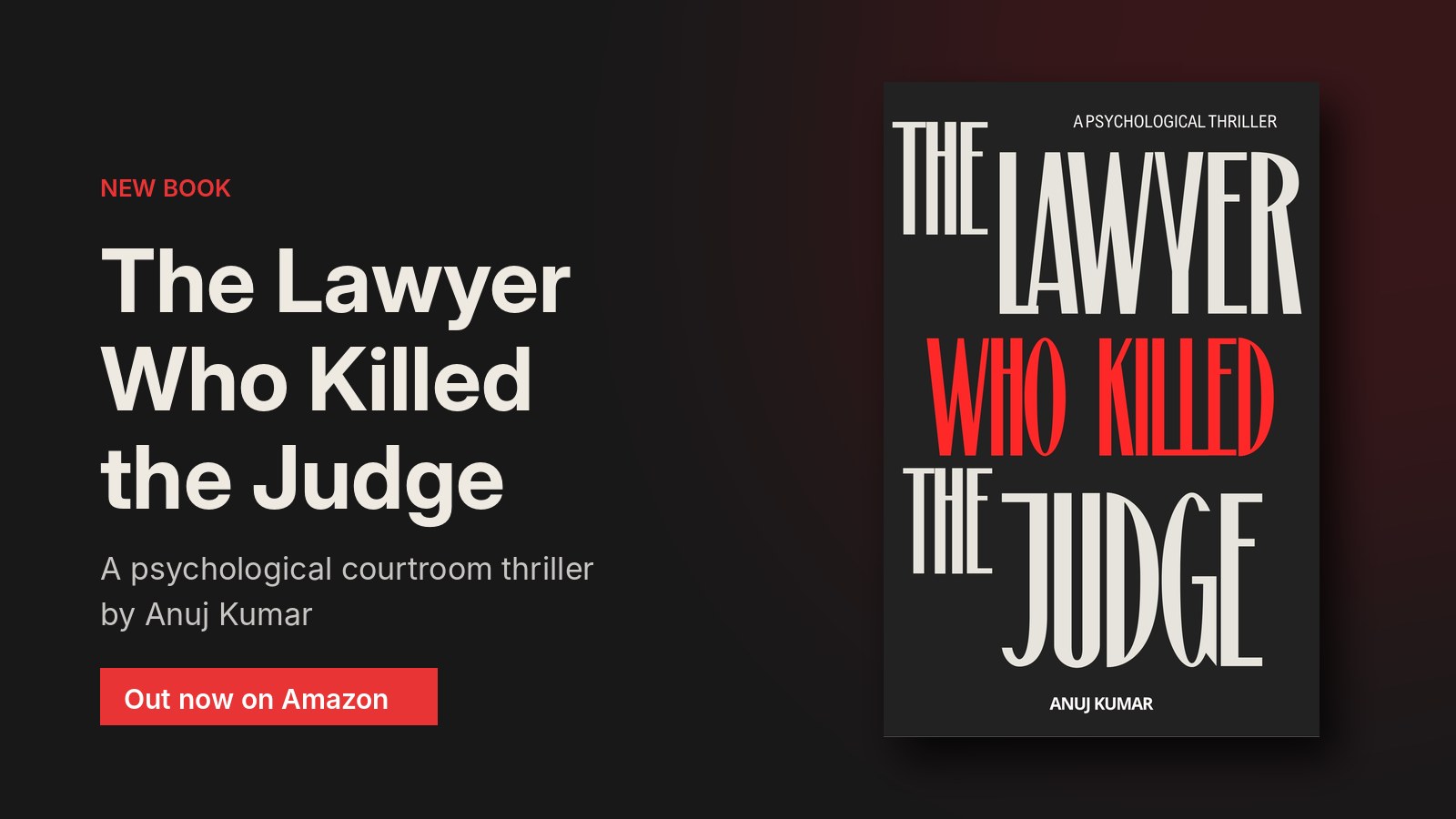
Disclosure: this book is written by Anuj Kumar, the founder of Legal Desire. Links to Amazon are affiliate links, so Legal Desire may earn a small commission from qualifying purchases.
Short answer: The Lawyer Who Killed the Judge is a psychological courtroom thriller by Anuj Kumar, published in July 2026 and available on Amazon in Kindle and paperback. It follows Daniel “Danny” Reyes, a feared trial lawyer who spends his career engineering one case in front of one judge: Aaron Vance, the judge he blames for his innocent father’s death in prison. Told by a narrator who promises the truth “just not all of it”, it is a short, tense novel of about 140 pages about revenge, certainty and the quiet power of the courtroom.
Get The Lawyer Who Killed the Judge on Amazon
Key takeaways
- A legal thriller where the courtroom itself is the weapon: the defence lawyer’s real target is the judge on the bench.
- Built around a morally grey antihero and an unreliable narrator, with a twist held back until the final pages.
- Written by a lawyer who has spent 14 years covering courts, firms and criminal justice through Legal Desire.
- A fast read at around 140 pages, aimed at readers who like courtroom drama with a psychological edge.
Book details at a glance
| Title | The Lawyer Who Killed the Judge: A Psychological Courtroom Thriller |
|---|---|
| Author | Anuj Kumar |
| Genre | Psychological thriller, legal and courtroom thriller |
| Published | 10 July 2026 (independently published) |
| Formats | Kindle eBook and paperback |
| Length | About 140 pages (paperback) |
| ISBN-13 | 979-8186611509 |
| Language | English |
| Where to buy | Amazon |
What is The Lawyer Who Killed the Judge about?
The book opens on a single idea: he did not come to win the case. He came for the judge.
Daniel Reyes is one of the best trial lawyers in the state. He is cold, brilliant and a little feared. What nobody knows is that everything he has built was aimed at one man. Twenty years ago, Judge Aaron Vance sent Danny’s innocent father into the system, and his father died there.
Now Vance is presiding over Danny’s newest case, the defence of a frightened young man accused of murder. Danny did not get the assignment by chance. He engineered it, patiently, and he plans to use the trial itself as the instrument of his revenge, in the judge’s own courtroom, where every polite word carries a second meaning only the two of them can hear.
The deeper Danny digs into the past, the darker the truth becomes: a planted glove, a silenced detective, a death in prison that was never a heart attack, and a question about his own father that he has spent his life refusing to ask. As the verdict approaches, the line between justice and murder begins to disappear, and only one of them will walk out of the courthouse alive.
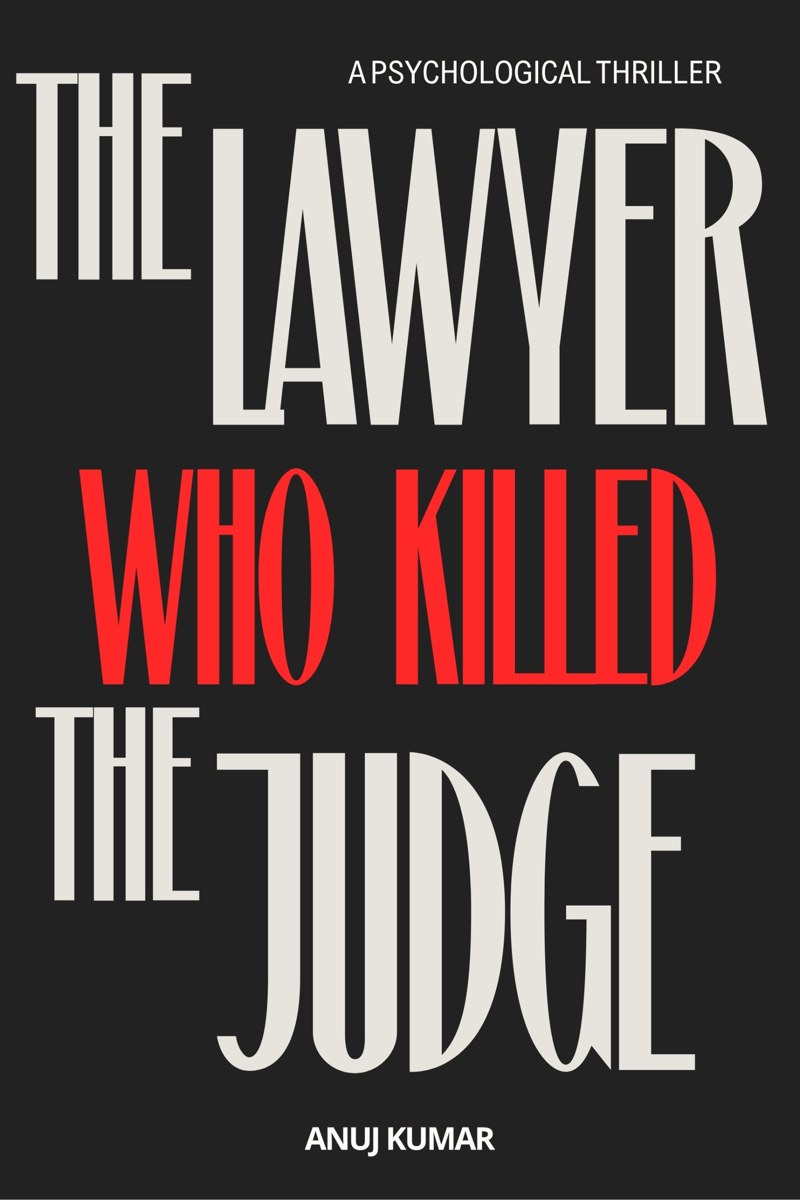
Themes: revenge, certainty and the quiet violence of the law
The courtroom as a weapon
Most legal thrillers ask who committed the crime. This one asks what happens when the person in the room with the most self-control, the defence lawyer, has his own agenda. Every objection, every bit of courtroom courtesy and every exchange with the bench works on two levels.
An unreliable narrator
The story is told by a narrator who promises to tell the reader the truth, and does, just not all of it. That device makes the reader a kind of juror: you are weighing testimony from someone with a motive to shape it.
Certainty and wrongful conviction
At its core, the novel is about how sure the justice system can be, and what it costs when it is wrong. Planted evidence, a detective who is silenced and a prisoner who dies inside are the raw material of real wrongful conviction cases, and the book uses them to ask whether revenge can ever correct a miscarriage of justice.
The real law behind the fiction
Because the author is a lawyer, the plot leans on real legal pressure points. If the book leaves you curious, these are the rules it plays against:
- Judicial recusal. In the US federal system, a judge must step aside where their impartiality might reasonably be questioned or where they have a personal bias or knowledge of disputed facts, under 28 U.S.C. § 455. State courts have similar rules. A hidden personal history between a lawyer and a judge is exactly the kind of fact that rule is designed to surface.
- A lawyer’s duty to the tribunal. Professional conduct rules such as the ABA’s Model Rule 3.5 bar lawyers from trying to improperly influence a judge, and conflict rules restrict acting where a lawyer’s personal interest could compromise the client.
- Disclosure of evidence. Since Brady v. Maryland (1963), prosecutors must disclose evidence favourable to the defence. A planted glove and a silenced detective sit right on that fault line.
- Judicial immunity. Judges are generally immune from civil lawsuits for their judicial acts, as the Supreme Court confirmed in Stump v. Sparkman (1978). That is part of why a character with a grievance against a judge might feel the system offers no remedy.
For the real-world procedure behind a murder case like the one in the book, see our guides to what happens at an arraignment, criminal defence rights when you are charged and the difference between a trial jury and a grand jury. If forensic evidence is what grips you, our explainers on how accurate fingerprint evidence is and how experts estimate time of death go deeper.
Who will enjoy this book?
- Readers of legal and courtroom thrillers who want a darker, more psychological story.
- Fans of morally grey antiheroes and revenge plots.
- Law students and lawyers who enjoy fiction that understands how a courtroom actually feels.
- Anyone who likes a short, single-sitting thriller with a late twist.
If you enjoy legal drama on screen, our list of the best legal TV shows every lawyer should watch is a good companion.
About the author
Anuj Kumar is a lawyer and the founder of Legal Desire, which has published on the legal industry for 14 years, and of Fashion Law Journal. He is also the author of A Practical Guide to Fashion Law. The Lawyer Who Killed the Judge is his latest book. You can find more about his work at anujkumar.co.
Where to buy
The Lawyer Who Killed the Judge is available on Amazon as a Kindle eBook and in paperback.
Frequently asked questions
Who wrote The Lawyer Who Killed the Judge?
Anuj Kumar, a lawyer and the founder of Legal Desire and Fashion Law Journal.
What genre is The Lawyer Who Killed the Judge?
It is a psychological courtroom thriller, combining a legal drama with a revenge story and an unreliable narrator.
How long is the book?
The paperback runs to about 140 pages, which makes it a quick read for most people.
When was The Lawyer Who Killed the Judge published?
It was published on 10 July 2026.
Is it available on Kindle?
Yes. It is available on Amazon as a Kindle eBook and as a paperback.
Is the story based on a real case?
No. It is a work of fiction, though it draws on real legal issues such as judicial bias, planted evidence and wrongful conviction.
Where the legal industry reads first.
Enjoyed this article? Get the biggest legal industry updates, deals, appointments, insights and expert interviews in your inbox, free.
No spam. Unsubscribe anytime.From Legal Desire
Is your firm the one being cited, or the one being skipped?
We ran the test. On several everyday legal questions, software companies are answering and law firms are not. We help firms fix that, and we build the technology behind the practice.
Lawyers and firms: get featured on Legal Desire
Share your deals, lateral moves, firm news and insights with 1M+ monthly readers: founders, law firm partners, general counsel and practising lawyers across the US, UK, EU and GCC.
Get featuredSubmit a press release