

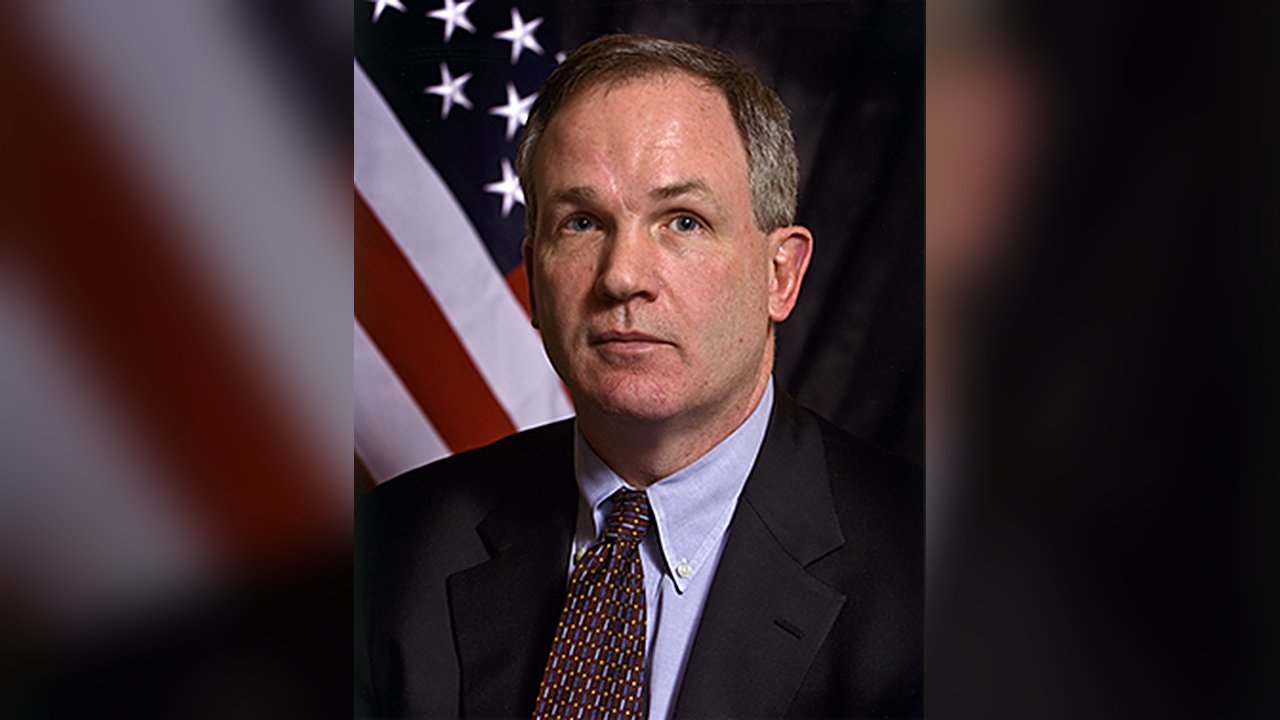
Last updated: 24 November 2026. Sources: Justice Department records of Patrick Fitzgerald’s career and his 2003 special counsel appointment, the motions and orders in United States v. Comey in the Eastern District of Virginia, and reporting by AP, CNN, Bloomberg Law, NBC News, Courthouse News and the Carolina Journal up to 20 November 2026.
Short answer: Patrick Fitzgerald was the US Attorney in Chicago from 2001 to 2012, the special counsel who convicted Scooter Libby and the prosecutor whose office convicted Governor Rod Blagojevich. A friend of James Comey for decades, he came out of retirement in 2025 to lead Comey’s defence. The Virginia case was dismissed because Lindsey Halligan was unlawfully appointed, so the vindictive prosecution motion was never decided.
Key takeaways
- Fitzgerald spent nearly 24 years at the Justice Department, ending as Chicago’s longest-serving US Attorney, then joined Skadden in 2012. NBC News reported in September 2025 that he had retired from the firm about two years earlier.
- Comey and Fitzgerald go back to their years as federal prosecutors in Manhattan. In December 2003 Comey, as acting attorney general for the CIA leak inquiry, named Fitzgerald special counsel and called him “my friend and former colleague”.
- On 20 October 2025 Fitzgerald’s team moved to dismiss Comey’s indictment as vindictive and selective. A separate motion on Halligan’s appointment won first, and the case was dismissed without prejudice on 24 November 2025.
- As of 20 November 2026, the Justice Department’s appeal was still pending, a second Comey case in North Carolina awaited rulings on new vindictive prosecution and true threat motions, and no judge had ruled that Comey was vindictively targeted.
Who is Patrick Fitzgerald?
Patrick J. Fitzgerald grew up in Brooklyn, graduated from Amherst College in 1982 with a degree in economics and mathematics, and from Harvard Law School in 1985. He spent most of his career as a federal prosecutor.
As an Assistant US Attorney in Manhattan he worked on the trial of Omar Abdel Rahman and others over the 1993 World Trade Center bombing and a plot against other New York landmarks, and on the prosecution of Osama bin Laden and others over the 1998 bombings of the US embassies in Kenya and Tanzania. On 1 September 2001 he became US Attorney for the Northern District of Illinois, in Chicago. When he announced his departure, effective 30 June 2012, the Justice Department’s release described him as the longest-serving US Attorney ever in Chicago.
In October 2012 he joined Skadden, Arps, Slate, Meagher & Flom in Chicago, where the firm said he would work on internal corporate investigations, civil litigation and arbitration. By the time Comey was charged, NBC News reported, Fitzgerald had retired from Skadden and was teaching. In the Comey filings he is listed with a Michigan bar number and a post office box in New Buffalo, Michigan, and no firm name.
How are Fitzgerald and Comey connected?
Their friendship dates to their years as federal prosecutors in Manhattan, Bloomberg Law reported. It became public on 30 December 2003. Attorney General John Ashcroft recused himself from the investigation into the leak of a covert CIA officer’s identity, which made Deputy Attorney General Comey the acting attorney general for that case. At a press conference that day Comey named Fitzgerald special counsel.
“I chose Mr. Fitzgerald, my friend and former colleague, based on his sterling reputation for integrity and impartiality,” Comey said, adding that he had once described Fitzgerald as “Eliot Ness with a Harvard law degree and a sense of humor”. In a letter of 6 February 2004, Comey confirmed that the authority he had delegated was “plenary”, covering perjury and obstruction committed during the investigation as well as the leak itself.
The link continued after President Trump fired Comey as FBI director in 2017. Fitzgerald later wrote in a court filing that Comey “sought legal advice with respect to his termination” and shared several of his memos about his meetings with the President with his lawyers. The Justice Department’s inspector general, in an August 2019 report, criticised Comey’s handling of the memos but found no evidence that Comey or his attorneys released any of the classified information in them to the media.
What were Fitzgerald’s biggest cases as a prosecutor?
| Case | Fitzgerald’s role | Outcome |
|---|---|---|
| United States v. Omar Abdel Rahman (New York) | Member of the trial team | Trial over the 1993 World Trade Center bombing and a plot against New York landmarks |
| United States v. Osama Bin Laden et al. (New York) | Member of the prosecution team | Case over the August 1998 East Africa embassy bombings |
| CIA leak investigation and United States v. Libby (Washington DC) | Special counsel from December 2003; lead trial counsel | I. Lewis “Scooter” Libby convicted in 2007 on four felony counts, including perjury and obstruction; sentence commuted by President Bush in July 2007; pardoned by President Trump on 13 April 2018 |
| Operation Safe Road (Chicago) | As US Attorney, supervised part of the investigation | Trial conviction of former Illinois governor George Ryan |
| Operation Board Games and the Blagojevich case (Chicago) | As US Attorney, supervised the investigation and announced the arrest | Blagojevich arrested on 9 December 2008, convicted in 2011 and sentenced to 14 years; sentence commuted by President Trump in 2020; pardoned on 10 February 2025 |
| John Kiriakou investigation | Special attorney appointed in 2010 to supervise it | Former CIA officer indicted in the Eastern District of Virginia over disclosures to journalists |
Announcing the governor’s arrest, he said Blagojevich had “taken us to a truly new low” and accused him of trying to sell the appointment to Barack Obama’s vacated Senate seat. Critics, NBC News noted, said his public remarks went too far. Both of his best-known convictions were later undone by clemency: Libby’s by two presidents, and Blagojevich’s by Trump, who cut short his sentence after eight years and later pardoned him.
What was the Comey case in Virginia?
On 25 September 2025 a grand jury in Alexandria indicted Comey on two counts: making a false statement to Congress under 18 U.S.C. 1001 and obstructing a congressional proceeding under 18 U.S.C. 1505, both based on his Senate testimony of 30 September 2020. The grand jury declined a third proposed count. The case was presented by Lindsey Halligan, a former White House aide who had been installed as interim US Attorney days earlier after Erik Siebert resigned.
Fitzgerald was admitted to the case on 29 September 2025 and led the defence alongside Jessica Carmichael as local counsel, Rebekah Donaleski, Ephraim McDowell and Elias Kim of Cooley, and the appellate lawyer Michael Dreeben. Comey pleaded not guilty on 8 October and the trial was set for 5 January 2026.
Fitzgerald quickly became a target himself. In a filing on 19 October 2025, prosecutors suggested that Comey had used “current lead defense counsel” to disclose classified information in 2017, which they said raised “a question of conflict and disqualification”. The defence replied that there was “no good faith basis for attributing criminal conduct to either Mr. Comey or his lead defense counsel” and pointed to the inspector general’s finding. No ruling removing Fitzgerald was reported, and he stayed on the case.
What did the vindictive prosecution motion argue?
The motion filed on 20 October 2025, signed by Carmichael with Fitzgerald and the rest of the team, said the government “has singled out Mr. Comey for prosecution because of his protected speech and because of President Trump’s personal animus toward Mr. Comey”. Its core narrative was that when “no career prosecutor would carry out those orders”, the President forced out the interim US Attorney, “installed a White House aide with no prosecutorial experience”, and the indictment followed days later, just before the five-year limitation period ran out.
The motion made two claims. Vindictive prosecution, under the Due Process Clause and the First Amendment, required objective evidence of genuine animus and proof that Comey would not have been charged without it. Selective prosecution, under equal protection principles, required proof that he was treated differently from others in his position for an improper reason. It asked for dismissal with prejudice. Our explainer on vindictive and selective prosecution sets out why these motions so rarely succeed.
Judge Michael Nachmanoff heard the motion on 19 November 2025. Dreeben argued it, pointing to a September post in which Trump wrote, “We can’t delay any longer, it’s killing our reputation.” Dreeben told the court that if this was “not a direction to prosecute”, he would “be at a loss to say what is”. The judge did not rule from the bench. Two days earlier, Magistrate Judge William Fitzpatrick had ordered the grand jury materials handed to the defence, citing what AP reported as a “disturbing pattern of profound investigative missteps”. Grand jury material is normally secret, as our grand jury guide explains.
Why was the Comey indictment dismissed?
The defence had filed a second motion to dismiss on the same day, arguing that Halligan’s appointment was unlawful. It was transferred to Senior Judge Cameron McGowan Currie of South Carolina, sitting by designation, and that motion decided the case.
In her opinion of 24 November 2025, Judge Currie held that the Attorney General’s attempt to install Halligan breached 28 U.S.C. 546 and the Appointments Clause, because Siebert had already used the 120-day interim appointment and the power to make a further one had passed to the district court. She wrote that “because Ms. Halligan had no lawful authority to present the indictment”, she would grant the motion, and she dismissed the indictment without prejudice. She also held that the Attorney General’s attempt to ratify the indictment on 31 October came too late, because the limitation period had expired on 30 September, and noted that an invalid indictment “cannot serve to block the door of limitations as it swings closed”.
Because the case ended on the appointment point, Judge Nachmanoff never ruled on the vindictive prosecution motion. The Justice Department appealed on 19 December 2025, the Fourth Circuit joined the appeal with the Letitia James case, and argument was heard on 15 September 2026. CNN reported on 20 November 2026 that the appeal was still pending.
What has happened in the Comey cases since?
North Carolina. On 28 April 2026 a grand jury in the Eastern District of North Carolina indicted Comey over a 2025 Instagram post of seashells arranged as “86 47”, charging him with threatening the President under 18 U.S.C. 871(a) and transmitting a threat under 18 U.S.C. 875(c). Fitzgerald again entered the case for him. At the end of July 2026 the defence filed motions arguing that the post was not a true threat, that the prosecution was vindictive and selective, and seeking grand jury material and suppression of search warrant evidence. Fitzgerald filed an affidavit alleging that the Secret Service tracked Comey’s phone in May 2025 and stating, “The Government obtained no warrant or court order for the electronic surveillance,” the Carolina Journal reported. On 25 September 2026 Judge Louise Flanagan postponed the arraignment to January 2027, writing that “the motions now are ripe for decision”.
Washington DC. In October 2026 prosecutors filed a criminal information charging Comey with transmitting national defence information, and conspiracy to do so, under 18 U.S.C. 793, over an alleged disclosure to a New York Times reporter in October 2016. Comey moved to dismiss on limitation grounds, and Courthouse News listed Fitzgerald among his lawyers. Judge Trevor McFadden had not ruled, and CNN reported that the Justice Department intended to seek an indictment.
As CNN put it on 20 November 2026, no judge had yet ruled that Comey was singled out unfairly or vindictively targeted.
Why did Comey turn to Fitzgerald?
Trust, mostly. “Comey implicitly trusts Pat Fitzgerald,” the former head of the FBI’s Chicago office, Robert Grant, told NBC News. A former Manhattan prosecutor, Joshua Naftalis, told Bloomberg Law that Comey had “gone to one of the best lawyers in the country, who is also his friend”.
Fitzgerald also knows from the inside how a federal prosecutor builds a politically sensitive case. Around him the team added local counsel in Alexandria, a large-firm litigation group and an appellate specialist. In the companion case, Letitia James was represented by Abbe Lowell.
This article is general information about public court proceedings as of 24 November 2026, not legal advice. James Comey has pleaded not guilty or contested every charge described here, and the North Carolina and Washington DC matters remain undecided.
Frequently asked questions
Who is James Comey’s lawyer?
Patrick Fitzgerald, the former US Attorney in Chicago, has led Comey’s defence since September 2025, working with Jessica Carmichael, Cooley lawyers including Rebekah Donaleski and Ephraim McDowell, and the appellate lawyer Michael Dreeben.
Was the Comey case dismissed for vindictive prosecution?
No. Judge Cameron McGowan Currie dismissed the Virginia indictment on 24 November 2025 because Lindsey Halligan was unlawfully appointed as interim US Attorney. The vindictive and selective prosecution motion was argued but never decided.
Can the Justice Department charge Comey again in Virginia?
The dismissal was without prejudice, but Judge Currie found the five-year limitation period had expired on 30 September 2025. The Justice Department appealed instead, and the Fourth Circuit appeal heard on 15 September 2026 was still pending on 20 November 2026.
What did Patrick Fitzgerald do in the Scooter Libby case?
Comey appointed him special counsel in December 2003 to investigate the leak of a CIA officer’s identity. He was lead trial counsel when Libby was convicted in 2007 of perjury, obstruction and lying to the FBI.
Did Patrick Fitzgerald prosecute Rod Blagojevich?
His office did. As US Attorney he supervised the investigation, announced the governor’s arrest on 9 December 2008 and oversaw the case that led to Blagojevich’s 2011 conviction. Trump commuted the sentence in 2020 and pardoned him in 2025.
Is Patrick Fitzgerald still at Skadden?
No. He joined Skadden in 2012, and NBC News reported in September 2025 that he had retired from the firm about two years earlier. In the Comey cases he appears as an individual lawyer, not through a firm.
Featured image: Photo: United States Department of Justice via Wikimedia Commons, Public domain, adapted
Where the legal industry reads first.
Enjoyed this article? Get the biggest legal industry updates, deals, appointments, insights and expert interviews in your inbox, free.
No spam. Unsubscribe anytime.From Legal Desire
Is your firm the one being cited, or the one being skipped?
We ran the test. On several everyday legal questions, software companies are answering and law firms are not. We help firms fix that, and we build the technology behind the practice.
Lawyers and firms: get featured on Legal Desire
Share your deals, lateral moves, firm news and insights with 1M+ monthly readers: founders, law firm partners, general counsel and practising lawyers across the US, UK, EU and GCC.
Get featuredSubmit a press release