Introduction:
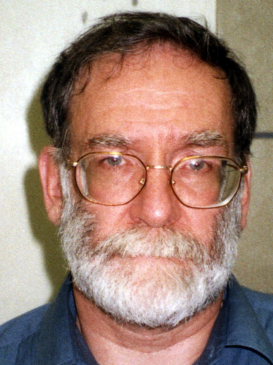
Harold Frederick Shipman was a British GP who was considered to be the most prolific serial killer in the country’s history and was born in Hyde, Greater Manchester. He had killed patients, chiefly elderly women, by injecting them with lethal doses of diamorphine (medical heroin) for more than 23 years, typically at their homes. In January 2000, he was convicted of murdering 15 patients and of forging a will and sentenced to life in prison. He was convicted at a later public inquiry led by Dame Janet Smith that he killed at least 215 patients (and may have killed more) from 1975 to 1998. He was exposed due to his fraudulent execution of his last victim’s will, Kathleen Grundy. Her daughter, who is also a solicitor, reported her suspicions to the police. A team of exhumers, toxicologists, and computer forensics then took over the case. Shipman hanged himself in Wakefield Prison on 13 January 2004.
Date of birth-14 January 1946
Birthplace-Nottingham, England
Nationality-British
Occupations are divided into General practitioner (GP), Hyde, Greater Manchester.
Known as “Doctor Death”, the UK’s most prolific serial killer
There are times when a person is classified as a serial killer; this is when the killer is a medical professional, also known as “angel of death.”
Number of victims-15 convicted; at least 215 according to the Shipman Inquiry and probably around 250
Span of crimes-1975–1998
Victims: Mostly old women, his own patients (the Inquiry identified 171 women and 44 men)
Arrested on-7/9/98
Murder method– diamorphine (morphine overdose) administered at a person’s home
The areas of murder are Hyde and surrounding areas, Greater Manchester, England.
Status– Deceased; died by suicide at HMP Wakefield on 13 January 2004.
Murder: 15 (Sentence recommended by the judge: “Never to be released”, Jan. 2000) Forgery: 15 (Sentence recommended by the judge: “Never to be released”, Jan. 2000)
Background:
Shipman was born in Nottingham in 1946 and qualified as a doctor at Leeds. One explanation for his crimes is that his mother died of cancer when he was a teenager. In her last illness, a doctor gave her morphine at home. It’s the technique he later employed on his victims. He became addicted to the painkiller pethidine in the mid-1970s and was found to have been forging prescriptions for the drug in order to support his addiction. He was reprimanded by the law, rehabilitated, and returned to practice. He started at Donneybrook Medical Centre in Hyde as a GP in 1977, and went on to work as a single-handed GP, with minimal supervision. The Inquiry subsequently blamed some 71 deaths on his group practice and some 143 deaths on his solo practice. It wasn’t until March 1998, when another local doctor expressed concerns about the number of Shipman’s patients dying, that Greater Manchester Police started an investigation. It was later criticized by the Inquiry as having been given to inexperienced officers and closed on 17 April 1998 without charges. It was closed, and Shipman went on to murder three others. His last victim was Kathleen Grundy, a former mayoress of Hyde, who was found dead at her home on 24 June 1998.
Events:
- Harold Frederick Shipman was born in Nottingham on 14 January 1946.
- 1970s: Shipman begins to be caught forging pethidine prescriptions for himself, is sentenced and rehabilitated.
- The killings started in the mid-1970s, with the earliest identified victims coming from 1975, as part of the Shipman Inquiry.
- 1977: Shipman starts work for the Donneybrook Medical Centre in Hyde, Greater Manchester.
- 1990s: He moves to a single-handed practice, killing many more patients, mostly elderly women.
- In March 1998, another local doctor and the employees of an undertaker raise concerns about the strange mortality rate of Shipman’s patients, and police launch an investigation.
- The Greater Manchester Police investigated and closed the case on 17 April 1998, due to a lack of evidence.
- Shipman visits Kathleen Grundy in what becomes a chilling trip of the dead to her home on 24 June 1998, where she is found dead.
- Angela Woodruff, a solicitor, is notified by another solicitor, Brian Burgess, about a will made by Grundy which leaves approximately £386,000 to Shipman but excludes the family, and visits the police.
- On August 1, 1998, Grundy’s body was exhumed with permission from a coroner, at Woodruff’s urging.
- In August 1998, toxicology revealed that Grundy had a toxic level of morphine in his system; investigators discovered the will typed on a typewriter that Shipman has in his possession.
- 7 September 1998: Shipman is arrested.
- September 1998 onwards: Other deaths that he certified are examined by the police and 15 specimens are picked out, 12 of which are exhumed, including nine in the indictment.
- 5th October 1999 – Shipman’s trial starts at Preston Crown Court.
- On 31st January 2000, he was convicted of 15 murders and forgery, and sentenced to 15 life sentences.
- 2000-2005: The Shipman Inquiry, chaired by Dame Janet Smith, investigates all deaths he certified; the first report says that he killed at least 215 patients.
- 13 January 2004: Shipman hangs himself in his cell in Wakefield Prison.
Harold Shipman’s crimes are the following:
- Injection with lethal doses of diamorphine, causing the deaths of at least 215 patients (15 of which have been proved in court).
- The forgery of Kathleen Grundy’s will, giving her estate to her daughter, Ann, instead of her husband.
- Making up patients’ medical records after they are dead, assigning them sicknesses to justify the mortality.
- Fraudulently obtaining and hoarding morphine and other drugs.
- Previously, the doctor forged pethidine prescriptions to supply his own drug addiction.
Modus Operandi:
Shipman was a womaniser who killed primarily old women whom he trusted as their family physician. He would come and give them a dose of diamorphine at their homes, typically in their presence only, and administer a lethal dose of the substance. He then signed the death certificate himself, frequently arranging for the body to be cremated and thus destroying forensic evidence. Shortly afterwards he changed the patient’s computerised medical record to make the death appear as if it had been a natural one; he inserted fabricated symptoms and illnesses in the record. He was a trusted GP in the business of using controlled drugs who was hardly subject to any oversight. The Inquiry also found that he got other doctors to countersign cremation forms and that he obtained morphine by over-prescribing to patients and keeping what was left over.
Crime scene:
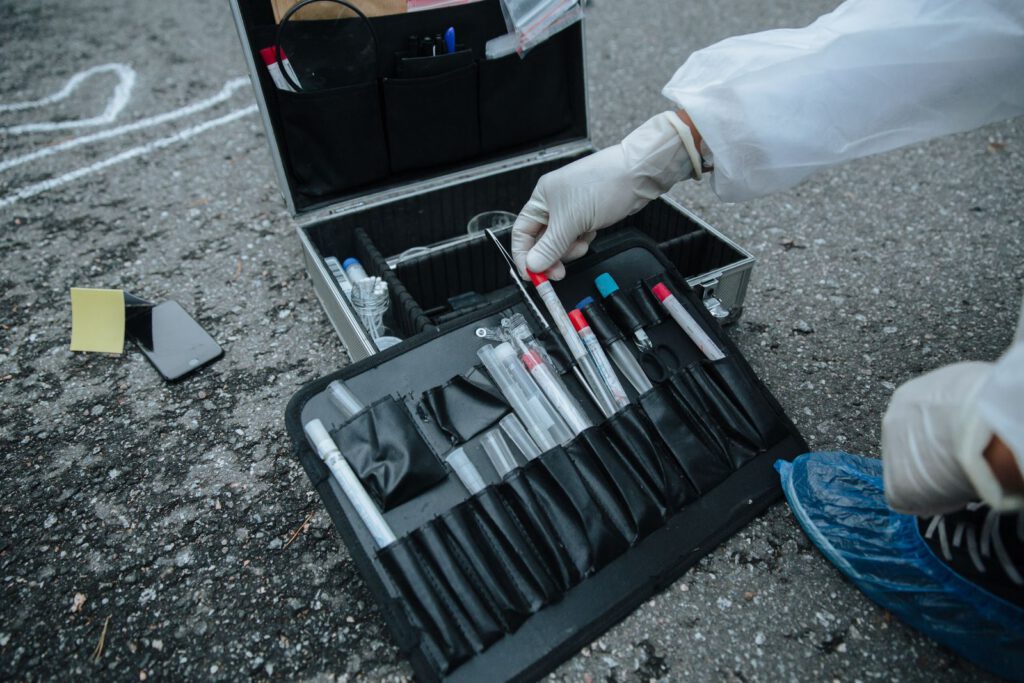
There was no one crime scene. The murders occurred in patients’ residences in the vicinity of Hyde, in patients’ rooms, typically during Shipman’s house visits. There was a high rate of cremation, and there was not always an autopsy or toxicology available. The police could exhume a body and search a surgery in Grundy. Medical records, jewellery from patients, drugs and the typewriter that they used to prepare the forged will were found in his consulting room and at his home. His practice computer also proved to be an important source of evidence, since it would show when each patient’s entry had been created or modified.
Forensic investigation:
The Shipman case had three strands. First, the toxicology: As a result of Angela Woodruff’s concerns, Kathleen Grundy was exhumed,d and it was discovered that she had lethal amounts of morphine in her body. Morphine is how the body breaks down diamorphine, so this showed she had been given a lethal injection. Later, other victims were exhumed by the police. Twelve bodies were exhum,ed and nine of those cases were carried into the indictment and in a scientific review of the case it was said the conviction rested heavily on the analysis of the samples of thigh muscle which contained the amount of morphine. Second, document and typewriter evidence: Grundy’s will proved to be a forgery, made on a typewriter similar to one that Shipman had. Third, computer forensics: Shipman told police that Grundy had been a secret addict, and showed them notes on his computer. When the machine was examined by police, these entries were found to have been added since her death. There was also a pattern with other patients, with false symptoms and illnesses being entered into the computer within hours of their death, and sometimes after he had been investigated by the police. Together, these three strands enabled prosecutors to secure convictions, even in cases where the bodies of the victims had been cremated, in 6 of 15 convictions without autopsies or toxicology. Three of his victims could have been saved if the police investigation into the case in 1998 was treated more seriously, the Shipman Inquiry later said.
The motive of the crime:
There is no definitive explanation why he was murdered. Dame Janet Smith said she did not believe his motives would ever be apparent, but she believed that his addiction to pethidine may have extended to other addictive behaviour. Leading the police investigation was Bernard Postles, who felt it was a matter of power and control of life or death. Another explanation attributes his actions to the death of his mother (a cancer victim) and the use of morphine for her treatment. A few have said that it was a foolish act by someone who was looking to be caught, or who was thinking of retiring and leaving the country. She never confessed, and he never ever claimed to be guilty of the crime, and he didn’t until he died.
Judgement:
Shipman was found guilty of 15 murders and forgery at Preston Crown Court on 31 January 2000, and given 15 life sentences. The trial judge advised him not to be discharged ever. He was incarcerated in Wakefield Prison. Sheepman was charged to the Shipman Inquiry, led by Dame Janet Smith, after the deaths of 888 patients were investigated and at least 215 were found to have been killed, and there was a strong suspicion of 45 others. The total is estimated at approximately 215 to 250; be sure to identify the number and the source in your work. The Inquiry also recommended changes to death certificates, cremation, doctors and the use of controlled drugs. Shipman hanged himself in his cell on 13 January 2004.
References:
- https://en.wikipedia.org/wiki/Harold_Shipman
- https://en.wikipedia.org/wiki/The_Shipman_Inquiry
- https://www.aetv.com/articles/harold-shipman-prolific-serial-killer
- https://www.biography.com/crime/harold-shipman
- https://pmc.ncbi.nlm.nih.gov/articles/PMC1123718
- https://www.researchgate.net/publication/246477768_Dr_Shipman_murder_and_forensic_toxicology
- https://www.researchgate.net/publication/10578128_The_Case_of_Dr_Shipman
- https://casepin.org/case/harold-shipman-case-1975
- https://www.serialkillercalendar.com/Dr%20Harold%20Frederick%20SHIPMAN.php
- https://www.pressreader.com/uk/daily-record/20170711/282016147364177
- https://assets.publishing.service.gov.uk/media/5a7ceaee40f0b65b3de0bf11/5853.pdf
Where the legal industry reads first.
Enjoyed this article? Get the biggest legal industry updates, deals, appointments, insights and expert interviews in your inbox, free.
No spam. Unsubscribe anytime.From Legal Desire
Is your firm the one being cited, or the one being skipped?
We ran the test. On several everyday legal questions, software companies are answering and law firms are not. We help firms fix that, and we build the technology behind the practice.
Lawyers and firms: get featured on Legal Desire
Share your deals, lateral moves, firm news and insights with 1M+ monthly readers: founders, law firm partners, general counsel and practising lawyers across the US, UK, EU and GCC.
Get featuredSubmit a press release