Last updated: 8 November 2026. This explainer draws on the US Supreme Court’s opinions in Trump v. Slaughter (2026), Loper Bright (2024), Dobbs (2022), Ramos (2020) and Janus (2018), vote counts from the Court’s syllabi and Oyez, the House of Lords Practice Statement of 26 July 1966 as recorded in Hansard, and the UK Supreme Court’s judgments in Austin v Southwark (2010) and Knauer v Ministry of Justice (2016).
Short answer: Stare decisis is the rule that courts follow earlier decisions. Lower courts must follow higher courts, and a court normally follows its own past rulings. The US Supreme Court can overrule itself, but only with a “special justification”, weighing the old case’s reasoning, workability, fit with other cases, later developments and reliance. In June 2026 it used that test to overrule what remained of Humphrey’s Executor.
Key takeaways
- Vertical stare decisis binds lower courts to follow higher courts. Horizontal stare decisis is a court’s practice of following its own earlier decisions, and only the highest court can overrule its own precedent.
- The Supreme Court says stare decisis is “not an inexorable command” and is weakest in constitutional cases, but stronger where a precedent interprets a statute, because Congress can change the statute.
- Recent majorities have used a common list of factors: the quality of the old reasoning, workability, consistency with related decisions, developments since, and reliance interests.
- On 29 June 2026, in Trump v. Slaughter, a 6-3 Court held that “if anything more is left of Humphrey’s, we overrule it.” In the UK, the top court has been able to depart from its own decisions since the 1966 Practice Statement.
What does stare decisis mean?
Stare decisis is Latin for “to stand by things decided”. Once a court has decided a legal question, later courts should give the same answer. Cornell’s Legal Information Institute describes it as the doctrine that courts adhere to precedent, provided the earlier court had binding authority over the later one. A decision from a court without that authority is only persuasive.
The doctrine works in two directions.
- Vertical stare decisis. A lower court must follow the decisions of the courts above it. A federal district court in New York follows the Second Circuit, and every federal court follows the Supreme Court. This is close to absolute. In Rodriguez de Quijas v. Shearson/American Express (1989) the Supreme Court said that even where one of its precedents seems to rest on reasons it has since rejected, a court of appeals “should follow the case which directly controls, leaving to this Court the prerogative of overruling its own decisions.”
- Horizontal stare decisis. A court follows its own earlier decisions. This is a strong practice rather than an iron rule, and the Supreme Court, as the top court, can overrule itself.
Only the reasoning needed for the result, the ratio decidendi, binds; side remarks (obiter dicta) do not. Our guide to ratio decidendi vs obiter dicta explains how to tell them apart.
Why do courts follow precedent, and when is it weaker?
The Supreme Court’s standard explanation comes from Payne v. Tennessee (1991): stare decisis “promotes the evenhanded, predictable, and consistent development of legal principles, fosters reliance on judicial decisions, and contributes to the actual and perceived integrity of the judicial process.” In Kimble v. Marvel Entertainment (2015), Justice Kagan added that the doctrine means “sticking to some wrong decisions”, because overruling always needs a “special justification” beyond a belief that the earlier case was wrong.
The strength of the doctrine depends on the kind of precedent:
- Statutory precedents get extra protection. Kimble held that where a precedent interprets a statute, “stare decisis carries enhanced force”, since anyone who dislikes the result can ask Congress to change the law.
- Constitutional precedents get less. In Trump v. Slaughter the Court repeated that stare decisis “is at its weakest in constitutional cases, where only we may readily fix our own mistakes”, citing Agostini v. Felton (1997). Only a constitutional amendment or the Court itself can undo a constitutional ruling.
What factors does the Supreme Court weigh before overruling itself?
There is no single official test, but the majority opinions of the last decade use overlapping lists. The clearest is in Janus v. AFSCME (2018), where Justice Alito named five factors as “most important”: “the quality of Abood’s reasoning, the workability of the rule it established, its consistency with other related decisions, developments since the decision was handed down, and reliance on the decision.”
| Case and year | How the Court framed the test |
|---|---|
| Janus v. AFSCME (2018) | Quality of reasoning, workability, consistency with related decisions, later developments, reliance |
| Ramos v. Louisiana (2020), Kavanaugh concurrence | Three questions: is the precedent “grievously or egregiously wrong”, has it caused “significant negative jurisprudential or real-world consequences”, and would overruling “unduly upset reliance interests” |
| Dobbs v. Jackson Women’s Health (2022) | Five factors: the nature of the error, quality of reasoning, workability, disruptive effect on other areas of law, and the absence of concrete reliance |
| Loper Bright v. Raimondo (2024) | Applied the same factors and found Chevron unworkable; it had not “fostered meaningful reliance” and had “undermined the very ‘rule of law’ values that stare decisis exists to secure” |
| Trump v. Slaughter (2026) | Quality of reasoning, consistency with other cases, workability and reliance, quoting Knick v. Township of Scott (2019) |
Justice Kavanaugh’s Ramos concurrence is often cited because it tries to put the factors in order. He wrote that the Court had applied the various factors “without establishing any consistent methodology”, and grouped them into his three questions. The Dobbs majority cited that concurrence when it set out its own five factors.
Reliance is often the hardest factor to pin down. In Slaughter the Court turned the respondent’s reliance argument around: Congress had relied on Humphrey’s Executor to build independent agencies, and the majority called that “precisely the problem.”
Which landmark decisions has the Supreme Court overruled?
The table lists some of the best-known examples, with the vote in the overruling case taken from the Court’s syllabus or Oyez. Our list of 50 landmark Supreme Court cases covers many of them in more depth.
| Year | Overruling decision | Vote | Precedent overruled | Issue |
|---|---|---|---|---|
| 1937 | West Coast Hotel Co. v. Parrish | 5-4 | Adkins v. Children’s Hospital (1923) | Minimum wage laws |
| 1954 | Brown v. Board of Education | 9-0 | Plessy v. Ferguson (1896, decided 7-1) | “Separate but equal” in public schools |
| 1963 | Gideon v. Wainwright | 9-0 | Betts v. Brady (1942, decided 6-3) | Right to appointed counsel |
| 1991 | Payne v. Tennessee | 6-3 | Booth v. Maryland (1987) and South Carolina v. Gathers (1989), in part | Victim impact evidence in capital sentencing |
| 2003 | Lawrence v. Texas | 6-3 (five joined the overruling opinion) | Bowers v. Hardwick (1986, decided 5-4) | Criminal bans on same-sex intimacy |
| 2010 | Citizens United v. FEC | 5-4 | Austin v. Michigan Chamber of Commerce (1990) and part of McConnell v. FEC (2003) | Corporate independent election spending |
| 2018 | Janus v. AFSCME | 5-4 | Abood v. Detroit Board of Education (1977) | Public-sector union agency fees |
| 2020 | Ramos v. Louisiana | 6-3 | Apodaca v. Oregon (1972) | Unanimous juries in state criminal trials |
| 2022 | Dobbs v. Jackson Women’s Health Organization | 6-3 on the judgment, 5-4 on overruling | Roe v. Wade (1973) and Planned Parenthood v. Casey (1992) | Constitutional right to abortion |
| 2024 | Loper Bright Enterprises v. Raimondo | 6-2 (6-3 in the companion Relentless case) | Chevron v. NRDC (1984) | Judicial deference to agency readings of statutes |
| 2026 | Trump v. Slaughter | 6-3 | Humphrey’s Executor v. United States (1935), to the extent anything was left | Removal protection for FTC commissioners |
Two vote counts need explaining. In Lawrence, Justice O’Connor concurred only in the judgment, so the opinion overruling Bowers had five votes. In Dobbs, Chief Justice Roberts agreed Mississippi’s law should stand but wrote that he “would take a more measured course” and not overrule Roe outright. In Loper Bright, Justice Jackson took no part in the lead case, which is why that vote was 6-2. Our explainer on the major questions doctrine covers how courts now read agency statutes.
What happened to Humphrey’s Executor in the 2025-26 term?
Humphrey’s Executor (1935) upheld Congress’s power to protect Federal Trade Commission members from removal except for “inefficiency, neglect of duty, or malfeasance in office”. For decades it was the main legal support for independent agencies run by multimember commissions.
In March 2025 President Trump fired the FTC’s two Democratic commissioners without naming any statutory cause. Commissioner Rebecca Slaughter sued and won in the district court. The Supreme Court took the case before the court of appeals had ruled, heard argument on 8 December 2025 and decided it on 29 June 2026. According to the opinion published on supremecourt.gov, Chief Justice Roberts wrote for the Court, joined by Justices Alito, Gorsuch, Kavanaugh and Barrett, and by Justice Thomas in all but one part. Justice Sotomayor dissented, joined by Justices Kagan and Jackson.
The stare decisis passage is short. The Court said Humphrey’s “has for decades been a result in search of a rationale” and that every relevant factor counselled “in favor of letting Humphrey’s go.” It found the decision out of step with later cases, “all but limited it to its facts”, and said that “no one knows how to apply Humphrey’s in practice.” The dissent accused the majority of all but disregarding stare decisis and stressed the “tremendous reliance interests” built on the case.
The Court left some questions open, including the Federal Reserve. Our full analysis of Trump v. Slaughter and the end of Humphrey’s Executor covers what it means for other agencies, and our review of Justice Barrett’s votes in the 2025-26 term places the case in the wider term.
Does overruling a precedent undo past cases?
Usually not. A final judgment between the parties stays final, and the Court often limits the knock-on effects of an overruling. Loper Bright is the clearest recent example. The Court said that by overruling Chevron it did “not call into question prior cases that relied on the Chevron framework.” Holdings that particular agency actions were lawful, including the Clean Air Act holding of Chevron itself, “are still subject to statutory stare decisis.” The Court added that “mere reliance on Chevron” could not be a special justification for overruling them.
So the old method goes, but many of its results remain binding. Before relying on a precedent, check whether its reasoning has since been rejected or a later case has narrowed it.
How does stare decisis work in the UK?
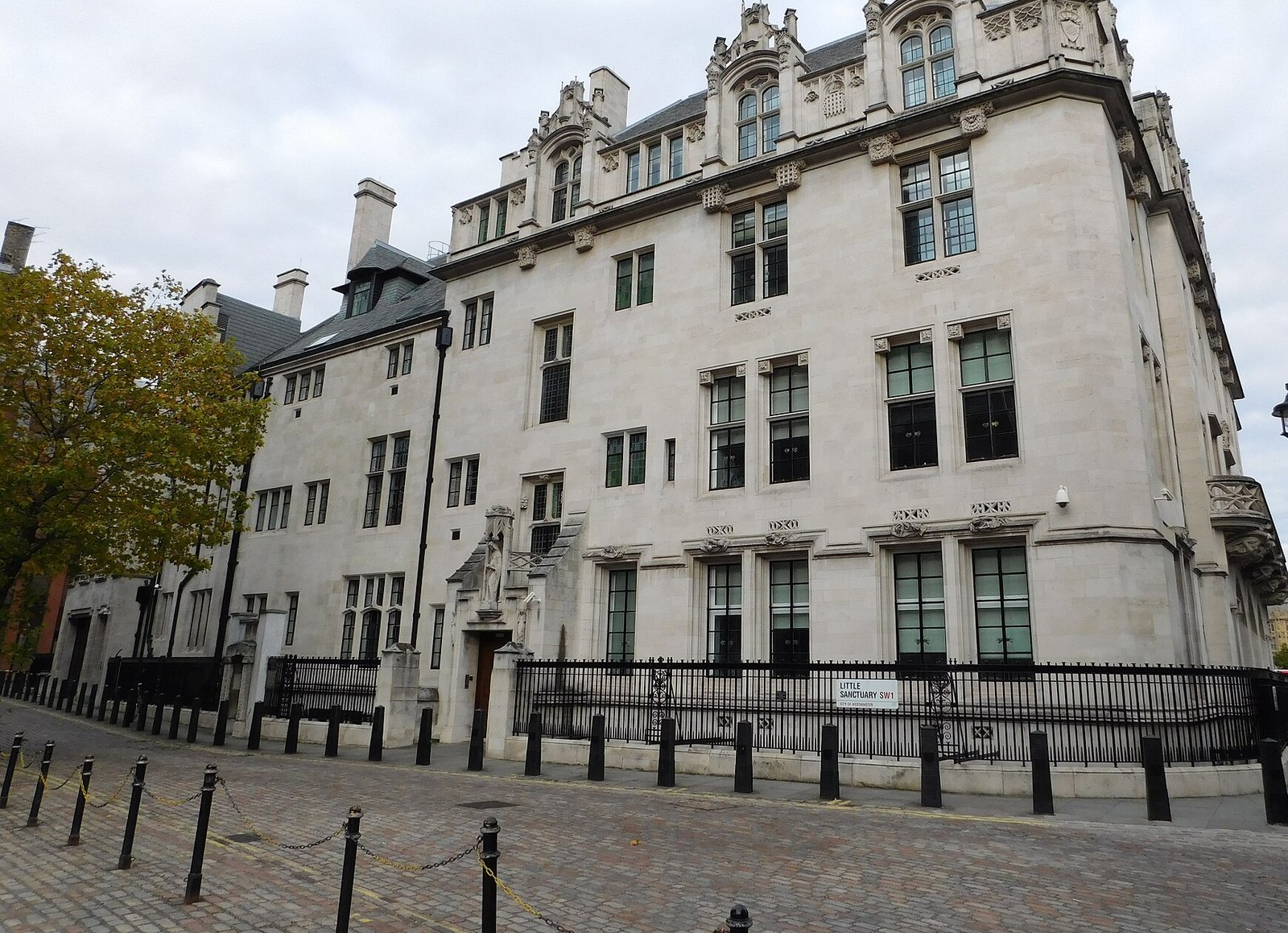
For most of the 20th century the House of Lords treated itself as bound by its own decisions. That changed on 26 July 1966, when Lord Gardiner, the Lord Chancellor, read out the Practice Statement recorded in Hansard. The Law Lords said they would, “while treating former decisions of this House as normally binding, … depart from a previous decision when it appears right to do so.” They promised to bear in mind the danger of disturbing contracts, property settlements and tax arrangements, and “the especial need for certainty as to the criminal law.” The statement was “not intended to affect the use of precedent elsewhere than in this House.”
When the UK Supreme Court took over from the House of Lords in October 2009, it did not reissue the statement. In Austin v Southwark London Borough Council [2010] UKSC 28 it explained that the Practice Statement “has as much effect in this Court as it did before the Appellate Committee in the House of Lords.”
The Court uses the power sparingly. In Knauer v Ministry of Justice [2016] UKSC 9, Lord Neuberger and Lady Hale, for a seven-justice panel, departed from two House of Lords decisions, Cookson v Knowles and Graham v Dodds, on how to calculate damages for a dependant in a fatal accident claim. They said the Court “should be very circumspect” before invoking the 1966 statement and should not refuse to follow an earlier decision “merely because we would have decided it differently.” But they had “no hesitation” in doing so, because the old approach was “illogical” and produced “unfair outcomes.”
Frequently asked questions
What is stare decisis in simple terms?
It is the principle that courts follow earlier decisions on the same legal question. The phrase is Latin for “to stand by things decided”, and it keeps the law predictable so people can plan around settled rules.
What is the difference between vertical and horizontal stare decisis?
Vertical stare decisis means lower courts must follow the decisions of higher courts above them, such as a district court following its circuit and the Supreme Court. Horizontal stare decisis means a court follows its own past decisions. Only the highest court in a system can overrule its own precedent.
How does the Supreme Court decide whether to overrule a precedent?
It asks whether there is a special justification beyond the old case being wrong. Recent majorities weigh the quality of the old reasoning, whether its rule is workable, its consistency with related decisions, legal or factual developments since, and how far people have relied on it.
Did the Supreme Court overrule Humphrey’s Executor?
Yes, in effect. In Trump v. Slaughter, decided 6-3 on 29 June 2026, the Court held the FTC’s removal protection unconstitutional and said that “if anything more is left of Humphrey’s, we overrule it.” It left the position of the Federal Reserve open.
Is stare decisis stronger for statutes than for the Constitution?
Yes. The Supreme Court says stare decisis carries enhanced force when a precedent interprets a statute, because Congress can change the law if it disagrees. It is weakest in constitutional cases, since only the Court or a constitutional amendment can correct a constitutional ruling.
Can the UK Supreme Court overrule its own decisions?
Yes. Under the 1966 Practice Statement the House of Lords could depart from its earlier decisions when it appeared right to do so. The UK Supreme Court confirmed in 2010 that the statement applies to it, and used the power in Knauer v Ministry of Justice in 2016.
This article is general information about how precedent works as of 8 November 2026. It is not legal advice. Check the current status of any precedent, including later cases that may have narrowed or overruled it, before relying on it.
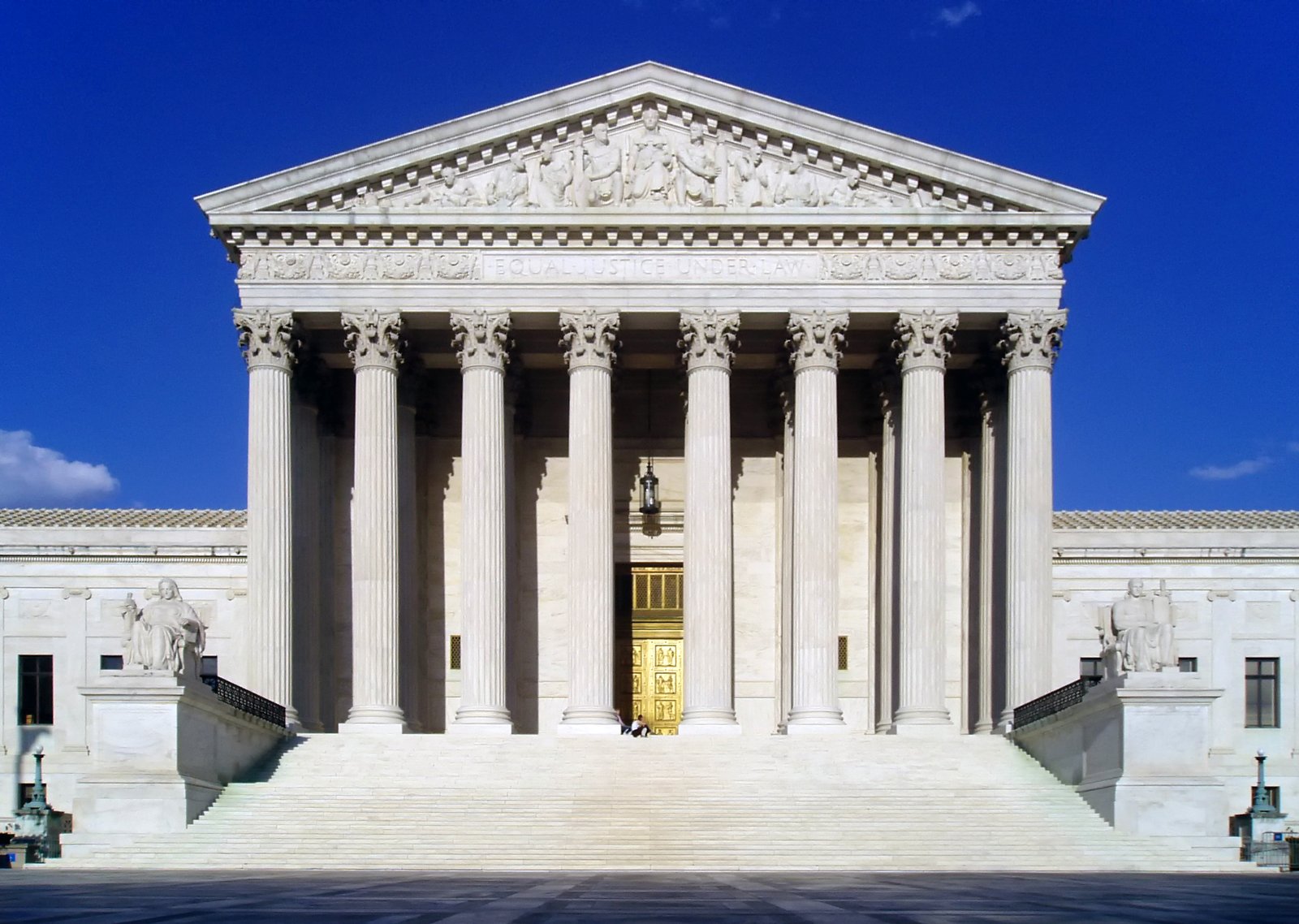
Featured image: Photo: UpstateNYer via Wikimedia Commons, CC BY-SA 3.0
Where the legal industry reads first.
Enjoyed this article? Get the biggest legal industry updates, deals, appointments, insights and expert interviews in your inbox, free.
No spam. Unsubscribe anytime.From Legal Desire
Is your firm the one being cited, or the one being skipped?
We ran the test. On several everyday legal questions, software companies are answering and law firms are not. We help firms fix that, and we build the technology behind the practice.
Lawyers and firms: get featured on Legal Desire
Share your deals, lateral moves, firm news and insights with 1M+ monthly readers: founders, law firm partners, general counsel and practising lawyers across the US, UK, EU and GCC.
Get featuredSubmit a press release