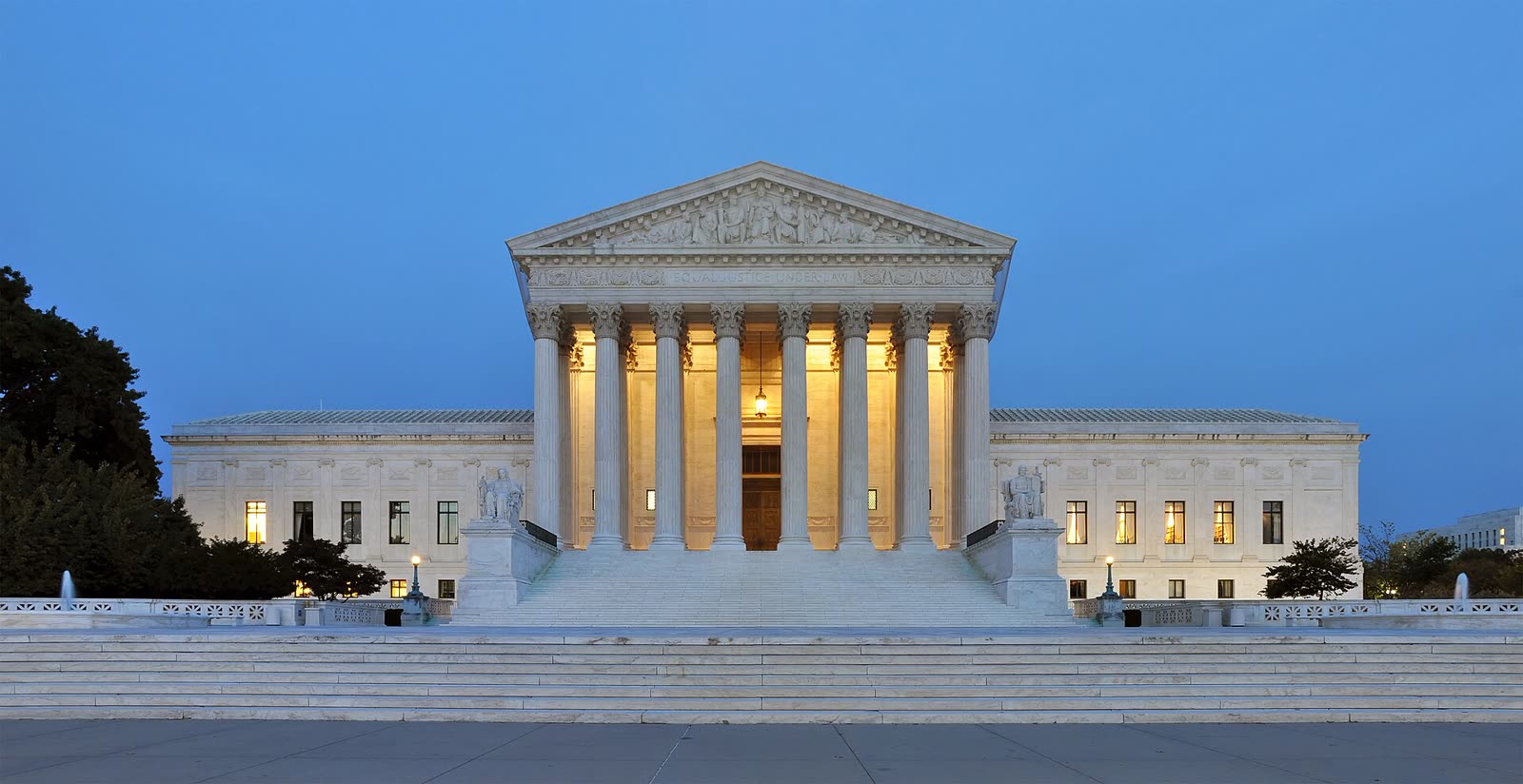
Last updated: 5 November 2026. This explainer draws on the Supreme Court’s opinions in West Virginia v. EPA, Biden v. Nebraska and Learning Resources v. Trump, published through Cornell’s Legal Information Institute, along with SCOTUSblog reporting and law firm and academic analysis. Quotes from opinions were checked against those sources. It covers US federal law only.
Short answer: The major questions doctrine says courts will not assume Congress handed over a power of vast economic or political importance unless it said so clearly. It sank the EPA’s climate plan in 2022 and student debt relief in 2023. In February 2026 the tariffs case split the Court: six justices rejected the tariffs, but only three relied on the doctrine.
Key takeaways
- The doctrine is a rule about reading statutes. If an agency or president claims a huge power from vague or old words, the government must point to clear authorisation from Congress.
- West Virginia v. EPA (30 June 2022) was the first time a majority opinion used the name. Biden v. Nebraska (30 June 2023) followed. Both were 6 to 3, written by Chief Justice Roberts.
- Learning Resources v. Trump (20 February 2026) held 6 to 3 that the International Emergency Economic Powers Act (IEEPA) does not authorise tariffs. The doctrine itself drew only three votes.
- Trump v. Slaughter is a separate line of cases. It concerns who controls agencies, under the Constitution, and does not rest on the doctrine.
What is the major questions doctrine?
Agencies only have the powers Congress gives them. Most of the time, a court reads the statute, works out its best meaning and moves on. The major questions doctrine adds a check for unusual cases. Where an agency claims a power of great economic and political significance, and the claim rests on general or old statutory language, a plausible reading is not enough.
In the words of the West Virginia v. EPA opinion, the agency “must point to ‘clear congressional authorization'” for what it claims. The idea has a simple logic: Congress decides big policy questions, so nobody should presume it settled one in a passing phrase. Justice Scalia gave it its best-known line in 2001, when he wrote that Congress does not “hide elephants in mouseholes”.
The doctrine has older roots than its name, and it is one of the threads running through the landmark Supreme Court cases law students meet early on.
| Case | Year | What happened |
|---|---|---|
| MCI v. AT&T | 1994 | Power to “modify” a requirement did not include dropping it |
| FDA v. Brown & Williamson | 2000 | The FDA could not regulate tobacco under its general powers |
| Whitman v. American Trucking | 2001 | The “elephants in mouseholes” line |
| Utility Air v. EPA | 2014 | Congress is expected to speak clearly on decisions of vast significance |
| Alabama Association of Realtors v. HHS | 2021 | The nationwide eviction moratorium was blocked |
| West Virginia v. EPA | 2022 | First majority opinion to name the doctrine |
| Biden v. Nebraska | 2023 | Student debt cancellation struck down |
| Learning Resources v. Trump | 2026 | IEEPA tariffs struck down; doctrine backed by three justices |
What did West Virginia v. EPA decide?
The case concerned the Clean Power Plan, an Obama-era rule. Section 111(d) of the Clean Air Act lets the EPA set emissions limits for existing power plants based on the “best system of emission reduction”. The EPA read “system” to include generation shifting, meaning moving electricity production from higher-emitting sources to lower-emitting ones.
The Court ruled 6 to 3 on 30 June 2022 that Congress had not clearly given the EPA that power. Chief Justice Roberts wrote for the majority, joined by Justices Thomas, Alito, Gorsuch, Kavanaugh and Barrett. He said the EPA was claiming a power to “substantially restructure the American energy market”, one it had never used that way, based on a word too vague to carry so much.
Justice Gorsuch, joined by Justice Alito, concurred to tie the doctrine to the Constitution. Justice Kagan dissented, joined by Justices Breyer and Sotomayor. Her criticism has followed the doctrine ever since: she wrote that the Court is textualist only when it suits, and that canons like this one appear as “get-out-of-text-free cards”.
What did Biden v. Nebraska decide?
In 2022 the Education Secretary announced a student debt relief plan under the HEROES Act, which allows the Secretary to “waive or modify” rules in connection with a national emergency. The plan would have cancelled about $430 billion in principal. About 43 million borrowers qualified, and 20 million would have seen their debts erased completely.
The Court ruled 6 to 3 on 30 June 2023, again through Chief Justice Roberts, that “modify” means changing something moderately. Wiping out debt on that scale was a new programme, not a modification. The Court found standing through MOHELA, a loan servicer created by Missouri, because the plan would cost it fees.
Justice Barrett joined the majority in full but wrote separately with a narrower account. For her, the doctrine is not a special rule that overrides text. It is a way of reading a statute in context, the way a sensible listener would. Justice Kagan dissented again, joined by Justices Sotomayor and Jackson. That split between Roberts and Barrett mattered three years later.
What did the Supreme Court decide in the tariffs case?
President Trump used IEEPA, a 1977 emergency statute, to impose tariffs tied to drug flows from Canada, China and Mexico, and to trade deficits. Two challenges reached the Court together: Learning Resources v. Trump and Trump v. V.O.S. Selections. They were argued on 5 November 2025 and decided on 20 February 2026.
The Court held 6 to 3 that IEEPA does not authorise the President to impose tariffs. Chief Justice Roberts wrote that the claimed power reached tariffs “of any product, at any rate, for any amount of time”, and that in nearly five decades “no President has invoked the statute” for that purpose. The ruling in V.O.S. Selections was affirmed. The Learning Resources case itself was vacated and sent back for dismissal, because the Court of International Trade has exclusive jurisdiction.
The vote is where it gets interesting. Six justices agreed on the result, and on a reading of the text: the power to “regulate” importation does not usually include taxing it. But the parts of the Roberts opinion invoking the major questions doctrine were joined only by Justices Gorsuch and Barrett. So on the doctrine itself, this is a plurality.
| Justice | Tariffs | Position on the doctrine |
|---|---|---|
| Roberts (with Gorsuch, Barrett) | Unlawful | Applied it. Said there is “no major questions exception to the major questions doctrine” |
| Gorsuch (concurring) | Unlawful | Defended it as “pro-Congress” and rooted in Article I |
| Barrett (concurring) | Unlawful | Treats it as “an ordinary application of textualism” |
| Kagan (with Sotomayor, Jackson) | Unlawful | Declined to join. Ordinary statutory reading was enough |
| Jackson (concurring) | Unlawful | Added an argument from legislative history |
| Kavanaugh (with Thomas, Alito) | Lawful | IEEPA was clear enough anyway, and the doctrine has no place in foreign affairs |
| Thomas (dissenting) | Lawful | Argued from nondelegation: tariffs are not “core” legislative power |
Justice Kagan’s line sums up the left of the Court. She wrote that she needed no “thumb on the interpretive scales”, Hunton’s analysis records, because none of the actions listed in the statute raises revenue. She also referred to the “so-called” doctrine. Justice Kavanaugh wrote that “the major questions doctrine does not apply in the foreign affairs context”, as SCOTUSblog reported. The Roberts opinion rejected that exception, stressing that the Framers gave the tariff power to Congress despite its foreign affairs effects.
Did the Court use the doctrine in any other 2025-26 case?
We found no other decision that term resting on it. Neither Ronald Levin’s July 2026 review in The Regulatory Review nor the Hunton analysis names one. Levin argues the doctrine now looks more tenuous, though he does not expect it to be abandoned soon.
The other big executive power rulings ran on different tracks:
- Trump v. Slaughter (29 June 2026): our explainer covers how the Court overruled Humphrey’s Executor, 6 to 3, and held that the President may remove FTC commissioners at will. That is a constitutional ruling about control of agencies, not a reading of how much power a statute grants.
- Trump v. Cook (29 June 2026): the Court refused, 5 to 4, to let the President remove Fed Governor Lisa Cook for now, in a dispute over removal procedure and the meaning of “cause”.
- Trump v. Barbara (30 June 2026): the birthright citizenship ruling turned on the Citizenship Clause, not the doctrine.
One link between the lines is real, though it is a matter of commentary, not holding. Justice Gorsuch’s Slaughter concurrence notes that Congress assigned agencies broad legislative and judicial powers. Now that the President controls those agencies more directly, he asked how Congress might respond. The major questions doctrine and the removal cases both ask where power sits among the branches, a debate as old as the separation of powers itself. But one tests statutory claims and the other tests constitutional limits, and neither case decided the other.
How does it differ from Chevron and the nondelegation doctrine?
Chevron. Under Chevron deference, courts accepted an agency’s reasonable reading of an ambiguous statute. Loper Bright overruled that on 28 June 2024. Courts now decide the best reading themselves, so the doctrine no longer has to work as an exception to deference. The live question is whether it still adds anything, which is exactly what Justices Gorsuch and Barrett disagree about.
Nondelegation. This constitutional doctrine asks whether Congress can give a power away at all. In FCC v. Consumers’ Research (27 June 2025) the Court, through Justice Kagan, upheld the Universal Service Fund against that challenge by 6 to 3. The major questions doctrine asks an earlier and narrower question: did Congress actually give this power?
What does the doctrine mean in practice now?
For agencies and businesses, a few points follow from the 2026 line-up:
- Count the votes. Only three justices relied on the doctrine in the tariffs case. Three more declined to use it, and the three dissenters would not apply it in foreign affairs.
- Expect arguments on both tracks. Challengers will plead the doctrine and ordinary text together, because the tariffs result came from the second.
- Lower courts may avoid it. When the Court of International Trade ruled 2 to 1 against the Section 122 tariffs on 7 May 2026, the majority disclaimed the doctrine and relied on “the normal tools of statutory interpretation”, Skadden noted. Relief was limited to three plaintiffs, and the Federal Circuit stayed the ruling.
- It cuts across party lines. West Virginia concerned an Obama-era rule, Nebraska a Biden plan and Learning Resources a Trump policy. Any president relying on broad old statutes faces the same risk.
The tariffs ruling also had a large practical sequel, even though the Court said nothing about refunds. Justice Kavanaugh warned of them in dissent. As of 2 October 2026, more than 75% of about $166 billion in IEEPA duties had been refunded with interest, according to a government filing reported by Davis Wright Tremaine. On 8 October the Court of International Trade certified a class of importers who had not sued.
Frequently asked questions
What is the major questions doctrine in simple terms?
It is a rule of statutory reading. If the government claims a power of huge economic or political importance, courts will want clear authorisation from Congress, and vague or general words will not do. The idea is that Congress keeps the biggest policy choices for itself unless it clearly says otherwise.
Did the Supreme Court use the major questions doctrine to strike down the tariffs?
Only partly. Six justices held that IEEPA does not authorise tariffs, and all six agreed on a reading of the text. Only Chief Justice Roberts and Justices Gorsuch and Barrett relied on the doctrine as well. Justices Kagan, Sotomayor and Jackson said ordinary interpretation was enough and did not join that part.
Is the major questions doctrine in the Constitution?
No, not in express terms. The justices disagree about its source. Justice Gorsuch ties it to Article I and the separation of powers. Justice Barrett sees it as ordinary textual reading in context. Justice Kagan has criticised it as a rule the Court does not need.
Which case first used the term major questions doctrine?
West Virginia v. EPA in 2022 was the first majority opinion to use the name, although earlier cases applied the same reasoning. Stephen Breyer, then a federal appeals judge, wrote about major questions in a 1986 law review article, well before the label became common.
Does the doctrine apply to the President as well as agencies?
The Roberts plurality in Learning Resources applied it to a presidential claim of power under IEEPA, rejecting the idea of an exception for foreign affairs or emergencies. That part had three votes, not a majority, so the point is not settled. Justice Kavanaugh and the other dissenters would exempt foreign affairs.
Did Trump v. Slaughter apply the major questions doctrine?
No. Slaughter held that the FTC’s for-cause removal protection violates the separation of powers and overruled Humphrey’s Executor. That is a constitutional question about who controls agencies. The doctrine is about how far a statute reaches. The two are related in theme only.
This article is general information about US law as of 5 November 2026. It is not legal advice. Litigation over tariffs and refunds is continuing, so check the current position before relying on anything here.
Featured image: Photo: Joe Ravi via Wikimedia Commons, CC BY-SA 3.0
Where the legal industry reads first.
Enjoyed this article? Get the biggest legal industry updates, deals, appointments, insights and expert interviews in your inbox, free.
No spam. Unsubscribe anytime.From Legal Desire
Is your firm the one being cited, or the one being skipped?
We ran the test. On several everyday legal questions, software companies are answering and law firms are not. We help firms fix that, and we build the technology behind the practice.
Lawyers and firms: get featured on Legal Desire
Share your deals, lateral moves, firm news and insights with 1M+ monthly readers: founders, law firm partners, general counsel and practising lawyers across the US, UK, EU and GCC.
Get featuredSubmit a press release