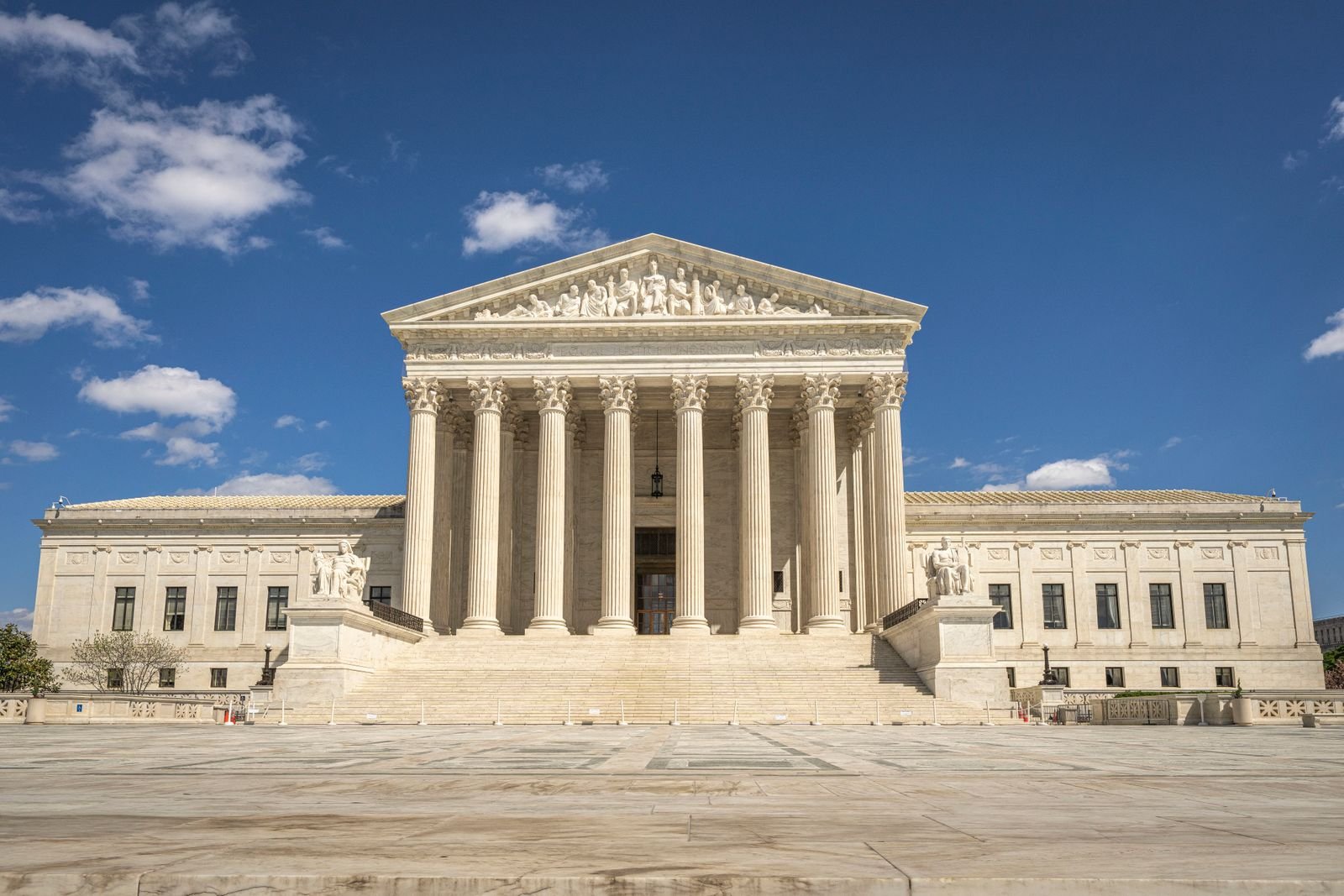
Last updated: 31 October 2026. This explainer draws on the Supreme Court’s slip opinions in Trump v. Slaughter (No. 25-332) and Trump v. Cook (No. 25A312), both decided on 29 June 2026, the Oyez and SCOTUSblog case records, the text of 15 U.S.C. §41 and reporting on later orders involving the NLRB and MSPB. It is general information, not legal advice.
Short answer: On 29 June 2026 the Supreme Court ruled 6 to 3 in Trump v. Slaughter that the President can fire Federal Trade Commission commissioners at will. Chief Justice Roberts wrote that the FTC’s for-cause removal protection breaches the separation of powers, and the Court overruled whatever was left of Humphrey’s Executor (1935). The same day, in Trump v. Cook, it signalled that the Federal Reserve is different.
Key takeaways
- Trump v. Slaughter was argued on 8 December 2025 and decided on 29 June 2026. Chief Justice Roberts wrote for a 6 to 3 majority; Justice Gorsuch concurred and Justice Sotomayor dissented, joined by Justices Kagan and Jackson.
- The Court held that the FTC Act’s rule allowing removal only for “inefficiency, neglect of duty, or malfeasance in office” is unconstitutional, and that “if anything more is left of Humphrey’s, the Court overrules it.”
- The majority expressly left open the Federal Reserve and judges of non-Article III courts such as the Tax Court. In Trump v. Cook, decided the same day by 5 to 4, the Court refused to let the President remove Fed Governor Lisa Cook for now.
- Other multimember commissions, including the NLRB, MSPB, CPSC, FERC and NRC, now look exposed. The Court has since declined to hear challenges by fired NLRB and MSPB members.
What was Trump v. Slaughter about?
The Federal Trade Commission has five commissioners who serve seven-year terms. Since 1914 the FTC Act has said the President may remove a commissioner only “for inefficiency, neglect of duty, or malfeasance in office”, a rule now found at 15 U.S.C. §41. No more than three commissioners can belong to the same party.
In March 2025, soon after starting his second term, President Trump fired the FTC’s two Democratic commissioners, Rebecca Slaughter and Alvaro Bedoya. He did not claim any of the statutory causes. According to the Court’s syllabus, he told them their continued service was “inconsistent with [his] Administration’s priorities” and that they were removed under his “authority under Article II of the Constitution.”
Slaughter sued. The federal district court in Washington, D.C. granted her summary judgment, declared the removal unlawful and ordered that she be allowed to keep working. A divided panel of the D.C. Circuit refused to pause that order. The Supreme Court then stayed it and, on 22 September 2025, granted certiorari before judgment, meaning it took the case before the court of appeals had ruled on the merits. The Oyez case page sets out the timeline.
The fight was part of a wider campaign. The administration had also removed members of the National Labor Relations Board, the Merit Systems Protection Board and the Consumer Product Safety Commission, and in July 2025 it asked the Supreme Court to let it remove three CPSC commissioners while litigation continued.
What did the Supreme Court decide, and who wrote the opinions?
The Court reversed the district court. Its central holding is short: the FTC’s for-cause removal provision is “contrary to the separation of powers enshrined in the Constitution.” Because the FTC exercises executive power, its commissioners must answer to the President, and the President must be able to remove them at will.
| Opinion | Author | Joined by |
|---|---|---|
| Opinion of the Court | Chief Justice Roberts | Justices Alito, Gorsuch, Kavanaugh and Barrett in full; Justice Thomas in all but Part III-B |
| Concurrence | Justice Gorsuch | Writing alone |
| Dissent | Justice Sotomayor | Justices Kagan and Jackson |
Part III-B, the section Justice Thomas did not join, is where the majority marks the limits of the ruling, including the Federal Reserve and non-Article III courts.
The reasoning rests on Article II, which vests “the executive Power” in a single President who must “take Care that the Laws be faithfully executed.” The Chief Justice traced the removal power through the “Decision of 1789”, when the First Congress accepted that the President could remove department heads, and through Myers v. United States (1926), which struck down a law requiring Senate consent to fire a postmaster.
The opinion then looked at what the modern FTC does. It enforces and administers about 80 statutes, writes substantive rules with the force of law, brings in-house enforcement proceedings and files civil suits in federal court. Each of those, the Court said, is executive work, and the FTC “unquestionably exercises executive power.” The opinion closes with the line likely to be quoted most: “neither Congress nor the courts may saddle him with those with whom he cannot work.” You can read the full slip opinion on supremecourt.gov.
What was Humphrey’s Executor, and why was it overruled?
Humphrey’s Executor v. United States (1935) arose when President Franklin Roosevelt fired FTC Commissioner William Humphrey without citing any of the statutory causes. A unanimous Court ruled against Roosevelt. It said the FTC was “predominantly quasi-judicial and quasi-legislative”, that it exercised “no part of the executive power”, and that Congress could therefore protect its members from removal at will. For 90 years, that decision was the legal basis for so-called independent agencies run by multimember, bipartisan boards.
The Slaughter majority said the decision had “not withstood the test of time.” It pointed to later cases that narrowed it: Morrison v. Olson (1988) admitted that the FTC’s powers would now be seen as executive “at least to some degree”, and Free Enterprise Fund (2010) and Seila Law (2020) refused to extend it to new situations. On the Court’s account, all that survived was the idea that a body exercising no executive power need not be removable at will.
Then came the overruling. The Chief Justice called Humphrey’s “a result in search of a rationale” and said every stare decisis factor, including the quality of its reasoning, its fit with other cases, its workability and reliance interests, favoured “letting Humphrey’s go.” Readers who want the background on when courts can depart from their own precedents may find our explainer on precedent and legislation useful.
Slaughter argued that Congress had relied on Humphrey’s to build agencies insulated from presidential control. The majority turned that argument around, saying “that is precisely the problem”, and rejected her proposal that courts should only check whether Congress’s removal limits were “reasonable.”
Does the ruling cover the Federal Reserve?
Not on its face. In Part III-B the majority said it had “no occasion today to define the bounds” of executive power. It repeated an earlier suggestion that the Federal Reserve may be different “to the extent that it follows in the distinct historical tradition of the First and Second Banks of the United States”, and said its opinion “should not be read” to decide that question. It also left aside tenure protections for judges of non-Article III courts, such as the Tax Court and the Court of Federal Claims.
The Fed question was answered, at least for now, on the same day in Trump v. Cook. In August 2025 the President tried to fire Lisa Cook, a member of the Fed’s Board of Governors. The Court’s syllabus notes that she was the first Governor fired in the central bank’s 111-year history. A district court blocked the removal, and the government asked the Supreme Court to lift that order.
By 5 to 4, the Court refused. Chief Justice Roberts wrote for himself and Justices Sotomayor, Kagan, Kavanaugh and Jackson. The Court said Cook was entitled to notice and some opportunity to respond before removal, and that the Fed Governors’ protection from removal “is consistent with the Constitution”, drawing on the independence the founding generation gave the First and Second Banks. Justices Kavanaugh and Jackson wrote concurrences. Justices Thomas, Alito (joined by Justice Gorsuch) and Barrett each dissented. Because Cook came to the Court on an application for a stay, the case continues in the lower courts.
Which other agencies are affected?
Slaughter decided only the FTC’s provision, but its reasoning reaches any agency whose leaders exercise executive power behind a removal shield. The table below sets out where key bodies stood on 31 October 2026, based on the opinions and later orders.
| Agency or office | Position after Slaughter |
|---|---|
| Federal Trade Commission | For-cause protection held unconstitutional; commissioners removable at will |
| Federal Reserve Board of Governors | Expressly left open in Slaughter; Trump v. Cook kept Governor Cook in place on an interim basis and treated the Fed’s protection as constitutional |
| National Labor Relations Board | D.C. Circuit ruled 2 to 1 in December 2025 that the President could remove members; the Supreme Court declined to review Gwynne Wilcox’s challenge on 19 October 2026 |
| Merit Systems Protection Board | Covered by the same D.C. Circuit ruling; the Supreme Court denied a former member’s petition in Harris v. Bessent on 30 June 2026 |
| CPSC, FERC, NRC, Chemical Safety Board | Named by the dissent as agencies likely to become “purely executive”; not decided |
| SEC and FEC | Justice Gorsuch noted they have no formal statutory removal protection at all |
| Tax Court and Court of Federal Claims judges | Expressly not decided |
The NLRB position matters most to employers and unions. As SHRM reported, the Court’s refusal to hear Wilcox’s case leaves the D.C. Circuit ruling in place and effectively ends her attempt to return to the Board.
What did the concurrence and dissent warn about?
Justice Gorsuch agreed with the result but raised a problem it creates. Congress has delegated “vast legislative and judicial powers” to independent agencies, and after Slaughter “the President can effectively exercise all those powers too.” He asked whether Congress would have delegated so much had it known the President would control these bodies, and what the Court might do about it. That points towards future challenges based on the non-delegation doctrine.
Justice Sotomayor’s dissent called the decision “grievously wrong.” She argued that the founding generation itself created bodies free from unfettered presidential control, that a century and a half of Congresses and Presidents built agencies on the FTC model, and that the Court had worked “a profound bait and switch” on Congress. In a footnote she also rejected the government’s fallback argument that courts cannot order a removed official reinstated, an issue the majority did not need to reach. The separation of powers debate behind both opinions is older than the Constitution, as our guide to Montesquieu’s separation of powers theory explains.
What happens next?
Three practical consequences follow. First, a President can now replace members of most multimember commissions over policy disagreements, so the traditional partisan balance on these boards depends on political choice rather than law. Second, litigants may test whether particular bodies exercise “no part of the executive power” and so fall outside the ruling. Third, Congress keeps control over agency powers, budgets and structure, even though it can no longer shield executive officers from removal.
For lawyers who practise before these agencies, the change is about who sets priorities, not the rules themselves. The Sidley analysis of the case noted that the ruling does not alter any agency’s statutory authority; it changes who controls the officials exercising it. Enforcement policy, rulemaking agendas and settlement positions can now shift faster after an election. SCOTUSblog’s case file collects the briefs and argument materials for anyone who wants to go deeper.
Frequently asked questions
When was Trump v. Slaughter decided?
The Supreme Court decided Trump v. Slaughter on 29 June 2026, near the end of the October 2025 term. The case was argued on 8 December 2025 after the Court granted certiorari before judgment on 22 September 2025.
What was the vote in Trump v. Slaughter?
The vote was 6 to 3. Chief Justice Roberts wrote for the majority, joined by Justices Alito, Gorsuch, Kavanaugh and Barrett, with Justice Thomas joining all but Part III-B. Justice Sotomayor dissented with Justices Kagan and Jackson.
Did the Supreme Court fully overrule Humphrey’s Executor?
Yes, in substance. The majority said later cases had already left little of Humphrey’s standing and that “if anything more is left of Humphrey’s, the Court overrules it.” Only the narrow idea that a body with no executive power need not be removable at will remains.
Can the President now fire Federal Reserve governors?
Not on the current case law. Slaughter left the Fed question open, and in Trump v. Cook the Court refused by 5 to 4 to let the President remove Governor Lisa Cook while her case continues, describing the Fed’s removal protection as consistent with the Constitution.
Was Rebecca Slaughter reinstated to the FTC?
No. The Supreme Court had already stayed the district court’s order in 2025, and its June 2026 decision reversed that judgment and sent the case back to the lower court. Her removal therefore stands.
Does the ruling affect the NLRB and MSPB?
Yes, in practice. The D.C. Circuit held in December 2025 that their members could be removed, and the Supreme Court declined to review a former MSPB member’s case, Harris v. Bessent, on 30 June 2026 and former NLRB member Gwynne Wilcox’s case on 19 October 2026.
This article is general information about United States constitutional law as of 31 October 2026. It is not legal advice and does not create a lawyer and client relationship. Litigation over agency removals is continuing, so check the latest court orders and take advice from a qualified lawyer before relying on this summary.
Where the legal industry reads first.
Enjoyed this article? Get the biggest legal industry updates, deals, appointments, insights and expert interviews in your inbox, free.
No spam. Unsubscribe anytime.From Legal Desire
Is your firm the one being cited, or the one being skipped?
We ran the test. On several everyday legal questions, software companies are answering and law firms are not. We help firms fix that, and we build the technology behind the practice.
Lawyers and firms: get featured on Legal Desire
Share your deals, lateral moves, firm news and insights with 1M+ monthly readers: founders, law firm partners, general counsel and practising lawyers across the US, UK, EU and GCC.
Get featuredSubmit a press release