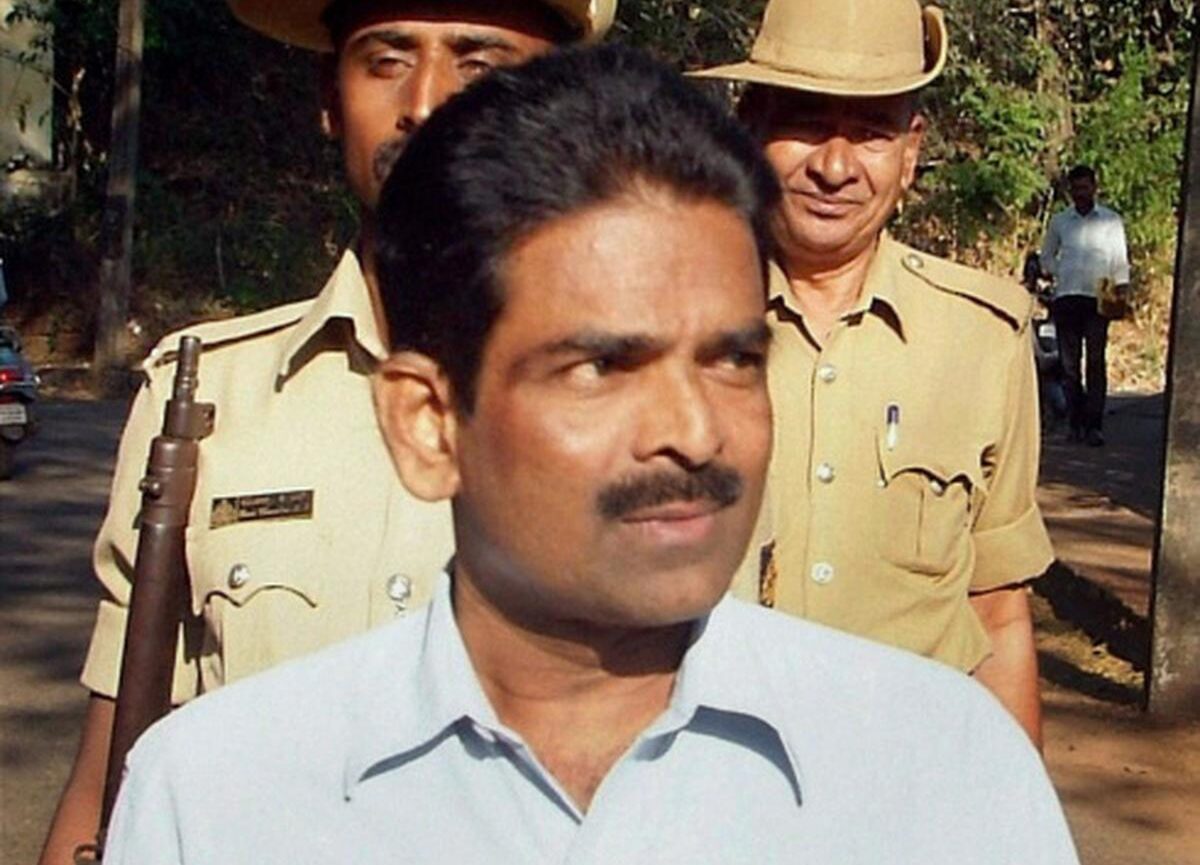
Country: India | Active: 2003–2009 | Region: Karnataka (Dakshina Kannada, Mangaluru, Mysuru, Bengaluru belt) Victims: Convicted in 20 murders; suspected in over 30 | Caught: 21 October 2009 | Sentence: Death penalty (2013), commuted to life imprisonment (2017); later convicted in further cases through 2020
1. Background
Mohan Kumar hails from a poor family in the village of Kanyana near Mangaluru, born in 1963. He had been trained and served as a school teacher in primary school and physical education school, a very respectable job that had established his place in society. Over the years, he was married several times, his wife being described as having been five times – children from more than one marriage – and he presented the public with the image of a faithful husband and father, though in reality he was living a double life.
He had a prior brush with the law: he was once accused of trying to kill a woman he was involved with by pushing her off a bridge, but was released for lack of evidence. Sometime later, he is reported to have taught himself about cyanide – one source states that he learned how to use it for gold purification from a goldsmith he was imprisoned with, as goldsmiths were known to use cyanide-based compounds in gold purification, and it was readily available from chemists. He was forced to quit his teaching career, c. 2003, and made use of this knowledge as a killing technique.
2. Modus Operandi (MO)
Mohan’s approach was logical and consistent and repeated:
He targeted the unmarried or vulnerable women in their 20s and 30s, including those under dowry pressure or under delayed marriage or financial pressure from their families, who were looking for a lifeline in the form of marriage.
His courtship involved using a fake identity, approaching a woman, presenting himself as a well-respected man, and a rapid courtship process, which frequently took place by visiting her home and “proposing.
Isolation: He would try to get the woman to run off with him, leaving family and friends behind who could oppose the relationship or later raise a red flag.
The kill: He took the victim (typically in wedding attire, wearing jewellery she had purchased for the day) to a bus station. There he would give her a pill and tell her that it was contraceptive and she should take it in the restroom because “otherwise it would make me feel sick in public. The pill was cyanide.
The result: He took off with her jewellery and money, and the body was discovered in a bus-station washroom, often initially believed to be a suicide or an unexplained death instead of a homicide.
3. Application (why he was able to escape arrest for years)
This pattern lasted for six years in five districts because of a number of factors:
The lack of immediate linkages between the cases: the bodies were found in various towns and police jurisdictions (Mysuru, Bengaluru, Mangaluru, Madikeri).
Misclassification: Deaths in public restrooms were frequently recorded as unnatural or unexplained deaths, instead of being considered homicides linked to one perpetrator.
Victim profile exploited social stigma: Families were sometimes slower in reporting missing persons or demanding investigations because there was a social stigma on being married outside the narrow family supervision – one that Mohan exploited.
He was a believable victim’s face and was so well suited to his role of a man who taught school that he was believable to investigators, at first, as well.
4. Breakthrough -How Forensics Caught Him:
The meticulously crafted clues did not trap Cyanide Mohan. One report of a missing person was ignored, but then was pulled to the surface, and the following 20 days or so from the investigation into the telecom call records to the victim and witness forensics, to the toxicology tests and the plain-vanilla police work — were used to unravel the rest. Here is the chain as it was reconstructed step by step from two or more investigations:
Step 1 – A Woman is missing, and a case that was almost forgotten by prejudice. The parents of twenty-two-year-old Anitha Mulya, Barimaru village in Bantwal taluk, made a missing person’s report on 17 June 2009. The case was not simply a low-priority investigation, but it acquired a political hue: rumours of Anitha eloping with a Muslim man were floated, and there were pre-existing conspiracy theories about “love jihad” being a ploy that was being used in the district at the time, against the backdrop of communal tension. Right-wing groups protested, and one group reportedly laid siege to Bantwal police station calling for action – but they were on the wrong target. Later, Anitha’s own father said that the police initially had instructed the family to “keep their mouths shut” and were hesitant to seriously investigate. The dedication of a group of police to be created was brought about after a period of about a month by sustained pressure from villagers, one of the local religious figures and community members.
Step 2 – The body, and the first forensic signature. Anitha’s body was finally discovered in a public restroom at a bus stand, dead in the same way police would come to know Mohan “was poisoned, robbed of jewellery, left in a toilet at the bus stand. The other victims who were later connected to the case also showed signs of cyanide poisoning when toxicology was performed on their bodies after death. Investigators were able to see a pattern in the cases after they all had this one toxicology result: a lethal, intentional dose of cyanide, not a natural or accidental cause, in all cases.
Step 3- The thread of the phone records. The Bantwal police retrieved the first call detail records (CDRs) from Anitha’s mobile phone and her home landline, with the disappearance of Anitha being the top priority. One of these numbers had caught her attention: it was the registered number of a man called Sridhar in Madikeri (Coorg). He was tracked down by investigators.
Step 4 –The first link to a second missing woman. Police (and, in one instance, a group of villagers on a tip-off before police attempted to intervene) confronted Sridhar, who admitted that the phone had been his sister’s, Kaveri, everyday companion. It was later discovered that Kaveri too was missing, having been air-lost on 17 March 2009. This is when the case became more than it was about one woman; it was a pattern.
Step 5 –Linking calls together, one-by-one. Next, investigators retrieved Kaveri’s own cell phone logs. Those records guided them to two more missing women: Vinutha, of Puttur, and another woman named Pushpa, both of whom had been on the phone with numbers that went back to the same web. Police continued to retrieve call logs as they identified more and more missing women and found that they weren’t dealing with a “sex trade racket” nor with isolated disappearances, but a single perpetrator using a series of SIM cards and phones to obtain the cell phone numbers of victims.
Step 6 –Scientific, systematic call-record correlation. Instead of following every lead on a single-by-single basis, the investigation began to take a more scientific turn, cross-referencing all of the calls made on each of the names on the missing and dead women’s list at once and searching for any overlaps in cell tower activity and contacts. The breakthrough correlation has been geographical, with all the traced phone numbers at some time in their lives having been active in or around the small town of Deralakatte near Mangaluru. The footprint of that common cell tower was the main anchorage of the investigation.
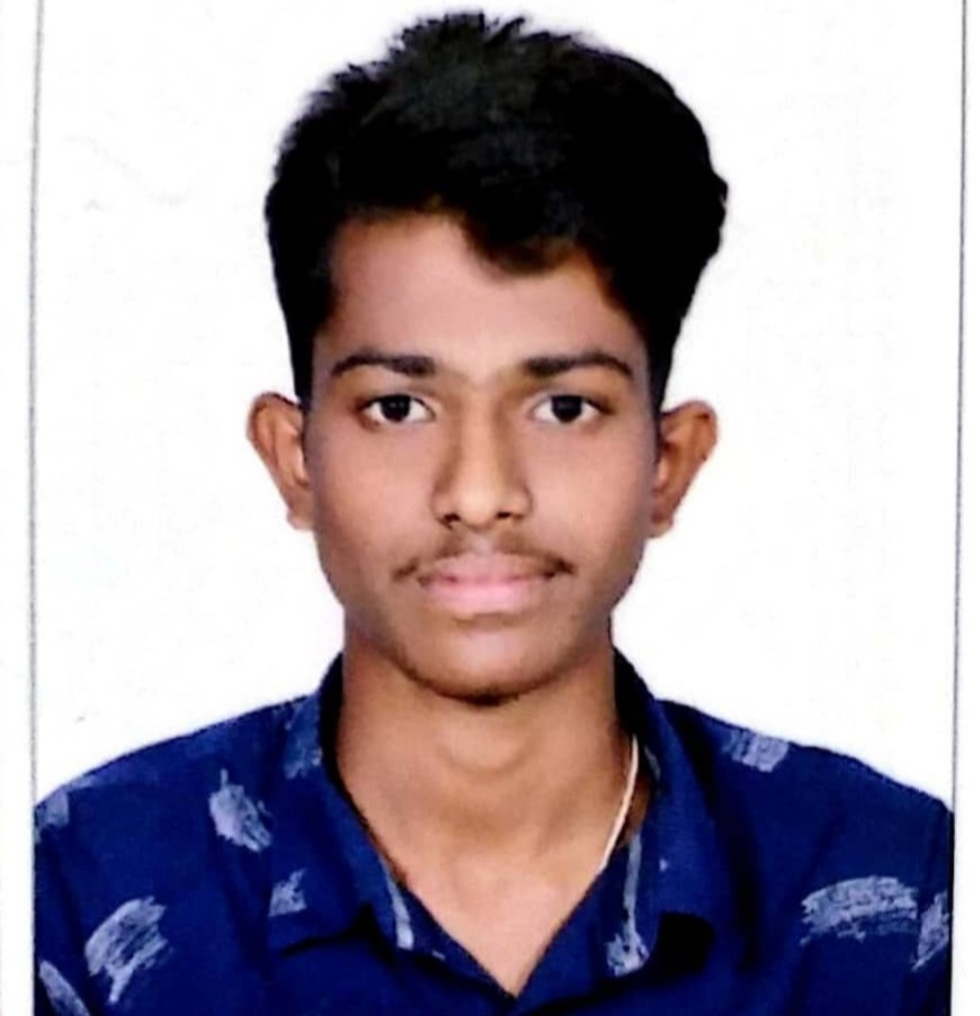
Step 7- Boots are on the ground, keyed off the data from the phone. Following that tip, several teams of police officers were dispatched to canvass the door in Deralakatte lodges and guesthouses. They went straight to a young boy named Dhanush based on the telecom analysis they’d made. When asked under questioning, Dhanush admitted that the mobile phone and the SIM card he was using were provided by his uncle named Mohan Kumar.
Step 8- A witness who would cross paths with the killer twice. A local tailor, Sumithra, also emerged. She spotted Anitha and informed the police she had seen her getting on a bus together with a man who matched Mohan’s description. Sumithra had first met Mohan, as well, years before in 2005 when he had made her his own marriage proposal, which she rejected — and she could recognise him personally, not just by a description.
Step 9 – Use witnesses to help in arrest. Dhanush’s evidence was that the phone belonged to Mohan Kumar, and Sumithra managed to recognise him in person. The police hatched a plan: They asked Sumithra to contact Mohan, claiming she was going to meet him at a bus stand in Dakshina Kannada, and then arranged to have undercover officers standing nearby. On 21 October 2009, Mohan Kumar was arrested upon entering the trap.
Step 10- Physical evidence that puts the case to an end. When they arrested him, police found eight cyanide tablets, four mobile phones and jewellery which was known to be Anitha’s — the physical evidence that directly linked him to her murder, and by implication to the pattern they had traced through the phone calls.
Step 11- Confession, and the consolidating of the serial pattern. After his arrest, Mohan Kumar confessed to a series of murders. The investigators were able to use the confessions, the toxicology reports, recovered jewellery and the reopening of 17 previously unsolved missing persons cases to systematically match victims to location and date. In Mysuru, Bengaluru, Madikeri and elsewhere, bodies were all found poisoned with cyanide, robbed of all valuables and dumped there in the same fashion; a decade later, bodies were confirmed, and prosecutors were able to secure 20 separate murder convictions against him.
- In brief, the forensic chain of events which led to the capture of Cyanide Mohan involved the toxicology, call detail record analysis (CDR) and linking victim after victim to a phone number that was shared and reused, cell tower correlation and the victim identification by a witness and a police sting that resulted in an arrest; and the final link in the chain the physical evidence recovered from his person locked into the process.
Resources:
- Wikipedia — Mohan Kumar (serial killer) https://en.wikipedia.org/wiki/Mohan_Kumar_(serial_killer)
- The News Minute — “K’taka court gives serial killer ‘Cyanide’ Mohan life term in rape and murder case” (24 July 2023) https://www.thenewsminute.com/karnataka/k-taka-court-gives-serial-killer-cyanide-mohan-life-term-rape-and-murder-case-76982
- Forensic Field Blog – “Cyanide Mohan: The Gruesome Tale of India’s Dreaded Serial Killer”(19July2023)https://forensicfield.blog/cyanide-mohan-the-gruesome-tale-of-indias-dreaded-serial-killer/
- Gulf News- “India: Serial killer named ‘Cyanide Mohan’ sentenced to death in Karnataka” https://gulfnews.com/world/asia/india/india-serial-killer-named-cyanide-mohan-sentenced-to-death-in-karnataka-1.1572360699937
- Deccan Herald “Indian fugitive Mohan Kumar aka Cyanide Mohan arrested in Bali” (26October2015)https://www.deccanherald.com/amp/story/archives%2Findian-fugitive-mohan-kumar-aka-2157477
- Deccan Herald — “Shocking serial killings for sex, cash in Bantwal” https://www.deccanherald.com/amp/story/india%2Fkarnataka%2Fshocking-serial-killings-sex-cash-2568870
- Deccan Herald — “Mohan confesses killing 4 women in Kodagu” (1 November 2009) https://www.deccanherald.com/india/karnataka/mohan-confesses-killing-4-women-in-kodagu-31615.html
- Press Reader (IANS) — “Mangaluru serial killer guilty for 20th murder” (22 June 2020) https://www.pressreader.com/india/the-free-press-journal/20200622/281797106252763
- Open Magazine — “Cyanide Mohan” (15 January 2014) https://openthemagazine.com/features/india/cyanide-mohan
- The News Minute — “Dahaad’s Anand Swarnakar closely reflects a real-life serial killer — Cyanide Mohan” (18 August 2023) https://www.thenewsminute.com/news/dahaad-s-anand-swarnakar-closely-reflects-real-life-serial-killer-cyanide-mohan-177631
- Kerala Kaumudi Online — “Mammootty’s film brings back horrifying memories of Cyanide Mohan’s crimes” (6 December 2025) https://keralakaumudi.com/en/news/news.php?id=1660053&u=cyanide-mohan-how-a-fake-lover-became-one-of-india%E2%80%99s-deadliest-killers
- StarsUnfolded — “Mohan Kumar (Cyanide Mohan) Age, Wife, Family, Biography & More” https://starsunfolded.com/mohan-kumar-cyanide-mohan/
- Serial Killer Calendar — “Serial killer Mohan KUMAR | AKA Ananda” https://www.serialkillercalendar.com/Mohan%20KUMAR.php
- Guyhadleigh — “The Cyanide Mohan Murders” https://www.guyhadleigh.com/blog/the-cyanide-mohan-murders
Where the legal industry reads first.
Enjoyed this article? Get the biggest legal industry updates, deals, appointments, insights and expert interviews in your inbox, free.
No spam. Unsubscribe anytime.From Legal Desire
Is your firm the one being cited, or the one being skipped?
We ran the test. On several everyday legal questions, software companies are answering and law firms are not. We help firms fix that, and we build the technology behind the practice.
Lawyers and firms: get featured on Legal Desire
Share your deals, lateral moves, firm news and insights with 1M+ monthly readers: founders, law firm partners, general counsel and practising lawyers across the US, UK, EU and GCC.
Get featuredSubmit a press release