

Last updated: 6 November 2026. Chatrie v. United States is described from the Supreme Court’s slip opinion, which is subject to formal revision. As of this date we found no Fourth Circuit ruling on remand and no Fifth Circuit ruling in the tower dump appeal described below. This area of law is moving quickly.
Short answer: Usually not. In Chatrie v. United States, decided on 29 June 2026, the Supreme Court ruled 6 to 3 that police conduct a Fourth Amendment search when they obtain a person’s phone location data from a company. That normally means a warrant. Emergencies and voluntary consent are exceptions, and real-time tracking, tower dumps and purchased data remain unsettled.
Key takeaways
- Carpenter (2018) requires a warrant, in general, for historical cell-site records. Chatrie (2026) applies the same reasoning to Google Location History, even for a two-hour window.
- Chatrie did not ban geofence warrants. It sent the case back to the Fourth Circuit to decide whether the warrant met the probable cause and particularity rules, and the good-faith question also remains open.
- The emergency exception survives. The Court said its ruling does not call into doubt a warrantless geofence search in true exigent circumstances.
- Buying data is the big gap. The Fourth Amendment Is Not For Sale Act passed the House in 2024 but is not law, and Congress has not enacted the 2026 versions as far as we could find.
Can police track your phone without a warrant?
The answer depends on how they do it. The Fourth Amendment bars unreasonable searches, and police searching for evidence of a crime generally need a warrant from a neutral judge, based on probable cause. The table sets out where each method stands.
| Method | What it is | Where the law stands |
|---|---|---|
| GPS device on a car | A tracker fitted by police | A search (United States v. Jones, 2012) |
| Historical cell-site records | A carrier’s record of towers your phone used | A search. Warrant generally needed (Carpenter) |
| App or account location history | Data such as Google Location History | A search (Chatrie) |
| Geofence warrant | Data on all phones in an area at a set time | A search. Whether such warrants are valid is unresolved |
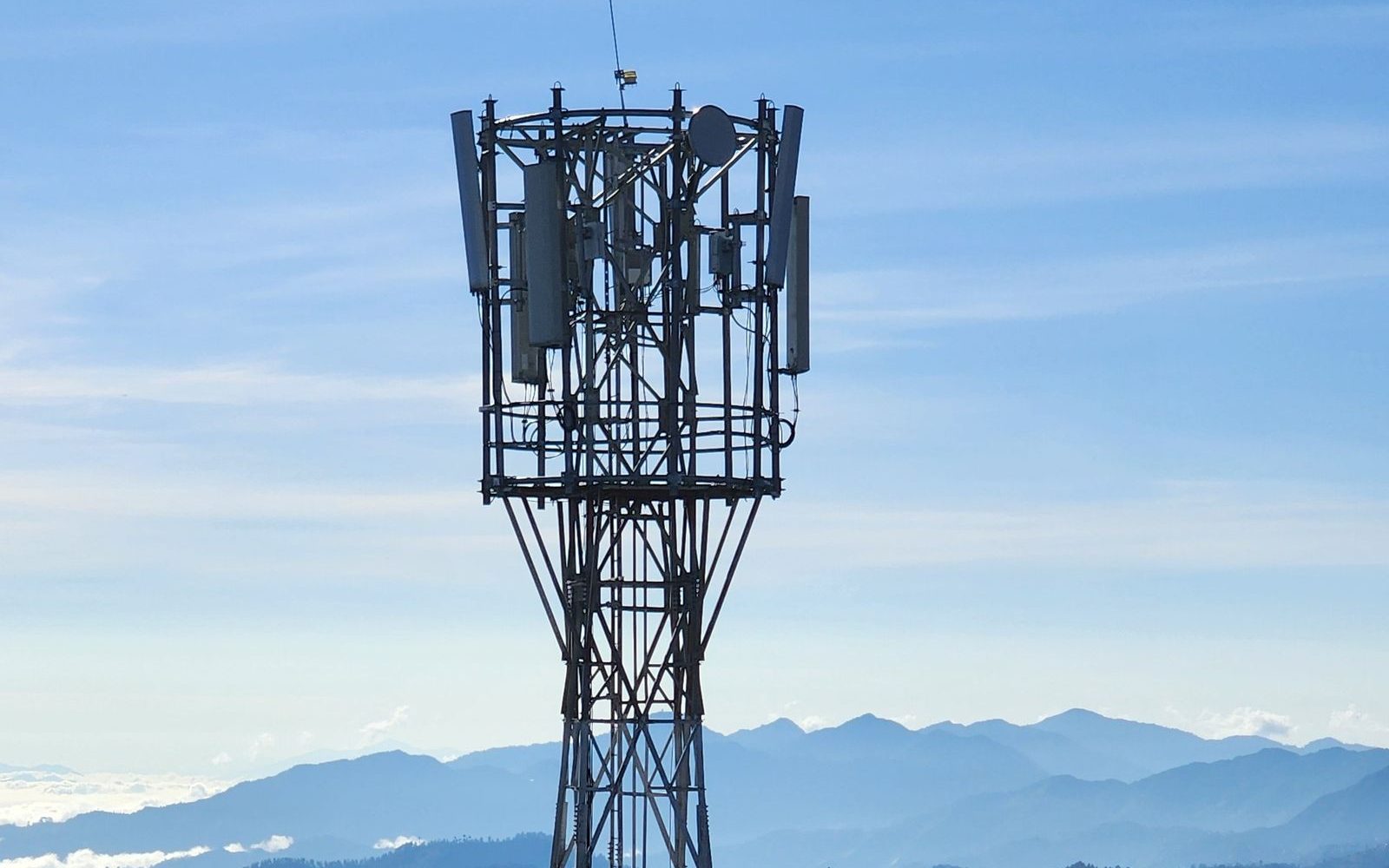
| Tower dump | All phones that connected to a tower in a time window | Not decided by the Supreme Court. Lower courts split |
| Real-time pings | A carrier locates a phone live | Not decided by the Supreme Court. Lower courts differ |
| Stingray | A device that imitates a cell tower | No Supreme Court ruling found. Federal policy requires a warrant, with exceptions |
| Data bought from brokers | Commercial location data | Not decided. No federal ban |
This is separate from searching the phone itself. In Riley v. California (2014) the Court held that police generally need a warrant to search the digital contents of a phone seized on arrest.
What did the Supreme Court decide in Carpenter?
In Carpenter v. United States, decided on 22 June 2018 by 5 to 4, the Court held that people have a legitimate expectation of privacy in the record of their movements captured through cell-site location information. Getting those records was a search, and police must generally obtain a warrant supported by probable cause. A court order under 18 U.S.C. 2703(d), which needs less than probable cause, was not enough.
The Court said accessing seven days of records was a search and did not set a lower limit. It called its decision narrow, expressed no view on real-time tracking or tower dumps, and left warrantless access open in emergencies. Carpenter is one of the rulings in our list of landmark Supreme Court cases.
What did Chatrie v. United States decide?
In May 2019 a man robbed a credit union in Midlothian, Virginia. Police got a warrant directed to Google covering phones within 150 metres of the building around the time of the crime. Through a three-step process, Google identified three users, including Okello Chatrie.
The opinion, No. 25-112, came on 29 June 2026. Justice Kagan wrote for herself, Chief Justice Roberts and Justices Sotomayor, Kavanaugh and Jackson. Justice Gorsuch agreed that there was a search but reached that result by a different route. Justices Alito, Thomas and Barrett dissented, with Alito warning that the ruling removes Carpenter’s limits.
The main points:
- A search occurred. A person has a reasonable expectation of privacy in cell-phone location information.
- A short window does not help the government. It did not matter that the data covered only two hours.
- Sharing with Google does not end protection. The Court refused to apply the third-party doctrine, and it called the argument that turning on Location History was a voluntary choice meritless.
- The warrant itself was not judged. The Fourth Circuit must decide whether each step met the probable cause and particularity rules. Justice Jackson, joined by Justice Sotomayor, would have said steps two and three failed.
- Good faith is open. The Fourth Circuit may still consider whether the evidence comes in under the good-faith exception, which had saved it in the district court.
The opinion also notes that Google moved Location History onto users’ devices in July 2025 and says it can no longer respond to geofence warrants for that data. That limits one source, not the legal rule.
Are geofence warrants and tower dumps legal now?
Geofence warrants are not banned nationally. After Chatrie, police should expect to need a warrant, and courts must then test it. The Fifth Circuit, which covers Texas, Louisiana and Mississippi, went further in United States v. Smith (2024), calling geofence warrants general warrants categorically prohibited by the Fourth Amendment. It still let the evidence in under the good-faith exception.
Tower dumps are the next fight. On 5 August 2026, Judge Carlton Reeves of the Southern District of Mississippi held in a Jackson gang investigation that tower dumps are per se unconstitutional, relying on Carpenter, Chatrie and Smith. He said the applications could produce thousands if not tens of thousands of records. The government filed a notice of appeal to the Fifth Circuit on 3 September 2026. Other courts have gone both ways: Judge Reeves’s order cites United States v. Spurlock (D. Nev. 2025) as finding a search and United States v. Williams (E.D. Mich. 2024) as finding none. Both came before Chatrie.
Can police track your phone in real time?
A physical GPS tracker on a vehicle is a search under Jones. Live location from a carrier is less clear, because Carpenter set that question aside and Chatrie speaks of historical information.
Lower courts have differed. In United States v. Hammond (2021) the Seventh Circuit held that collecting about six hours of real-time location data on a violent suspect was not a search on those facts. In Commonwealth v. Almonor (2019) the highest court in Massachusetts held that causing a phone to reveal its location in real time is a search under the state constitution, though an emergency justified it there. Hammond came before Chatrie, and we think its short-duration reasoning is now harder to defend, but no court we found has said so.
Stingrays, or cell-site simulators, work differently because they collect signals directly. The Justice Department’s 2015 policy requires a warrant, except in exigent circumstances and very limited exceptional cases. The Department of Homeland Security issued a similar directive that year. These are policies rather than court rulings, and the Justice Department’s covers its own components, including when they assist state or local police.
When can police get your location without a warrant?
- Exigent circumstances. Carpenter names pursuing a fleeing suspect and protecting people from imminent harm. Chatrie repeats that it does not call warrantless geofence searches into doubt in such situations.
- Consent. Police need no warrant if you voluntarily agree. Under Schneckloth v. Bustamonte (1973), when a person is not in custody, they need not be told they can refuse. You may still refuse.
- Company disclosures. Under 18 U.S.C. 2702(c), a provider may give records with the customer’s lawful consent, or in an emergency involving danger of death or serious physical injury. A subpoena works for many business records, but Carpenter said the government cannot use one for records in which a suspect has a reasonable expectation of privacy.
Unlawful tracking does not automatically end a case. A defence lawyer can ask the court to suppress the evidence, usually early in the process, which is one reason to know what happens at an arraignment. The good-faith exception can still let evidence in, as it did in Smith. Police also do not need a warrant for every step of an investigation, and our piece on pretext stops shows how much room they have in other settings.
Can police buy your location data from data brokers?
This is the largest open question. Location data collected through apps can be sold on to brokers, and the government has treated buying it as lawful. In March 2026, FBI Director Kash Patel told senators that the bureau buys commercially available information consistent with the Constitution. TechCrunch reported this as confirming purchases of location data, while The Register reported that the FBI later said he had not mentioned location data.
Bloomberg Law reported on 10 September 2026 that Chatrie could weaken the government’s position. University of Utah professor Matthew Tokson said it knocks out a main pillar of the argument, while an ACLU lawyer said it is unclear how far the Court would go. Bringing a case is hard, because defendants may never learn that bought data was used.
The Fourth Amendment Is Not For Sale Act would require a court order and bar agencies from buying certain data. It passed the House 219 to 199 on 17 April 2024 and died in the Senate. Its name returned in 2026 as Title II of the Government Surveillance Reform Act (H.R. 7901), introduced on 12 March 2026, and in H.R. 7816, which BillTrack50 lists as in committee. Bloomberg Law said passage before the midterm elections looked unlikely, and we found no sign of enactment.
Do state laws give more protection?
Yes. The Fourth Amendment sets a floor, and states can go further. This is a sample rather than a full list:
- Montana passed a location warrant law in 2013. In 2025 it became, by EFF’s account, the first state to stop government agencies buying certain data, including precise geolocation, from brokers.
- Utah passed a law in 2014 generally requiring a warrant for device location information.
- California’s Electronic Communications Privacy Act, at Penal Code 1546.1, generally requires a warrant, with exceptions for consent and emergencies.
- Massachusetts requires a warrant for real-time tracking under its state constitution, following Almonor.
What is the rule in the UK?
The Fourth Amendment does not apply in the UK. The main statute is the Investigatory Powers Act 2016, and police do not normally use a warrant for location records. Under section 60A they apply for an authorisation from the Investigatory Powers Commissioner, in practice through the Office for Communications Data Authorisations, which must find the request necessary and proportionate. Section 61A lets a designated senior officer authorise urgent requests.
Communications data can include location, under section 261. Retention notices need Judicial Commissioner approval and cannot require data to be kept for more than 12 months (section 87). Hacking a device is different: a law enforcement chief issues an equipment interference warrant under section 106, generally with a Judicial Commissioner’s approval.
Frequently asked questions
Do police need a warrant to ping my phone?
The Supreme Court has not ruled directly on real-time pings. Massachusetts requires a warrant under its constitution, and the Seventh Circuit upheld warrantless pings over about six hours in one case before Chatrie. In a true emergency, police may act without one. The rule depends on where you are.
Did the Supreme Court ban geofence warrants?
No. Chatrie held that getting the data is a search. It left the Fourth Circuit to decide whether that warrant was valid. The Fifth Circuit has separately called geofence warrants categorically prohibited, so the position differs between circuits for now.
How much location data can police get without a warrant?
Carpenter held that seven days of cell-site records was a search and set no lower limit. Chatrie held that two hours of Location History was also a search. The Court rejected the idea that a short period avoids the Fourth Amendment for that data.
Does Chatrie protect my data in every app?
It concerned Google Location History, but the reasoning was broad: a phone user does not give up privacy by doing the ordinary things phone users do. The dissent warned about how far this reaches. Courts will now test other apps and services.
What should I do if police tracked my phone without a warrant?
Speak to a criminal defence lawyer before talking to police. A lawyer can ask what data was obtained and how, and whether to move to suppress it. Keep any records you have. Do not delete data if you know of an investigation.
Can police use my phone location without a warrant in the UK?
Usually they do not need a warrant for communications data, but they do need an authorisation under the Investigatory Powers Act 2016. It normally comes from an independent authorising body, with a separate route for urgent cases. Hacking a device requires a warrant.
This article is general information as of 6 November 2026 and is not legal advice. The law on phone tracking varies by state and is changing after Chatrie. If you are under investigation or have been charged, speak to a qualified criminal defence lawyer.
Featured image: Photo: Thirdman via Pexels
Where the legal industry reads first.
Enjoyed this article? Get the biggest legal industry updates, deals, appointments, insights and expert interviews in your inbox, free.
No spam. Unsubscribe anytime.From Legal Desire
Is your firm the one being cited, or the one being skipped?
We ran the test. On several everyday legal questions, software companies are answering and law firms are not. We help firms fix that, and we build the technology behind the practice.
Lawyers and firms: get featured on Legal Desire
Share your deals, lateral moves, firm news and insights with 1M+ monthly readers: founders, law firm partners, general counsel and practising lawyers across the US, UK, EU and GCC.
Get featuredSubmit a press release