Last updated: 20 October 2026. This guide explains how US courts treat pretextual police stops under the Fourth Amendment and state constitutions, and pretextual reasons for firing under federal anti-discrimination law, with a short comparison with the law of England and Wales. It is general information, not legal advice.
Short answer: In law, “pretextual” describes a stated reason that hides the real one. A pretextual stop is a traffic stop made for a minor violation so police can investigate something else; under federal law it is lawful if officers had probable cause. A pretext termination is a firing where the employer’s stated reason covers up discrimination or retaliation, which is unlawful.
Key takeaways
- In Whren v. United States (1996), a unanimous Supreme Court held that a traffic stop backed by probable cause does not violate the Fourth Amendment, whatever the officer’s real motive.
- Some states go further under their own constitutions. Washington has barred pretextual stops since State v. Ladson (1999), and New Mexico courts have taken the same view.
- In employment cases, pretext is the third step of the McDonnell Douglas test: the employee must show the employer’s stated reason is not the real one and that discrimination or retaliation was.
- Showing the employer’s explanation was false can be enough for a jury to find discrimination (Reeves, 2000), but it does not guarantee a win (St. Mary’s Honor Center v. Hicks, 1993).
What does pretextual mean in law?
A pretext is a reason given in order to hide the true reason. Calling an action “pretextual” means the official explanation is cover. The word turns up across the law, but it matters most in two places:
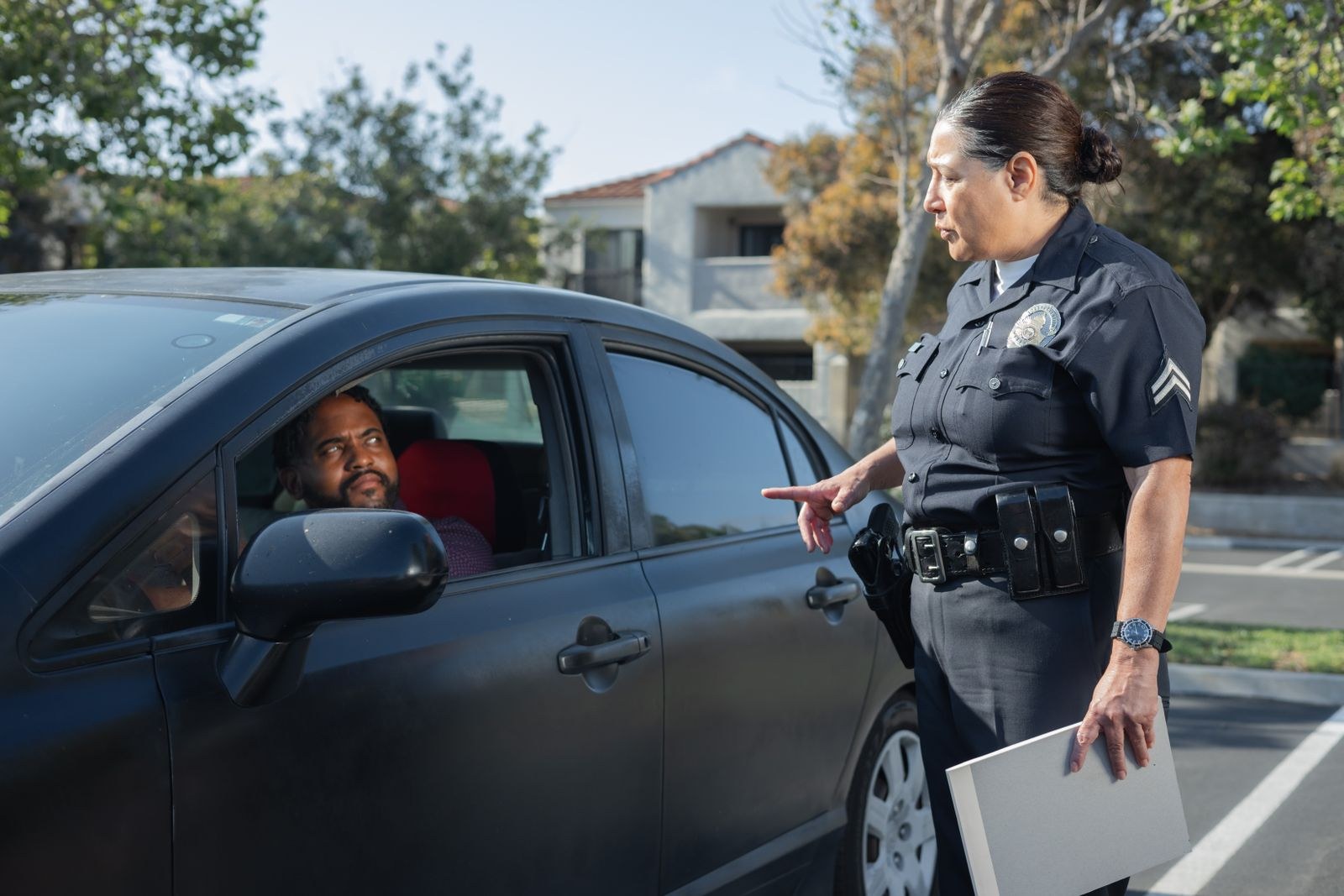
- Policing: a “pretextual stop” or “pretext stop” is when an officer uses a minor traffic offence, such as a broken tail light or a missed signal, as the legal basis to stop a car they really want to investigate for something else, often drugs or weapons.
- Employment: a “pretextual firing” or “pretext termination” is when an employer gives a lawful-sounding reason, such as poor performance or restructuring, to disguise an unlawful one, such as race, sex, age or retaliation for a complaint.
The two areas reach opposite results. For police stops, federal law largely ignores the officer’s motive. For firings, the employer’s real motive is the whole question.
Is a pretextual stop legal under the Fourth Amendment?
Under federal law, generally yes. The leading case is Whren v. United States, 517 U.S. 806 (1996). On 10 June 1993, plainclothes vice officers in an unmarked car in Washington, DC, watched a truck wait at a stop sign for more than 20 seconds, then turn without signalling and speed off. They stopped it, saw bags of crack cocaine in a passenger’s hands and made arrests. The defendants argued that the traffic violation was a pretext for a drug investigation the officers had no grounds for.
Justice Scalia, for a unanimous Court, rejected that argument. The temporary detention of a motorist on probable cause of a traffic violation is reasonable “even if a reasonable officer would not have stopped the motorist absent some additional law enforcement objective”. In the Court’s words, “Subjective intentions play no role in ordinary, probable-cause Fourth Amendment analysis.”
That does not leave drivers with no protection:
- Race discrimination. Whren said the Constitution prohibits selective enforcement based on race, but the objection belongs under the Equal Protection Clause, not the Fourth Amendment. Those claims are hard to prove.
- Length of the stop. In Rodriguez v. United States (2015), the Court held that police may not prolong a completed traffic stop, even by seven or eight minutes, to run a dog sniff without reasonable suspicion.
- Searches. A lawful stop does not by itself justify searching the car. Officers still need consent, probable cause or another recognised exception.
If evidence was found after an unlawful stop or search, the usual remedy is a motion to suppress. Our guide on talking to police without a lawyer explains why what you say at the roadside matters.
Which states reject pretextual stops?
State courts can give more protection under their own constitutions than the federal floor. A few have done so for pretext stops.
Washington. In State v. Ladson, 138 Wn.2d 343 (1999), the Washington Supreme Court held that pretextual stops violate article I, section 7 of the state constitution. Courts look at the totality of the circumstances, including “both the subjective intent of the officer as well as the objective reasonableness of the officer’s behavior”. The court refined the rule in State v. Arreola, 176 Wn.2d 284 (2012): a “mixed-motive” stop is lawful “so long as a police officer actually, consciously, and independently determines that a traffic stop is reasonably necessary in order to address a suspected traffic infraction”.
New Mexico. In State v. Ochoa, 2009-NMCA-002, decided in November 2008, the New Mexico Court of Appeals held that “pretextual traffic stops are not constitutionally reasonable in New Mexico” under article II, section 10. The state Supreme Court has since applied that test.
Local laws. Some cities have acted by legislation. Philadelphia’s Driving Equality law, which took effect in March 2022, tells officers not to stop drivers where the main violation is minor, such as a single broken light or an object hanging from the rear-view mirror.
| Jurisdiction | Rule on pretextual stops | Key authority |
|---|---|---|
| Federal (Fourth Amendment) | Allowed if there is probable cause of any traffic violation; motive irrelevant | Whren v. United States (1996) |
| Washington | Pretextual stops unlawful; mixed-motive stops allowed if the traffic reason was an actual, conscious and independent cause | State v. Ladson (1999); State v. Arreola (2012) |
| New Mexico | Pretextual stops unreasonable under the state constitution | State v. Ochoa (Court of Appeals, 2008) |
| Philadelphia | Ordinance limits stops for listed minor violations | Driving Equality law (in effect from March 2022) |

What is a pretext termination?
Federal laws such as Title VII of the Civil Rights Act of 1964 and the Age Discrimination in Employment Act make it unlawful to fire someone because of a protected characteristic, or in retaliation for complaining about discrimination. Our overview of the most common types of employment discrimination sets out the protected grounds.
Employers rarely admit an unlawful motive. They usually give a neutral reason: missed targets, misconduct, a reorganisation. If the employee can show that reason is false or was not what really drove the decision, the reason is a pretext, and a court or jury may infer the unlawful motive. Pretext arguments are central to many retaliation and wrongful termination claims.
How does the McDonnell Douglas burden-shifting test work?
Where there is no direct evidence of discrimination, federal courts use the three-step framework from McDonnell Douglas Corp. v. Green, 411 U.S. 792 (1973):
- Prima facie case. The employee shows basic facts suggesting discrimination. In that hiring case, the Court listed: belonging to a racial minority, applying and being qualified, being rejected, and the employer continuing to look for applicants with similar qualifications.
- Legitimate reason. The employer must then state a legitimate, non-discriminatory reason. In Texas Department of Community Affairs v. Burdine (1981), the Court held this is only a burden of production; the “ultimate burden of persuading the trier of fact” stays with the employee “at all times”.
- Pretext. The employee must prove the stated reason was not the true one. Burdine said this can be done “either directly by persuading the court that a discriminatory reason more likely motivated the employer or indirectly by showing that the employer’s proffered explanation is unworthy of credence”.
Two later cases set the limits of step three. In St. Mary’s Honor Center v. Hicks, 509 U.S. 502 (1993), the trial court found the employer’s reasons were not the real ones but also found the employee had not proved race was the cause. The Supreme Court held that rejecting the employer’s reasons does not entitle the employee to judgment automatically. In Reeves v. Sanderson Plumbing Products, 530 U.S. 133 (2000), the Court made the other half of the point: a prima facie case plus enough evidence that the employer’s explanation is false “may permit the trier of fact to conclude that the employer unlawfully discriminated”, without separate proof of bias.
In June 2025, in Ames v. Ohio Department of Youth Services, a unanimous Court struck down a rule, applied by the Sixth Circuit, that made majority-group employees show extra “background circumstances” at step one. The same standard now applies to every plaintiff.
How do employees show pretext?
Courts look at the evidence as a whole. Common kinds of pretext evidence include:
- The stated reason is factually wrong. In Reeves, the company said it fired a 57-year-old supervisor for failing to keep accurate attendance records; he produced evidence that his records were accurate.
- Others were treated better. McDonnell Douglas itself pointed to evidence that employees outside the protected group who did the same thing were kept on.
- Shifting explanations. The employer gives one reason at the time and a different one later.
- Timing. The firing closely follows a complaint, a request for leave or the disclosure of a protected characteristic.
- Departures from policy. Skipped warnings, unusual procedures or a sudden change in performance reviews.
- Biased remarks. In Reeves, a senior manager had made age-related comments to the employee.
Emails, appraisals, disciplinary files and witness accounts are usually the core of the case. Our guides on suing an employer for firing you and hostile work environment claims cover related routes.
How does UK law treat sham reasons for dismissal?
UK law does not use the American burden-shifting test, but it deals with the same problem in two ways.
Unfair dismissal. Under section 98 of the Employment Rights Act 1996, it is for the employer to show the reason, or principal reason, for the dismissal and that it is a fair one. In Royal Mail Group Ltd v Jhuti [2019] UKSC 55, a manager had built a false picture of poor performance after the employee blew the whistle. The Supreme Court held that where the real reason is hidden behind “an invented reason” that the decision-maker adopts, the tribunal must look through it. Ordinary unfair dismissal claims currently need two years’ service. Under the Employment Rights Act 2025, which received Royal Assent on 18 December 2025, that falls to six months from 1 January 2027.
Discrimination. Under section 136 of the Equality Act 2010, if there are facts from which a tribunal could decide, without any other explanation, that discrimination occurred, it must find so unless the employer shows it did not discriminate. In Efobi v Royal Mail Group Ltd [2021] UKSC 33, the Supreme Court confirmed the claimant must still establish those facts first. Discrimination claims need no minimum length of service.
Frequently asked questions
Is a pretextual stop legal?
Under the US Constitution, generally yes, as long as the officer had probable cause to believe a traffic law was broken. Whren says the officer’s real motive is irrelevant. Some states, including Washington, ban pretextual stops under their own constitutions.
Can police search my car after a pretext stop?
Not automatically. A valid stop allows officers to deal with the traffic violation. A search needs your consent, probable cause or another legal exception, and the stop cannot be stretched beyond its purpose without reasonable suspicion, as Rodriguez held in 2015.
What does pretext mean in an employment case?
It means the employer’s stated reason for a decision, such as poor performance, is not the true reason and is covering for discrimination or retaliation. Proving pretext is the third stage of the McDonnell Douglas framework.
What is the best evidence of pretext?
Evidence that the stated reason is factually untrue is often the strongest, followed by proof that colleagues outside your protected group did the same thing without being fired. Changing explanations, suspicious timing and departures from normal policy also help.
If I prove my employer lied, do I automatically win?
No. Under Hicks, a court or jury may still find the real reason was something other than discrimination. But under Reeves, a false explanation combined with a prima facie case can be enough for a jury to rule in your favour.
Is “pretext” the same as a “sham” reason in UK law?
The ideas overlap. UK tribunals ask what the real reason for dismissal was, and Jhuti allows them to look past an invented reason. In discrimination cases, section 136 of the Equality Act shifts the burden to the employer once the claimant proves facts suggesting discrimination.
This article is general information about pretextual stops and pretextual dismissals and is not legal advice. Rules differ between states and countries, and deadlines for employment claims can be short, so speak to a qualified criminal defence or employment lawyer about your situation.
Where the legal industry reads first.
Enjoyed this article? Get the biggest legal industry updates, deals, appointments, insights and expert interviews in your inbox, free.
No spam. Unsubscribe anytime.From Legal Desire
Is your firm the one being cited, or the one being skipped?
We ran the test. On several everyday legal questions, software companies are answering and law firms are not. We help firms fix that, and we build the technology behind the practice.
Lawyers and firms: get featured on Legal Desire
Share your deals, lateral moves, firm news and insights with 1M+ monthly readers: founders, law firm partners, general counsel and practising lawyers across the US, UK, EU and GCC.
Get featuredSubmit a press release