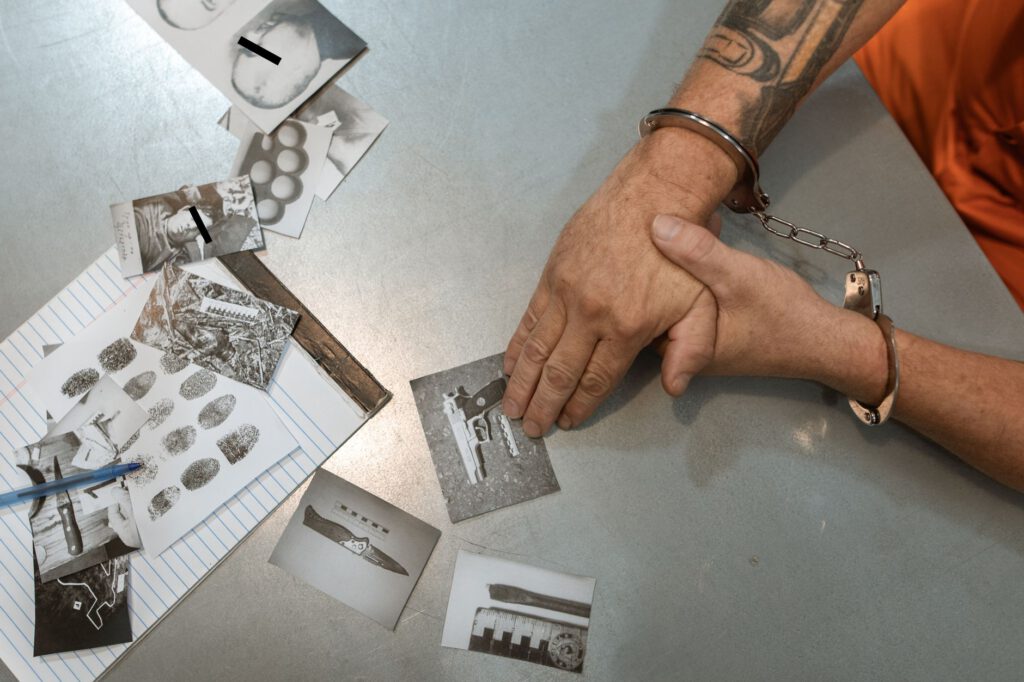

Physical and digital evidence is the basis on which facts are known, and justice is met in all criminal investigations. Fingerprints, blood samples, guns, drugs, cell phones, hard disks, clothes, and biological evidence can all be crucial pieces of information that connect a suspect, victim, or crime scene. Evidence, however, is not enough for it to be accepted in court unless it is scientifically valuable. The case also has to be proven before the court using the same evidence gathered at the crime scene and which has not been altered since it was collected. That assurance is given by the “chain of custody,” a procedure that traces every step of the evidence, from its collection to its transportation, to the laboratory, to its storage, to its appearance before the court.
A chain of custody protects the reliability, authenticity and integrity of forensic evidence. Inaccuracies in the documentation or handling of evidence, even though the analysis is scientifically correct, can raise doubts about the accuracy of the analysis. The loss of evidence, failure to have evidence seals, access by unauthorized persons, contamination and unexplained gaps in evidence possession can affect the evidence’s worth and, in extreme situations, exclude evidence from court. Hence, keeping the proper chain of custody is not only an administrative need but also a crucial legal protection to preserve the credibility of forensic investigations.
Chain of Custody: What Is It?
Chain of custody refers to a chronological record of possession of evidence, which includes the following: who collected the evidence, who possessed the evidence, who transferred the evidence, how the evidence was examined, how it was stored, and how it was ultimately disposed of. It creates a history identifying each person who touched the evidence, when and how often they touched it, why they touched it, and how the evidence looked after being touched each time. This documented history can be used to prove that evidence presented at trial is genuine, not altered or substituted, and has been under the control of authorized personnel during the investigation.
The main goal of the chain of custody is to ensure the integrity of the evidence. All transfers of custody should be recorded with the individual’s names, date, time, and case specifics. Biological, physical, chemical and digital evidence can all be preserved and kept in continuous evidence, avoiding allegations of tampering, contamination and fabrication of evidence and enhancing the credibility of forensic evidence.
The chain of custody consists of three key components.
- Evidence Collection
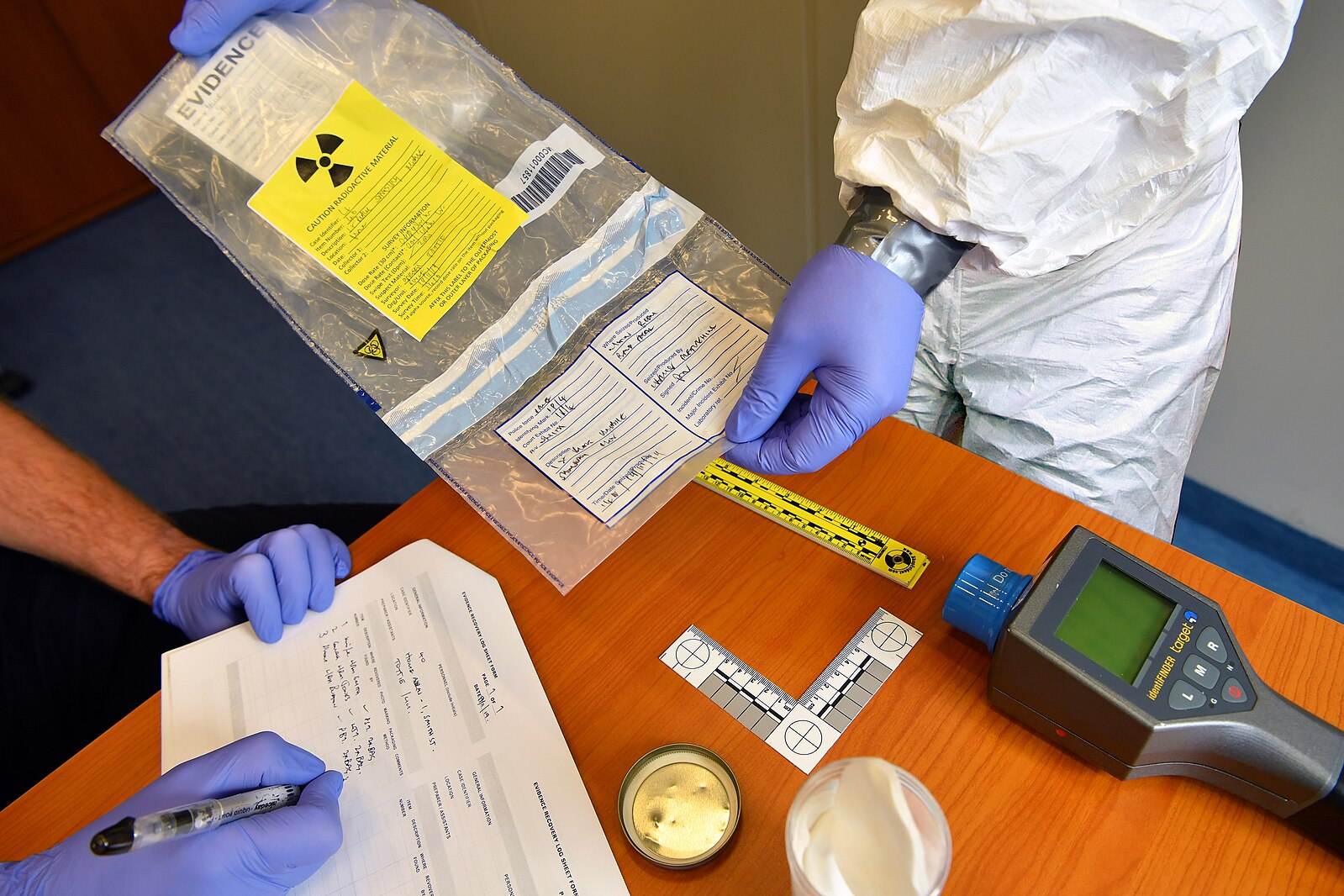
From the origin of the crime scene to the discovery and collection of evidence, the chain of custody starts. The investigators will be required to wear the proper personal protective equipment and utilize sterile collection techniques, as well as photograph the evidence prior to recovery and accurately record the location. Every item is given a unique identification number, and once identified, is immediately put into appropriate packages to prevent contamination or deterioration.
- Documentation
Chain of custody relies on proper documentation. Therefore, an evidence package should have the case number, exhibit number, description of evidence, evidence recovery site, date and time of collection, collector’s name and signature, and the information about all persons who received the evidence from him/her. In addition, poor and/or faulty documentation leads to questions concerning the authenticity of evidence.
- Preservation and Packaging
Packaging should be designed to preserve the evidence, depending on the type of evidence. When needed, biological specimens are contained in paper boxes that are breathable, sharp objects are kept in place to avoid injuries, guns are made safe before they’re put in, and electronics are shielded from electromagnetic interference. All evidence packages are provided with tamper-evident seals so that any alteration in the package will be readily discovered.
- Evidence Transfer
Evidence often passes through the hands of officers, forensic laboratories, evidence custodians, prosecutors and courts. All transfers must be recorded with names of both transferring and receiving parties, date, time, purpose of transfer and receipt signatures. This is a way of keeping the possession of the ball uninterrupted without any possession that is not documented.
- Storage
Evidence is collected and/or examined in the laboratory and then retained in secure evidence rooms with limited access.
Why does evidence get thrown out?
- Improper Evidence Collection
Evidence gathered with bad techniques can be tainted, damaged, or the evidence could become mixed with other evidence. Without gloves, use of inappropriate containers, or combining multiple samples can affect the ability to conduct forensic analysis and the reliability of evidence.
- Documentation that is missing or incomplete.
Evidence must be properly documented to prove its journey from collection to presentation in court. The lack of signatures, wrong dates, missing evidence logs, or missing transfers of evidence also leave room for doubt about who had the evidence at various points in time, which undermines its admissibility.
- Evidence seals are required and must not be broken or tampered with.
Tamper-evident seals give evidence that it has not been tampered with. When a seal is not opened in the proper manner for the evidence, for instance, without exception or proper documentation, the defence can argue that the evidence is tainted and that the seal was broken in an unscrupulous manner in order to make a false impression.
- Unauthorized Handling
Unmarked and unassigned evidence is a concern for possible tampering. All persons who have come into contact with evidence should be officially recorded for transparency and accountability.
- Contamination
Biological and trace evidence is especially susceptible to contamination. Poor handling or contaminated collection implements, as well as poor laboratory practices, can lead to false forensic results when DNA is passed on. Likewise, digital evidence could be corrupted as a result of improper handling of the original devices.
- Improper Storage
The quality of evidence is greatly impacted by improper storage conditions. Biological materials can be compromised from inadequate temperature and humidity, chemicals can degrade, and electronic device data can be corrupted. This can diminish the evidentiary value of forensic testing and compromise reliability concerns.
Chain of Custody -Legal Significance
Forensic evidence must be scientifically examined, but the fact that it has not been compromised in any way during the investigation must also be proved in court. Courts require investigators to develop a chain of custody to ensure that the evidence offered to the court is the same evidence collected. Any unexplained custody gaps may cast shade on the evidence’s authenticity/reliability.
The Bharatiya Sakshya Adhiniyam, 2023 presumes that the authenticity, integrity and relevance of evidence is pivotal to the adjudication of a case. The maintenance of the chain of custody becomes paramount as it is increasingly important for electronic evidence, where it can serve to document its acquisition, preservation, transfer and integrity verification to establish that the electronic evidence has not been tampered with during the course of investigation. A well-documented chain of custody is thus an effective way to bolster the credibility of the forensic conclusions and increase the evidentiary weight of physical and digital evidence.
| Legal provision | Relevance to chain of custody | Legal importance |
|---|---|---|
| Indian Evidence Act, 1872/ Bharatiya Sakshya Adhiniyam, 2023 | General law of evidence governing relevance, proof, and admissibility | Chain of custody is used to prove that the evidence produced in court is the same as the evidence seized and that it remained untampered. |
| Section 45 IEA Replaced as Section 39 (BSA) | Expert opinion | Forensic reports are valuable only if the sample tested is proved to be the same sample collected from the scene. |
| Sections 61-65 Replaced as sec- 56, 57,58 (BSA). | Proof of documents and secondary evidence | Seizure memos, labels, forwarding letters, registers, and laboratory papers help establish the continuity and authenticity of evidence. |
| Sections 101-103 IEA replaced as sec- 104 (BSA), sec- 105 (BSA) & sec-106 (BSA). | Burden of proof | The prosecution must prove the integrity and continuity of custody; if it fails, doubt goes to the accused. |
| Section 136 IEA Replaced as sec- 141 (BSA). | Judge decides admissibility of evidence. | The court may insist on proof of foundational facts before admitting evidence, including proof of proper custody. |
| Section 65B IEA Updated as 63(BNS) | Electronic records | Very important for CCTV, mobile data, chats, call logs, and other digital evidence; it helps prove authenticity and integrity. |
| NDPS Act, 1985 -Section 52A | Inventory, photographs, and certification of seized narcotic substances | Helps preserve identity of seized contraband and reduces disputes about tampering. |
| NDPS Act, 1985 – Section 55 | Safe custody of seized articles by police | Requires proper sealing and safe keeping of seized narcotic substances. |
| NDPS Act, 1985 – Section 57 | Report of arrest and seizure within 48 hours | Ensures prompt official record and strengthens the custody trail. |
Best Practices for Chain of Custody
The chain of custody must be followed and adhere to standardized procedures for effective handling. All evidence should be accurately labelled and packaged in a tamper-evident way; all evidence transfers should be documented in real time; evidence should be stored securely and only transferred to authorized persons. Digital evidence should be stored by using forensic imaging, cryptographic hash values and reliable forensic software. Other methods that can help reduce mistakes and increase transparency and responsibility are training, quality control programs, computer evidence management systems, and audits.
Conclusion
Chain of custody is one of the most significant concepts in the field of forensic sciences, as it ensures the integrity of collected evidence throughout the entire criminal investigation. In other words, the chain of custody implies that evidence is presented in court exactly as it was originally collected. Therefore, no matter how advanced forensic technologies are, without proper maintenance and control, evidence may become useless in court due to a broken chain of custody. If the documentation is incomplete, contaminated, improperly handled by another individual, missing seals, or improperly stored, it can create reasonable doubt and lead to the loss of critical evidence at trial. It is therefore paramount that forensic investigations are properly documented, securely kept, well standardised and that there is ongoing control and accountability to ensure that public confidence in forensic investigations is maintained and that forensic evidence is used to best effect in the administration of justice.
Where the legal industry reads first.
Enjoyed this article? Get the biggest legal industry updates, deals, appointments, insights and expert interviews in your inbox, free.
No spam. Unsubscribe anytime.From Legal Desire
Is your firm the one being cited, or the one being skipped?
We ran the test. On several everyday legal questions, software companies are answering and law firms are not. We help firms fix that, and we build the technology behind the practice.
Lawyers and firms: get featured on Legal Desire
Share your deals, lateral moves, firm news and insights with 1M+ monthly readers: founders, law firm partners, general counsel and practising lawyers across the US, UK, EU and GCC.
Get featuredSubmit a press release