

The forensic DNA phenotyping (FDP) technique is an investigative method using information from biological trace to infer externally visible characteristics and biogeographic and chronological age, even in the absence of a match in the reference sample or a database. In this review, we have compiled and collated the work in the last few years of seven selected open access papers on pigmentation prediction together with work in the related field of epigenetic age estimation, to provide a coherent overview of the current state of the field.
The pigmentation prediction and the HIrisPlex-S system.
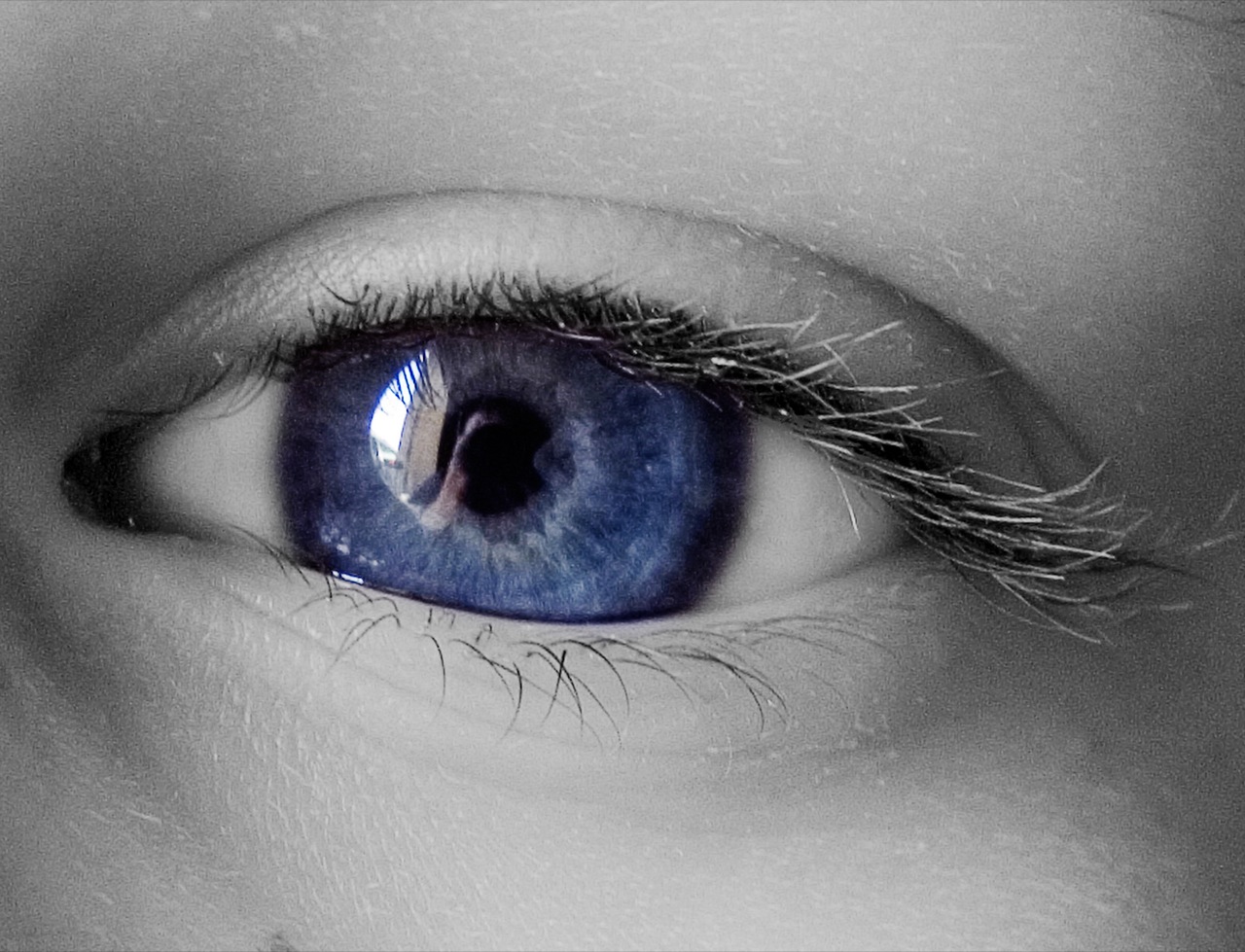
The most developed area of FDP is that of pigmentation traits, where eye, hair and skin colour are well established as highly heritable traits and have been shown to be controlled by a relatively well understood set of genes. It is generally accepted that the HIrisPlex-S system (41 autosomal markers) is the first forensically validated system able to predict all three of the traits simultaneously from degraded or low quantity DNA.
It has been tested in actual casework with very decomposed human remains. A study has been performed that compared the predictions made using DNA with the available photographs of deceased people, and showed that at a probability threshold of 0.7, the prediction accuracy rate for iris, hair, and skin colour was above 90% overall. In particular, the researchers said that the only ambiguous cases in that sample were people with medium eye and hair colour, so the system requires further work in this category in particular. This fact, that extreme phenotypes reliably predict, but intermediate ones do not, is repeated in the literature in general and is one of the core open problems in the field.
Addressing the intermediate Phenotype problem.
Due to being the weak spot for common SNPs, a slew of studies has turned their eyes directly at intermediate pigmentation, such as green and hazel eye colour, which has been a target of machine learning. One recent study added an expanded SNP panel to the existing one and developed a final 37-SNP predictive signature that was specifically developed for classification of three categories of eye colour, called Geno Eye, a machine learning framework that is interpretable. This model had excellent performance for blue and brown eye colour with area-under-the-curve (AUC) values of up to 0.97; it significantly improved the classification of intermediate phenotypes, with an AUC of 0.79, an area where existing tools such as HIrisPlex-S have historically performed poorly. Importantly, the developers have engineered interpretability into the tool itself: the model is accompanied by a web application which includes the model’s predictions and a clear explanation of which genetic variants were responsible for making the prediction, designed to help the eventual acceptance of the tool by forensic investigators and other courts.
This type of work falls under a larger body of work that can be categorised as machine learning in FDP. That review identified machine learning methods which demonstrate a significant improvement over previous statistical models, with AUC values exceeding 0.9 for the prediction of eye colour in degraded and/or minimal DNA conditions, and up to 15% more SNPs recovered using imputation-based methods. The review was also honest about the weaknesses of FDP, stating that although the HIrisPlex-S and related panels of eye and hair colour are well-developed and well-validated tools, prediction of skin colour is at a moderate level of accuracy, and the prediction of age and facial morphology from genetic markers is described as an “emerging” capability rather than a fully-developed one.
The same imputation-based reasoning has been applied to ancient DNA, particularly to the analysis of highly degraded ancient DNA, which is now very similar to forensic DNA. One research group devised a method where they can predict eye, hair, and skin colour from low-coverage ancient DNA samples, claiming that a lot of the HIrisPlex-S markers are common alleles with a high minor allele frequency, meaning that the imputation errors don’t significantly affect the final phenotypic call. They have been validated with high coverage sequence data from both modern and ancient remains, demonstrating the potential for this approach even in the case where only part of a genome is recovered. The imputation principle is directly applicable to situations where skeletal or trace material has been degraded, such as a forensic case, but the method was designed for archaeological contexts.
DNA Methylation for Age Estimation.
Forensic age estimation is based on epigenetics, namely DNA methylation, which is a chemical modification of the DNA with clock-like changes across the human lifespan, but which do not affect the DNA sequence itself. In this literature, age estimation is considered an integral part of FDP in addition to appearance and ancestry prediction.
One review followed the conceptual evolution of the “epigenetic clocks,” algorithms that use methylation states at a handful of CpG sites to estimate age. It explained that first-generation clocks were developed to directly estimate chronological age with high accuracy using single-step regression, whereas second-generation clocks were developed later to predict other biological measures like functional decline and diseases, not just chronological age. The first-generation, chronological approach continues to be more useful for forensic purposes because the reasons for investigation are to reduce the number of unknowns rather than for long-term health evaluation.
A targeted examination of DNA methylation as a forensic age estimation marker revealed that ELOVL2 is the gene with the highest number of studies conducted in this context, and is one of the strongest markers available. That review also checked the breadth of the laboratory techniques for measuring methylation, and bisulfite sequencing was one of the oldest and most widely available, and was still one of the easiest techniques to perform in a typical forensic lab even as newer, more high throughput approaches have become available. The authors also noted that few methylation-based age estimates are available in other forensically relevant tissues in comparison to blood, which means this is a significant area of interest for future studies.
This gap-oriented view was corroborated and significantly extended by a systematic review on biochemical, genetic and epigenetic chronological ageing methods over a 15-year time span. During that review, it was made clear that there is a difference between chronological age (the actual number of years since birth) and biological age (the actual condition of the body’s physiology and cells), with the latter being more relevant to forensic applications. When considering all the methods tested, such as the use of aspartic acid racemization and other biochemical markers of degradation, the authors found that DNA methylation at CpG sites is now the most widely studied and promising epigenetic marker for forensic chronological age prediction. Importantly however they also noted a significant institutional gap, as at present there is no generally accepted guidelines for quality assurance in human chronological age prediction which they claim is required to take the proper steps to address the legal, ethical and social questions that age estimation raises in forensic medicine.
Conclusion
Forensic DNA phenotyping has progressed from a theoretical possibility to a growing collection of partially validated, but nonetheless useful investigative tools. Pigmentation prediction is getting closer to reliable performance for common phenotypes, and is making good progress for intermediate phenotypes, but age estimation based on methylation is scientifically promising and awaits the standardisation which pigmentation prediction has already attained. Continued development of the formal quality-assurance guidelines for epigenetic age prediction, wider population reference datasets, and further incorporation of machine learning for low template samples will likely be important for future progress.
References
- Castagnola, M. J., Medina-Paz, F., & Zapico, S. C. (2024). Uncovering forensic evidence: A path to age estimation through DNA methylation. International Journal of Molecular Sciences, 25(9), 4917. https://doi.org/10.3390/ijms25094917
Open access: https://pmc.ncbi.nlm.nih.gov/articles/PMC11084977/ - Dalfovo, M., Faccinetto, C., & Romanel, A. (2026). GenoEye: A machine learning-based framework for the prediction of intermediate eye color phenotypes. Journal of Forensic Sciences, 71(5), 2145–2156. https://doi.org/10.1111/1556-4029.70403
Open access: https://pmc.ncbi.nlm.nih.gov/articles/PMC13534952/ - Fabbri, M., Alfieri, L., Mazdai, L., Frisoni, P., Gaudio, R. M., & Neri, M. (2023). Application of forensic DNA phenotyping for prediction of eye, hair and skin colour in highly decomposed bodies. Healthcare, 11(5), 647. https://doi.org/10.3390/healthcare11050647
Open access: https://www.ncbi.nlm.nih.gov/pmc/articles/PMC10000573/ - Liang, R., Tang, Q., Chen, J., & Zhu, L. (2025). Epigenetic clocks: Beyond biological age, using the past to predict the present and future. Aging and Disease, 16(6), 3520–3545. https://doi.org/10.14336/AD.2024.1495
Open access: https://pmc.ncbi.nlm.nih.gov/articles/PMC12539533/ - Marcante, B., Marino, L., Cattaneo, N. E., Delicati, A., Tozzo, P., & Caenazzo, L. (2025). Advancing forensic human chronological age estimation: Biochemical, genetic, and epigenetic approaches from the last 15 years: A systematic review. International Journal of Molecular Sciences, 26(7), 3158. https://doi.org/10.3390/ijms26073158
Open access: https://www.ncbi.nlm.nih.gov/pmc/articles/PMC11988829/ - Maróti, Z., Nyerki, E., Török, T., Varga, G. I., & Kalmár, T. (2026). Robust imputation-based method for eye, hair, and skin colour prediction from low-coverage ancient DNA. Scientific Reports. https://doi.org/10.1038/s41598-026-38372-3
Open access: https://www.ncbi.nlm.nih.gov/pmc/articles/PMC12923854/ - Sessa, F., Dervišević, E., Esposito, M., Francaviglia, M., Chisari, M., Pomara, C., & Salerno, M. (2026). Predicting physical appearance from low template: State of the art and future perspectives. Genes, 17(1), 59. https://doi.org/10.3390/genes17010059
Open access: https://www.ncbi.nlm.nih.gov/pmc/articles/PMC12841266/
Where the legal industry reads first.
Enjoyed this article? Get the biggest legal industry updates, deals, appointments, insights and expert interviews in your inbox, free.
No spam. Unsubscribe anytime.From Legal Desire
Is your firm the one being cited, or the one being skipped?
We ran the test. On several everyday legal questions, software companies are answering and law firms are not. We help firms fix that, and we build the technology behind the practice.
Lawyers and firms: get featured on Legal Desire
Share your deals, lateral moves, firm news and insights with 1M+ monthly readers: founders, law firm partners, general counsel and practising lawyers across the US, UK, EU and GCC.
Get featuredSubmit a press release