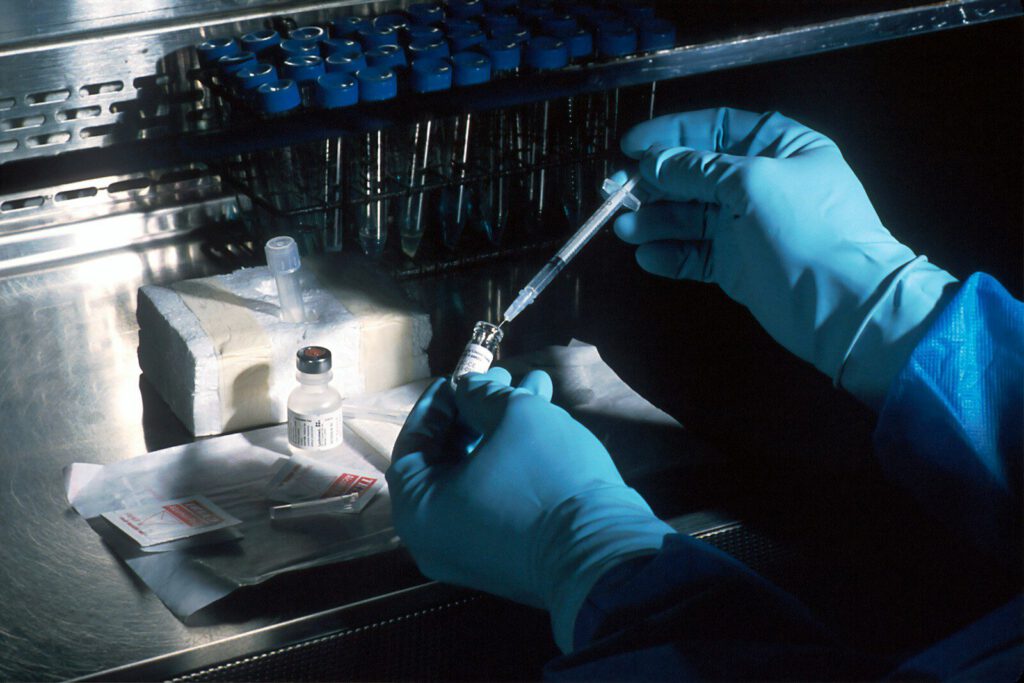
Poison has long been called the weapon of the patient and the cunning. A gunshot leaves a wound, and a stabbing leaves a blade mark, but poison can leave a body that looks entirely natural. A victim may simply appear to have fallen, become weak and die. Because of this, many poisonings once went unnoticed. Some probably still do. Modern forensic science solves this problem through toxicology, a field that brings together analytical chemistry, pharmacology and pathology. The main questions are simple to state and hard to answer: was poison present, what type of poison was it, and how much poison was there? Did poison actually cause the death?
A Crime Without a Wound
Poisoners depend on confusion. Many harmful chemicals create symptoms that look like illnesses. Arsenic leads to vomiting, belly pain and loose stools—symptoms that seem like stomach flu. Cyanide can make a person appear to have a heart attack. Back in the 1800s, arsenic was simple to buy and nearly impossible to catch. That’s why it got the name “inheritance powder.” Stories like Mary Ann Cotton’s in Britain show how long a poisoner could keep going before anyone started to suspect. She was eventually convicted of killing family members with arsenic.
Then in 1836, a big change happened. The chemist James Marsh invented a test that could find tiny traces of arsenic. A Spanish-born scientist named Mathieu Orfila, often called the father of toxicology, used this test in a famous trial in 1840. That was the case of Marie Lafarge in France. Her trial proved that chemical proof could be trusted in court. It was a turning point. That moment marked the start of toxicology as a science in legal cases.
The Dose Makes the Poison
The guiding principle of toxicology comes from a sixteenth-century physician named Paracelsus. He said that everything can be a poison, and the only difference between a poison and a remedy is the amount. A forensic toxicologist has to do more than just find out what substance is present. Oxygen, water and everyday medicines can hurt or even kill if taken in the wrong amount. The danger depends on the dose, how the person was exposed, their age, body weight, health, tolerance and whether other substances were in their system.
That is why toxicologists study something called toxicokinetics. This looks at how a substance enters the body, moves around in the body, gets broken down and leaves the body. A drug found in the blood shows that exposure happened. The level of the drug when it was taken and the types of breakdown products present help determine if the amount was safe, accidental or deadly.
From Scene to Laboratory
A toxicological investigation starts earlier than the lab. At the scene, investigators look for bottles, containers, leftover food and drinks, signs of vomiting, syringes and any strange smells. They also pay attention to the person’s medical history and the order in which symptoms appeared. This information helps narrow down which poisons might be involved. Every piece of evidence collected must be sealed carefully, clearly labelled, and tracked through a documented chain of custody. This ensures that the evidence stays reliable and can’t be challenged in court.
During the autopsy, the pathologist gathers types of biological samples. Blood is an important sample, especially if it comes from a peripheral site like the femoral vein because it’s best for measuring poison levels. Urine often has amounts of drugs and their breakdown product,s making it useful for initial screening. The liver, where many toxins are processed, is saved for analysis. The stomach contents are also preserved, as they may still hold substances. The vitreous humour, the fluid inside the eye, is especially useful because it resists decomposition and gives results. Hair and nails are also collected, since they can show long-term exposure. Some poisons get trapped in them as they grow.
Detecting the Undetectable
The laboratory work usually splits into two stages: screening and confirmation. Screening is meant to cut down the list of suspects as fast as possible. Simple tests like immunoassays or colour reactions such as the Reinsch test for metals or the Prussian blue test for cyanide can point to a general class of chemicals. Thin‑layer chromatography is another tool for quick screening. These tests are rapid. They can give false alarms and should never be treated as the final word. Confirmation on the hand requires methods that can identify a poison with certainty. Before an analysis, the poison must normally be separated from the messy biological background. Classic tricks such as the Stas‑Otto method for alkaloids and modern tricks like liquid‑liquid and solid‑phase extraction pull the poison out of proteins, fats and other dirt. After that, gas chromatography‑mass spectrometry (GC‑MS) and liquid-liquid chromatography‑tandem mass spectrometry (LC‑MS/MS) separate the pieces and break each molecule into a clear fingerprint of fragments. For metals like arsenic, lead and thallium, inductively coupled plasma mass spectrometry (ICP‑MS) can measure levels at parts‑per‑billion. High‑resolution mass spectrometry now lets a lab look for unknown poisons without having to decide in advance what to look for.
The Classic Poisons
Arsenic is the famous classic poison. It stops cells from making energy. It sticks tightly to sulfhydryl groups in proteins. That is also why it builds up in hair and nails. By cutting a hair strand into pieces, a timeline of exposure can be seen. It shows whether a victim got one dose or many doses over months.
Cyanide works in minutes by blocking cytochrome c oxidase, the enzyme that lets cells use oxygen. The body then gets flooded with oxygen it cannot use. The tissues suffocate. Investigators sometimes note an almond smell, although not everyone can smell it and a bright cherry‑red colour in the blood and lividity.
Strychnine, in contrast, blocks glycine receptors in the spinal cord. It causes convulsions and a fixed grimacing facial spasm called risus sardonicus.
Thallium, a tasteless heavy metal made famous by Agatha Christie’s novel *The Pale Horse*, makes people suffer painful neuropathy and lose hair after a few weeks of exposure.
In India, organophosphate and carbamate pesticides, as well as aluminium phosphide, are among the most frequently encountered poisons in forensic practice. Organophosphates inhibit the enzyme acetylcholinesterase, causing an overload of acetylcholine that produces excessive salivation, sweating, pinpoint pupils, muscle twitching and respiratory failure. Because these agricultural chemicals are so widely available, their detection forms a major part of routine toxicological work.
The Modern Invisible Poisons
In India, organophosphate pesticides and carbamate pesticides, plus aluminium phosphide, are among the common poisons that forensic experts see. Organophosphate poisons block the enzyme acetylcholinesterase. This blockage causes much acetylcholine, which makes a person drool a lot, sweat, have very small pupils, twitch muscles and struggle to breathe. Because these agricultural chemicals are so common, finding them is a part of normal toxicology work.
The Modern Invisible Poisons
Some of the cases involve substances that the body makes itself or that look like medical treatments. Insulin can cause low blood sugar that can be fatal in a person who is not diabetic. Because insulin is a hormone, proving that it was injected needs a measurement of the ratio of insulin to C‑peptide. C‑peptide is released when the body makes its own insulin. This measurement is done with mass spectrometry techniques. Succinylcholine, a muscle relaxant used during anaesthesia, breaks down fast after death. Therefore, the toxicologist often has to look for its metabolites. Potassium chloride can stop the heart. Yet potassium is a part of the body, so interpreting its effect is especially difficult.
Carbon monoxide, a gas, is measured as carboxyhaemoglobin in the blood using CO‑oximetry. In the end, the 2006 death of Alexander Litvinenko demonstrated that even a radioactive isotope, polonium‑210, could be used as a poison. Its alpha radiation does not penetrate the skin or ordinary detectors easily. It was identified only after investigators suspected radiation and applied specialised alpha spectrometry. The case reminded the community that the most dangerous poisons are often the ones nobody thinks to test for.
The Challenges of Postmortem Toxicology
Understanding the findings from a body is much more complex than checking a live patient. After a person has died, medication can shift from organs such as the liver, lungs and heart into the surrounding blood. This shifting is called postmortem redistribution. Postmortem redistribution can make the levels of medication in the blood look higher than they were when the person died. Decomposition adds trouble. Bacteria can create ethanol and other substances. These substances can make it seem as though the person drank alcohol even if they did not. Some poisons also break down over time.
Exhumation cases add another layer of complexity. Arsenic is one example. Arsenic is very stable. Arsenic can stay in tissues and hair for years. The investigator must also take samples of soil and the coffin. The investigator must prove that the Arsenic did not come from the soil around the body. For every test, controls and proven methods are necessary. A careful sceptical approach is always required. The dead body remains a puzzle.
Interpretation and the Courtroom
A toxicology report by itself is never a decision. A substance that is found could have been taken as medicine, could have been consumed by accident or could have been added after death through contamination. The forensic toxicologist therefore needs to combine the lab results with the autopsy, the tissue analysis, the evidence from the scene, the medical history and what people say. The expert’s job in court is to explain this information truthfully, including what the evidence cannot prove. In India, cases involving poisoning are handled under the Bharatiya Nyaya Sanhita. This law includes rules about causing harm with poison on purpose and about murder. Forensic laboratories provide the support that these charges depend on.
The Future of Poison Detection
The area is moving fast. Ambient ionisation methods let samples be checked with little work, and small mass spectrometers are expected to give quick answers right where the action is. Metabolomics can find changes in chemistry from a poison even if the poison is not there anymore. Micro-segmented hair analysis gives more detailed records of exposure, and artificial intelligence is starting to help understand complicated data and point out strange signs. All these tools are making it harder for someone who wants to poison others to stay hidden.
Conclusion
Poisoning is a crime that hides. Chemistry rarely keeps truth hidden forever. From the Marsh test in the century, to modern mass spectrometry, forensic science has steadily improved its ability to reveal what a body conceals. Every sample, every chromatogram and every documented result helps answer a single question: what really happened. The invisible poison may leave no wound. The invisible poison leaves a molecular trace, and the forensic toxicologist’s task is to find the invisible poison, prove the invisible poison and explain the invisible poison.
Where the legal industry reads first.
Enjoyed this article? Get the biggest legal industry updates, deals, appointments, insights and expert interviews in your inbox, free.
No spam. Unsubscribe anytime.From Legal Desire
Is your firm the one being cited, or the one being skipped?
We ran the test. On several everyday legal questions, software companies are answering and law firms are not. We help firms fix that, and we build the technology behind the practice.
Lawyers and firms: get featured on Legal Desire
Share your deals, lateral moves, firm news and insights with 1M+ monthly readers: founders, law firm partners, general counsel and practising lawyers across the US, UK, EU and GCC.
Get featuredSubmit a press release