

The instinct to cooperate with law enforcement when they ask questions feels almost universal. Most people believe that if they have nothing to hide, talking to the police is harmless and helpful. However, experienced Stuart personal injury attorneys and criminal defense lawyers across Florida know that this belief is one of the most consistently dangerous assumptions a person can make in a legal context, however understandable it may be. The right to remain silent is a constitutional right precisely because voluntary cooperation with law enforcement without legal counsel present produces harmful outcomes for innocent and guilty people alike far more often than most people realize.
Key Takeaways
- The Fifth Amendment to the United States Constitution guarantees the right to remain silent and the right against self-incrimination to every person. This right applies in every state, including Florida, and in every encounter with law enforcement, regardless of whether the individual is a suspect, a witness, or has been asked to answer a few questions.
- The Sixth Amendment guarantees the right to counsel. In Florida, once a person in custody invokes their right to an attorney, questioning must stop under the Supreme Court’s Miranda v. Arizona ruling (384 U.S. 436 [1966]).
- Both Florida and federal courts have consistently held that statements made voluntarily to law enforcement are admissible in criminal proceedings, even if the person was not under arrest or read their Miranda rights. There is no requirement to give Miranda warnings outside of custodial interrogation.
- According to research published by the Innocence Project, approximately 29% of wrongful convictions later overturned by DNA evidence involved false confessions or incriminating statements made to law enforcement. These were people with nothing to hide who said the wrong things under pressure.
- The right to counsel also applies in civil proceedings, including personal injury claims and insurance investigations. In these cases, statements made to opposing parties, adjusters, or investigators can be used to reduce or eliminate compensation.
- In Florida and under federal law, invoking the right to remain silent and requesting an attorney is not evidence of guilt, and no adverse inference may be drawn from a person’s exercise of these constitutional rights in a criminal proceeding.
The Constitutional Foundation
The Fifth and Sixth Amendments to the United States Constitution establish the legal framework that solidifies the principle of not speaking to law enforcement without counsel as one of the most well-supported in American jurisprudence.
The Fifth Amendment states that no person shall be compelled to be a witness against themselves in any criminal case. This protection applies not only when someone is formally charged with a crime. It applies to any statement that could be used or lead to evidence that could be used in a criminal prosecution. The breadth of this protection is intentional.
In 1966, the Supreme Court ruled in Miranda v. Arizona that law enforcement must inform suspects of their right to remain silent and their right to an attorney. Suspects are also informed that anything they say can and will be used against them in court. However, what most people do not fully understand is the critical limitation of these requirements.
Miranda warnings are required only during custodial interrogation. They are not required when police ask questions at the scene of an accident. They are not required when investigators contact someone as a witness. Nor are they required when an officer asks routine questions during a traffic stop. Statements made in any of these contexts are admissible without Miranda warnings having been given.
This is the gap that catches people off guard. The absence of Miranda warnings does not mean the absence of legal consequences.
Why Talking Seems Safe But Is Not
While it is psychologically understandable that innocent people believe they have nothing to fear from talking to law enforcement, this belief is legally incorrect. Several mechanisms explain why.
First, memory is reconstructive, not recording.
Human memory is reconstructive, meaning that every time a memory is recalled, it is rebuilt from available information and subject to influence from the recall context. A person interviewed by law enforcement immediately after a stressful event is not operating with reliable recall. Details get compressed, sequenced differently, or filled in unconsciously.
When these imperfectly recalled details are recorded in a statement, even an informal verbal one, they become a fixed record that can be compared to physical evidence, surveillance footage, and the statements of other witnesses. Any inconsistency between the initial statement and subsequent evidence can be used to undermine credibility, regardless of whether the inconsistency reflects anything other than the normal limitations of human memory under stress.
Officers Are Trained Interrogators
Law enforcement officers, particularly detectives and investigators, receive specific training in interrogation techniques. One widely used technique in American law enforcement is the Reid Technique, which is designed to produce admissions and confessions through structured conversational approaches that most people are not trained to recognize or resist.
According to research by the American Psychological Association, certain interrogation techniques can produce false confessions, even from highly resistant individuals, under prolonged questioning. Therefore, a person sitting across from a trained investigator in a Martin County interview room who is trying to cooperate and explain a complicated situation is at a structural disadvantage that no amount of good faith can overcome.
The Innocent Explanation That Is Not
Consider the following common scenario on Kanner Highway or US-1 near Stuart: A driver is involved in a crash. Officers arrive and begin asking questions. Wanting to be helpful and believing that honesty will resolve the situation quickly, the driver provides a detailed account of what happened. They mention that they had been driving for several hours. They admit to reaching for their phone when the other driver merged unexpectedly.
This acknowledgment, though accurate and offered in good faith, provides evidence of distracted driving. Under Florida’s modified comparative fault system, which took effect in March 2023 under Florida Statute Section 768.81, a finding of more than fifty percent fault eliminates recovery entirely. One voluntary statement made to quickly resolve a situation can transform a significant personal injury claim into a zero-dollar outcome.
The Civil Context: Why This Applies Beyond Criminal Law
The idea of not providing detailed statements without legal counsel applies not only to criminal investigations. It is also important in civil matters, including personal injury claims following a car accident.
For instance, insurance adjusters who contact you after a car accident in Stuart are not neutral investigators. They work for the insurance company, and their goal is often to minimize the company’s payout. They may ask you how the crash happened, how you felt afterward, and whether you think you were injured.
The problem is that many of these conversations take place before an injured person has seen a doctor, understands the full extent of their injuries, or has spoken with an attorney. Even seemingly innocent comments, such as “I’m fine,” or guesses about what caused the accident, can later be used to challenge the claim or reduce compensation.
While a conversation with an insurance adjuster is not the same as a police interview, the underlying principle is similar, particularly when considering how Florida insurance laws affect personal injury settlements and the way insurers evaluate claims. In both situations, a trained professional is asking questions, and your answers may be used in a way that does not serve your interests. This is why it’s important to understand your rights and seek legal guidance before providing detailed statements.
What Invoking Your Rights Actually Looks Like
Most people are concerned that invoking their right to remain silent will make them appear suspicious or uncooperative. Both Florida and federal law address this directly.
During a criminal proceeding, a jury cannot draw an adverse inference from a defendant’s invocation of their Fifth Amendment right to remain silent. The jury cannot be informed that the defendant refused to speak with the police, nor can they be told to draw a negative conclusion from that refusal.
The invocation process is straightforward. In a law enforcement context, the appropriate response is: “I would like to speak with an attorney before answering any questions.” This statement is clear, unambiguous, and legally effective. It does not require explanation or elaboration. Adding explanations, context, or reassurances to this statement reduces its legal effectiveness and provides the information that the invocation was intended to prevent.
In a civil insurance context, the practical equivalent is: “Please direct all questions to my attorney.” Providing an attorney’s contact information and declining to discuss claim details before legal consultation is both legally appropriate and strategically sound. A Stuart personal injury lawyer can be especially helpful in these matters.
The Specific Risks for Business Owners and Professionals
For business owners, entrepreneurs, and professionals in Martin County and the Treasure Coast, unguarded statements made to law enforcement or opposing investigators can have consequences that extend beyond personal legal exposure and affect the business interests they have spent years building.
Statements made by business owners to investigators regarding premises liability claims, business disputes, or regulatory inquiries can be used against not only the individual, but also the business entity itself, its insurance coverage, and its professional licenses. In these contexts, the protection of legal counsel is not a defensive luxury. Rather, it is a business risk management decision.
In Florida, professional licensing boards treat law enforcement cooperation with their investigations differently than courts treat criminal interrogations. A Stuart personal injury attorney can help navigate these distinctions and ensure that, where appropriate, cooperation is structured in a way that protects both the individual and their professional standing.
Frequently Asked Questions
Am I required by law to answer police questions in Florida?
Generally, you are required to identify yourself to law enforcement under Florida Statute Section 856.021 if you are stopped based on reasonable suspicion of criminal activity. Beyond identification, however, you have the right to remain silent. Providing your name and identification is legally required in appropriate circumstances. However, answering substantive questions about events, your location, your activities, or your knowledge of a situation is not required.
What if I am a witness rather than a suspect?
The distinction between a witness and a suspect is often less clear to investigators than it appears to the person being questioned. Witnesses can become suspects as an investigation progresses, and statements made as a witness are admissible in subsequent proceedings. The right to counsel applies regardless of how the questioning is framed.
Does invoking my right to counsel make the situation worse?
No, because invoking the right to counsel is a legally protected act. Law enforcement cannot legally penalize you for exercising a constitutional right, nor can they draw an adverse inference from the invocation in a criminal proceeding. As a practical matter, invoking the right to counsel also immediately stops questioning and buys time for legal counsel to assess the situation before any statement is made.
This article is intended for general informational and educational purposes only and does not constitute legal advice. Florida law may vary based on individual circumstances and the specific facts of each case. Readers should consult qualified Stuart personal injury lawyers or criminal defense counsel for advice specific to their situation.
Author: Attorney Guy Rubin
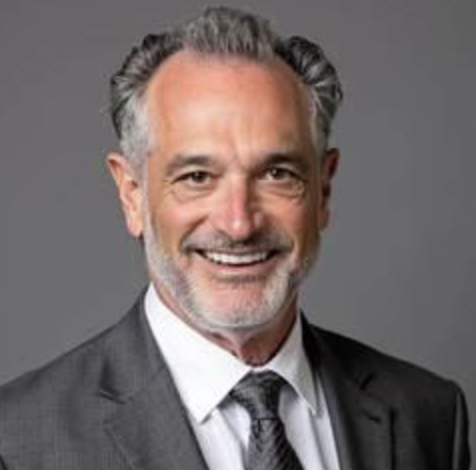
Guy has been a trial lawyer since 1987, handling hundreds of cases through trial at the highest levels in our legal system in the state and federal courts. He has achieved numerous 7 and 8-figure settlements and verdicts during his career.
Website: https://www.therubinfirm.com/
Email: grubin@therubinfirm.com
Contact: +1 (772) 283-2004
State/Country: Florida, United States
Where the legal industry reads first.
Enjoyed this article? Get the biggest legal industry updates, deals, appointments, insights and expert interviews in your inbox, free.
No spam. Unsubscribe anytime.From Legal Desire
Is your firm the one being cited, or the one being skipped?
We ran the test. On several everyday legal questions, software companies are answering and law firms are not. We help firms fix that, and we build the technology behind the practice.
Lawyers and firms: get featured on Legal Desire
Share your deals, lateral moves, firm news and insights with 1M+ monthly readers: founders, law firm partners, general counsel and practising lawyers across the US, UK, EU and GCC.
Get featuredSubmit a press release