“My count has reached 100. He was a handsome 16-year-old Bhutan boy … he came from Peshawar, With the grace of God, my mission is complete. Tears roll down my cheeks. I will make sure that my mission, and my message reaches the world.”
-JAVED IQBAL MUGHAL
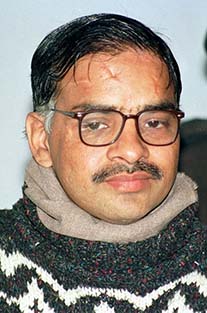
Javed Iqbal, commonly referred to as “Kukri” or “Mughal,” was a notorious serial killer and murderer who was born in Lahore, Punjab, Pakistan, in 1961. He was brought up in the Shad Bagh locality of Lahore with his father and siblings in a villa. The lives of Iqbal and his family took a turn for the worse when he began a steel recasting business as a student at Government Islamia College in 1978. But it would be his abominable atrocities that would characterize him. In 1998-99, Iqbal admitted to the rape and murder of some 100 boys, ages between 6 and 16, in Lahore. He was thorough in the record of his offenses, keeping records and even sending a letter to the police, confessing his crimes and giving them clues to where the bodies were located. Iqbal’s twisted crimes would make him a part of the list of the most prolific serial killers of the 20th century in Pakistan.
Date of birth-1961
Date of birth– 1968.Place of birth-Lahore, Punjab, Pakistan.
Nationality-Pakistan
Job-steel recasting business.
Popularly known as -Pakistan serial killer
Classification– serial killer and child molester.
Number of victims -100
Span of crimes-1998-1999
Victims-100 vulnerable boys, all aged between 6
And 16.
Date of arrest-december30,1999
Method of murder-strangulation
The city of Lahore, Pakistan, is a murder haven.
Status -dead
Sentence -Iqbal was sentenced to death; the judge passed the sentence saying, “Strangled to death in front of the parents whose children you killed, your body will then be cut into 100 pieces and put in acid, the same way he killed the children.” However, Interior Minister Moinuddin refuted the sentence by saying that Pakistan has signed the human rights commission, hence punishment is not permissible.
Background of the case:
Javed Iqbal’s case is one of the most horrifying and most infamous crime cases in Pakistan’s history. Javed Iqbal was the 6th child (4th son) of a well-to-do trader, Mohammad Ali Mughal. He got matriculation from Islamia High School. He started his own business in 1978 when he was an intermediate student at the Islamia College, Railway Road. His father bought two villas in Shadbagh. Iqbal rented one of the houses and started a business of recasting steel there, and then he stayed there with the boys for several years. Iqbal was a wealthy man, but had a rough time of it. He had been diagnosed with mental health problems, and his family had issues with him. He also had several run-ins with the law for minor offenses, but it was not in his youthful past that it was evident that the crimes he was to commit would be as horrendous as they were. During the period 1998-1999, Iqbal started to focus on young boys, usually 6 to 16 years old, many of whom were street children and runaways, many of whom were from poor backgrounds. He enticed these youngsters with offers of food, shelter or money to come to his house. After being captured, Iqbal would strangle the boys, cut their bodies open and dissolve the bodies in hydrochloric acid. He had detailed notes about his offences, even photos and objects taken from his victims.
In December, 1999, Iqbal admitted in a letter to a newspaper and police to killing 100 children. This was the reason the police were able to find evidence to back up his statement in his confession when they went to his house. Iqbal was arrested in March 2000 after a short time on the run, and sentenced to death. His crimes are so brutal that in the judge’s sentence, Iqbal was not only to be strangled, but to be cut into 100 pieces and dissolved in acid, but this sentence was not legally enforced.
Javed Iqbal was discovered dead in his cell at Kot Lakhpat Jail, Lahore, on 8th October 2001 before he could be executed. He had been killed with a bed sheet, and his death was ruled a suicide, although there had been speculation that he could have been murdered. Pakistan and the world were shocked by Javed Iqbal’s case, and it remains a subject of discussion when it comes to criminal psychology or serial killers.
Events:
- Javed Iqbal was born in Lahore, Punjab, Pakistan, in 1961.
- In 1986, Iqbal moved to Faisalabad, where he became a leading citizen of the city and was engaged in several business activities. He starts to adopt a plausible face of respectability, and harbours dark intentions himself.
- 1990s: Iqbal begins to work in the world of crime. He infects young boys and offers monetary rewards or gifts in exchange for their compliance. Over time, his techniques of killing and disposing of bodies become more organized.
- 1997: Iqbal is first recorded as committing murder. His work has yet to be discovered, and he is still developing his techniques, including his use of acid to dissolve bodies.
- 1998: Iqbal’s criminal activities peak. In this year, he slays a lot of boys and follows the pattern he had adopted; he puts them to death with acid, as usual. In December 1999, Iqbal sent a letter to the police and to a chief news editor of a Lahore newspaper, Khawar Naeem Hashmi, in which he confessed to the rape and murder of 100 vulnerable boys, all aged between 6 and 16. He had dismembered and strangled the victims after sexually assaulting them, who were mostly runaways or orphans living in Lahore’s streets and disposed of their bodies with a vat of Hydrochloric acid, which he later emptied into a local river, he wrote.
- Early 2000s: During this time, there are no known significant activities or developments related to Iqbal’s crimes. His actions are not known to the police.
- December 2000: Javed Iqbal admits his guilt, offering a full confession and explanation for his killings and handing over evidence to the police. His subsequent confession exposes the nature of his offenses, such as killing more than 100 boys.
- December 30, 2000: Iqbal is arrested and charged with the murder of his wife based on his statement. His arrest marks a significant investigation of his crimes and a very public trial.
- In January of 2001, Iqbal is formally charged, and the legal process begins. His case is attracting a lot of attention in the media because of the horrific nature of his crimes.
- On 8th October 2001, Javed Iqbal passes away in prison on what would have been his 45th birthday. Suicide is reported as the official cause of death. Iqbal’s death in his cell was a suspicious one.
Javed Qibal Mughal’s crimes are as follows:
Convinced boys to come to his house to receive a gift or cash.
- Raping the victims
Engaged in sexual assault of victim(s).
- Strangled and dismembered the boys.
Used vats of hydrochloric acid to dispose of the bodies.
Dumped acid in a local river, wiping out evidence
Modus Operandi:
Javed Iqbal had committed crimes in a systematic and horrid manner. He cultivated a relationship with young boys, mainly from the lower socio-economic strata and enticed them with promises of money, gifts or job opportunities. His plan was to take advantage of the fact that he was perceived as wealthy and privileged to get to know his victims and their families.
After attracting a boy to his house, Iqbal would kidnap and then keep him prisoner in his house. He inflicted cruel and brutal torture on his victims, both physical and mental. He was extremely cruel, and his methods of torture were at times very cruel.
After the torture, Iqbal would slay the boys, sometimes by strangulation and other violent means. He was breaking up bodies, smashing them apart and dissolving them in acid to get rid of any marks of his crimes and to get rid of the bodies. This process was done in such a way as to leave no physical evidence.
Iqbal’s confession followed his arrest, where he released a chilling video confession and a letter to the police, outlining his crimes. His records contained descriptions of the murders and how he disposed of the bodies. His crimes were so extensive that they caught the public’s attention because of the gruesome nature of his methods.
Crime scene:
Javed Iqbal’s situation was very chilling and grim. His house in Lahore, Pakistan became the main venue of the atrocities. Iqbal’s home was where a lot of brutality took place, where Iqbal would offer opportunities for kindness to his victims. His house was a place of his terrible deeds. Rooms would be littered with evidence of torture and abuse, and would have been marked with signs of the violent encounters that had occurred. Iqbal inflicted torture on his victims with various means and methods, creating a horrid and disturbing scene. The disposal process was also disturbing. Iqbal used acid to break down the bodies of his victims and also a process of dismemberment before dissolving the remains in large containers of acid. The place where this happened must have been stinking with decay and chemical fumes, very much a reminder of the grimness of his crimes.
He admitted, in both video and written statements, his true brutality and how he made sure to cover up his deeds. When he was arrested, he confessed the details of his crimes in a way that gave a glimpse into the extreme nature of his crimes, and the scene of his crimes was chilling.
Forensic investigation:
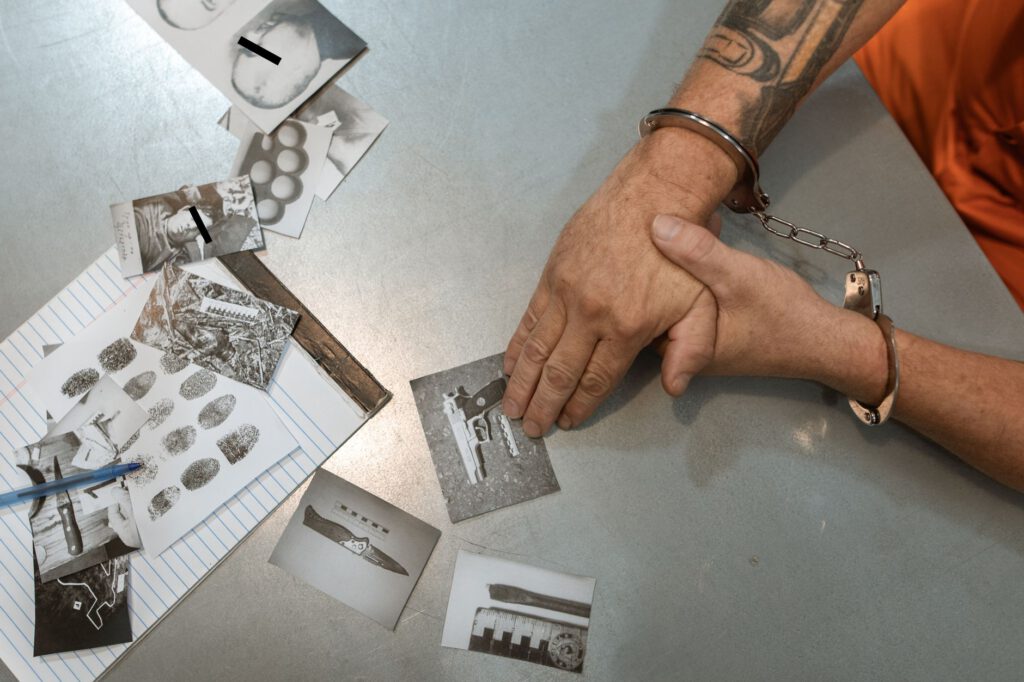
Iqbal’s letter, sent in December 1999, to the police and a local Lahore newspaper, admitted to the killings of 100 boys aged between six and 16. In the letter, he claimed to have strangled and dismembered the victims – mostly runaways and orphans living on the streets of Lahore – and disposed of their bodies using vats of hydrochloric acid. He then threw the trash into a nearby river. In his house, police and reporters found bloodstains on the walls and floor, with the chain on which Iqbal claimed to have strangled his victims, and photographs of many of his victims in plastic bags. The items were well labelled with handwritten pamphlets. Also, two vats of acids, containing partially dissolved human remains, were left open for police to find, and a note stated that the “bodies in the house” had been “deliberately not disposed of so that authorities will find them.
In his confession letter, Iqbal admitted that after committing the offences, he intended to commit suicide by drowning himself in the Ravi River, but after trying to drag the river with nets, police launched what, at the time, was the biggest manhunt in the history of Pakistan. In Sohawa, four accomplices, teenagers who shared Iqbal’s three-bedroom apartment, were arrested. Within days, one of them died in police custody, apparently by jumping from a window.
On 30th December 1999, a month after Iqbal turned himself in at Daily Jang offices in the Urdu-language newspaper. He was later arrested. He said he was “giving in to the newspaper because I am afraid of being killed and I think the police will kill me. The forensic investigation of Javed Iqbal’s case was heavily dependent on his detailed confession, which included a video and written documents that outlined how he tortured, murdered and disposed of Javed Iqbal’s body. As most of the physical proof was lost, a forensic examination of his home was conducted to see if there was any trace of his activities left. The scene of the crime was highly bloody and had been scrubbed and cleaned. In the absence of acid, Iqbal’s bodies dissolved, traditional forensic methods were hampered, and investigators turned to evidence that survived, such as acid residue and dismemberment tools. Witnesses and Iqbal’s confessions helped paint a picture of his crimes.
Motive for the crime:
Javed Iqbal said he started killing out of anger at the Lahore police. He said that they arrested him for a sexual assault on a young runaway boy in the 1990s, and that was a mistake. The boy was beaten by Iqbal so badly that he lost consciousness. Iqbal was not charged with this, but it had caused his mother to suffer and die of a heart attack. Iqbal, who said his mother’s death and his own fall were a source of anguish, said he wanted the other mothers to have the same pain. He was going to kill 100 boys, and then other mothers would mourn for their sons as his mother mourned for him.
Judgement:
In 2000, the judge sentenced Iqbal to be strangled, and his body cut up into 100 pieces and dissolved in acid, according to the Shariah legal principle of Qisas (“an eye for an eye”).
42-year-old Javed Iqbal was sentenced to death by public hanging.
Sajid Ahmad (17) was also given the death sentence in connection with the killings.
- Mamad Nadeem (15 years old) was found guilty of the murders of 13 of the victims and was sentenced to 182 years in prison (14 years for each murder).
Mamad Sabir (13) was sentenced to 63 years in prison.
However, Pakistan’s Interior Minister Moinuddin Haider refuted the sentence, saying that Pakistan is a member of the Human Rights Commission and “such punishments are not allowed.”
References:
- https://www.jgnt.co/pakistani-serial-killer-javed-iqbal
- https://www.dawn.com/news/896/lahore-the-story-of-a-pampered-boy
Where the legal industry reads first.
Enjoyed this article? Get the biggest legal industry updates, deals, appointments, insights and expert interviews in your inbox, free.
No spam. Unsubscribe anytime.From Legal Desire
Is your firm the one being cited, or the one being skipped?
We ran the test. On several everyday legal questions, software companies are answering and law firms are not. We help firms fix that, and we build the technology behind the practice.
Lawyers and firms: get featured on Legal Desire
Share your deals, lateral moves, firm news and insights with 1M+ monthly readers: founders, law firm partners, general counsel and practising lawyers across the US, UK, EU and GCC.
Get featuredSubmit a press release