

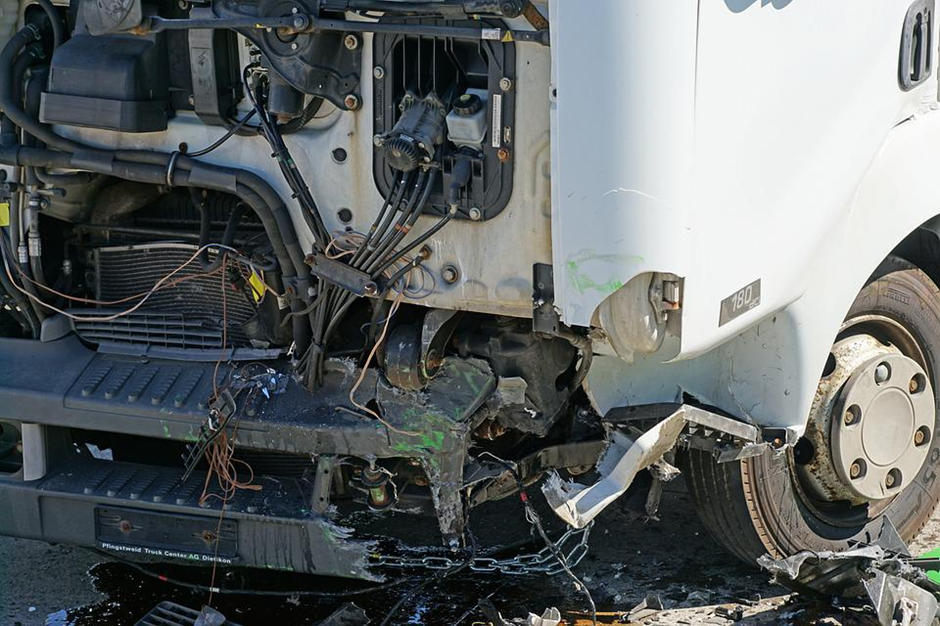
A commercial truck collides with several vehicles on Interstate 275 near Tampa, leaving motorists with serious injuries. The trucking company acknowledges the collision but argues that an outside maintenance contractor and another driver contributed to the accident. Florida negligence law permits qualifying defendants to allocate fault to parties who are not directly involved in the lawsuit, potentially reducing the compensation available from the defendants being sued.
Understanding this legal distinction is essential because commercial trucking operations frequently involve multiple businesses with separate responsibilities.
Florida Law Allows Fault Allocation Among Multiple Parties
Under Florida Statutes Section 768.81, courts generally allocate negligence damages according to each responsible party’s percentage of fault. The statute ordinarily requires several liability rather than joint and several liability.
A defendant generally pays damages corresponding to its assigned percentage of responsibility. This becomes particularly important when a collision involves a truck driver, transportation company, maintenance contractor, and other motorists.
However, identifying several potentially responsible parties does not establish that each acted negligently. Every allegation requires evidence connecting particular conduct to the accident.
Nonparty Fault Must Be Pleaded and Proven
Section 768.81(3)(a) establishes specific requirements when a defendant wants fault allocated to someone who is not a party to the lawsuit.
The defendant must affirmatively plead the nonparty’s fault and generally identify that person or business as specifically as practicable. To place the nonparty on the verdict form, the defendant must prove the alleged negligence by a preponderance of the evidence.
Simply blaming an unidentified contractor does not automatically reduce a defendant’s liability. The defense must establish how the nonparty’s actions contributed to the claimant’s injuries.
Trucking Companies and Contractors Have Distinct Responsibilities
Commercial transportation involves several operational relationships. Trucking companies employ or contract with drivers, maintenance providers service equipment, and cargo contractors handle freight.
A Tampa truck accident lawyer at Brooks Law Group investigates commercial vehicle collisions involving multiple potentially responsible businesses. The firm’s truck accident practice includes claims concerning negligent driving, vehicle maintenance, and cargo-related failures.
For example, a brake malfunction might involve inadequate maintenance, defective components, or negligent operation. The existence of multiple contractors does not establish that every business contributed to the collision.
Legal Desire’s discussion of complex truck accident liability explains why these relationships require detailed investigation.
Maintenance Records Help Establish Independent Negligence
Federal Motor Carrier Safety Regulations require covered carriers to systematically inspect, repair, and maintain commercial vehicles under 49 CFR Section 396.3.
Maintenance records generally document inspections, repairs, and scheduled servicing. These documents help establish whether a known mechanical problem existed before the accident and which organization was responsible for correcting it.
A mechanical failure does not automatically establish negligent maintenance. Investigators must determine whether the defect was reasonably discoverable and whether a specific failure contributed to the collision.
Repair invoices, inspection reports, and service agreements help distinguish carrier responsibilities from those assigned to outside contractors.
Electronic Evidence Tests Competing Fault Allegations
Commercial trucks frequently contain electronic systems recording speed, braking activity, and other operational information. Dispatch communications and available camera footage also help reconstruct events preceding a collision.
Legal Desire’s guide to investigating truck accidents explains how digital evidence, maintenance records, and accident reconstruction specialists contribute to liability investigations.
Electronic records must be interpreted alongside physical evidence and witness testimony. A truck’s recorded speed might establish its movement without conclusively identifying why another vehicle entered its path.
An Injured Driver’s Fault Can Bar Recovery
Section 768.81(6) establishes Florida’s modified comparative negligence rule. In covered negligence actions, a claimant found more than 50% responsible for their own harm cannot recover damages.
A motorist found 20% responsible generally receives a corresponding 20% reduction in recoverable compensation. However, responsibility exceeding 50% ordinarily eliminates recovery under the provision.
This creates separate questions concerning the claimant’s conduct and fault allocated among defendants and nonparties. A commercial driver’s negligence does not automatically eliminate the possibility of contributory fault by another motorist.
Nonparty Allocation Can Affect Settlement Value
Consider a collision involving a negligent truck driver and an independently responsible maintenance contractor. If the contractor is not sued but qualifies for fault allocation, the trucking defendant’s percentage of responsibility might be reduced.
The result matters because assigning fault to a nonparty does not itself produce an enforceable judgment against that nonparty. An injured claimant might therefore face difficulties recovering the portion attributed to an absent responsible business.
Identifying potentially liable companies before settlement negotiations helps establish whether the available claims and insurance coverage address the documented losses.
Florida’s Two-Year Deadline Requires Early Investigation
Under Florida Statutes Section 95.11(5)(a), negligence lawsuits generally must be filed within two years, subject to statutory exceptions.
However, contractual records, electronic vehicle information, and maintenance documentation might become difficult to obtain much later. Preserving these materials helps establish which businesses exercised control over the truck and contributed to the collision.
The decisive issue is not how many companies participated in the transportation operation, but whose negligent conduct caused the injuries. Florida’s fault-allocation rules make that distinction central to determining liability and the amount recoverable from each defendant.
This article provides general legal information and is not individualized legal advice.
Where the legal industry reads first.
Enjoyed this article? Get the biggest legal industry updates, deals, appointments, insights and expert interviews in your inbox, free.
No spam. Unsubscribe anytime.From Legal Desire
Is your firm the one being cited, or the one being skipped?
We ran the test. On several everyday legal questions, software companies are answering and law firms are not. We help firms fix that, and we build the technology behind the practice.
Lawyers and firms: get featured on Legal Desire
Share your deals, lateral moves, firm news and insights with 1M+ monthly readers: founders, law firm partners, general counsel and practising lawyers across the US, UK, EU and GCC.
Get featuredSubmit a press release