

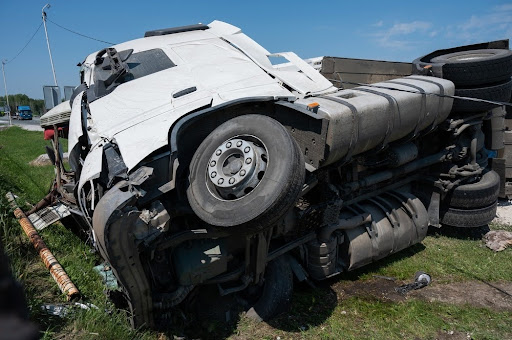
A collision with a loaded tractor-trailer is a different event from an ordinary fender bender, and the legal aftermath reflects that. The physics alone explain why injuries are so often severe, since a fully loaded truck can weigh many times more than a passenger car. Interstate 95 and the Florida Turnpike carry a steady stream of freight through Palm Beach County, and local roads around warehouses and ports see heavy trucks making tight turns every day.
What makes these cases unusual is the paperwork behind each truck. Drivers, carriers, shippers and maintenance vendors all leave records, and most of those records are controlled by the companies that would rather not hand them over. This article looks at the federal rules that shape driver behavior, the evidence that disappears if nobody asks for it, and the way fault and filing deadlines work in Florida once someone has been seriously hurt or killed.
The Federal Rules Behind Every Long Haul
Commercial drivers operate under federal hours-of-service regulations written by the Federal Motor Carrier Safety Administration. For property-carrying drivers, the basic limits are 11 hours of driving after 10 consecutive hours off duty, inside a 14-hour on-duty window. A driver must also take a 30-minute break once 8 hours of driving have accumulated. Those numbers sound generous until a delivery schedule pushes a driver to the edge of them.
In practice, fatigue is one of the most common contributors to serious truck crashes, and logs are the first place investigators look. Electronic logging devices record driving time, and a gap or an edit can point to a problem. Case notes from Demand The Limits on fatal collisions often come back to the same theme, which is that the company’s records tell a story the driver’s memory may not.
Hours of service are only one piece. Federal rules also cover vehicle inspection, cargo securement and driver qualification files. A carrier that hired a driver with a poor record, or skipped a required brake inspection, may carry responsibility of its own. That second layer of fault is often where a claim becomes larger than a simple driver-versus-driver dispute.
Weather and road design come into these cases as well. South Florida afternoon storms reduce visibility and lengthen stopping distances, and a loaded truck needs far more room to stop on wet pavement than a car does. Work zones, short merge lanes and poorly marked exits add pressure on drivers who are already tired. A carrier cannot blame the rain if the driver was going too fast for conditions, and records of speed and braking usually settle that point.
Drug and alcohol testing is another area with strict federal requirements. After certain serious crashes, carriers are expected to test drivers within set time limits, and missing or late tests raise questions of their own. The results, or the absence of them, become part of the evidence file. Investigators also look at prescription medication, since some drugs that are legal still impair driving.
Evidence That Does Not Wait
Trucks carry more data than most people realize. Engine control modules record speed, braking and throttle position, and some trucks have forward-facing cameras that capture the seconds before impact. Carriers are not required to keep all of this indefinitely, and routine business practice can mean that footage is overwritten within days. A preservation letter sent promptly puts the carrier on notice that the data must be kept.
Oddly enough, the truck itself is sometimes the first thing to disappear. Damaged tractors go back into service or get sold, and trailers return to a shipper’s yard. Photographs of the scene help, but they do not replace a mechanical inspection of brakes, tires and coupling equipment. An engineer who looks at the actual equipment can tell whether a defect contributed to the crash, and that opinion carries real weight with an insurer.
A boca raton commercial truck accident lawyer can send those preservation demands and arrange independent inspections, but the practical problem is time. The earlier the demand goes out, the more likely the data still exists. Injured people and families usually are not thinking about any of this in the first week, since they are dealing with surgeries, funerals and missed paychecks.
Third parties deserve attention too. A shipper that overloaded a trailer, a broker that chose a careless carrier or a maintenance company that signed off on a faulty repair may each share responsibility. Identifying them early matters because each one has its own insurance, and the combined coverage can be far larger than the driver’s policy alone. Contracts between these companies sometimes shift risk in ways that only become clear once documents are produced.
Fault, Insurance and the Filing Clock
Florida’s 2023 reform, HB 837, made fault allocation matter more than before. A plaintiff who is found more than 50 percent responsible is barred from recovery, and the same law shortened the general negligence filing period to two years for causes of action that accrued after March 24, 2023. Trucking defendants know these rules well, and their investigators begin building a comparative fault case within hours of a crash.
Insurance structure is the other piece. Commercial carriers usually hold liability policies far larger than those on passenger cars, though the amount varies widely by company and cargo type. Personal injury protection still applies to the injured person’s own medical bills up to $10,000 in emergency and disability benefits, and the medical portion generally requires initial treatment within 14 days. Missing that window is a small mistake that can cost a family real money.
When a person dies, the claim changes in character. A wrongful death action is brought by the personal representative of the estate for the benefit of survivors, and the damages recognized differ from those in a case where the injured person lives. Survivors often face funeral bills, lost income and the sudden loss of household support at the same time. Deadlines in these cases are strict, so families benefit from learning them early rather than late.
Insurers also tend to move quickly with recorded statements and early settlement offers, sometimes within days. An offer made before the full medical picture is known rarely reflects the long-term cost of a spinal injury or a traumatic brain injury. Anyone who signs a release loses the ability to ask for more later, even if complications show up months afterward. For general background on collisions involving passenger vehicles, https://demandthelimits.com/car-accident-lawyer-boca-raton covers the ground that applies to most crash claims.
Why Truck Cases Take Longer
These claims rarely resolve quickly. Defendants often hire accident reconstruction teams that arrive at the scene before the wreckage is cleared, and the injured side has to catch up. Discovery involves company policies, driver histories and electronic data, and disputes over what must be produced can stretch for months. Medical treatment is often still ongoing while all of this happens, which complicates any estimate of long-term costs.
Even so, patience tends to pay off when the facts are strong. A well-documented case with preserved data and clear medical records stands in a better position than one built from memory alone. Insurers adjust their posture when they see that the other side has the logs, the inspection report and the treatment history in hand.
Most families who go through a serious truck crash never expected to learn the vocabulary of federal motor carrier rules. They learn it because the outcome depends on it, and because the companies on the other side already know it. A little knowledge about records, deadlines and fault early on does not undo the harm, but it keeps avoidable losses from piling on top of it.
Where the legal industry reads first.
Enjoyed this article? Get the biggest legal industry updates, deals, appointments, insights and expert interviews in your inbox, free.
No spam. Unsubscribe anytime.From Legal Desire
Is your firm the one being cited, or the one being skipped?
We ran the test. On several everyday legal questions, software companies are answering and law firms are not. We help firms fix that, and we build the technology behind the practice.
Lawyers and firms: get featured on Legal Desire
Share your deals, lateral moves, firm news and insights with 1M+ monthly readers: founders, law firm partners, general counsel and practising lawyers across the US, UK, EU and GCC.
Get featuredSubmit a press release