

A crash on a Texas highway can look the same in the first few minutes whether it involves two passenger cars or a car and an eighteen-wheeler. Glass is on the road and someone is calling 911 while everyone is trying to work out what just happened. The paperwork that follows is where the two situations split apart, and the split tends to surprise people who have only ever dealt with a fender bender.
Texas sees a constant flow of freight on its interstates and farm-to-market roads, which means drivers of ordinary vehicles share lanes with commercial rigs every day. When something goes wrong, the questions about who answers for the damage depend heavily on what kind of vehicle was involved. Looking at those differences side by side makes it easier to see why the same injury can lead to very different claims.
Why a Commercial Truck Crash Is Built Differently
In a standard collision between two drivers, the picture is usually simple: one driver, one insurer, one policy. A commercial truck crash adds layers. The driver may work for a carrier, the trailer may belong to a separate company, and the cargo may have been loaded by a third party, so responsibility can spread across several businesses. Readers looking at how that works in the Rio Grande Valley can start with a page on truck accident attorney mcallen that describes how these claims are usually handled in that area.
Federal safety rules sit on top of Texas traffic law for these vehicles. Property-carrying drivers are limited to 11 hours of driving after 10 consecutive hours off duty, they operate inside a 14-hour window, and they must take a 30-minute break after 8 hours behind the wheel. When a crash happens late in a long shift, those numbers become a starting point for asking whether fatigue played a part.
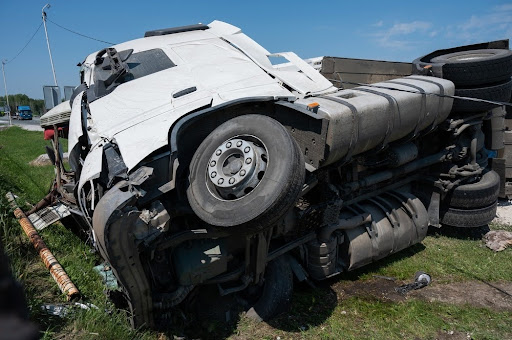
Then there is the sheer physical mismatch. A loaded tractor-trailer carries far more momentum than a sedan, so the injuries tend to be more serious and the property damage heavier. Higher stakes usually mean the carrier’s insurer gets involved quickly, often sending a rapid-response adjuster to the scene or the yard within hours.
Evidence That Disappears Faster Than Most People Expect
Trucks carry their own paper trail. Logbooks, electronic logging device records, dispatch messages, maintenance files, and inspection reports all describe what the vehicle and driver were doing before the collision. Some of that material is kept only for a limited time under company policy, which is why a written request to preserve it matters early on.
Many rigs also have event data recorders and dash cameras. Those devices can capture speed and braking, along with following distance in the seconds before impact, and they can be overwritten or lost when a truck goes back into service. Ordinary passenger cars have recorders too, but the data is generally less detailed and rarely supported by a company that keeps its own files.
Scene evidence follows the same pattern. Skid marks fade after a few rainy days, debris gets swept up, and a tow yard can release a wrecked trailer for repair before anyone has photographed the coupling or brakes. Photos from a phone, a note of nearby businesses with cameras, and the names of witnesses can fill gaps that official reports leave open.
Where Ordinary Car Collisions Run Into Trouble
Passenger vehicle crashes get less attention, yet they produce plenty of disputes of their own. Texas follows a proportionate-responsibility approach, so each driver’s share of blame is argued over, and insurers often push to assign some of it to the injured person. Disagreements about who braked late, who drifted across a line, or who was looking at a phone are the bread and butter of these claims. Anyone searching for mcallen car wreck attorney will find a page that lays out what these cases involve from a local point of view.
All the same, the evidence in a car-versus-car case is often thinner than people assume. Without a dash camera, the account of each driver carries a lot of weight, and the police report may only record an officer’s impression after arriving late. Statements given to an insurer in the first day or two can end up being quoted back months later, sometimes with the wording stripped of context.
Medical records play a bigger role here than in many other kinds of claims. Soft-tissue injuries and concussions do not always show up the moment the airbags deploy. A gap between the crash and the first doctor visit gives an adjuster room to argue that the symptoms came from somewhere else.
The Clock Is Shorter Than It Feels
Texas sets a general limit of two years for filing a personal injury lawsuit, counted from the date the cause of action accrues, under Civil Practice and Remedies Code section 16.003. Wrongful death claims follow a two-year period as well, measured from the date of death. There are exceptions, such as tolling for minors or people who are legally incapacitated, and the discovery rule in certain situations, but they are narrow and are not something to count on.
That said, the practical deadline is often earlier than the legal one. Evidence ages and witnesses move, while trucking companies routinely clear their records on a schedule. Waiting close to the two-year mark can leave a claim with a statute still open and very little proof behind it.
Claims against government vehicles or entities can carry shorter notice periods, so a crash involving a city truck or a school bus deserves its own check of the rules. The vehicle type shapes the deadlines as well as the evidence. Checking which rules apply in the first weeks, rather than the last ones, keeps that kind of surprise off the table.
When Impaired Driving Is Part of the Story
Alcohol complicates either kind of collision. A driver who was intoxicated opens the door to a criminal case running alongside the civil one, and the two proceed on different tracks with different standards of proof. A civil claim does not wait for a criminal verdict, and a not-guilty result in a criminal courtroom does not automatically end the injured person’s case.
San Antonio, with its mix of highways and nightlife, gives a good example of where these questions show up. A page on drunk driving accident lawyer san antonio speaks to how impaired-driver collisions are treated in that part of the state. Evidence such as breath or blood results and witness accounts of the hours before the wreck tends to carry more weight than it would in a routine fault dispute.
Oddly enough, impairment is not limited to alcohol. Prescription medication and drowsiness after a double shift can both affect a driver in similar ways, and each leaves different traces. Toxicology reports tell one story, while phone records or a logbook tell another.
Third parties sometimes enter the picture too. A business that kept serving an obviously intoxicated customer, or an employer that sent a worn-out driver back on the road, may share responsibility depending on the facts. Those theories take more work to prove, but they can matter when the driver’s own insurance is limited.
Anyone hurt in a crash, whether the other vehicle was a pickup or a tractor-trailer, ends up asking the same basic thing: who has to pay and how much proof does it take. The answer rarely comes from a single document, and it usually depends on how early the right records were saved and how carefully the first few weeks were handled. Photos and a medical file that starts promptly do more for a claim than most people expect.
Where the legal industry reads first.
Enjoyed this article? Get the biggest legal industry updates, deals, appointments, insights and expert interviews in your inbox, free.
No spam. Unsubscribe anytime.From Legal Desire
Is your firm the one being cited, or the one being skipped?
We ran the test. On several everyday legal questions, software companies are answering and law firms are not. We help firms fix that, and we build the technology behind the practice.
Lawyers and firms: get featured on Legal Desire
Share your deals, lateral moves, firm news and insights with 1M+ monthly readers: founders, law firm partners, general counsel and practising lawyers across the US, UK, EU and GCC.
Get featuredSubmit a press release