
When the police are trying to figure out who a dead person is, it is an important part of their job. Finding out who the person is helps the family of the person to deal with their loss. It also helps the police to solve crimes. It is important for legal proceedings. Sometimes the police do not have enough information to identify the person, like fingerprints or DNA. This is where facial reconstruction comes in. It is a way to recreate what the person’s face might have looked like.
Facial reconstruction is a process that uses science and art to recreate a person’s face from their skull. It is not a picture of the person, but it gives the police something to show to the public. The police can then ask people if they recognize the person in the picture. Over the years, facial reconstruction has changed a lot. It used to be done by hand. Now it is done using computers and special machines.
Understanding Facial Reconstruction
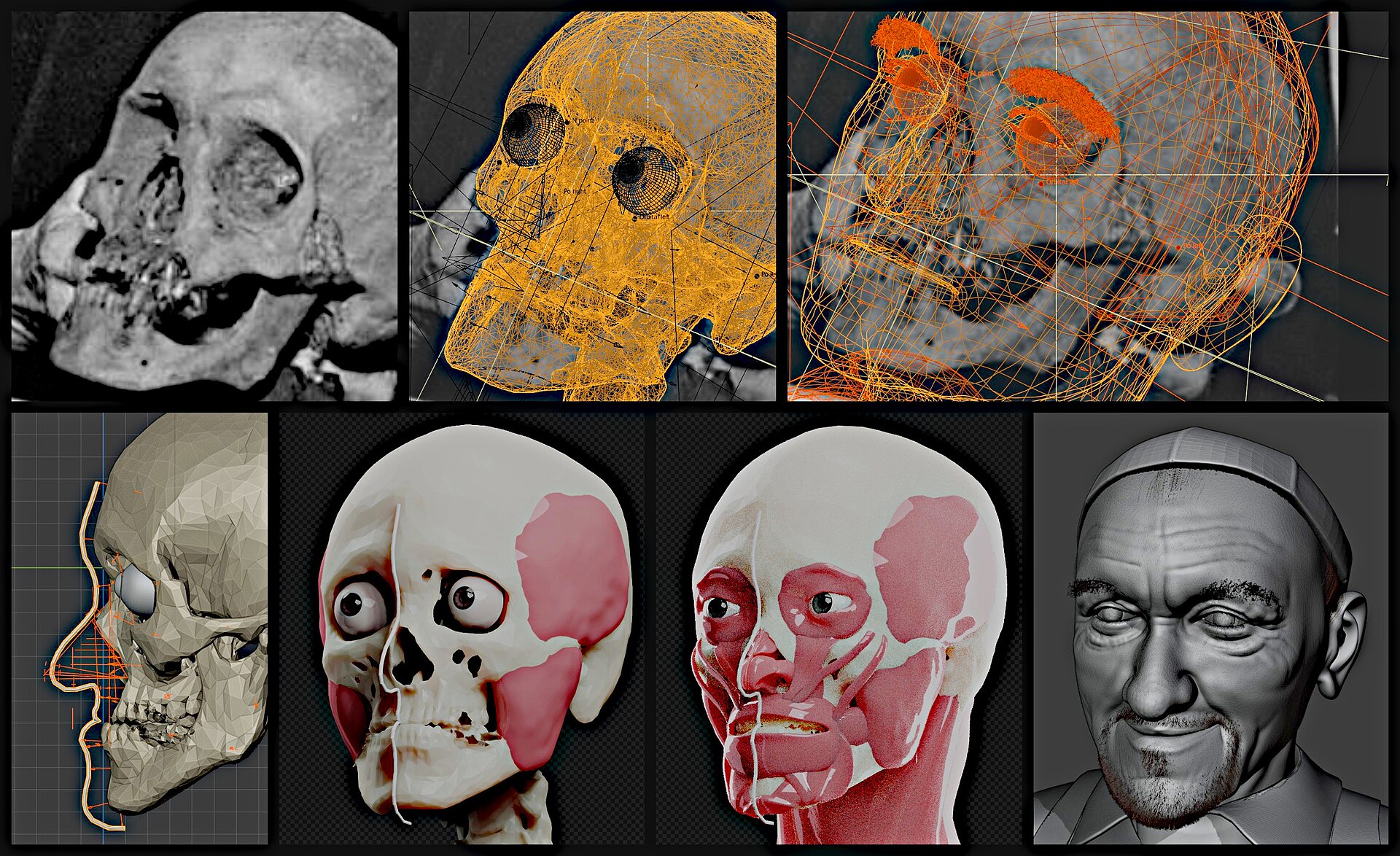
Reconstruction is a field that combines science, art and technology. The people who do reconstruction use the shape of the skull to figure out what the person’s face might have looked like. They look at the eye sockets, the nose, the jaw and other parts of the skull to get an idea of the person’s structure.
Each skull is unique, like a fingerprint. The shape of the skull can tell us a lot about what the person’s face might have looked like. The people who do reconstruction use this information along with information about the average thickness of skin on different parts of the face to recreate the person’s face.
Historical Development
The idea of reconstruction has been around for a long time. It was first used in the 1800s to recreate the faces of people whose skulls had been found in archaeological digs. Later, it was used in investigations. One of the important people in the development of facial reconstruction was a man named Mikhail Gerasimov. He was an archaeologist and anthropologist who developed a way to recreate faces from skulls.
Today, facial reconstruction is done using computers and special machines. It is a more accurate and detailed process than it used to be.
Principles of Facial Reconstruction
There are principles that are used in facial reconstruction. These include:
- The shape of the skull determines the shape of the face.
- The thickness of the skin on parts of the face is used to recreate the person’s facial structure.
- The muscles of the face are recreated based on their attachment points on the skull.
- Specific landmarks on the skull, such as the eye sockets and the nose, are used to guide the reconstruction process.
- Information about the person’s population, such as their age, sex and ancestry, is used to help recreate their face.
Methods of Facial Reconstruction
There are methods that can be used for facial reconstruction. These include:
- Two-dimensional reconstruction, which involves drawing the person’s face on a piece of paper.
- Three-dimensional clay reconstruction, which involves creating a model of the person’s face using clay.
- Computerized facial reconstruction, which involves using a computer to recreate the person’s face.
- AI-assisted facial reconstruction, which involves using intelligence to help recreate the person’s face.
Each of these methods has its advantages and disadvantages. The choice of method will depend on the case and the resources that are available.
Steps in Facial Reconstruction
The process of reconstruction involves several steps. These include:
- Cleaning the skull.
- Examining the skull to determine the person’s profile, such as their age, sex and ancestry.
- Creating a model of the skull using a CT scan or other technology.
- Placing markers on the skull to indicate the thickness of the skin on parts of the face.
- Recreating the muscles of the face based on their attachment points on the skull.
- Adding layers of skin and fat to the face.
- Estimating the shape of the person’s features, such as their nose, lips and eyes.
- Adding hair, eyebrows and other details to the face.
- Creating a digital image of the person’s face.
- Reviewing the image to make sure it is accurate and realistic.
Role in Unidentified Body Cases
Reconstruction is especially useful in cases where the person’s body is unidentified. This can happen for a variety of reasons, such as if the body is found in a remote area or if it has been damaged in some way. Facial reconstruction can help the police identify the person and solve the case.
Advantages
Facial reconstruction has advantages. It can help the police to generate leads in a case. It can assist in missing person investigations. It can also help families to recognize their loved ones even if the body is badly damaged. Additionally, facial reconstruction can preserve records for future comparison, and it can complement other forms of identification such as DNA and fingerprints.
Limitations
Despite its advantages, facial reconstruction also has some limitations. It is not always possible to determine certain facial characteristics, such as the person’s eye color or hair color. Additionally the accuracy of the reconstruction depends on the quality of the skull and the expertise of the person doing the reconstruction.
Technological Advancements
There have been technological advancements in facial reconstruction in recent years. These include the use of CT and MRI imaging, 3D printing, laser surface scanning and artificial intelligence. These advancements have made facial reconstruction more accurate and detailed. They have helped to solve many cases.
Ethical Considerations
There are also some considerations to take into account when it comes to facial reconstruction. The police must be careful not to present the face as an exact representation of the person, as this can be misleading. Additionally, the privacy and dignity of the deceased must always be respected.
Notable Applications
Facial reconstruction has been used in notable cases over the years. It has helped to identify persons, and it has assisted in the solution of crimes. In some cases, the reconstructed face has been released to the public. This has helped to generate leads and to solve the case.
Future Prospects
The future of reconstruction is exciting. It is likely that the technology will continue to improve and that it will become more accurate and detailed. The use of intelligence and machine learning algorithms will help to automate the process, and it will make it possible to reconstruct faces more quickly and accurately. Additionally, the use of cloud-based databases and automated reconstruction software will make it possible to share information and to collaborate with experts more easily.
Facial reconstruction is a tool that can be used to help identify unknown human remains. It is a combination of science, art and technology. It has been used in many notable cases over the years. While it has its limitations, it is an aid in the investigation of crimes, and it can help to bring closure to families who have lost loved ones. As the technology continues to improve, it is likely that facial reconstruction will become more important in the field of forensic science.
Facial reconstruction is really good at helping us figure out who someone is. It is usually the step in finding out who a victim is, and it helps the police with their investigation. New things, like intelligence and special imaging, are making facial reconstruction better and more accurate. Facial reconstruction is where science and technology meet. It helps us to know who people are. It takes someone who’s unknown and makes them known again, which helps the families of these people to finally get some answers.
Where the legal industry reads first.
Enjoyed this article? Get the biggest legal industry updates, deals, appointments, insights and expert interviews in your inbox, free.
No spam. Unsubscribe anytime.From Legal Desire
Is your firm the one being cited, or the one being skipped?
We ran the test. On several everyday legal questions, software companies are answering and law firms are not. We help firms fix that, and we build the technology behind the practice.
Lawyers and firms: get featured on Legal Desire
Share your deals, lateral moves, firm news and insights with 1M+ monthly readers: founders, law firm partners, general counsel and practising lawyers across the US, UK, EU and GCC.
Get featuredSubmit a press release