
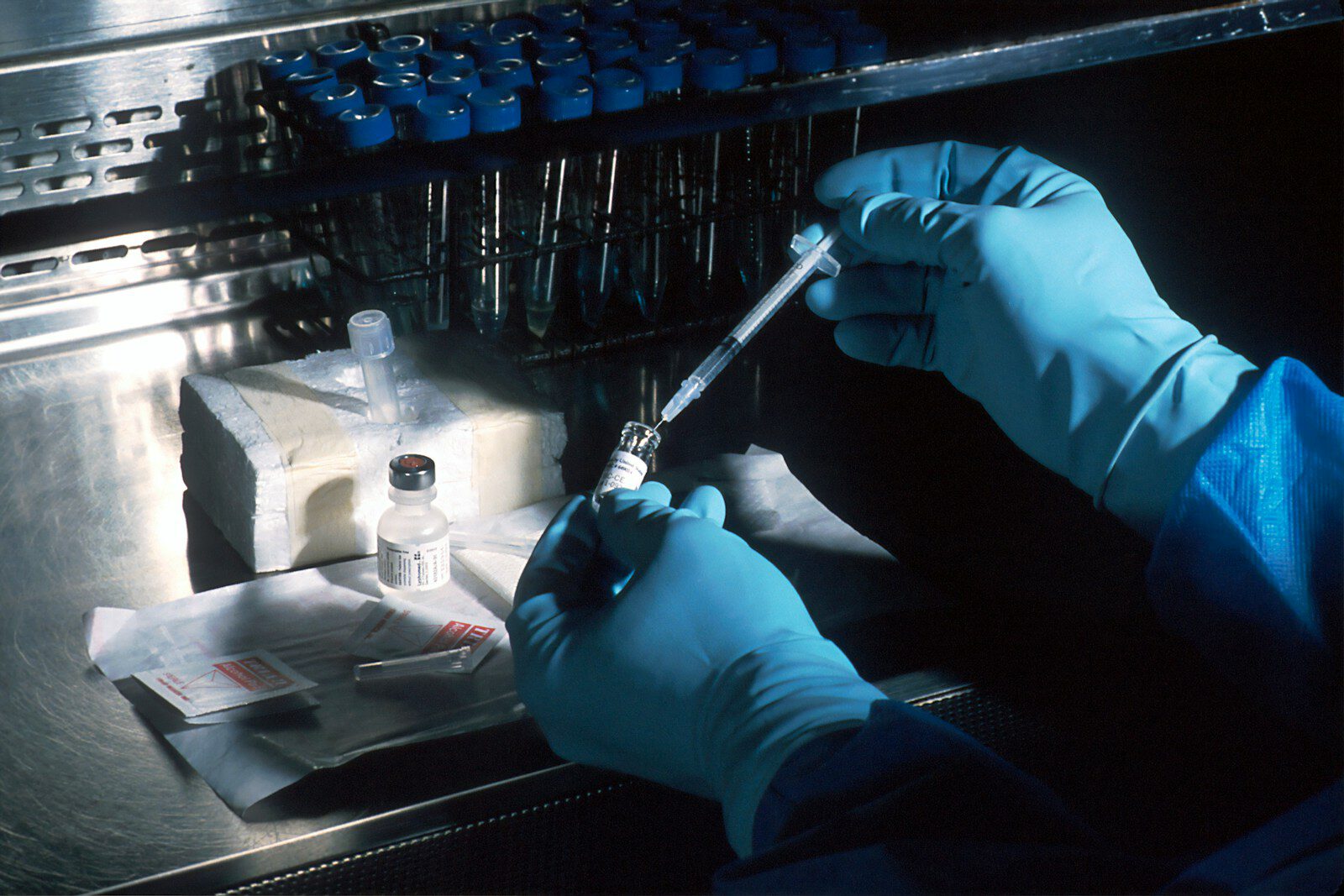
Crime scene management has always followed consistent principles, for example, ensuring everything is documented, limiting disturbance, and ensuring evidence is collected before it is compromised. Over the past eighteen months, a number of new technologies have started to emerge that help to improve how traditional principles are applied. By using laser scanner technology, we can create digital twins of crime scenes and allow investigators to revisit scenes (NIST, 2026). With portable sensors, we can now perform preliminary chemical analyses at the scene (Cozens et al., 2026). We can now create very detailed 3D records of surfaces, such as injuries, using a range of new 3D capture technologies (Thali et al., 2026). The government is also looking to increase basic forensic capabilities at a district level using mobile vans in India (Press Information Bureau, n.d.). Finally, a multiyear research project in Europe has shown that certain trace evidence can be identified and documented without touching it (RISEN project, 2024). This article brings together all these developments and looks at the overall trend of AI-aided crime scene investigations (Herke, 2026).
From Physical Crime Scenes to Virtual Investigations
Crime scene investigators have been using ground-based laser scanners to create accurate point cloud data of the scene for some time now. However, this data is often seen on a 2D screen and can be difficult to fully take in by the investigators and jury. The National Institute of Standards and Technology in the U.. has launched a project called ‘ForensiTwin’. This project began on the 22nd September 2026 and aims to create a fully immersive virtual reality platform so that investigators can utilize laser scan data to create a digital twin of the crime scene. Investigators can utilize this digital twin to walk around the scene in virtual reality. They will be able to add computational forensic data and interact with features of interest that have been identified by AI. The team can also work with other experts usinghead-mounted displays. This is a research project and aims to improve how evidence is presented in court. It also aims to create standardized virtual training environments that are cost-effective for new crime scene analysts (NIST, 2026).
In Germany, researchers are now also working on creating AI technologies that can automatically identify, categorize, and catalog objects within a 3D reconstruction of the crime scene. This means that the scene can be directly searched by the investigator. For example, they could search for all sharp objects in a room. This is being implemented in regional state police forensic offices (Techxplore, 2026).
The Lab Goes to The Scene
A large amount of research has been carried out between 2025 and 2026 looking at how we can miniaturise laboratory instruments to analyse chemicals at the scene. A comprehensive review was published in September 2025 looking at all portable andpoint-of-care technologies that can be used to analyse 11 different analytes of interest. This includes illicit drugs, explosives, gunshot residue, biological fluids, and fingerprints. Electrochemical, colorimetric, immunoassay, luminescent, and surface-enhanced Raman spectrometry are becoming the main methods of analysis for low-cost portable instruments. Gunshot residue is still lagging behind compared to drug and explosive testing.Colorimetric spot tests have proved to lack specificity and cause sample degradation. However, fingerprint collection has progressed the furthest. Mobile biometric identification systems are now available that can match fingerprints to national databases in real time (Cozens et al., 2025).
Another review looking at fluorescent sensor technology was published in 2026. This review concluded there has been a clear trend towards portable, smart and multi-modal instruments. This includessmartphone-enabled miniaturized detection systems (Wang et al., 2026). However, there is a large caveat to this, as these instruments are mostly presumptive. If acolorimetric or electrochemical test comes back positive at the scene, this usually still needs to be analysed using laboratory mass spectrometry or equivalent before it can be used as conclusive evidence (Cozens et al., 2025; Wang et al., 2026).
Moving From 2D Crime Scene Photography
Photography and reports have always struggled to show spatial information. Therefore, 3D surface documentation, laser scanning, structured light scanning, and photogrammetry have gradually been incorporated into forensic practices. The newest technology to be added is 3D Gaussian Splatting (3DGS). This is an imaging-based technology that creates a 3D reconstruction directly from images or videos (Fukuda et al., 2026).
A study published in September 2026 used multi-camera photogrammetry, projection, and 3DGS to generate detailed surface information, such as injury patterns (Thali et al., 2026). Another validation study looked at the accuracy of 3DGS. Using a mock crime scene, it was found that the reconstructions were accurate to the millimeter scale. Error occurred between 0.25mm and 3.58mm depending on what item was being measured. Larger objects such as desks and doors were measured with stable accuracy. However, smaller/thinner items such as bloodstains had a higher relative error due to the scale. However, the actual measurements were still accurate. A review published in 2026 looked at the usage of 3D technologies in forensics. This included laser scanning, structured light, photogrammetry, and 3DGS. It was found that the 3DGS reconstructions can be sharper and more accurate at creating realistic lighting effects when viewed from different angles. However, this should be seen as an additional tool rather than replacing accurate measuring devices (Fukuda et al., 2026).
Forensic Science on Your Doorstep
India has worked to increase crime scene capabilities at a district level. The central government has launched a project called the Scheme for Modernization of Forensic Capacities. This has a specific section with an approved budget of ₹496.66 crore. This aims to provide Mobile Forensic Vans (MFVs) to all districts and State Forensic Science Laboratories across the country (PressInformation Bureau, n.d.; Aviation & Defence Universe, 2026).In mid-2026, it was stated in Parliament that 619 vans have been allocated to the states (Aviation & Defence Universe, 2026). This aims to increase forensic capabilities at a rural and district level.
These are mobile mini labs that can be used to document, photograph, and film crime scenes. They can collect biological and trace evidence, develop and lift fingerprints, and perform preliminary physical analysis. They can also preserve exhibits securely. In Gujarat, it was reported that they have visited over 37,000 crime scenes using their fleet of mobile forensic vans. The majority of crime scenes were fatal or life-threatening incidents. This is due to the fact that, currently in India, the Bharatiya Nagarik Suraksha Sanhita, 2023 law now requires crimes that have a sentence of 7 years or more to have forensic analysis performed (New Kerala, 2026).
Contactless Crime Scene Investigation
A four-year Horizon research project was carried out by the European Union called RISEN (Real-time on-site forensic trace qualification). This aimed to see if crime scenes could be investigated in a contactless manner. Instead of using traditional chemical swabs, the project aimed to look at using non-invasive methods to analyse evidence. The final system was demonstrated at the end of 2024. This used 8 contactless sensors to create a 3D imaging system that could be used in real time. Everything can be managed using one API (RISEN Project, 2024).
The system allowed automatic identification, selection, and labelling of trace evidence. This can be seen in real time on an interactive 3D model showing where the trace evidence is located and what preliminary analysis has been done. The full system was trialed using 7 contactless sensors. This was trialed using realistic mock crime scenes, including a clandestine drug and homemade explosive lab. High-quality 3D point cloud and mesh data were created. This was a proof of concept and not a full implementation. The project has shown that using new technology, we can now investigate crime scenes without touching them and without using chemicals (RISEN Project, 2024).
Overall Trends
All of the above developments have a common theme: the increasing use of AI to identify physical evidence at the scene. A systematic review was published in January 2026 looking at how AI is impacting fingerprint and latent print identification. This has moved from traditional dactyloscopy to AI-enhanced Automated Fingerprint Identification Systems. AI has reduced the time to create a list of candidates from hours/days to seconds/minutes. Edge computing is now being used to create AFIS systems on mobile devices. This allows real-time identification at the scene. However, the authors stressed that this is just a triage tool and doesn’t replace the need for an expert. This automatically identifies the easier cases, leaving trained examiners to focus on the harder matches (Herke, 2026).
This theme runs through all the technologies mentioned. This suggests that AI reducing investigation times may be the driving force behind the changes in crime scene management (NIST, 2026; Cozens et al., 2025; Fukuda et al., 2026).
Conclusion
None of the developments mentioned have claimed to replace traditional crime scene practices. Digital twins are a research project; portable sensors are presumptive and need to be confirmed in a lab. 3DGS is an additional tool to help with accurate measurements. Mobile vans have been introduced in India to improve current forensic practices. RISEN has made it very clear it is a proof of concept. Overall, they all have the same aim of capturing evidence quicker, with more spatial information and with less disturbance. Over the next few years, the main issue will likely be how these are validated, standardized, and how they can fit into evidence chains that will be accepted in court.
References:
- Aviation & Defence Universe. (2026). District-level forensic mobile van network. https://www.aviation-defence-universe.com/district-level-forensic-mobile-van-network/
- Cho, S., & Woo, T. (2026). Accuracy of three-dimensional Gaussian Splatting for virtual crime scene reconstruction. Frontiers in Computer Science, 8, Article 1755361. https://doi.org/10.3389/fcomp.2026.1755361
- Cozens AE, Johnson SD and Lee T-C (2025) A systematic review of sensors to combat crime and routes to further sensor development. Front. Chem. 13:1568867. doi: 10.3389/fchem.2025.1568867
- H. Fukuda, L. Ebert, F. Kreitmeier, et al., “ From 3D Surface Documentation to Visualization in Forensic Practice: A Review of Current Methods and Emerging Technologies,” APMIS 134, no. 4 (2026): e70215, https://doi.org/10.1111/apm.70215.
- Herke, C. (2026). Automated fingerprint identification: The role of artificial intelligence in crime scene investigation. Forensic Sciences, 6(1), Article 6. https://doi.org/10.3390/forensicsci6010006
- Indian Masterminds. (2026). Centre approves ₹496.66 crore scheme to expand mobile forensic vans across India. https://indianmasterminds.com/news/mobile-forensic-vans-india-221946/
- National Institute of Standards and Technology. (2026). Immersive digital twins for investigations at virtual crime scenes (ForensiTwin). https://www.nist.gov/programs-projects/immersive-digital-twins-investigations-virtual-crime-scenes
- New Kerala. (2026). Gujarat’s mobile forensic vans attend more than 37,000 crime scenes in two years. https://www.newkerala.com/news/a/gujarat-mobile-forensic-vans-attend-more-than-37000-899.htm
- Press Information Bureau, Government of India. (n.d.). Mobile forensic vans and modernization of forensic capacities. https://www.pib.gov.in/
- RISEN Project (Real-time on-site forenSic tracE qualificatioN). (2024). Final project results and system demonstration. European Union Horizon 2020, Grant Agreement No. 883116. https://cordis.europa.eu/project/id/883116/reporting
- TechXplore. (2026). Researchers develop intelligent 3D twins of crime scenes. https://techxplore.com/news/2026-07-intelligent-3d-twins-crime-scenes.html
- Thali, M., Herr, J., & Gascho, D. (2026). Next-generation forensic 3D surface documentation with projection-assisted digital spray multicamera photogrammetry and 3D Gaussian splatting. Forensic Science, Medicine and Pathology. https://link.springer.com/journal/12024/articles
- Wang, Q., Liu, X., Yang, L., & Yin, Q. (2026). Recent Advances in Fluorescent Sensors for On-Site Forensic Analysis. Luminescence : the journal of biological and chemical luminescence, 41(8), e70598. https://doi.org/10.1002/bio.70598
Where the legal industry reads first.
Enjoyed this article? Get the biggest legal industry updates, deals, appointments, insights and expert interviews in your inbox, free.
No spam. Unsubscribe anytime.From Legal Desire
Is your firm the one being cited, or the one being skipped?
We ran the test. On several everyday legal questions, software companies are answering and law firms are not. We help firms fix that, and we build the technology behind the practice.
Lawyers and firms: get featured on Legal Desire
Share your deals, lateral moves, firm news and insights with 1M+ monthly readers: founders, law firm partners, general counsel and practising lawyers across the US, UK, EU and GCC.
Get featuredSubmit a press release