

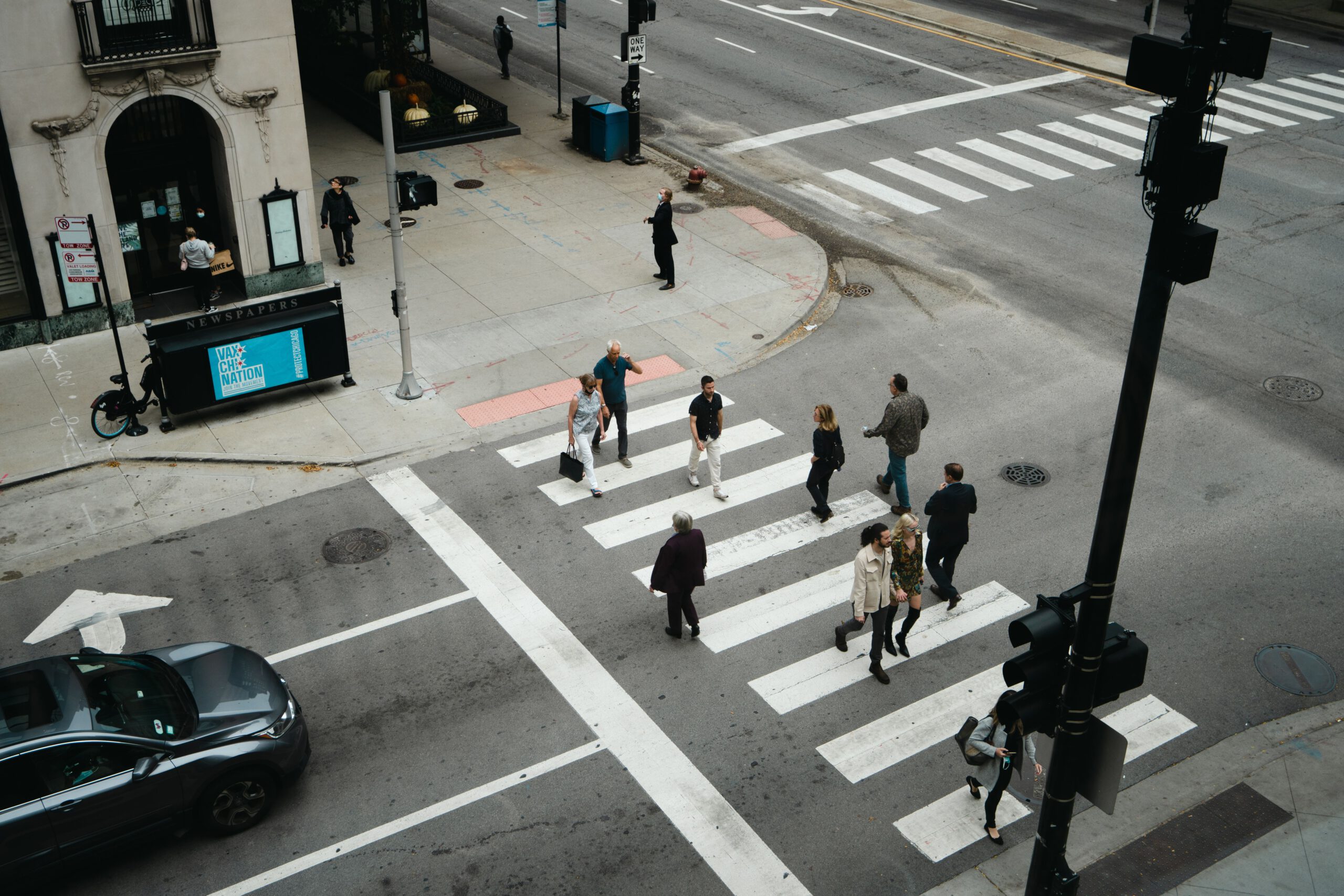
Walk signal’s lit. You’re in the crosswalk, doing everything right. And a car turning left swings into the exact space you’re standing in, the driver’s eyes somewhere else entirely, and he doesn’t clock you until you’re already on his hood.
That exact thing happens thousands of times a year. It’s one of the most common ways people on foot get wrecked at an intersection, and here’s the part that surprises people: it’s usually not some maniac blowing a red light. It’s a normal driver doing a normal turn. The danger is baked into the turn itself, and into where drivers look versus where they don’t.
So let’s talk about the left turn, because it’s the worst of them by a wide margin.
When a driver turns left, his whole brain is on the gap in oncoming traffic. He’s watching cars, judging how fast they’re coming, timing his shot across the intersection. You, in the crosswalk, are nowhere in that calculation. Studies on intersection crashes keep finding the same thing, left turns show up in way more pedestrian collisions than right turns do. The driver commits, looks at traffic, hits the gas into the crosswalk, and you appear in a spot he never bothered to check.
Speed piles on. A left-turning car is usually moving quicker than a right-turning one because the arc is wider and the driver’s rushing to clear that gap. Get hit at 20 instead of 10 and your odds of a severe injury or dying jump hard. Distracted eyes plus more speed. That’s the left turn, and that’s why it does so much damage.
The post that hides you
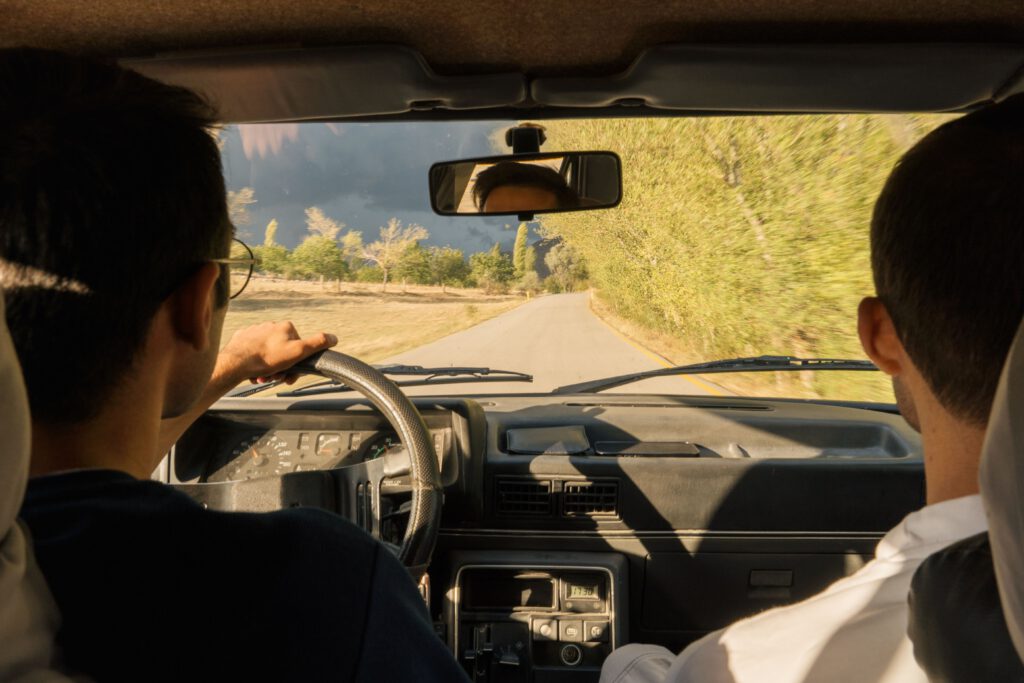
Look at the windshield. There’s a thick support post on each side holding up the roof, called the A-pillar. On newer cars it’s fat, partly because they stuff airbags in there now. And it can hide a whole human being.
Here’s the ugly mechanics of it. The car turns, and that pillar sweeps across the driver’s view. If you’re walking at a steady clip, you can stay tucked behind that post for the entire turn, because you and the pillar drift across his vision at the same rate. He looks. Sees a clear road, because the one thing that matters is sitting right behind the one thing blocking his view. He goes. Bigger truck, bigger pillar, bigger hidden zone.
So make eye contact with turning drivers before you step in front of them. Can’t see his face? He can’t see you. Assume it. Wait the extra two seconds and let the car clear instead of betting your legs on a driver who’s looking at traffic coming the other way.
Right turns are their own thing. Slower, usually, but there’s a pattern to them and once you see it you can’t unsee it.
The driver pulls up to turn right. Looks left for his gap. Rolls forward still looking left. Gap opens, foot comes off the brake, and the crosswalk on his right, the one you’re in, went completely unchecked the whole time. Right turn on red makes it worse, because now he’s treating a red light as a yield, creeping out watching for cars from the left, and he never once glances right at you crossing with the signal. And the rolling stop, where nobody actually stops anymore, means the car’s still moving when he finally looks your way. If he looks.
A little trick that’s saved people. Watch the front wheels of any car waiting to turn, not the driver. The wheels start rolling before the car really goes, and that’s your half-second heads up that he’s about to move whether he sees you or not.
How bad is this, actually
Pedestrian deaths have been climbing for a decade now, and intersections eat up a big chunk of them. The National Safety Council’s pedestrian injury data tracks the numbers year over year, how many people die, where it keeps happening. Go look at the real figures sometime. It makes the whole thing a lot less abstract.
Couple things stay true no matter the year. You’ve got nothing between you and two tons of metal, so the injuries run severe. Brain injuries, spinal damage, shattered pelvises, legs broken in a few places. A crash that’d be a crumpled bumper between two cars turns into a life-changer when one side is a person on foot.
And it’s rougher on older folks. Somebody over 65 is more likely to die from the same crash a thirty-year-old would survive, because the body just doesn’t bounce back the same. Kids too, small enough that a driver can’t see them over the hood at all.
So who’s at fault
You’re in a marked crosswalk with the walk signal. You’ve got the right of way, plain and simple, and a driver who turns into that crosswalk and hits you is almost always on the hook. He’s got a legal duty to yield to anybody already crossing, and “I didn’t see her” is not a defense. The law says look.
But fault is never where the fight ends. Insurance companies will dig for any way to shove some of the blame back onto you. Were you on your phone? Did you step out a hair before the signal. Dark clothes at night. One foot outside the lines. And in Georgia this matters a lot, because it’s modified comparative negligence, so your recovery drops by your share of the fault and if they can get you to 50 percent or more you get nothing. Pin 30 percent on you and you’ve lost nearly a third of everything.
Evidence settles those fights. Signal timing, any traffic or store camera that caught it, where the car actually hit you, what the witnesses saw, the crosswalk paint. Snap photos of the scene and the signal fast, before anybody can spin a story about you darting into traffic.
If one of them hits you
Doctor first, even if the adrenaline’s got you feeling fine and ready to walk home. Pedestrian injuries love to hide, internal stuff, concussions, things that don’t speak up for a day or two. Get seen inside 24 to 72 hours so the record ties your injuries to the crash. Wait too long and the insurer gets to say your back pain came from somewhere else.
Then document whatever you can reach. The intersection, the crosswalk, the signal, the car. Driver’s info, and the numbers of any witnesses before they drift off. If a traffic cam or some business camera on the corner might’ve caught it, that footage can decide the whole case, and it’s often wiped inside 30 to 90 days.
An Atlanta pedestrian accident lawyer can move quickly to lock down that video, pull the signal timing from the city, and push back when the insurer starts building a story where the crash is somehow your fault for walking. Most of these firms are contingency, usually around a third, nothing up front, so asking early costs you time and not much else. And early help matters extra here because pedestrian injuries tend to be bad and the recoveries long, which means the settlement has to cover next year’s medical bills too, not just the first ER visit.
One more thing. Don’t just grab whoever’s advertising. You want a firm that actually runs pedestrian and serious injury cases, not a general shop that sees one every couple years. Ask how many they’ve taken all the way to a verdict, not quietly settled. Ask who’s really handling your file. Fees in writing. And check them somewhere that isn’t their own website, like the Justia profile for attorney David M. Van Sant, where the practice areas and reviews come from a third party. A few minutes, tells you fast whether they really do this.
Turning cars hurt people on foot because of where drivers aim their eyes, because a roof pillar can swallow a whole person mid-turn, and because nobody fully stops anymore before they look right. Make eye contact. Watch the front wheels. Never assume the turning driver sees you, because half the time he flat out doesn’t. And if one gets you anyway, see a doctor, shoot the scene, and get a lawyer going before that corner camera records over itself. You weren’t at fault for being on foot. The proof you grab is what makes the record say so.
Author: James K. Camper
With a BA in communications and paralegal experience, Irma Dengler decided to make the best of her writing skills. She decided to turn complicated legal matters into something more palatable for the masses. Therefore, Irma became a law communicator who writes about everyday problems so everyone can understand them and take the appropriate action. She specializes in personal injury cases, as they are more common than anyone thinks, but her areas of expertise also include civil law, criminal law, insurance-related issues, and more.
Where the legal industry reads first.
Enjoyed this article? Get the biggest legal industry updates, deals, appointments, insights and expert interviews in your inbox, free.
No spam. Unsubscribe anytime.From Legal Desire
Is your firm the one being cited, or the one being skipped?
We ran the test. On several everyday legal questions, software companies are answering and law firms are not. We help firms fix that, and we build the technology behind the practice.
Lawyers and firms: get featured on Legal Desire
Share your deals, lateral moves, firm news and insights with 1M+ monthly readers: founders, law firm partners, general counsel and practising lawyers across the US, UK, EU and GCC.
Get featuredSubmit a press release