

Car turns left across a rider’s path, the rider goes down hard, injuries are bad. On paper that’s a textbook left-turn case, the kind that’d settle between two cars in a couple weeks.
Put a motorcycle in it and watch what happens instead. The driver swears the rider was speeding. The insurer floats that the biker “came out of nowhere.” Suddenly fault is a brawl, and the rider, who might have done absolutely nothing wrong, is the one stuck proving it.
Two things drive this, and they feed each other. Riders carry a reputation they didn’t ask for, and the way these crashes play out tends to wipe out the evidence that would’ve cleared them. Bias on top of thin proof. That’s the whole problem in one line.
The bias shows up before anyone’s even looked at the facts. A lot of drivers, adjusters, even jurors, they picture every rider as some guy weaving through traffic at 90. So the adjuster who answers your claim is already starting from “well, he probably had it coming.” The other driver leans right into that, because blaming you costs them nothing and might save their rate. And honestly, cops at the scene aren’t immune to it either, which bleeds into how the report gets written and who gets tagged as the likely cause.
Here’s why that’s worse than it sounds. People remember what they expect to see. A witness who didn’t actually catch the start of the crash will still swear the bike was “flying,” because that fits the story already in their head. So you’re not just fighting the facts. You’re fighting an assumption, and assumptions don’t move easy.
The evidence is already against you
And it’s not bad luck. It’s built in.
A bike gives you almost nothing to protect you, so the rider gets thrown and hurt, often badly. An injured or knocked-out rider isn’t photographing anything, isn’t collecting witness numbers, isn’t giving their side while it’s fresh. The driver, who usually walks away fine, does all of that. They own the story from minute one. By the time you’re out of the hospital the scene’s long gone and their version has already hardened into “the truth.”
The physical proof is thin, too. Two cars smack together and leave matching crumple damage an expert can actually read. A bike hitting a car might leave a dent, a scuff, or nothing you’d notice. Skid marks? A motorcycle brakes and skids nothing like a car, and an investigator who doesn’t get two-wheel dynamics will straight up misread what those marks are saying.
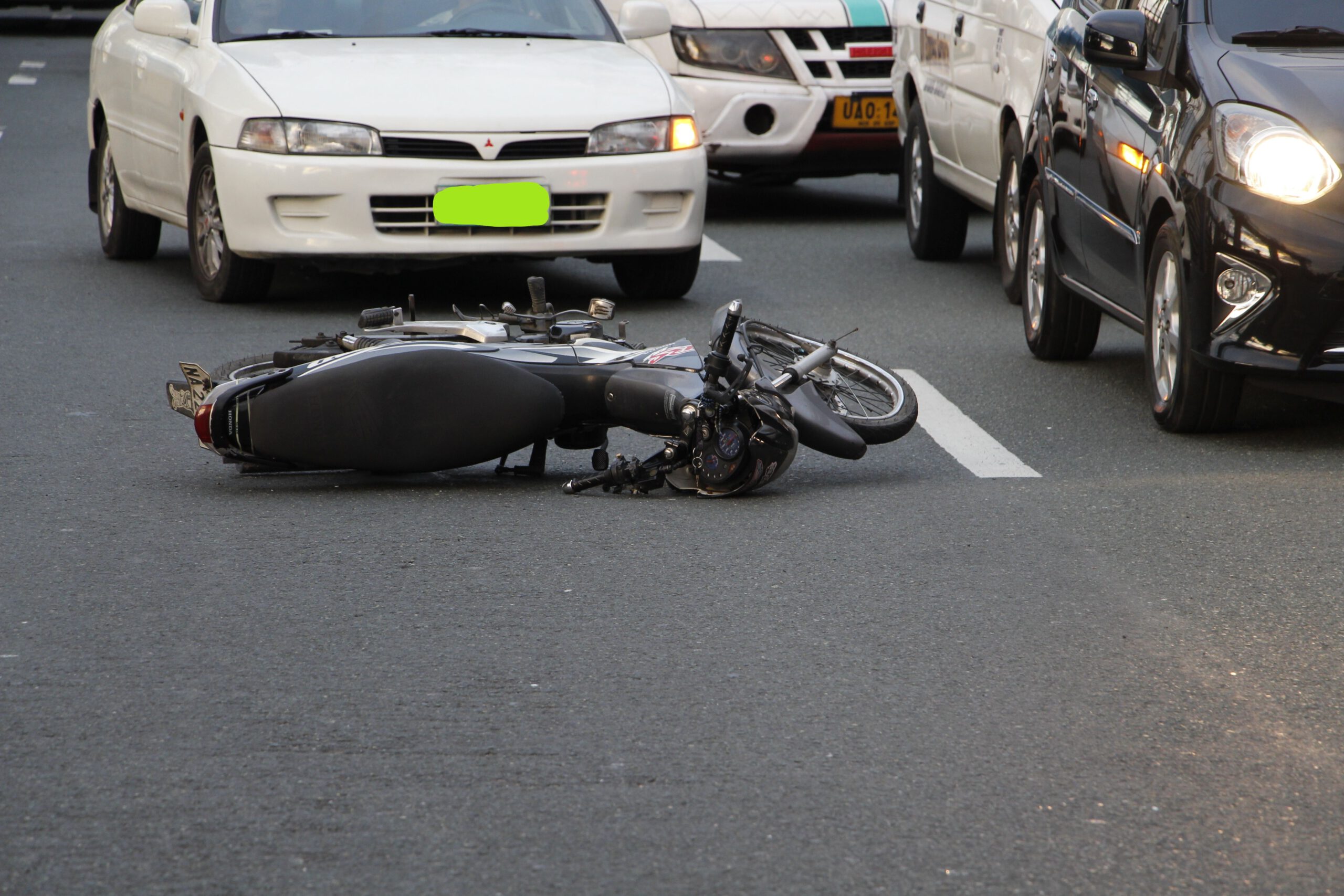
Then there’s the bike itself, and this one’s maddening. A downed motorcycle slides and tumbles down the road, and all that sliding tears it up. Looks exactly like high-speed damage even when you were doing the limit. So the other side points at your mangled bike and goes “look at it, he had to be flying,” when every bit of that destruction came from the slide, not the speed.
The crashes that always turn into a fight
Few scenarios cause most of these, and each one comes with its own canned argument.
Left-turn is the big one. Car turns left in front of an oncoming bike. Driver says he never saw it, or it was going too fast to dodge. What really happened, most of the time, is the driver flat misjudged how fast and how close the bike was, which is a known thing with small narrow vehicles, or he just didn’t look.
Lane splitting lights the fuse where it comes up. In Texas it’s illegal, so if you went down moving between lanes, the other side will hang fault on you even when the driver’s lane change is what caused the contact. Where it’s legal or tolerated, the fight shifts to whether you did it safely.
Blind-spot and lane-change wrecks are their own mess, because a bike disappears into a car’s blind spot without trying. Driver says the bike wasn’t there, or popped up out of nowhere. Rider says the guy changed lanes without looking. No witness, no camera, and now it’s just one voice against another.
This is where the money actually lives
Fault in a motorcycle case is almost never all or nothing, and the slice they pin on you controls your check. Once you get that, you get why insurers claw so hard for even a little piece of blame.
Texas runs modified comparative negligence with a 51 percent cutoff. Hit 51 percent or more at fault and you collect nothing. Below that, your recovery just drops by your share. So a rider with 100,000 dollars in damages who gets tagged at 30 percent walks away with 70,000. The insurer doesn’t have to prove you caused the wreck. They just have to shove 30 or 40 percent your way, and that’s real money saved, so they shove. Forbes Advisor’s guide to motorcycle accident lawsuits lays out how fault and damages and the claims process fit together, and it’s worth reading just so you see that the percentage fight is the entire game. Every jab about your speed, your gear, where you were in the lane, all of it is aimed at nudging that number up.
Helmets get dragged into it too, in some states. The insurer might argue no helmet, or the wrong one, made your injuries worse and should cut your payout. Texas lets riders 21 and up ride without one if they’ve got the insurance or training, but don’t be shocked when they bring it up anyway to shave the damages.
What it actually takes to win
Since the default evidence tilts toward the car, you win by building a better record than they do. Period.
Scene photos carry a ton of weight, so if you physically can, shoot the vehicle positions, the damage on both, the road, the lights, any skid marks, before a single thing gets moved. Can’t, because you’re hurt? Get a passenger or a bystander to do it. And helmet cams and dashcams have flat-out ended motorcycle disputes on the spot, because footage kills the argument about who did what. If you ride, run a camera. Seriously.
Independent witnesses count for more here than almost anywhere, because a neutral voice snaps the tie between his story and yours. Grab names and numbers before anybody drives off. Traffic and store cameras near the corner might’ve caught the whole thing, and that stuff gets recorded over in 30 to 90 days, so somebody has to ask for it fast.
Reconstruction experts come in when the physical evidence is a mess. An engineer who actually understands bikes can back out your real speed from the skid and slide marks and show the jury the bike damage came from the slide, not from you being reckless. That testimony turns cases around. I’ve seen it be the whole difference.
Get a lawyer on it early, not eventually
The entire case runs on that fault percentage, so the pushback has to start fast and hit hard. A motorcycle accident lawyer in Texas can fire off preservation letters to lock down camera footage before it’s gone, bring in the reconstruction people to kill the speeding claim, and hunt down the neutral witnesses who break the tie. They also deal with the insurer so you don’t, which keeps you from tossing off some offhand line that the adjuster then uses to build the comparative-fault case against you.
Most motorcycle firms are contingency, usually around a third, and they front the cost of the experts and the investigation, nothing out of your pocket, paid only if they win. That matters a lot here, because reconstruction experts aren’t cheap, and being able to actually fund one is often what decides whether the fault fight gets won or lost.
Moving quick is the whole thing. A lawyer in during the first week preserves the evidence and talks to witnesses while it’s all still sharp. Same case six months late has lost the footage, the scene’s long cleaned up, and half the proof that would’ve cleared you is just gone.
One last thing before you sign anybody. These cases need specific experience, because the bias and the evidence problems don’t even exist in a normal car claim. Ask how many motorcycle cases they’ve run and how many they’ve taken to trial, since insurers play harder against a firm that’ll actually go to court. Ask which reconstruction experts they use and who’s handling your file. Fees in writing. And check them somewhere independent, like the Super Lawyers profile for AK Law Firm, to confirm the practice focus and background from a third party instead of their own ads. Few minutes. Tells you whether they really do this or just take the occasional one.
Motorcycle wrecks turn into fault fights because riders start with a reputation they never earned and a crash that tends to erase the proof in their favor. The driver owns the early story, the physical evidence reads against the bike, and the insurer has every reason in the world to push the blame onto you. You answer it by documenting the scene when you can, locking down footage before it vanishes, bringing in people who understand two wheels, and getting a lawyer early. The percentage decides the money. The evidence decides the percentage. That’s it.
Author: Mark Scott
With a law degree under his belt, Mark Scott understood very early that law communication was a relatively neglected area. He decided to help people by “translating” the language and offering information and advice in a clear, helpful, and actionable manner. For this reason, instead of finding him in court, you will most likely find his name online, where he is very active and thriving as a legal columnist. His part of making the world a better place is to make the law a less convoluted maze. He aims to make it easier for people to understand when and how to seek legal counsel, how to proceed in a significant number of legal matters, and how to find the proper resources so they can stand up for their rights.
Where the legal industry reads first.
Enjoyed this article? Get the biggest legal industry updates, deals, appointments, insights and expert interviews in your inbox, free.
No spam. Unsubscribe anytime.From Legal Desire
Is your firm the one being cited, or the one being skipped?
We ran the test. On several everyday legal questions, software companies are answering and law firms are not. We help firms fix that, and we build the technology behind the practice.
Lawyers and firms: get featured on Legal Desire
Share your deals, lateral moves, firm news and insights with 1M+ monthly readers: founders, law firm partners, general counsel and practising lawyers across the US, UK, EU and GCC.
Get featuredSubmit a press release