
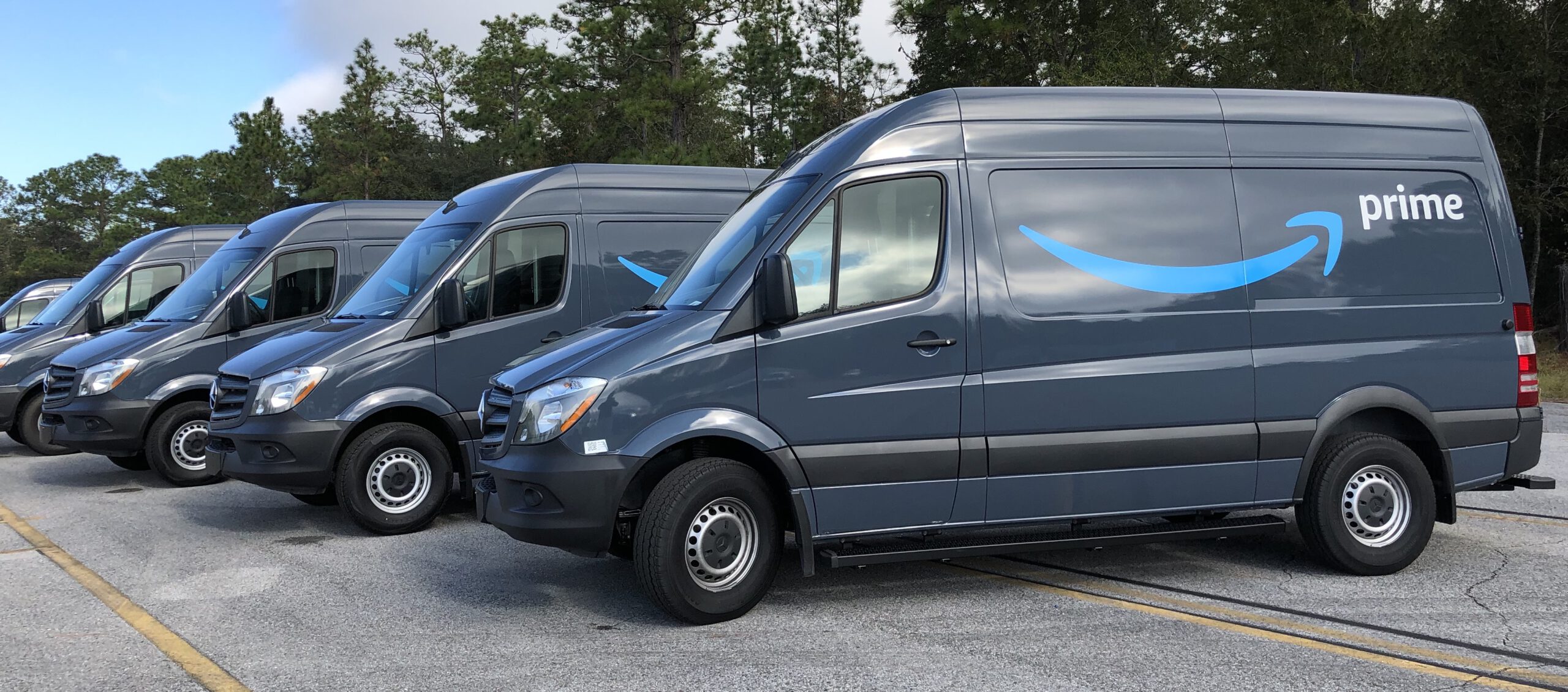
It’s practically wallpaper at this point. A white van with a smile logo rolling down the street, pulling into a driveway, backing out a minute later, gone before you’ve even finished glancing over. Most people don’t think twice about it anymore.
What doesn’t show up in that quick glance is everything happening inside the cab. A schedule packed tight enough to leave almost no breathing room, a navigation app constantly recalculating, dozens of stops still waiting, and a driver trying to keep all of it straight at once.
That gap between how ordinary these vans look and how much is actually going on behind the wheel is a big part of what shapes Amazon van delivery accidents in Tampa, FL, and it’s worth understanding exactly what that pressure looks like from the inside.
The Clock Is Riding Shotgun
Delivery routes get built around numbers, stops per hour, packages per shift, windows that don’t leave a lot of slack if something runs long. That kind of schedule sits in the passenger seat the entire day, whether the driver acknowledges it or not.
Frequent stops mean constant starting and stopping, over and over, dozens of times before lunch even rolls around. Navigation demands stack on top of that, since routes shift daily and rarely follow the same pattern twice in a row.
The pressure to keep moving doesn’t announce itself loudly, it just quietly shapes decisions all day long, how quickly to pull back into traffic, how much time to spend double-checking a turn, how close to cut things when a stop is running behind schedule.
A Different Kind of Distracted Driving
Distracted driving usually brings phones to mind first, but delivery driving involves a considerably wider set of distractions built right into the job itself. Hunting for the correct address on an unfamiliar street eats up attention that would otherwise stay on the road.
Checking navigation constantly matters too, since routes change daily and muscle memory simply doesn’t build the way it would on a regular commute. Locating the actual entrance to a building, especially in apartment complexes or busy commercial areas, adds its own layer of searching.
Watching for an open parking space competes for attention as well, along with mentally prepping for whatever the next stop happens to require. None of this looks like texting behind the wheel, but it pulls focus in a strikingly similar way.
The Van Doesn’t Stay in Traffic for Long
Most vehicles on the road are heading somewhere continuous, point A to point B, without much in between. A delivery van does something else entirely, weaving in and out of the traffic flow constantly, rarely staying part of it for more than a block or two.
Sudden stops happen often, sometimes with little warning to the cars following behind. Frequent turns pile up too, along with pulling onto shoulders or curbs in spots that weren’t really designed for parking at all. Backing up becomes routine in tight driveways and narrow lots.
That constant in-and-out pattern means everyone sharing the road with a delivery van needs to expect behavior that looks nothing like typical, steady traffic flow, since the van simply isn’t operating the same way most other vehicles nearby actually are.
When a Crash Gets More Complicated Than It Looks
The moment something actually goes wrong, figuring out what happened isn’t always as simple as pointing at the driver. Employment status matters, since delivery drivers sometimes work as direct employees and sometimes through contracted delivery partners entirely.
Vehicle ownership can trace back to a different party than the driver themselves, and that distinction affects how responsibility eventually gets sorted out. Insurance coverage often follows that same layered structure, rarely as simple as a single policy covering everything involved.
Evidence adds its own complexity too, route data, dispatch records, and company logs can all become relevant depending on exactly what happened. What looks like a straightforward crash on the surface can turn out to involve considerably more moving pieces underneath.
Conclusion
That van in the rearview mirror looks about as unremarkable as traffic gets, easy to overlook, easy to forget about the second it turns onto another street. But there’s genuinely a lot happening inside it that never crosses most drivers’ minds.
Time pressure, constant stopping, navigation demands, and driving patterns that don’t match ordinary traffic all combine to make these trips considerably more complicated than they appear from the outside, even during a completely uneventful afternoon.
Recognizing that complexity doesn’t mean assuming the worst about every van on the road, it just means understanding why these vehicles behave the way they do, and why that behavior deserves a little extra attention from everyone sharing the street with them.
Where the legal industry reads first.
Enjoyed this article? Get the biggest legal industry updates, deals, appointments, insights and expert interviews in your inbox, free.
No spam. Unsubscribe anytime.From Legal Desire
Is your firm the one being cited, or the one being skipped?
We ran the test. On several everyday legal questions, software companies are answering and law firms are not. We help firms fix that, and we build the technology behind the practice.
Lawyers and firms: get featured on Legal Desire
Share your deals, lateral moves, firm news and insights with 1M+ monthly readers: founders, law firm partners, general counsel and practising lawyers across the US, UK, EU and GCC.
Get featuredSubmit a press release