

1. Cream-Coloured Button That Hanged Dhananjoy Chatterjee
A 14-year-old girl, Hetal Parekh, was raped and murdered in her own apartment in a block in Kolkata in March 1990. The security guard of the building, Dhananjoy Chatterjee, was identified as the prime suspect.
The case against him was based on circumstantial evidence, but something that stood out was a broken chain and a cream-colored shirt button with four holes that was found in the room where Hetal’s body was discovered. Later, police searched Chatterjee’s home and found a shirt with a missing button. The Calcutta High Court, and eventually the Supreme Court of India, considered this recovery, which bound up the accused with an ordinary piece of cloth and brought him to the scene, one of the strongest pieces of evidence against him, along with testimony from the witnesses and forensic evidence of the assault.
After almost 14 years of appeals, Chatterjee was executed in 2004, one of the most haunting cases in Indian criminal history where physical evidence no bigger than a coin has underpinned an entire prosecution.
References:
Dhananjoy Chatterjee vs State of W.B on 11 January, 1994 https://indiankanoon.org/doc/1351933
2. The Pyjama Top That Contradicted Jeffrey MacDonald.
Jeffrey MacDonald, a physician for the U.S. Army, testified to investigators in February 1970 that the intruders had forced their way into his home at Fort Bragg, North Carolina, murdered his pregnant wife and two young girls, and stabbed him in the process. He claims that he put his own torn-up top of his pyjamas over his wife after the attack.
In reopening the case years later, forensic scientists scrutinised the pyjama top itself. The holes made in the fabric were clean-edged, round, and made when the fabric was not moving, but rather when it was in a stationary position, such as during puncture rather than during use in conjunction with movement as part of a struggle. If MacDonald had been wearing it while he was fighting attackers, as he claimed, there would be ragged and torn holes. Another team of investigators also found a blood stain on the two parts of the shirt that matched, and the pattern lined up before the tearing, which contradicts his own testimony as to when he had put it over the body.
The single garment, along with the physics of the shape of the punctures, became one of the key pieces of evidence that led to MacDonald’s conviction in the murders nearly 10 years after the crime.
References:
3. A Woollen Dress that caught a Killer who thought he had gotten away.
Bromley, England, February 1968. Bernard Josephs returned home to discover his wife Claire, with her throat slashed. Police spoke with a recent romantic partner of the couple, Roger Payne, who had visible scratches on his hands. Payne was able to provide an explanation, though it didn’t convince forensic examiners,s who instead went to his clothes.
The evidence that led to the conviction of her attacker was the single garment of wool that Claire was wearing when she was killed. Payne’s clothing, when examined, revealed over sixty cerise coloured wool fibres from her dress, all of which matched the fabric of her dress, despite his denials that he had been in close and strong contact with her at the time of her death. It was one of the first times in Britain that such “fiber transfer”, the basic, almost common-sense idea that clothes shed fibres on any surface they come into contact with, was crucial in the courtroom before DNA testing came along.
References:
4. The Grey Sweatshirt That Freed David Camm and Convicted the Real Killer
Former Indiana State Trooper David Camm returned home on September 28, 2000, to discover his wife and two young children had been shot to death in the garage of their Georgetown, Indiana home. In 2002, Camm himself was the prime suspect and found guilty of the murders, mainly based on bloodstain-pattern evidence concerning his t-shirt.
One of the other things that investigators uncovered at the scene, but barely touched upon in the first trial, was a gray sweatshirt, lying in the corner of the garage, with the word “BACKBONE” written inside the collar. It wasn’t Camm’s, and he told that from the beginning. A few years later, the sweatshirt’s unknown male DNA was successfully matched by the FBI to a known felon named Charles Boney (also known as “Backbone”) with a history of assaults on women. Camm’s conviction was overturned, but he was retried and convicted again, until a third trial in 2013, which resulted in the introduction of a forensic expert who identified Kim Camm’s DNA on the same sweatshirt as Boney’s, and Boney’s DNA under her fingernails.
That one sweatshirt, initially missed notice, then finally tested correctly, was the only piece of clothing that broke two wrongful convictions and in 2006 sent the real killer to prison for 225 years. David Camm was freed from prison in October 2013 after serving 13 years.
References:
- National Registry of Exonerations, “David Camm”exonerationregistry.org/cases/11440
- Wikipedia, “Wrongful conviction of David Camm” en.wikipedia.org/wiki/Wrongful_conviction_of_David_Camm
- ForensicsColleges.com, “Fraud in Forensics: Cases of Evidence Tampering and Abuse” — forensicscolleges.com/blog/resources/real-cases-of-forensic-fraud-flawed-evidence
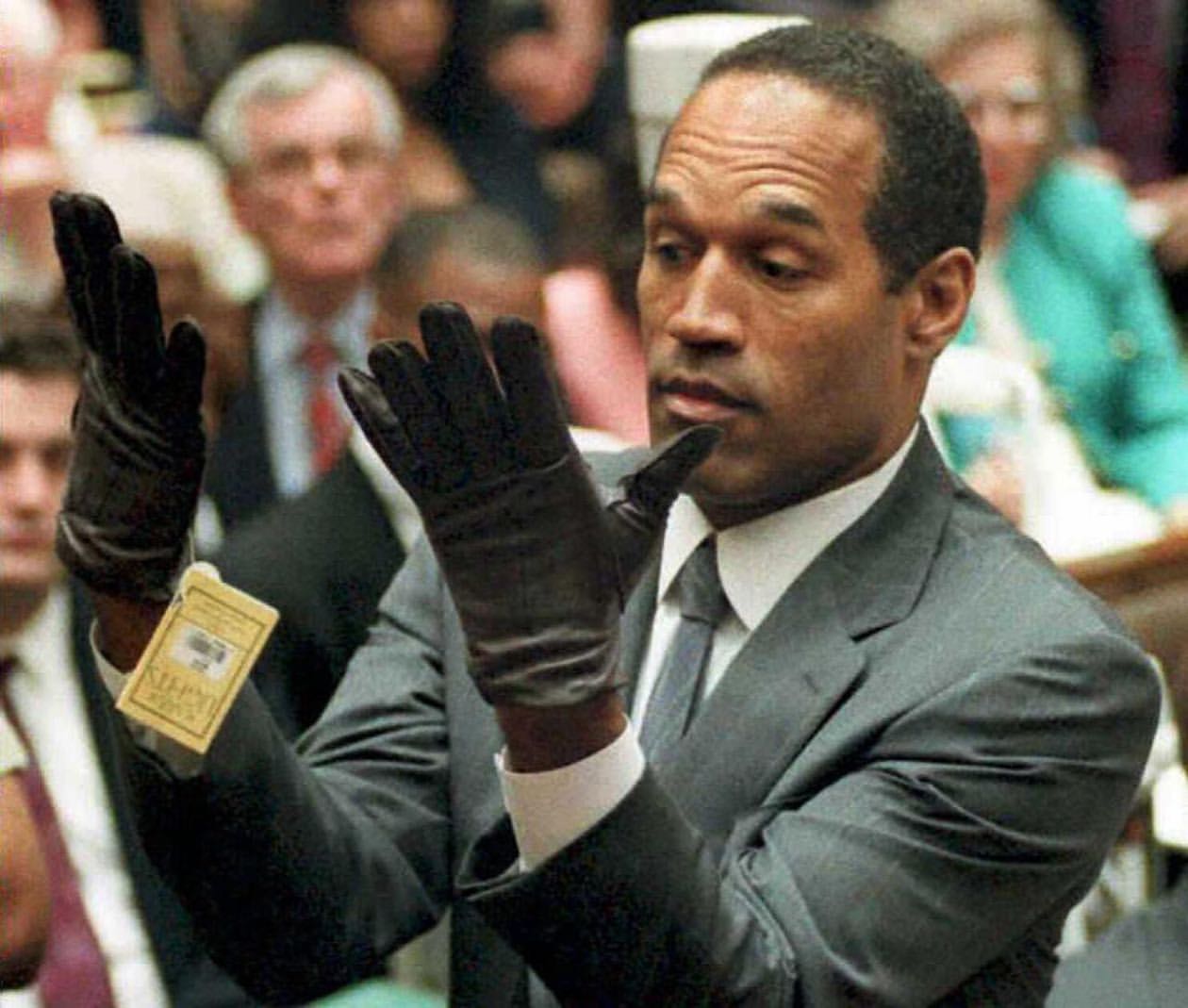
5. The Gloves That Didn’t Fit — O.J. Simpson
Not all cases of garments result in conviction. Occasionally, it rips apart the case in the middle of a trial, live on television.
One of the blood-stained leather gloves was found at the scene of the crime, and the other was discovered at Simpson’s own estate and used to build part of the case against him in the 1995 murder trial of Nicole Brown Simpson and Ron Goldman. It should have been a physical piece that was an easy grab. Rather, prosecutor Christopher Darde made the fatal move of asking Simpson to give them a try in front of the jurors.
They seemed to be inappropriate. Simpson could clearly see they were having trouble getting them over his hands, and he was wearing latex gloves under his hands, as mandated when handling evidence. Défense attorney Johnnie Cochran took yet another shot, making the day’s most memorable quote: “If it doesn’t fit, you must acquit. The gloves just didn’t fit – they were shrunk from blood-soaked or affected by the latex beneath – or whether courtroom theatre simply outplayed forensic science, but however the incident came about, it is generally regarded as a turning point that helped to lead to Simpson’s acquittal later that year.
References:
- NBC Los Angeles, “OJ Simpson Murder Trial: ‘If It Doesn’t Fit, You Must Acquit'” nbclosangeles.com/news/local/oj-simpson-20-years-later-glove-fit-darden-dunne-murder-trial-of-the-century/1976992
- Yahoo Entertainment, “‘ If It Doesn’t Fit, You Must Acquit’: Everything About the Infamous Glove in O.J. Simpson’s Trial” yahoo.com/entertainment/doesnt-fit-must-acquit-everything-221702662.html
6. The Gold Ring and the Spectacles that Almost Sealed Matru’s Fate
A woman and her three-year-old son were stabbed to death, and cash and ornaments were stolen from the house, in the early 1960s in a village in Uttar Pradesh. Matru, alias Girish Chandra, who resided next door, was made a suspect because there had been an altercation between his wife and the woman’s dead body about six months ago.
Matru went missing right after the murder. After three days, he was caught by the police, who found a spectacle case in his possession and a pair of spectacles, and a gold ring in the folds of his dhoti. The ring was found to be the one his wife had been wearing the morning of her death when identified by the wife’s husband. This recovery was considered by both the trial court as well asthe High Court as one of the most damning pieces of evidence, and both had convicted Matru along with another co-accused.
However, when the case got to the Supreme Court, they examined the entire circumstantial evidence, not the ring. The weapon that killed the victim has never been recovered, and although the victim’s husband, Matru, remained with the victim until the police report was filed, his clothing was never found to contain any blood stains. The Court also ruled that, in isolation, absconding was not evidence of a guilty mind as it could be the result of a panic by an innocent person who is mistakenly accused. Considering the totality of the circumstances, the Supreme Court concluded the chain of circumstantial evidence was not sufficient to convict Matru of the murder, and reversed his conviction in 1971.
References: Matru alias Girish Chandra vs State of Uttar Pradesh, Supreme Court of India, 3 March 1971, (1971) 2 SCC 75 — indiankanoon.org/doc/99578
7. The Gold Chain, Wristwatch and Muffler That Unravelled a Ransom Killing
In January 2003, an 18- to 20-year-old boy was kidnapped and strangled to death in Delhi on the same day he was kidnapped (and subsequently burned to destroy evidence). His father went to the police and filed a missing person’s report, and over the next few weeks, got six separate ransom calls for money so he could get information about his son.
The disclosure statement for the man who was already accused led police to two others. A gold chain belonging to the deceased was found when the first accused was discovered, and the motorcycle on which the victim was last seen was found. The second accused presented two items – the deceased’s wristwatch and a black muffler that was used to strangle the deceased. A half-burnt body found by another police station a day after the disappearance of the boy was, in fact, the missing boy, identified by his father, investigators found.
The disclosure-based recoveries of the chain, the watch and the muffler, along with call-record analysis and witness identification, laid a circumstantial case which led to the conviction of all three accused under Sections 302, 364A, 201, and 120B of the IPC, upheld on appeal.
References:
Vikas Chaudhary vs The State of Delhi, 21 April 2023 — indiankanoon.org/doc/174887931
Where the legal industry reads first.
Enjoyed this article? Get the biggest legal industry updates, deals, appointments, insights and expert interviews in your inbox, free.
No spam. Unsubscribe anytime.From Legal Desire
Is your firm the one being cited, or the one being skipped?
We ran the test. On several everyday legal questions, software companies are answering and law firms are not. We help firms fix that, and we build the technology behind the practice.
Lawyers and firms: get featured on Legal Desire
Share your deals, lateral moves, firm news and insights with 1M+ monthly readers: founders, law firm partners, general counsel and practising lawyers across the US, UK, EU and GCC.
Get featuredSubmit a press release