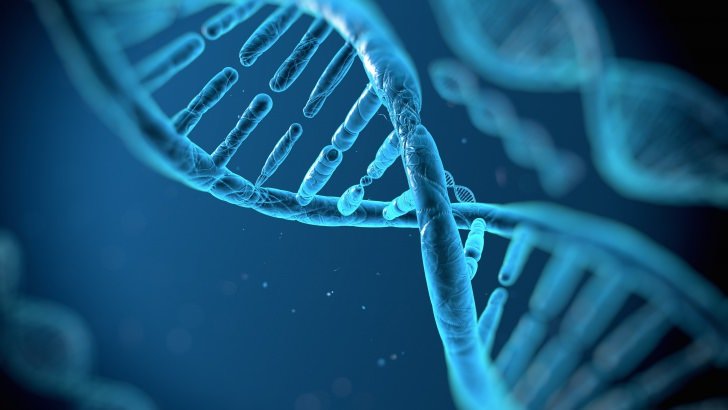

The murder of JonBenet Ramsey has been one of the unsolved crimes of America for over 30 years since a six-year-old girl was discovered dead in the basement of her family’s home in Boulder, Colorado. It’s back in the spotlight this week with a new television special and new remarks from Boulder officials, as well as a new public debate over the possibility of modern-day DNA science being able to overcome what earlier techniques could not.
The point that is crucial has been known for years. Forensic scientists used a technique known as touch DNA analysis to discover DNA outside JonBenet’s pyjama bottoms in 2008. It was the same DNA found within her underwear and was also linked to an unknown male. The two profiles were not in the Ramsey family. That discovery prompted the former Boulder County district attorney to send a letter to Ramsey and let the community know that his immediate family was no longer suspected. The profile has been in the case file since then until they attach a name to it.
Science, that’s the new thing. Single nucleotide polymorphism testing (SNP testing for short) is a technology that can recover useful genetic information from much smaller and more damaged samples than older technology. Short tandem repeat regions of DNA are known as STRs and are the standard DNA analysis used in forensic science. Like finding a few minor typographical errors in a lengthy manual, SNP testing detects variations in individual DNA letters at hundreds of thousands of sites. If used in conjunction with forensic genetic genealogy, investigators can query genetic databases for distant relatives of the unknown individual and create family trees until a name comes up. The method has already been used to solve cold cases nationwide, and it has been well publicized in the Golden State killer case.
Now Boulder’s police chief, Stephen Redfearn, has said his department is discussing with labs that could conduct this test on the Ramsey evidence. Investigators are also re-interviewing individuals involved in the case, testing other evidence and following leads. Dist. Atty. Michael Dougherty said that he is more optimistic than he has been in the past. Despite this, there is a call for patience, and the reasons are pragmatic. Genetic genealogy is better using a sample from one individual, but in this instance the key DNA was found in the girl’s underwear, along with her own blood. Interpretation of mixed samples is much more difficult and requires different thresholds. Researchers are developing methods to separate mixtures, and in this case, some scientists hope it will not be long before it can help the technology is not quite ready for all sorts of samples.
Also, the amount of evidence is considered. DNA is not endless, and some of it has been used and reused throughout the years. A small sample can be devoured by the test, and investigators might only be able to test once. Hence, they believe they are not going to take anything to a lab unless they have confidence that it will advance the case. Reporting this week even indicates it is likely that the male profile will not be identified by the end of 2026, thus disappointing for the longest waiters.
Cassie Leigh, a forensic technician and crime analyst, has outlined the other challenges effectively. The original crime scene was not properly secured, she points out, and many people had access to the home before and after the killing. This increases the likelihood of contamination and secondary transfer, by which DNA can be transferred from one person or surface to another, and the possibility that the DNA could have been left by people who had a right to be in the house. Crime laboratories are typically backed up, which delays matters even more. Even a good genealogy answer would merely be a lead. A relative match does not necessarily make someone a suspect, nor does it establish he committed a crime. Detectives still would have to determine his residence and whether this person could have been at the scene.
The Ramsey family’s hope is just one word: simple. The new coverage is a result of years of JonBenét’s father and two brothers urging the use of the best technology available. There’s also a sense, too, that time is important; that witnesses get older, and evidence gets lost.
The short answer to the headline question is no one knows the answer yet. The science is progressing rapidly; the investigators claim they are actively working on the case, and a name would be a major discovery. However, it was going to take a workable sample, a painstaking lab procedure, and a lot of traditional detective work to make the genetic clue into a case that could be substantiated. For the time being, Boulder’s message is that it is playing it safe, and when it does play what it is believed to be its last card, it gets it right.
Resources:
- https://abcnews.com/US/new-dna-tech-solve-jonbent-ramseys-murder-case/story?id=137603999
- https://abc7.com/story/how-new-dna-tech-could-solve-jonbent-ramseys-murder-case-30-years-later/20020608/
- https://www.wdbo.com/news/national/how-new-dna-tech-could-solve-jonbent-ramseys-murder-case-30-years-later/EGM7LMVM3EZB3MVXBFQG7PMAWU/
- https://www.unilad.com/news/crime/jonbenet-ramsey-new-dna-technology-548763-20261110
- https://coloradosun.com/2026/11/11/dna-could-solve-jonbenet-ramsey-investigation/
- https://newsnationnow.com/crime/current-da-says-he-jonbenet-ramsey
Where the legal industry reads first.
Enjoyed this article? Get the biggest legal industry updates, deals, appointments, insights and expert interviews in your inbox, free.
No spam. Unsubscribe anytime.From Legal Desire
Is your firm the one being cited, or the one being skipped?
We ran the test. On several everyday legal questions, software companies are answering and law firms are not. We help firms fix that, and we build the technology behind the practice.
Lawyers and firms: get featured on Legal Desire
Share your deals, lateral moves, firm news and insights with 1M+ monthly readers: founders, law firm partners, general counsel and practising lawyers across the US, UK, EU and GCC.
Get featuredSubmit a press release