Introduction:
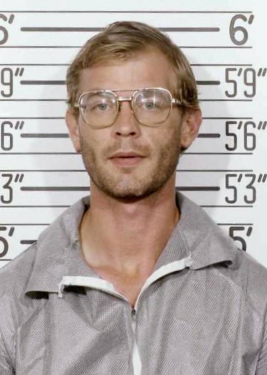
“The Milwaukee Cannibal,” or “The Milwaukee Monster”, Jeffrey Lionel Dahmer was an American serial killer and sex murderer who murdered 17 men and boys over the course of 13 years, from 1978 to 1991. His crimes were rape, murder, dismemberment, necrophilia and cannibalism. He shot for the first time in Ohio in June 1978, but not again for nine years until 1987 in Milwaukee, WI. The killings increased in intensity in 1990-91. A planned victim, Tracy Edwards, managed to break free of the handcuffs and give police the location of the apartment door with the handcuffs on his wrist on 22 July 1991. Photographs and human remains were discovered in the apartment by officers,s and Dahmer was arrested. He admitted in great detail. In 19,92 he was convicted on 15 counts of murder in Wisconsin and sentenced to 15 consecutive life terms (957 years). Later he pleaded guilty in Ohio for his first murder and was sentenced to life imprisonment again. On 28 November 199,4 a fellow prisoner beat him to death.
Date of birth-21 May 1960
Born in Milwaukee, WI, USA.
Nationality-American
Also known as: The Milwaukee Cannibal; The Milwaukee Monster
Classification: Sex Offender/Serial killer
Found 17 victims, 10 of them men and boys, approximately 14-36 years of age.
Span of crimes: June 1978 – July 1991 (first murder 1978; resumed 1987)
Victim selection-Men and boys met at bars, shopping malls and bus stops in Milwaukee
Date of arrest-22 July 1991
How he murdered them: By drugging them and strangulation (his first victim was murdered with a barbell blow)
Some of the locations of the murderer include the Bath Township, Ohio area (first victim), a hotel, his grandmother’s house in West Allis, WI, and his apartment (Oxford Apartments, Apt. 213)
Status: Deceased. Killed by inmate Christopher Scarver, Columbia Correctional Institution, Portage, Wisconsin, on 28 November 1994.
Sentence: 155 consecutive life terms in Wisconsin (957 years total, February 1992); one further life sentence in Ohio (May 1992)
A brief summary of the case:
Born in Milwaukee in 1960, Dahmer did not come from an open and violent home, although there are reports of emotional neglect, his parents’ failing marriage and an increasing drinking problem during his teenage years. Soon after graduating from high school in June 1978, he picked up an 18-year-old hitchhiker named Steven Hicks and brought him to his parents’ home in Bath Township, Ohio, where they shared a drink together. Hicks attempted to escape, but Dahmer struck him with a barbell, dismembered his body, buried him and later dug him up, crushing the bones and scattering them in the woods. He went on to say he killed Hicks because he did not want him to leave. He enlisted in the U.S. Army but was discharged around 1981 due to alcohol abuse and for minor offences was arrested without any suspicion being raised by the police about what he did. In November 1987, nine years after Hicks, he killed again in Milwaukee. He was arrested in 1988 for sexually assaulting a 13-year-old boy and sentenced to work release and probation rather than a lengthy jail term. He began to kill in May 1990, in his apartment at 924 North 25th Street, where his killings increased to nearly one per week by mid-1991. In May 1991, a dazed, naked 14-year-old, Konerak Sinthasomphone, was found outside the building. He claimed that the boy was his adult partner and was handed over to police, who in turn returned him to Dahmer, who soon killed the boy. Dahmer’s last known murder was Joseph Bradehoft, a 25-year-old he met at a bus stop, in mid-July 1991.
Events:
- Jeffrey Lionel Dahmer was born in Milwaukee, WI, on May 21, 1960.
- 18 June 1978: Dahmer slaughters hitchhiker Steven Hicks, 18, at his parents’ home in Bath Township, Ohio.
- 1978-1981: Dahmer is discharged from the U.S. Army for alcohol abuse.
- 1981: Gets arrested for a minor drunk and disorderly charge.
- When he murdered his first victim in the Milwaukee area, Steven Tuomi, in November of 1987, it had been nine years since he was killed.
- He moves to a house he uses as his hiding place in West Allis and slays several additional men and boys during the years 1987-1990.
- 1988: Dahmer is arrested for sexually assaulting a 13-year-old boy; he is later sentenced to a year of work release with probation.
- May 1990: He enters into a new apartment, Apartment 213, Oxford Apartments, 924 North 25th Street, Milwaukee.
- In 1990-1991, his murders increased, and by summer 1991, he had begun to kill about one person a week.
- On 27 May 1991, police returned 14-year-old Konerak Sinthasomphone to Dahmer, and he alleged that the boy was his adult partner, but soon afterwards, Sinthasomphone was murdered.
- 1991: Dahmer murders his 17th and last victim, Joseph Bradehoft, 25.
- On 22 July 1991, 32-year-old Tracy Edwards manages to somehow break free from Dahmer’s apartment and is able to call out to two Milwaukee police officers.
- 22 July 1991: Officers arrive at apartment 213 and discover photographs of victims and bodies; they arrest Dahmer.
- July-August, 1991: Dahmer confesses to all 17 murders, including the Ohio “killing” of 1978.
- His trial starts Jan. 30, 1992, in Milwaukee, where he pleads guilty but insane, and the trial centres on his sanity.
- February, 1992: The jury decides he is sane and guilty on all 15 counts and gives him 957 years of life terms (15 consecutive).
- Dahmer pleads guilty in Ohio for the murder of Steven Hicks in May 1992 and is sentenced to an extra life term.
- 28 November 1994: gets beaten to death by another inmate at Columbia Correctional Institution, Portage, WI.
List the crimes that Jeffrey Dahmer committed:
- Murder of 17 men and boys between 1978 and 1991.
- Charming victims with promises of money, booze and/or photography.
- Inflicting a sedative on the victim, sometimes to cause unconsciousness and then killing them, typically by strangulation.
- Rip-up of bodies with retention of body parts, including skulls.
- Necrophilia (sexual relations with corpses).
- Cannibalism (he confessed to eating parts of some victims).
- Photographing the victim before and after the death, even during the stage of dismembering the body.
- A 1988 conviction for the sexual assault of a 13-year-old boy.
Modus Operandi:
Dahmer would meet young men in gay bars, shopping malls or at a bus stop and generally pay them money, alcohol or even take a picture of them coming home with him. In his home, he would administer sedatives to his victim, killing him, primarily by strangulation. Following his death, he allegedly engaged in sexual activities with the body, took photographs of it and dismembered it. He kept skulls and other parts as trophies, and disposed of other remains using chemicals. He usually targeted disenfranchised young men and boys, and their disappearances weren’t taken seriously by the police. His first victim in Ohio died in another fashion, from a blow to the head with a barbell, when Dahmer panicked at the thought of being left. He was able to pass off his presence on the streets as being overlooked by the police until the end of the 1980s and into the early 1990s.
Crime scene:
Most of the later killings occurred in Apartment 213 at the Oxford Apartments, 924 N. 25th Street in Milwaukee, where he was arrested. There, officers discovered photographs of dismembered victims in the bedroom and a severed head in the refrigerator in the kitchen; other severed heads were found in the freezer and skulls and other parts of bodies were found in large containers of chemicals that dissolve bodies. Previously, there were murders at a Milwaukee hotel and at his grandmother’s house in West Allis, Wisconsin. The location of his first killing was a wooded section of Bath Township, Ohio, where the remains of Steven Hicks were buried and crushed and scattered. After Dahmer’s confession, investigators went to Ohio and recovered bone fragments from that site.
Forensic investigation:
Forensic science was not the key to cracking the Dahmer case. It was broken when a victim managed to flee. Tracy Edwards, with a handcuff still on his wrist, jumped out of the apartment on 22 July 1991 and told two Milwaukee officers that he was drugged and threatened with a knife by a man. The officers entered the apartment and Dahmer, who was calm, handed them the handcuff key. One officer then spotted Polaroid pictures of the victims in the bedroom, where Dahmer fought back, and the officers subdued and arrested him. Since then, the focus has shifted to forensic activities. The Milwaukee County Medical Examiner‘s office described the apartment and catalogued the remains found here. Photographs, remains, and Dahmer’s own meticulous confession were then combined to identify victims, including through dental records, as well as match each victim with a specific date and location. His confession led investigators to travel to Ohio, where they retrieved bone fragments from the place where Hicks had been buried, corroborating his account of the 1978 murder. Dahmer has admitted to all charges, so the forensic evidence largely supported what he had said and established the number of victims. The identity of the killer wasn’t an issue for investigators, and the main legal issue at trial was sanity. Rather than being a forensic success, the case is frequently referred to as an opportunity missed, particularly the time in May, 1991 when the police returned Konerak Sinthasomphone to Dahmer without looking in the apartment.
The motive for the crime:
Dahmer called his killings “acts of total control over another human being ” and said he feared abandonment. He claimed that Steven Hicks wanted to get out, and he said that later victims were killed to keep a compliant, permanent “companion” that could not leave him. His compulsion was sexual fulfillment, necrophilia and the retention of body parts. He was diagnosed with borderline and schizotypal personality disorders, a paraphilia, but none of that rendered him “legally insane. At the time, Dahmer said that he knew he was doing the wrong thing.
Judgement:
Dahmer has been charged with 15 Wisconsin homicides. He was tried for sanity in January 1992 and was found sane and found guilty of all charges, with 15 consecutive life sentences in total (957 years), effectively a sentence for life. He pleaded guilty in May 1992 in Ohio to killing Steven Hicks; a second life sentence was imposed. Note that some sources cite a total of 941 years, so use one number throughout your assignment. He spent time at Columbia Correctional Institution in Portage, Wis., where the report goes on to say he became a “born-again Christian.” He was beaten to death on 28 November 1994 by fellow inmate Christopher Scarver while on a work detail.
References:
- https://www.britannica.com/biography/Jeffrey-Dahmer
- https://www.crimemuseum.org/crime-library/serial-killers/jeffrey-dahmer/
- https://www.biography.com/crime/jeffrey-dahmer
- https://scalar.usc.edu/works/serial-killers-in-film/jeffrey-dahmer
- https://en.wikipedia.org/wiki/Jeffrey_Dahmer
- https://www.crimeandinvestigation.co.uk/crime-files/jeffrey-dahmer
- https://parade.com/culture/jeffrey-dahmer-true-story
- https://www.fbi.gov/news/stories/serial-killers-part-7-jeffrey-dahmer
- https://www.history.com/this-day-in-history/july-22/cannibal-and-serial-killer-jeffrey-dahmer-is-caught
Where the legal industry reads first.
Enjoyed this article? Get the biggest legal industry updates, deals, appointments, insights and expert interviews in your inbox, free.
No spam. Unsubscribe anytime.From Legal Desire
Is your firm the one being cited, or the one being skipped?
We ran the test. On several everyday legal questions, software companies are answering and law firms are not. We help firms fix that, and we build the technology behind the practice.
Lawyers and firms: get featured on Legal Desire
Share your deals, lateral moves, firm news and insights with 1M+ monthly readers: founders, law firm partners, general counsel and practising lawyers across the US, UK, EU and GCC.
Get featuredSubmit a press release