Last updated: 11 November 2026. This article draws on Herbert Smith Freehills Kramer’s launch and appointment announcements, its first combined results published on 23 July 2026 as reported by Legal Business, the Law Society Gazette, Legal Cheek and Bloomberg Law, and reporting on hires and departures by Bloomberg Law, The Global Legal Post and Non-Billable. Figures are the firm’s own unless stated. It is general information, not investment or career advice.
Short answer: On the numbers, yes so far. HSF Kramer’s first combined year, to 30 April 2026, produced revenue of $2.4 billion (£1.8 billion) and profit per equity partner of about $2.05 million, and the firm says it beat its first-year targets. The US build is less settled: a large Silicon Valley IP team left, and the promised Texas office had not been confirmed by November 2026.
Key takeaways
- Herbert Smith Freehills and New York’s Kramer Levin combined on 1 June 2025, creating a firm of about 2,700 lawyers, roughly 630 partners and 26 offices.
- First-year results showed revenue of £1.8 billion ($2.4 billion), profit of £633.9 million and PEP of £1.5 million, covering 12 months of legacy HSF and 11 months of Kramer Levin.
- The firm says synergy revenue came in at more than double its target, and revenue grew in every region.
- The weak spot is the US: a 34-lawyer IP litigation group moved to Brown Rudnick in August 2026, while the goal of doubling US revenue to $1 billion within five years is still a plan.
What was the HSF Kramer merger?
Herbert Smith Freehills, the London and Australia firm, announced its plan to combine with Kramer Levin Naftalis & Frankel in November 2024. Partners at both firms approved the deal in April 2025, and the combined firm went live on 1 June 2025 as Herbert Smith Freehills Kramer, usually shortened to HSF Kramer.
At launch the firm described itself as having around 2,700 lawyers, about 630 partners, more than 6,000 people in total and 26 offices, with revenue above $2 billion. HSF brought a big disputes and energy practice across the UK, Europe, Asia and Australia. Kramer Levin brought a New York base in private equity, restructuring, real estate and securitisation, plus offices in Washington DC and Silicon Valley.
The firm’s stated plan at launch was to invest first where the fit was obvious: private equity, bankruptcy, disputes, real estate and securitisation. It also said it would enlarge its New York presence and build regulatory and technology work around Washington and Silicon Valley.
Who runs the combined firm?
Leadership was settled before launch and has largely held:
- Justin D’Agostino, Global CEO, who leads the global executive.
- Rebecca Maslen-Stannage, chair and senior partner.
- Paul Schoeman, executive partner for the US.
- Howard Spilko, global head of private equity and chair of US corporate, who came from Kramer Levin.
- Alison Brown, executive partner for US growth and strategic integration.
- Regional executive partners Jeremy Walden (UK and EMEA) and Kristin Stammer (Asia and Australia), with Anna Sutherland as executive partner for practices.
The biggest new appointment came in October 2025, when the firm hired Ilona Logvinova from Cleary Gottlieb as its first global chief AI officer. She started on 5 November 2025 and is based in New York. Legal Cheek reported in July 2026 that the firm was rolling out the AI platform Legora across the business, a choice we compare with its main rival in Legora vs Harvey.
What did the first-year results show?
HSF Kramer published its first combined figures on 23 July 2026. They cover the year from 1 May 2025 to 30 April 2026, which means a full year of legacy HSF and 11 months of Kramer Levin. The figures are unaudited.
| Measure | Year to 30 April 2026 (combined) | Year to 30 April 2025 (legacy HSF only) |
|---|---|---|
| Revenue | £1.8 billion ($2.4 billion) | £1.36 billion (about $1.9 billion) |
| Profit | £633.9 million ($850.8 million) | £486.9 million |
| Profit per equity partner | £1.5 million (about $2.05 million) | £1.4 million |
| Period covered | 12 months HSF, 11 months Kramer Levin | 12 months HSF |
The two columns are not like for like, and the firm itself says the legacy financials cannot be compared directly because the firms had different year ends and reporting bases. What the table does show is scale: the combined business is about a third bigger by revenue than HSF alone, with PEP that edged above $2 million.
The firm’s own claims, as reported by Legal Business and the Law Society Gazette, were these:
- It exceeded its first-year expectations and surpassed its FY26 financial goals.
- Synergy revenue, meaning work that came from the combination itself, was more than double the target set when the deal was agreed.
- Revenue grew in every region, with double-digit growth in Asia and EMEA, according to Legal Cheek.
D’Agostino said the firm’s “transatlantic and transpacific capabilities have propelled us into a new league.” For how that revenue ranks against other London-headquartered firms, see our list of UK law firms by revenue.
Which partners joined and which left?
Integration always costs some people. HSF Kramer has been a net hirer, but two exits stand out.
Notable arrivals
- Restructuring partners Kyle Ortiz and Brian Shaughnessy joined in New York days after launch in June 2025.
- Burr Eckstut joined from White & Case later in 2025 to lead US technology transactions in New York.
- A three-partner M&A team from Paul Hastings, led by Robert Leung with Mike Huang and Daniel Grossman, joined in March 2026.
- Antitrust partners David Pearl and John Elias joined in Washington DC.
- Daniel Geyser, who had led Haynes Boone’s Supreme Court practice and has argued 19 cases at the US Supreme Court, joined in Washington in July 2026 to co-lead Supreme Court and appellate work.
- In London, around the start of October 2026, the firm hired Sidley’s London life sciences head Marie Manley and private equity partner Alex McCarney from Eversheds Sutherland.
The Global Legal Post reported that the firm had added 35 lateral partners worldwide since 2025, eight of them in New York. It also made up 25 new partners in April 2026, its first full promotion round since the merger.
Notable departures
- Before the deal closed, Hogan Lovells hired four Kramer Levin litigation partners in Washington, including Gary Orseck and Jennifer Windom, who co-managed that office.
- In May 2026, McDermott Will & Schulte hired Lewis McDonald, co-head of HSF Kramer’s global energy practice, as a London partner. HSF Kramer named new global energy sector heads in June.
- In August 2026, Brown Rudnick hired a 34-lawyer IP litigation team from HSF Kramer’s Silicon Valley and New York offices, including seven partners such as Paul Andre and Lisa Kobialka. Non-Billable reported that the firm’s directory then listed only two lawyers in Silicon Valley, neither a partner.
The Silicon Valley loss matters because the launch plan named that office as a base for technology work. The firm’s results statement said it would build a new transactional team there, which suggests a deliberate shift from patent litigation to deals.
Has the US expansion happened yet?
Partly. Washington has clearly been strengthened, with appellate and antitrust hires. New York has added M&A, restructuring and technology partners. The bigger targets are still ahead.
In June 2026, D’Agostino told Bloomberg Law the firm wanted to open a Texas office within the year and aimed to double US revenue to $1 billion within five years. Schoeman said a Texas office would serve existing clients already active in the state rather than trying to break into a new market. We found no announcement of a Texas office opening as of 11 November 2026.
For context, a $1 billion US business would still be smaller than the largest US firms in the Am Law 100, where the leaders report several times that figure. HSF Kramer’s case to clients rests on combining US capability with its disputes and energy work elsewhere, not on matching Wall Street firms one for one.
How does HSF Kramer compare with other transatlantic mergers?
HSF Kramer was the second of four large UK and US combinations in just over two years. The table uses each firm’s own launch figures, plus first-year results where they exist.
| Firm | Effective date | Size at launch | Revenue | First-year PEP |
|---|---|---|---|---|
| A&O Shearman | May 2024 | Not given in its first-year results release | £2.9 billion ($3.7 billion) in year to 30 April 2025 | £2.0 million ($2.6 million) |
| HSF Kramer | 1 June 2025 | About 2,700 lawyers, 630 partners, 26 offices | £1.8 billion ($2.4 billion) in year to 30 April 2026 | £1.5 million (about $2.05 million) |
| Ashurst Perkins Coie | Late June 2026 | 950+ partners, about 3,500 fee earners, 52 offices | Legacy Ashurst just under £1.2 billion (FY26); Perkins Coie just under $1.3 billion (2025) | Not yet reported |
| Hogan Lovells Cadwalader | 1 July 2026 | 3,200+ lawyers, 900+ partners | $3.6 billion+ (firm figure, based on 2024 results) | Not yet reported |
Sources: A&O Shearman, HSF Kramer as reported above, The Global Legal Post on Ashurst Perkins Coie, and Hogan Lovells Cadwalader.
Two patterns repeat. Each deal lost US partners before or soon after closing, usually over conflicts or fit. We cover those losses in our explainers on Hogan Lovells Cadwalader and Ashurst Perkins Coie. And each firm has said its first priority is growing in New York. HSF Kramer is the only one of the 2025 and 2026 deals with a full year of combined results, so it is the best test case so far. A&O Shearman’s first-year PEP remains well above HSF Kramer’s, which reflects their different starting points more than the merger itself.
So, did the merger work?
Judged against what the firm promised, the first year was a success. Revenue rose, synergy revenue beat its target by a wide margin, PEP passed $2 million and leadership has stayed together. Lateral hiring has outpaced departures in number.
Three questions remain open:
- Profitability. PEP of about $2.05 million is respectable but trails the Magic Circle and A&O Shearman. Partner retention in the US depends on closing that gap.
- The US footprint. Texas, the $1 billion US revenue goal and a rebuilt Silicon Valley office are all still in progress.
- Like-for-like growth. The first year included 11 months of Kramer Levin, so the year to April 2027 will be the first clean comparison.
Anyone tracking the firm’s deal activity can follow its announced mandates on DealDatabase’s HSF Kramer page, which lists the deals and deal teams the firm has publicised.
Frequently asked questions
When did Herbert Smith Freehills and Kramer Levin merge?
The combination took effect on 1 June 2025, creating Herbert Smith Freehills Kramer. The firms had announced their plan in November 2024, and partners at both firms approved it in April 2025.
How much revenue did HSF Kramer make in its first year?
£1.8 billion, or about $2.4 billion, in the year to 30 April 2026. Profit was £633.9 million and profit per equity partner was £1.5 million, slightly above $2 million. The year included 11 months of legacy Kramer Levin.
Who is the CEO of HSF Kramer?
Justin D’Agostino is Global CEO. Rebecca Maslen-Stannage is chair and senior partner, and Paul Schoeman is executive partner for the US.
Which partners have left HSF Kramer since the merger?
The largest exit was a 34-lawyer IP litigation team, including seven partners, that joined Brown Rudnick in August 2026. Energy co-head Lewis McDonald left for McDermott Will & Schulte in London. Four Kramer Levin litigation partners in Washington joined Hogan Lovells before the deal closed.
Is HSF Kramer opening an office in Texas?
The firm said in June 2026 that it wanted to open a Texas office within a year, as part of a plan to double US revenue to $1 billion within five years. We found no confirmed opening as of 11 November 2026.
How does HSF Kramer compare with A&O Shearman?
A&O Shearman is larger. Its first post-merger year produced £2.9 billion ($3.7 billion) of revenue and PEP of £2.0 million, compared with HSF Kramer’s £1.8 billion and £1.5 million. HSF Kramer’s first year also included only 11 months of Kramer Levin.
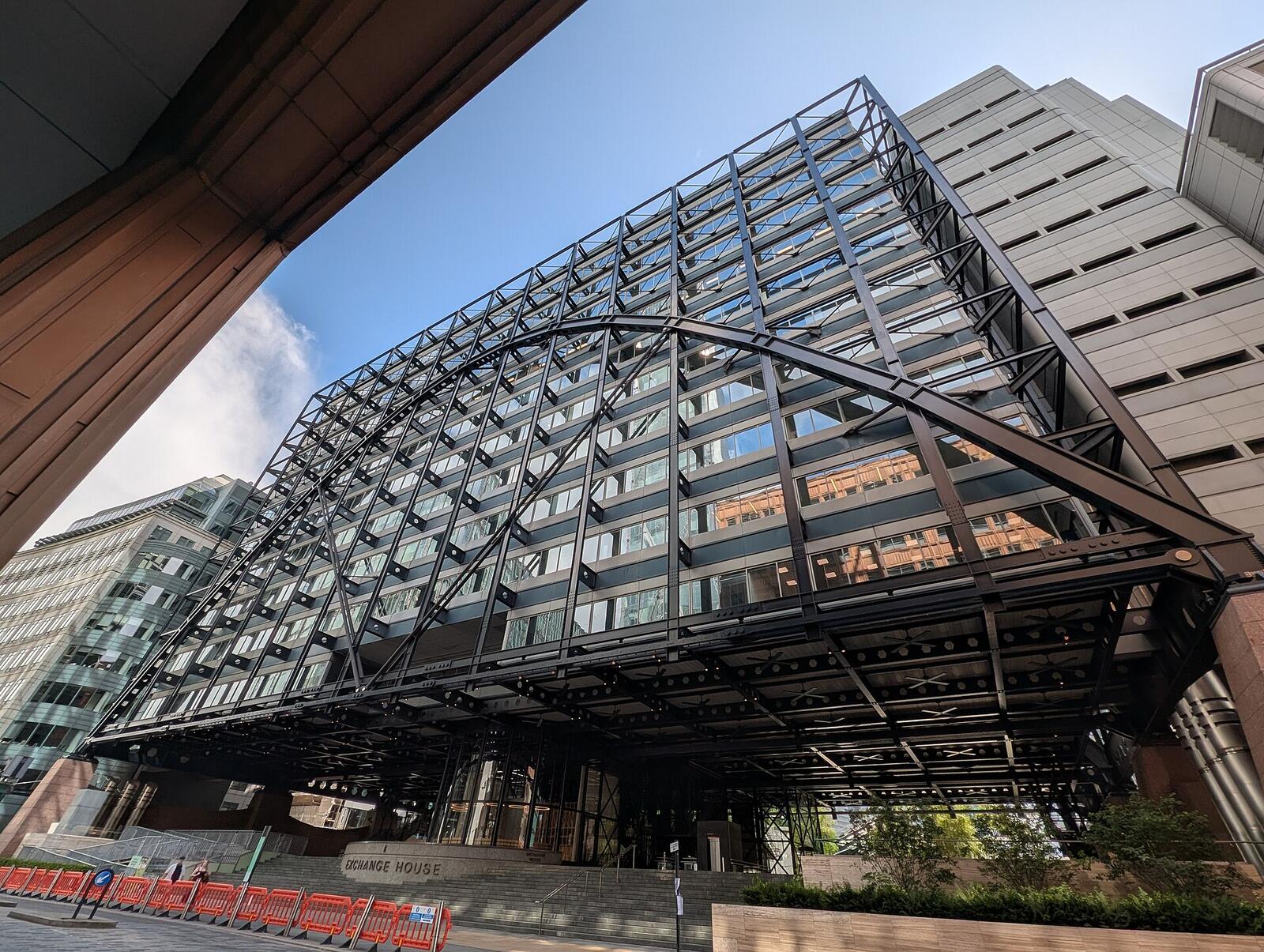
Featured image: Photo: The wub via Wikimedia Commons, CC BY-SA 4.0. Exchange House in Broadgate, London, home of HSF Kramer’s London office.
Where the legal industry reads first.
Enjoyed this article? Get the biggest legal industry updates, deals, appointments, insights and expert interviews in your inbox, free.
No spam. Unsubscribe anytime.From Legal Desire
Is your firm the one being cited, or the one being skipped?
We ran the test. On several everyday legal questions, software companies are answering and law firms are not. We help firms fix that, and we build the technology behind the practice.
Lawyers and firms: get featured on Legal Desire
Share your deals, lateral moves, firm news and insights with 1M+ monthly readers: founders, law firm partners, general counsel and practising lawyers across the US, UK, EU and GCC.
Get featuredSubmit a press release