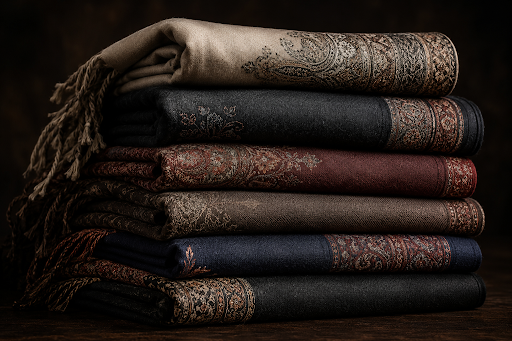
Kashmiri textiles are more than things you wear. They are the result of hundreds of years of skill, cultural memories, local identity and special knowledge that has been shared from one generation to the next. Among these items, Pashmina is very special. It is known for being very soft, warm, very thin and looking very fancy. Real Kashmiri Pashmina has become very valuable in India and around the world. This value has also caused a big problem. Fake mixed and wrong products are often sold as Pashmina or real Kashmiri items.
Telling the difference between fake textiles is not always easy for the naked eye. New ways of making clothes can create fabrics that look a lot like ones in how they feel, how they look, what color they are and how they hang. So a label or what a seller says does not always mean something is real. This is when forensic science and checking textiles can be very helpful.
Forensic textile analysis uses methods to look at fibers, threads, colors, how the fabric is made, any damage and other features of cloth. Even though textile forensics is usually connected to crime cases—like when fibers move from a suspect to a victim and a crime scene—the same science can be used to check if something is real or not. With Kashmiri textiles, forensic tests can help see if the material matches what was claimed, if the way it was made is like the ways and if the colors and tiny details support or disagree with the idea that it is real.
Checking authenticity is usually not just one thing. A real scientific answer comes from looking at different pieces of evidence together. Fiber shape, microscopes, light analysis, color tests, thread patterns, weaving styles and chemical parts all help build a picture of a piece of cloth.
This means forensic science helps connect the ways of making things with new scientific checks.
Understanding Pashmina: The Material Behind the Name
Pashmina is traditionally linked to the fine undercoat fibers of certain Himalayan goats, especially those that live in cold mountain areas. These fibers are extremely fine. They provide good warmth against harsh temperatures. In Kashmir, people have long turned these fibers into shawls and other cloths by spinning, weaving, dyeing and adding embroidery.
The worth of Pashmina depends a lot on the features of its fibers. Fine animal fibers have tiny and specific traits that set them apart from common materials like cotton, polyester, acrylic and many usual wool fibers.
However, proving that a finished cloth is real Pashmina is hard because the cloth is not just a pile of fibers. It is made through steps. Choosing fibers, spinning, preparing yarn, weaving, finishing, dyeing, embroidery and sometimes mixing fibers all change the product.
So asking if a cloth “looks like Pashmina” is not the same as using science to check if its fibers match Pashmina.
Fibre Evidence: The First Scientific Clue
The fibre is one of the important parts we look at when we try to prove if a textile is real.
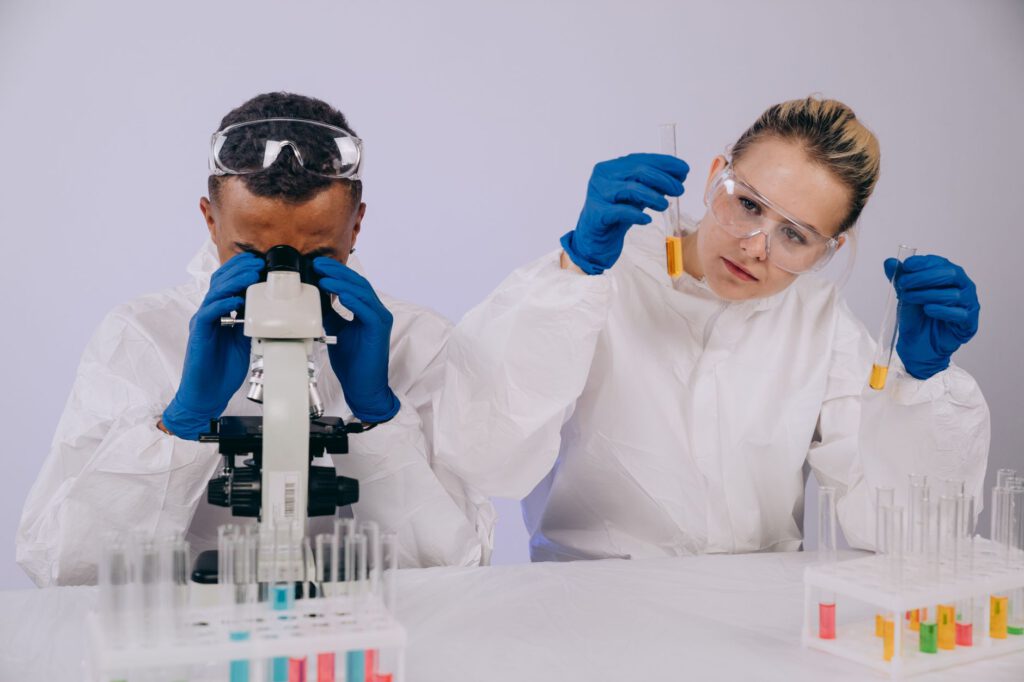
When we use a microscope, we can see things like how thick the fibre is, how the surface looks, the color, the shape of the fibre cross-section and if there is a cuticle. Animal fibres might have scales on the surface, but how big or clear those scales look depends on the specific type of animal fibre.
A light microscope is usually the tool we use to look at fibres taken from a textile. An analyst can take the questioned fibres. Compare them to a known sample to see if the shape and structure of the questioned fibres match what they are supposed to be.
Using a light microscope gives us even more details. This is because textile fibres react to light in their own unique ways. Looking at things like birefringence and how the light bends can help us tell kinds of fibres apart.
If we need to see things more clearly, we can use scanning electron microscopy (SEM). Scanning electron microscopy (SEM) gives us zoomed-in pictures of the fibre surfaces. Scanning electron microscopy (SEM) can show details on the fibres that a normal microscope might miss. This helps us compare the questioned fibres to the reference samples.
I always say that microscopy is not a perfect “yes or no” test. Natural fibres can look different from one another just because they are natural, and making the fabric can change how the fibres look. Because of this, we must look at what the microscope shows alongside all our test results.
Fibre Diameter and the Question of Fineness
One thing people always talk about when they discuss Pashmina is how fine the fibre is. Real Pashmina is special because the Pashmina fibres are so incredibly thin.
You can use a microscope to see how wide the fibres are. Of just looking at one single spot, it is better to look at a whole group of fibres to see how the fibre diameters change. This matters a lot because natural fibres are never the same size every time.
If someone tries to sell you a premium Pashmina but the Pashmina has a lot of coarse fibres in it, you should probably be careful and look closer.
However, you cannot tell where the wool comes from or if it is real by looking at the fibre diameter. Having fine animal fibre does not mean it is definitely Kashmiri Pashmina. On the other hand, having coarse fibre does not mean the Pashmina is fake or made by a machine. To know the truth, you need to look at different facts together.
Detecting Synthetic and Natural-Fibre Substitution
One of the problems in the textile market is when people mix different materials together. A textile might be sold as Pashmina, but it could actually contain wool, acrylic, polyester, viscose or other fibres.
I have found that microscopy can give you a hint if a textile has mixed fibres. If you see fibres that look very different under the microscope, the textile may need a look to find the real mix.
Fourier-transform infrared spectroscopy (FTIR) is very helpful for finding the groups in fibres. Every material has its way of vibrating at a molecular level, which creates a unique pattern on an infrared spectrum. By comparing the pattern of a questioned fibre to a known pattern, an analyst can see if the fibre is an animal protein fibre, a polymer, a cellulose-based material or something else.
Because of this, FTIR can be a lifesaver when just looking at the textile does not give you an answer.
There are ways to check fibres too, like Raman spectroscopy and thermal analysis. In high-end labs, experts often use different methods at once to make sure the results are right.
The Chemistry of Colour: Forensic Dye Analysis
The colour of a Kashmiri textile is not about beauty. Colour can also give clues about chemistry.
Traditional textiles often use dyes. Modern commercial pieces sometimes use dyes. The presence of a dye does not automatically prove authenticity because dyes can change with time, artisan skill, material supply and new ways of making.
Still analyzing dye can answer questions.
Techniques like thin‑layer chromatography, high‑performance chromatography, UV‑visible spectroscopy and mass spectrometry can look at colourants. These methods can. Describe chemical compounds linked to dyes.
For example, if a textile says it was made with a traditional dyeing method, it can be checked for chemical traits that match that claim. Likewise, comparing a questioned textile with an authenticated one can show similarities or differences in dye composition.
This information is especially useful for antique or heritage textiles, where authenticity can change both monetary value and historical importance.
Weaving as a Scientific Signature
A textile’s identity is not decided by what it is made of. How the material was put together can be just as important.
Traditional Kashmiri textiles might have ways of weaving, certain types of threads, particular designs and specific finishing methods. Looking at the fabric under a microscope can show how the threads are arranged, how the yarn is twisted, how tight the threads are, any mistakes and other details about how it was made.
A person who knows textiles well can write down these details. Check them against real examples.
This matters a lot because traditional handmade textiles often have differences because of the people who made them. These differences can be different from the even look of things made by machines.
But just because something is handmade doesn’t mean it is real, and just because something is made by a machine doesn’t mean it is fake. New technology can copy old looks. So scientific checking is needed to see if what is seen matches the claim being made.
Hand Spinning, Yarn Structure, and Craftsmanship
The change from fibre to yarn gives another possible way to find proof.
Yarn can be looked at for the way it’s twisted, how thick it is, if it is even all the way through, how the fibres are placed and what sort of structure it has. Hand spinning done in this way can create differences that are not like the ones made in big factories.
Using a microscope can show how the single fibres are put together inside the yarn. Measuring the size of the yarn and how much it is twisted can also help when comparing textiles.
These features can be very important when checking if a textile is real and from a time in history. A shawl that is said to come from an old time can be compared with other examples that are known to be from that same time.
In this situation analyzing textiles in a way becomes a kind of material history. The way the textile is made can give hints about when and how it was created.
Spectroscopy: Looking Beyond What the Eye Can See
One of the things about forensic science is that it can see things that the human eye simply cannot see.
Spectroscopic techniques work by looking at how materials react when they meet radiation. Depending on which technique a scientist picks, they can learn a lot about things like molecular composition, pigments, dyes, coatings and other tiny parts.
FTIR spectroscopy is great for helping with fibre identification and chemical characterisation. On the other hand, Raman spectroscopy can give us molecular information about pigments and dyes. Then there is UV spectroscopy, which helps when someone needs to examine coloured materials.
I find it amazing that these spectroscopic techniques can work with very small samples. This is a help when people are working with textiles that are rare, expensive or have a lot of history behind them.
The idea is quite simple but very strong. A person can try to copy how something looks. It is much harder to copy the actual chemical composition by mistake.
Advanced Imaging and Non-Destructive Examination
I see that modern forensic textile examination gains more from imaging technologies each day.
Resolution digital microscopy can record surface features, and multispectral or hyperspectral imaging can uncover pigment and material differences that normal light hides.
These methods are especially useful when examining heritage textiles because forensic science can cut down on destructive sampling.
Non-destructive methods are essential in cultural heritage science. A centuries-old shawl cannot simply be sliced into pieces for laboratory testing. Conservation scientists must then balance needs with preservation.
This is one area where forensic science and conservation science overlap strongly.
Authentication Versus Provenance
An important distinction must be made between material authentication and geographical provenance because understanding the difference helps us be accurate.
Scientific testing can show that a textile contains a type of animal fibre and that its construction matches a known category of textile. This does not prove that the textile was made in Srinagar, Kashmir or by a specific artisan.
Geographical provenance is a more complex question, and it needs deeper investigation.
To establish provenance, analysts need authenticated reference databases that contain textiles from known locations, known periods, known workshops and known manufacturing traditions. Then analysts can compare chemical signatures, fibre characteristics, weaving patterns and historical records.
A responsible forensic report should avoid claiming more than the evidence supports. A responsible forensic report should stay honest. Not overstate what the evidence says.
By saying, “This shawl definitely originated in Kashmir “, an examiner might say in a forensic report, The examined characteristics are consistent with the submitted reference population “, or say, “The findings do not support the claimed material composition.”
Scientific language matters because forensic evidence should communicate uncertainty, not hide it.
The Role of Reference Samples
No authentication system can work well if there is no reference material to look at.
Authenticated Kashmiri textiles can give us samples to study. We can look at fibre morphology, dye composition, yarn structure, weave patterns and other characteristics. Because of this, I believe building documented reference collections would be extremely valuable.
Such collections could include:
– Raw Pashmina fibres from verified sources
– Authenticated traditional shawls
– Different generations of Kashmiri weaving
– Naturally and synthetically dyed samples
– Machine-made and handwoven textiles
– Known blends and imitation products
– Historical textile samples where provenance is documented
A reference database could eventually allow laboratories to compare questioned textiles against a large population of known samples.
This would strengthen both forensic examinations and heritage authentication.
Protecting Kashmiri Cultural Heritage
The importance of textile authentication goes far beyond simple buying and selling. I see textile authentication as a vital part of protecting culture. Kashmiri textile traditions are a part of India’s cultural heritage. Counterfeit products hurt this heritage in ways. Kashmiri textile traditions can lose their value when counterfeit products lower the value of true craftsmanship, when buyers are tricked, when artisans struggle to earn a living and when false histories are created.
Forensic textile authentication can therefore be a type of protection. I think forensic textile authentication keeps stories alive. When buyers, museums, collectors, exporters, insurers and courts see evidence that real craftsmanship is easier to spot from fakes. Forensic textile authentication gives everyone a way to tell the difference. This does not mean we replace skills with lab science. Instead, the best system for textile authentication blends the knowledge of makers, textile historians, conservators and scientists. Traditional knowledge tells us what to look for and forensic science gives us tools to measure and record it.
Commercial Fraud and Consumer Protection
The commercial value of Pashmina makes authenticity very important. A consumer who pays a price for a real Pashmina product expects the material and the skill of making it to justify that price. If a synthetic or heavily blended textile is sold as Pashmina, the matter can turn into a case of misleading the customer.
Forensic testing can give evidence in disputes that involve manufacturers, sellers, exporters, insurers, collectors and consumers. A laboratory report that shows the fibre composition of a disputed product can be more convincing than the arguments made by sellers or buyers.
This is especially important when large commercial consignments are involved. Sampling and laboratory analysis can help decide if a batch matches the specifications that it says it does.
Forensic Evidence in Legal Disputes
From my perspective, textile authentication can also enter the courtroom. I see that many disputes may arise over goods, contractual disagreements, insurance claims, intellectual property, historical artefacts, auction descriptions or alleged misrepresentation. I understand that in some cases a forensic textile examiner may be asked to provide an expert opinion.
I believe that the examiners role is not to advocate for either party. The examiner’s task is to examine the material document, evaluate the results and communicate the limitations of the findings. I think that a strong forensic report should identify the sample, describe the methods, present observations and results, explain the significance of those results, and clearly distinguish scientific findings from assumptions. I agree that this is the principle of forensic science: evidence must be allowed to speak for itself.
Limitations of Forensic Textile Authentication
Although forensic analysis has strengths, it does not act as a perfect authenticity detector.
I see that natural fibres vary widely, and natural fibres can change over time. Traditional manufacturing techniques can change. Traditional manufacturing techniques can shift. Historical textiles may have been repaired, dyed, cleaned or altered, and historical textiles may have been changed in ways. Modern artisans may combine contemporary techniques, and modern artisans may blend old and new methods. Dyes may have been. Dyes may fade over time, and dyes may fade or be replaced. Contamination may also affect results, and contamination may alter outcomes.
Sampling is another limitation, and sampling can miss important details. A small piece taken from one portion of a textile may not represent the garment, and a single sample may not capture the full picture. I notice that sampling can be tricky. Furthermore, laboratory techniques can establish characteristics, and laboratory techniques may not always determine who made an object or exactly where it was produced. I find that laboratory techniques often reveal materials. They rarely pinpoint the maker or the exact place of production.
For these reasons, authentication should ideally involve lines of evidence, and authentication must rely on more than one source of proof. I believe that authentication needs types of evidence.
Fibre analysis, microscopy, spectroscopy, dye analysis, textile construction, historical documentation, provenance records and expert craftsmanship knowledge should be interpreted together. Each of these elements—fibre analysis, microscopy, spectroscopy, dye analysis, textile construction, historical documentation, provenance records and expert craftsmanship knowledge—must be considered as a whole. I think that by interpreting all of these together, we can reach a solid conclusion.
Toward a Scientific Authentication Framework
I propose a forensic approach to Kashmiri textile authentication that follows a structured process.
First, I will document the Kashmiri textile with photographs and physical notes before taking any samples. I will record its size, pattern, condition, labels, embroidery and how it was built. Second, I will collect samples carefully using methods that minimise damage to the Kashmiri textile. Third, I will identify the fibres by looking at them under a microscope and by using tests. Fourth, I will examine the yarns. Weave patterns to record how the Kashmiri textile was made. Fifth, I will analyse any dyes and pigments that are present if that is relevant.
Finally, I will compare all my findings with reference samples and interpret them in the context of the history and manufacturing of Kashmiri textile. My final conclusion will state the level of certainty I have without making claims about Kashmiri textile authentication. This framework will be especially useful for museums, government laboratories, textile institutions, customs authorities, collectors and courts when dealing with Kashmiri textile authentication.
The Future: From Craftsmanship to Data
In the future, textile authentication will likely rely more on databases, artificial intelligence, advanced microscopy and machine-learning-assisted pattern recognition.
High-resolution images of fibres, yarns and weave structures can be saved in reference databases. Spectral profiles can be compared by computer. Machine-learning systems can help analysts recognise patterns that belong to fibre groups or textile constructions.
Technology must stay a tool, not the final judge.
Interpreting evidence needs scientific validation, good quality control, the right reference populations and trained experts. Artificial intelligence can spot patterns. The decision to authenticate must stay clear, repeatable and backed by science.
For Kashmiri textiles, this technological future can help keep knowledge alive and give it a stronger scientific base.
Conclusion
From the softness of one fibre to the complex shape of a woven shawl, Kashmiri textiles hold a lot of information. For years,s artists have shown who they are through the things they make, the way they make them, the colours they use and the skills they have. Modern science gives another way of understanding that message.
Microscopy can show the shape of the fibres. Spectroscopy can look at what the fibres are made of. Dye analysis can find out what chemicals make the colours. Looking at the yarn. The way it is woven can show how it was made. All these tools together can help tell materials from fake ones and give clear proof when people are not sure if something is real.
The most important part of checking if something is real using science is not just about finding fakes. It is about keeping the skills, the real culture, the trust of people who buy things and the real history.
Pashmina is not a fancy fibre. It is a way of life that has been shaped by the place, the weather, the skills and many years of work by Kashmiri artists. Science cannot take the place of that histor—. It can help keep it safe.
In the end, looking at Kashmiri textiles with science is an example of how science can pay attention to the materials. A fibre can be very small. A thread can be almost hard to see. A dye molecule can be too tiny to see with the eyes..Together they can share a story.
When people are not sure if something is real, sometimes the tiniest clue can be the most powerful proof.
Where the legal industry reads first.
Enjoyed this article? Get the biggest legal industry updates, deals, appointments, insights and expert interviews in your inbox, free.
No spam. Unsubscribe anytime.From Legal Desire
Is your firm the one being cited, or the one being skipped?
We ran the test. On several everyday legal questions, software companies are answering and law firms are not. We help firms fix that, and we build the technology behind the practice.
Lawyers and firms: get featured on Legal Desire
Share your deals, lateral moves, firm news and insights with 1M+ monthly readers: founders, law firm partners, general counsel and practising lawyers across the US, UK, EU and GCC.
Get featuredSubmit a press release