Last updated: 25 November 2026. Sources: the Federal Rules of Evidence, Federal Rule of Civil Procedure 30, two US Supreme Court decisions, a 2023 UK Supreme Court judgment and the statutes of England and Wales.
Short answer: Cross-examination is the questioning of a witness by the lawyer for the side that did not call them. Its aims are to limit the damage the witness did on direct examination, draw out facts that help your case and test the witness’s credibility. Good cross-examiners ask short leading questions they already know the answers to, and stop once they have the point.
Key takeaways
- In US federal courts, Federal Rule of Evidence 611(b) limits cross-examination to the subject matter of the direct examination and matters affecting the witness’s credibility, though the judge can allow more.
- Leading questions are ordinarily allowed on cross-examination under Rule 611(c), which is why most cross-examiners use them almost exclusively.
- The classic way to impeach a witness is with a prior inconsistent statement: commit the witness to today’s answer, credit the earlier statement, then confront them with it, following the procedure in Rule 613.
- In England and Wales, a party who wants to dispute a witness’s evidence must generally challenge it in cross-examination, as the UK Supreme Court confirmed in TUI UK Ltd v Griffiths in November 2023.
What is cross-examination?
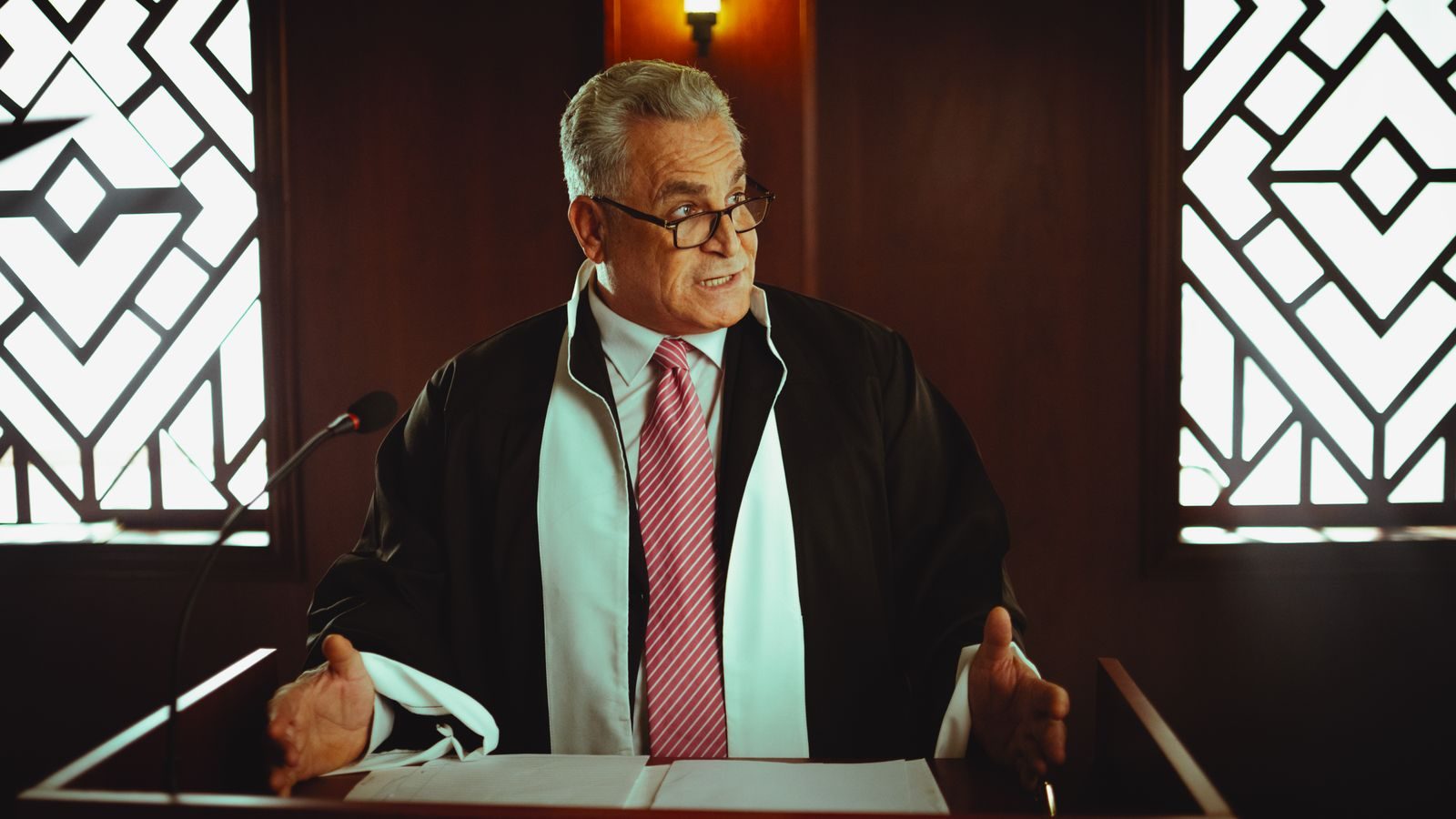
Every witness at trial is first questioned by the party who called them. That is direct examination (examination in chief in the UK). The other side then gets to question the same witness. That second round is cross-examination, and it is where trials are often won or lost.
Courts treat the right to cross-examine as a core part of a fair trial. In California v. Green (23 June 1970), the US Supreme Court quoted the evidence scholar John Henry Wigmore’s description of cross-examination as the “greatest legal engine ever invented for the discovery of truth”. In criminal cases, the Sixth Amendment’s Confrontation Clause gives defendants the right to confront the witnesses against them, and in Crawford v. Washington (8 March 2004) the Court held that testimonial statements from an absent witness cannot be used against a defendant unless the defendant had a prior opportunity to cross-examine.
A cross-examination usually has one or more of three goals:
- Build your own case. Get the witness to agree to facts that help you. These are often called “constructive” points, and they are usually safer to make first, while the witness is still cooperative.
- Limit the harm. Narrow or qualify what the witness said on direct, for example by showing they saw the event from a distance, briefly or at night.
- Damage credibility. Show bias, interest, prior convictions, inconsistent statements or a poor opportunity to observe, so the jury gives the testimony less weight.
What are the rules of cross-examination?
In US federal courts, the main rules sit in Article VI of the Federal Rules of Evidence. Many state evidence codes follow the same structure, but check the local version before you rely on a rule number. The table summarises the ones a cross-examiner uses most.
| Rule | What it says in practice | Why it matters on cross |
|---|---|---|
| FRE 611(a) | The court controls the mode and order of questioning, to find the truth, avoid wasting time and protect witnesses from harassment or undue embarrassment | Judges can cut off repetitive, argumentative or bullying questions |
| FRE 611(b) | Cross is limited to the subject matter of the direct and matters affecting credibility; the court may allow more, as if on direct | Going “beyond the scope” invites an objection and may force you to use non-leading questions |
| FRE 611(c) | Leading questions are ordinarily allowed on cross-examination | You can control the witness by asking questions that suggest the answer |
| FRE 608(b) | You may ask about specific past conduct that bears on truthfulness, but generally cannot prove it with outside evidence | If the witness denies it, you are usually stuck with the answer |
| FRE 609 | Allows impeachment with certain criminal convictions; convictions over 10 years old face a stricter test | Crimes involving a dishonest act or false statement must be admitted, whatever the punishment |
| FRE 613 | You need not show a witness their prior statement before asking about it, but must show opposing counsel on request; extrinsic proof generally needs a chance to explain or deny | Sets the procedure for impeachment with prior inconsistent statements |
| FRE 801(d)(1)(A) | A prior inconsistent statement given under penalty of perjury, for example in a deposition, is not hearsay | The earlier version can be used as evidence of the truth, not just to impeach |
The scope rule is the one that trips up new advocates most often. Rule 611 lets the judge permit questions on new subjects, but then the examiner proceeds “as if on direct examination”, which means the leading questions that make cross effective may no longer be allowed. If you need a witness on a new topic, it is often cleaner to call them yourself in your own case. Arguments about what the jury may hear on cross, such as an old conviction under Rule 609, are best settled before trial through a motion in limine.
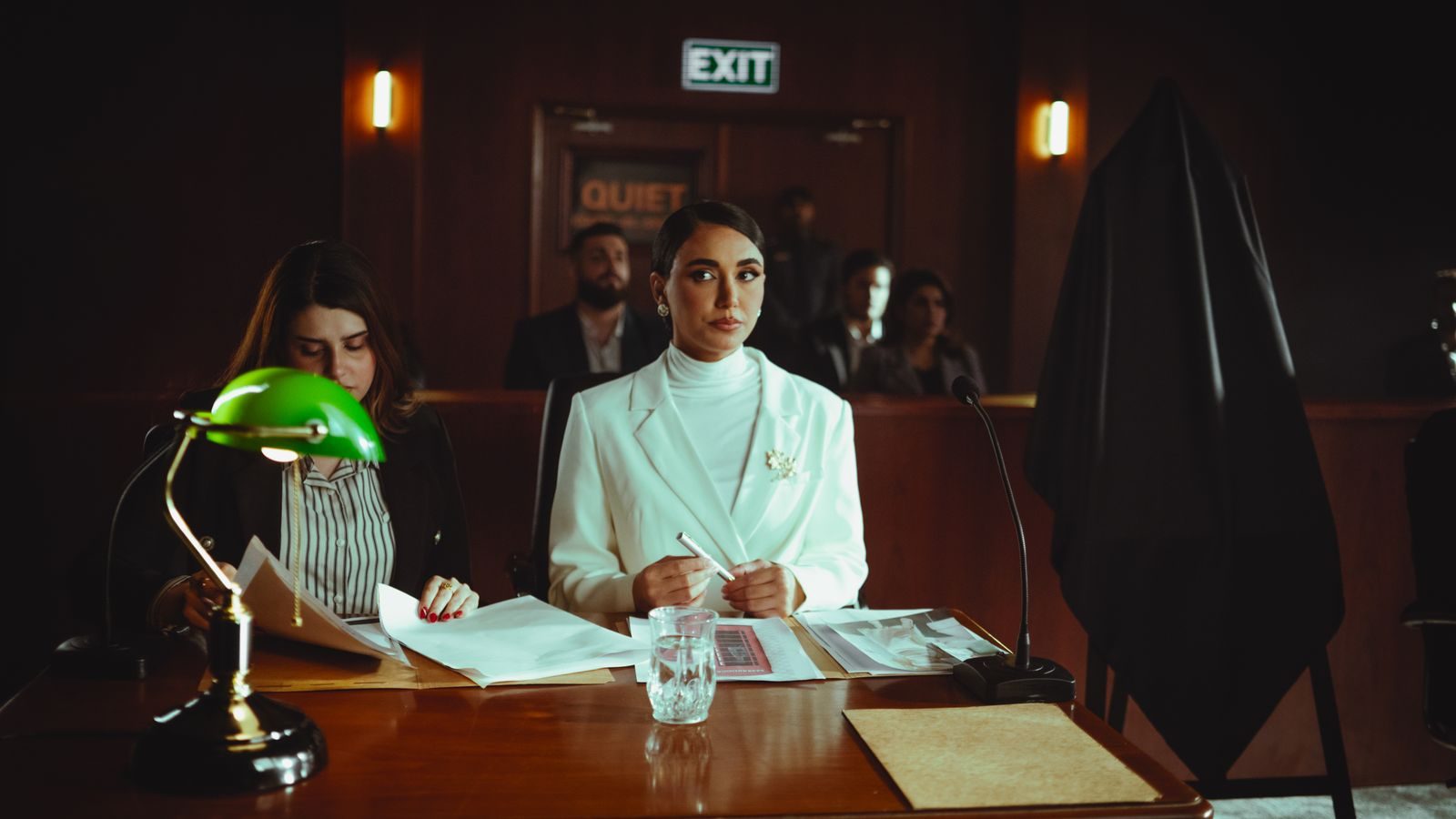
How do you prepare a cross-examination?
Most of the work happens before the witness takes the stand. Experienced trial lawyers rarely improvise.
- Decide whether to cross at all. If the witness did no harm, “no questions, Your Honour” can be the strongest choice.
- Pick a small number of points. Three or four points that support your closing argument are better than twenty that do not. Write down the sentence you want to say to the jury in summation, then work backwards.
- Gather every prior statement. Deposition transcripts, police reports, emails, texts, social media posts, earlier testimony and pleadings. If the witness is a third party, a subpoena may be needed to get documents.
- Organise by chapter. Group questions by topic (“the lighting”, “the distance”, “the phone call”) so you can drop a chapter if the direct went differently than expected.
- Write questions as statements. “You were 40 feet away.” “It was after 9 pm.” “The street lights were off.” Each should contain one fact.
- Index your sources. Next to each question, note the page and line of the deposition or the exhibit that proves the answer. If the witness strays, you can show it immediately.
Your knowledge of the jury matters here too. What you learned about the jurors at voir dire should shape tone: a sharp, sarcastic cross that works with one panel can alienate another.
What are Irving Younger’s ten commandments of cross-examination?
The best-known checklist comes from Irving Younger, then a professor at Cornell Law School, who set out ten rules in a 1975 talk. As an article on the commandments published by Holland & Knight’s Daniel Small notes, they quickly became standard advice. In that article’s wording, they are:
- Be brief.
- Ask short questions and use plain words.
- Always ask leading questions.
- Don’t ask a question to which you do not know the answer.
- Listen to the witness’s answers.
- Don’t quarrel with the witness.
- Don’t allow the witness to repeat his direct testimony.
- Don’t permit the witness to explain his answers.
- Don’t ask the “one question too many”.
- Save the ultimate point of your cross for summation.
The ninth and tenth are linked. The classic mistake is to get the witness to admit every fact you need and then ask the final “so you could not really see who did it?” The witness then explains, and the point is gone. Leave the conclusion for your closing, when the witness cannot answer back.
The commandments are a starting point, not law. Many defence lawyers argue that sometimes you have to ask questions without knowing the answer, for example when the witness is the only source of a fact and any answer helps. The rule of thumb is to ask an open question only when no answer can hurt you.
How do you impeach a witness with a prior inconsistent statement?
This is the single most useful technique in cross-examination, and it follows a three-step pattern often taught as commit, credit and confront.
1. Commit. Lock the witness into today’s version so they cannot wriggle out later.
Q: You told this jury the car was red?
A: Yes.
2. Credit. Build up the earlier statement, so the jury sees it was made carefully and closer to the events.
Q: You gave a deposition in this case on 4 March?
A: Yes.
Q: That was eight months closer to the accident than today?
A: Yes.
Q: You swore an oath to tell the truth?
A: Yes.
Q: Your lawyer was with you?
A: Yes.
3. Confront. Read the earlier words exactly and get the witness to agree they said them.
Q: Page 32, line 6. Question: “What colour was the car?” Answer: “Blue.” Did I read that correctly?
A: Yes.
Then stop. Do not ask which version is true. Under Rule 613(a), you do not have to show the witness the statement first, but you must show or disclose it to opposing counsel on request. Under Rule 613(b), if you later want to prove the statement with outside evidence, the witness generally must have had a chance to explain or deny it. And because deposition testimony is given under penalty of perjury, Rule 801(d)(1)(A) lets the jury treat the earlier version as substantive evidence.
How do you cross-examine an expert witness?
Experts are trained witnesses, and many have testified dozens of times. Arguing science with them on their own ground rarely works. More reliable lines of attack include:
- Assumptions. Every opinion rests on facts the expert was given. If one assumption is wrong, the opinion falls with it. “If the driver was going 30 miles per hour rather than 45, your calculation changes, doesn’t it?”
- What they did not do. No site visit, no testing, no review of a key document.
- Money and repeat work. How much they are paid, and how often they testify for the same side.
- Concessions. Get agreement on the parts of your own expert’s view that are uncontroversial, which narrows the dispute to the points you can win.
Challenges to whether an expert’s method is reliable enough to reach the jury at all belong in a pretrial motion, not in cross. If the testimony comes in, trial objections are covered in our guide to objections in court.
What are the most common cross-examination mistakes?
- Repeating the direct. Walking the witness back through their story lets the jury hear it twice.
- Open questions. “Why did you do that?” hands control to the witness.
- Arguing. Questions such as “You expect this jury to believe that?” draw an objection and make you look rattled.
- Not listening. Lawyers who read from a script miss the gift of an unexpected helpful answer, or a non-answer they should have pressed.
- Going too long. Finish on a strong point, not on whatever happened to be last in your notes.
How is cross-examination different in depositions and in England and Wales?
Depositions. Under FRCP 30(c)(1), the examination and cross-examination of a deponent proceed as they would at trial under the Federal Rules of Evidence, with limited exceptions. Rule 30(d)(1) caps a deposition at one day of seven hours unless the parties agree or the court orders otherwise.
England and Wales. The same techniques apply, but courtroom style is more restrained and the duty to “put your case” is stronger. In TUI UK Ltd v Griffiths [2023] UKSC 48 (29 November 2023), the Supreme Court held that in civil cases a party must generally challenge, by cross-examination, the evidence of an opposing witness, including an expert, on any material point it wants to dispute. The Court said the rule is not rigid and that the overall test is whether the trial was fair. The principle is often linked to the House of Lords decision in Browne v Dunn (1893).
Statute also limits who may cross-examine whom. Section 34 of the Youth Justice and Criminal Evidence Act 1999 bars a defendant charged with a sexual offence from cross-examining the complainant in person. In family proceedings, section 65 of the Domestic Abuse Act 2021 inserted a similar ban into the Matrimonial and Family Proceedings Act 1984, in force since 21 July 2022, where there is evidence of domestic abuse or a relevant conviction, caution, charge or protective injunction. The court can then appoint a qualified legal representative to ask the questions instead.
This article is general information about cross-examination under the US federal rules and the law of England and Wales as of 25 November 2026, not legal advice. State courts and other jurisdictions apply their own evidence codes and local practice.
Frequently asked questions
What is the difference between direct examination and cross-examination?
Direct examination is questioning by the party who called the witness, usually with open questions. Cross-examination is questioning by the opposing party, usually with leading questions, and in federal court it is limited to the subjects of the direct and the witness’s credibility.
Can you ask leading questions on cross-examination?
Yes. Federal Rule of Evidence 611(c) says leading questions are ordinarily allowed on cross-examination. They let the lawyer control the witness and make one point at a time.
What is redirect examination?
After cross-examination, the party who called the witness can ask further questions to repair damage or explain answers. Redirect is usually limited to matters raised on cross, and the other side may then get a short recross.
How long should a cross-examination be?
As short as possible. Most trial lawyers aim for a few clear points rather than a long session. The judge also has power under Rule 611(a) to stop repetitive or time-wasting questioning.
Can you refuse to answer a question on cross-examination?
A witness must answer proper questions unless a privilege applies, such as the privilege against self-incrimination or attorney-client privilege. If the witness refuses without a valid basis, the judge can order an answer.
What does impeaching a witness mean?
Impeaching means attacking a witness’s credibility, for example by showing bias, a prior inconsistent statement, certain criminal convictions or a poor opportunity to see what they describe. It goes to how much weight the jury gives the testimony.
Where the legal industry reads first.
Enjoyed this article? Get the biggest legal industry updates, deals, appointments, insights and expert interviews in your inbox, free.
No spam. Unsubscribe anytime.From Legal Desire
Is your firm the one being cited, or the one being skipped?
We ran the test. On several everyday legal questions, software companies are answering and law firms are not. We help firms fix that, and we build the technology behind the practice.
Lawyers and firms: get featured on Legal Desire
Share your deals, lateral moves, firm news and insights with 1M+ monthly readers: founders, law firm partners, general counsel and practising lawyers across the US, UK, EU and GCC.
Get featuredSubmit a press release