

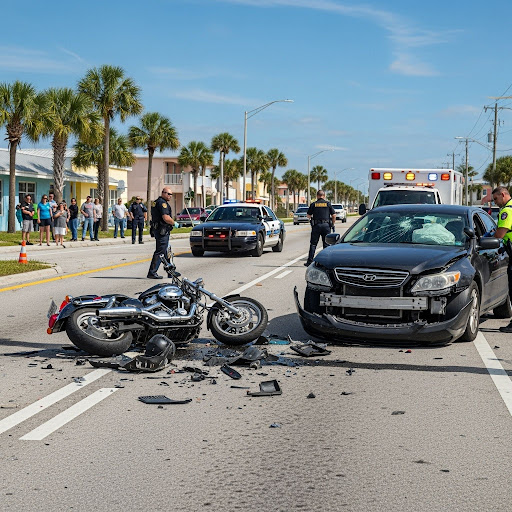
Motorcycle crashes already carry more risk than most roadway collisions, because the rider has no steel frame around the body. Add a rideshare vehicle to the scene and the paperwork grows as fast as the injuries do. A driver who was logged into an app, a company with its own insurance policy, and a rider recovering from fractures can all end up in the same claim file.
Treasure Valley roads see a steady mix of commuters, delivery drivers, and rideshare cars, especially around the airport, downtown Boise, and the Meridian corridor. Left turns across a rider’s path and lane changes into a blind spot are among the most common ways these crashes happen. The legal questions that follow are less obvious than the collision itself.
First hours at the scene and the hospital
What happens in the first hour tends to set the tone for everything after it. Medical attention comes first, even when the rider feels capable of walking away, since adrenaline hides pain and internal injuries are not always visible. A write-up at The Law Offices of Matthew G. Gunn covers the general sequence of a motorcycle or rideshare claim, from the crash itself to the settlement stage.
Evidence at the scene is worth gathering when the rider is able. Photos of vehicle positions, skid marks, road surface problems, and the rideshare driver’s phone mount or app screen can all matter later. Names and numbers of witnesses are just as valuable, since memories fade within days and drivers’ accounts have a habit of changing.
Police reports help, though they are not the final word on fault. Officers arrive after the fact, rely on statements, and sometimes miss details that a trained reconstructionist would catch. Riders who notice errors in a report can ask for corrections or add their own written account to the file.
How rideshare insurance changes the picture
Rideshare coverage depends on what the driver was doing when the crash happened. A driver with the app switched off is treated like any other motorist, and a personal auto policy responds. A driver who is logged in and waiting for a request, or who is on the way to a pickup or carrying a passenger, may trigger additional coverage from the company.
Then again, the label on the coverage is only part of the story. Insurers sometimes dispute which phase applied, and app records showing the exact minute a ride was accepted can decide which policy pays. Those records belong to the company, so getting them usually means a formal request and some patience.
Idaho requires drivers to carry at least 25,000 dollars in bodily injury coverage per person, 50,000 dollars per accident, and 15,000 dollars for property damage. A serious motorcycle injury can exceed those numbers quickly, which is why other layers of coverage deserve attention. Underinsured motorist coverage on the rider’s own policy sometimes fills part of the gap, and it is worth checking before any settlement is signed.
Fault, comparative negligence, and rider bias
Insurers do not always approach motorcycle claims neutrally. Adjusters sometimes lean on assumptions that riders are reckless or were traveling too fast, and those assumptions can show up in the first offer. Evidence like data from a vehicle’s event recorder, nearby camera footage, and the rider’s protective gear can push back on those assumptions with facts.
Idaho follows a comparative fault approach, so a rider’s own share of responsibility can reduce what is recovered, and a high enough share can bar recovery altogether. That is why small details matter, such as whether the rider was in the lane, whether the signal was working, and how quickly the other driver reacted. Many riders begin with a search for boise motorcycle accident attorney and then sort through what the results actually explain about fault and damages.
Even so, fault disputes rarely come down to one decisive fact. A rideshare driver distracted by a navigation prompt and a rider traveling a few miles over the limit can both bear some responsibility, and the final split often comes from negotiation. A clear record of the rider’s speed, position, and lighting at the moment of impact narrows the room for argument.
Visibility is a recurring theme in these cases. Drivers often say they never saw the motorcycle, and a headlight that blends into traffic at dusk can make that claim sound believable. Rideshare drivers add a second distraction, since route prompts and new ride requests pull their eyes toward a screen at the worst moments. Dashcam clips, phone records, and app activity logs can show whether attention was on the road, which is why requests to preserve that data tend to go out early.
Gear and riding history also come up. Insurers sometimes ask about helmets, jackets, boots, and prior citations, hoping to shift some blame to the rider. A clean record and a well-maintained bike help, though even a rider with a few blemishes can still have a valid claim, since the question is what caused this particular crash.
Damages and the long recovery
Medical bills are only the starting point. Lost income during recovery, future treatment costs, damage to the motorcycle and gear, and the harder-to-measure effects of pain and disrupted routines all count in a full claim. Road rash, broken bones, spinal injuries, and head trauma each carry different recovery timelines, and some require surgery or years of therapy.
Documentation drives how these losses are valued. Itemized bills, pay stubs, employer letters about missed shifts, and a daily record of pain and limitations make the picture concrete. Gaps in treatment give insurers a reason to argue that the injury was minor, so keeping appointments and following therapy plans protects the claim as much as it protects the body.
Deadlines deserve respect from the start. Idaho generally allows two years to file a personal injury lawsuit, and claims involving a company like a rideshare operator can take months of correspondence before that clock matters. Starting early leaves room to gather records, request app data, and still file in time if talks stall.
Questions that tend to come up later
Passengers raise their own questions. A person hurt while riding in a rideshare car that was struck by a motorcycle, or one who was a pedestrian near the crash, may have claims against several parties at once. Meridian residents sometimes look at results for uber accident lawyer meridian when they want to learn how responsibility is shared among a driver, a company, and another motorist.
Property damage runs on its own track and is usually settled first. A total-loss valuation for a motorcycle can feel low, especially when aftermarket parts and custom work are involved. Receipts for upgrades and photos taken before the crash give the adjuster something concrete to weigh. Riders who disagree with a number can usually submit their own comparable listings and ask for a second review, which sometimes moves the figure meaningfully.
Most of these cases end through negotiation rather than a courtroom verdict, though the possibility of trial shapes how seriously each side bargains. Riders who document carefully, treat the injury as a long recovery rather than a quick fix, and ask questions before signing anything tend to keep more options open. A crash like this rarely resolves quickly, and the strongest claims are usually built in the quiet weeks after the sirens are gone.
Where the legal industry reads first.
Enjoyed this article? Get the biggest legal industry updates, deals, appointments, insights and expert interviews in your inbox, free.
No spam. Unsubscribe anytime.From Legal Desire
Is your firm the one being cited, or the one being skipped?
We ran the test. On several everyday legal questions, software companies are answering and law firms are not. We help firms fix that, and we build the technology behind the practice.
Lawyers and firms: get featured on Legal Desire
Share your deals, lateral moves, firm news and insights with 1M+ monthly readers: founders, law firm partners, general counsel and practising lawyers across the US, UK, EU and GCC.
Get featuredSubmit a press release