


A collision on a Texas road rarely ends when the vehicles stop moving. The hours and weeks that follow decide how much of the story gets documented, who pays for treatment, and whether an injured person is dealing with a straightforward claim or a drawn-out dispute. Cars, pedestrians and commercial trucks each bring their own set of problems, and knowing where those problems start makes the whole process less confusing.
Texas also moves at a fast pace on the road. Interstates, farm-to-market highways and city arterials all feed into the same insurance and court system, so a crash in Austin follows the same basic rules as one in Lubbock or Houston. What changes from case to case is the kind of evidence available and the number of parties who might share responsibility.
Standard collisions and the paperwork behind them
Most injury claims begin with an ordinary two-car crash. Resources like The Applewhite Firm cover the basics of how an Austin car accident claim is built, from the first police report to the final settlement conversation. The pattern is familiar: one driver says the light was green, the other disagrees, and an adjuster has to sort it out from photographs and statements.
The police report matters, but it is not the last word. Officers arrive after the fact, and the contributing-factor codes they select are an opinion, not a finding of legal fault. Insurers treat the report as a starting point and then collect recorded statements, repair estimates and medical bills to form their own view.
For what it’s worth, the most useful evidence often disappears first. Skid marks fade within days, damaged vehicles get repaired or sold for salvage, and traffic cameras overwrite footage on a schedule that few drivers know about. A driver who photographs the scene, notes the weather and collects witness names before leaving has handled the part that is hardest to reconstruct later.
Medical records carry the other half of the claim. A gap between the crash and the first appointment gives an insurer room to argue that the injury came from something else. Soft-tissue injuries, concussions and back strain are the usual targets, since they do not always show up clearly on imaging in the first days.
Fault, shared blame and what it does to a claim
Texas follows a proportionate responsibility system, which means a jury or an adjuster can assign a percentage of blame to each person involved. A driver who is found partly at fault can see the final recovery reduced, and past a certain share of blame the claim can be barred altogether. The exact threshold is the kind of detail worth confirming with a licensed attorney rather than a blog post.
That framework explains why insurers spend so much effort on small details. A phone in a cupholder, a missed turn signal or a brief glance at a navigation screen can become the argument that moves five or ten percent of the blame. Speaking of which, injured people sometimes hurt their own claims by offering casual explanations at the scene. An offhand remark that the other car came out of nowhere can be quoted back months later as an admission about attention.
Time limits matter as well. Texas generally gives injured people two years from the date of the crash to file a personal injury lawsuit, with narrow exceptions for situations like claims involving minors. Wrongful death cases follow a similar two-year clock that runs from the date of death. Insurance negotiations can eat into that window quietly, since an adjuster who keeps asking for more paperwork is not extending the deadline.
People on foot face a different kind of risk
A pedestrian has no steel frame, no airbag and no seatbelt. Even a crash at modest speed can produce fractures, head trauma and injuries that change a person’s work life for years. Anyone looking up an austin pedestrian accident attorney will find a page that explains how claims involving people on foot are usually structured.
The evidence picture looks different from a car crash. There may be no second vehicle with a damaged bumper to compare, and the driver is often the only other witness. Crosswalk markings, signal timing, lighting at the location and the angle of the driver’s approach all become part of the story.
Oddly enough, location tells a lot. A person crossing mid-block on a wide arterial road at night faces a different fault analysis than someone walking through a marked crosswalk with the signal in their favor. Texas law gives drivers a duty to yield to pedestrians in certain situations and gives pedestrians their own duties in others, so the details of where and how the person was crossing carry real weight.
Cyclists, scooter riders and people using wheelchairs run into much of the same trouble. Drivers frequently say they simply did not see the person, which is an explanation rather than a defense. Attention and speed are the questions that tend to matter most, and both can often be reconstructed from vehicle data, nearby cameras and witness accounts.
Why commercial trucks change the whole picture
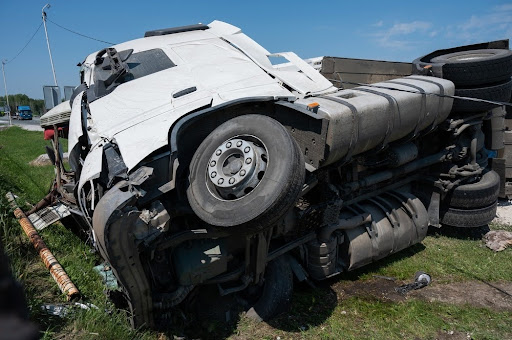
A loaded tractor-trailer is a different animal from a passenger car. Its stopping distance is much longer, its blind spots are larger and its weight multiplies the force of any impact. Injuries in truck crashes tend to be more serious, and the claims behind them tend to be more complicated.
That leads to the question of who is actually responsible. A driver might be an employee, an independent contractor or a leased operator, and the cargo may have been loaded by a third company. A separate page covering Austin truck crashes sits at https://applewhitefirm.com/austin-truck-accident-lawyer, and it looks at how freight cases differ from ordinary collisions.
Federal safety rules add another layer. Commercial drivers are subject to hours-of-service limits, inspection requirements and maintenance recordkeeping, and each of those produces paperwork that may bear on a crash. Logbooks, electronic logging device data, dispatch messages and maintenance files can show whether a driver was tired or a brake problem had been ignored.
Then again, those records do not stay available forever. Trucking companies keep some of them for limited periods, and an early written request to preserve evidence is a common step in these cases. Black-box data from the truck’s engine computer can capture speed and braking in the seconds before impact, which is information a witness could never supply.
Insurance structure is another difference. Commercial policies tend to carry higher limits than personal auto coverage, and the carriers behind them often send investigators to the scene quickly. Injured people who give recorded statements without understanding that dynamic can find their words used against them later.
Practical habits that carry across every type of crash
Some steps help no matter what kind of vehicle was involved. Getting medical care promptly, keeping every bill and receipt, and writing down symptoms as they change all build a record that is hard to dispute. A simple notebook or phone note kept over several weeks can show how pain, sleep and work were affected in a way that memory alone cannot.
Social media deserves a mention too. Photos of a weekend hike or a gym visit can be taken out of context and presented as proof that an injury is minor. The safer habit is to say little publicly while a claim is open, even about unrelated activities.
Settlement offers deserve patience. Early offers are often made before the full extent of an injury is known, and accepting one usually closes the claim for good. Future surgery, ongoing therapy and lost earning capacity are hard to price in the first few weeks, which is why many people wait until treatment settles before discussing numbers.
A crash tests a person’s patience as much as their health. Paperwork, phone calls and waiting periods wear people down, and that fatigue is part of why some accept less than a claim is worth. Treating the process as a series of small, documented steps tends to produce better results than trying to resolve everything at once.
Where the legal industry reads first.
Enjoyed this article? Get the biggest legal industry updates, deals, appointments, insights and expert interviews in your inbox, free.
No spam. Unsubscribe anytime.From Legal Desire
Is your firm the one being cited, or the one being skipped?
We ran the test. On several everyday legal questions, software companies are answering and law firms are not. We help firms fix that, and we build the technology behind the practice.
Lawyers and firms: get featured on Legal Desire
Share your deals, lateral moves, firm news and insights with 1M+ monthly readers: founders, law firm partners, general counsel and practising lawyers across the US, UK, EU and GCC.
Get featuredSubmit a press release