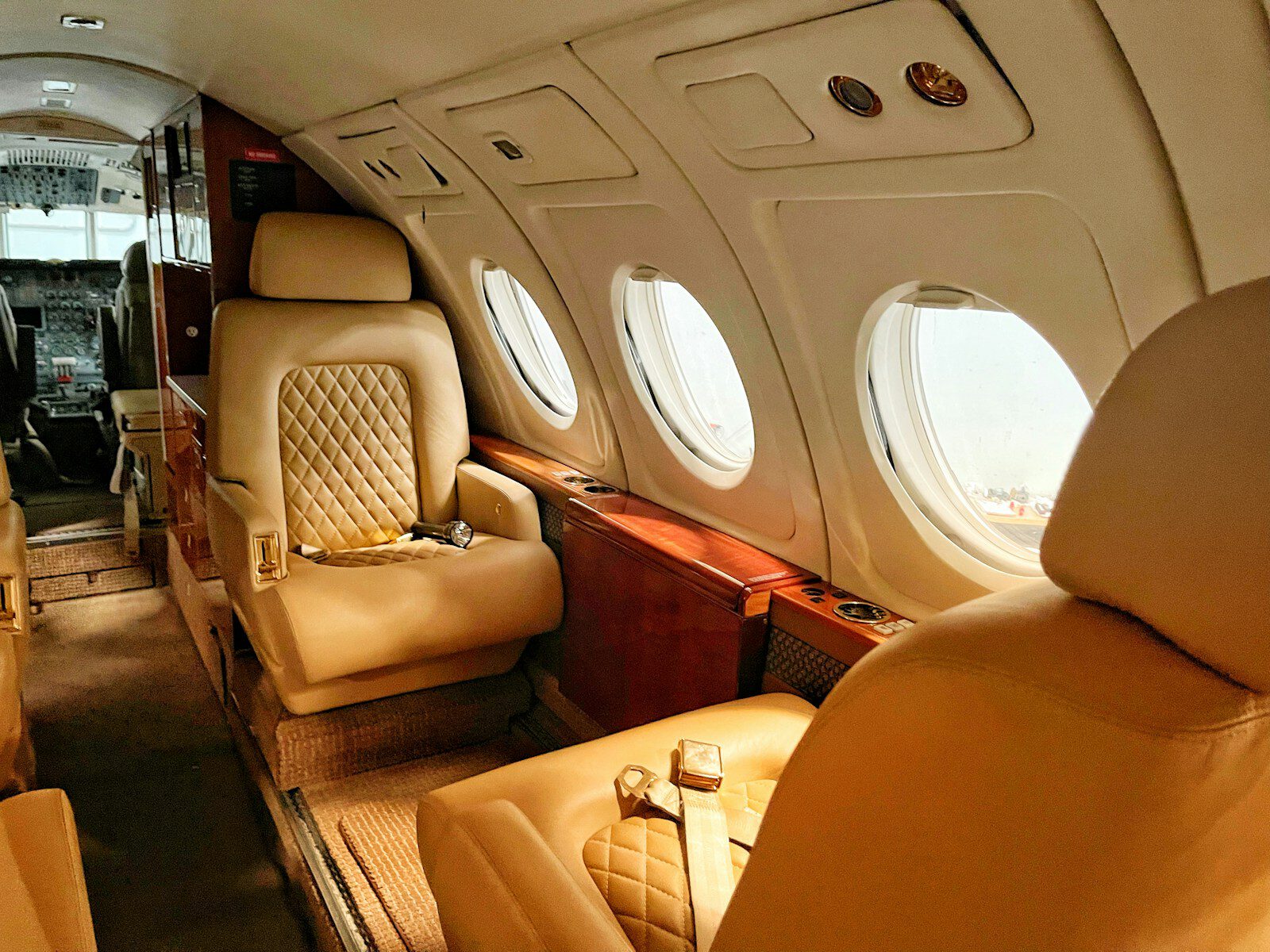
Manufacturing executives frequently oversee operations across multiple cities, states, and regions. Plant inspections, supplier meetings, production reviews, equipment evaluations, and operational audits often require leadership teams to travel between facilities within limited timeframes.
When factories are located outside major metropolitan areas, commercial airline schedules can make these visits particularly complicated. Connecting flights, long ground transfers, and overnight stays may consume valuable time that executives could otherwise spend on-site.
A private jet charter for manufacturing executives offers a flexible alternative, allowing companies to coordinate flights around facility visits rather than conventional airline schedules.
Private aviation can help manufacturing leaders reach regional airports, visit multiple locations during a single business trip, and manage demanding operational schedules.
At Hera Flight, companies can explore tailored private jet charter solutions for multi-city business travel, including visits to manufacturing plants, distribution centers, and supplier facilities.
Why Manufacturing Executives Need Flexible Business Travel
Manufacturing operations are often distributed across geographically separated locations. A company may operate production plants in several states while relying on suppliers, warehouses, and logistics partners throughout the country. Senior executives frequently need to visit these locations to evaluate performance, resolve operational issues, and coordinate long-term investments.
Plant Inspections and Operational Reviews
Factory visits allow leadership teams to evaluate production capacity, equipment performance, workplace conditions, and operational processes. Some inspections require specialized personnel, technical documents, or multiple executives to attend together.
Supplier and Vendor Meetings
Manufacturers may need to assess new suppliers, negotiate contracts, inspect production quality, or respond to delivery problems. These visits can be especially time-sensitive when supply chain disruptions affect production schedules.
Equipment and Facility Investments
Major machinery purchases, facility expansions, and new production lines often require in-person evaluations. Executives may need to visit several locations before approving investment decisions.
Emergency Operational Visits
Unexpected equipment failures, quality issues, or supply interruptions sometimes require urgent leadership attention. Flexible transportation can be valuable when the business cannot wait for the next convenient airline departure.
How Private Jet Charter Improves Multi-Facility Travel Efficiency
Access to Regional Airports
Manufacturing facilities are not always located near major commercial airports. Private jets can use a wider selection of suitable regional airports, potentially reducing ground transportation distances. Airport access remains subject to aircraft performance, runway conditions, operating hours, weather, and available services.
Flexible Departure Schedules
Private flights can be arranged around planned plant visits, subject to operational limitations and aircraft availability. An executive team may spend additional time at a facility without automatically needing to rebook several commercial airline tickets.
Multiple Facility Visits During One Trip
Customized routes can connect several production locations without requiring passengers to return repeatedly to major airline hubs. This flexibility may support more efficient regional tours.
Coordinated Executive Team Travel
Operations directors, finance executives, engineering leaders, and quality specialists can travel together. A dedicated aircraft helps the team follow a shared itinerary and coordinate discussions between facility visits.
Hera Flight’s corporate aviation guidance discusses multi-city trips involving manufacturing facilities, regional managers, and operational site inspections.
Private Jet Charter vs. Commercial Airlines for Manufacturing Travel
Manufacturing companies should evaluate the complete journey, including air travel, ground transfers, and time spent at each facility.
| Planning Factor | Commercial Airlines | Private Jet Charter |
|---|---|---|
| Departure times | Fixed airline schedules | Customized within operational limits |
| Regional airport access | Limited to airline routes | Broader selection of suitable airports |
| Multiple plant visits | Connections may be necessary | Direct routing may be possible |
| Executive group travel | Individual reservations | Coordinated group itinerary |
| Ground transportation | Often from major airports | Potentially closer to facilities |
| Schedule changes | Airline rules and availability | Charter conditions and aircraft availability |
| Cost structure | Usually passenger-based | Usually aircraft- or trip-based |
Private charter may provide substantial scheduling advantages for complex itineraries, but it is not automatically less expensive. The appropriate choice depends on the number of travelers, facility locations, urgency, and total trip costs.
7 Steps to Plan an Efficient Manufacturing Facility Tour by Private Jet
1. Define the Objectives of Every Facility Visit
Before arranging transportation, determine the purpose of each visit. Some trips involve routine operational reviews, while others focus on quality concerns, production delays, equipment installation, or supplier negotiations. The objectives determine how much time executives need at each facility.
2. Prioritize Critical Locations
Not every plant requires the same level of attention. High-priority production facilities, operational problem sites, and time-sensitive supplier meetings should receive scheduling priority.
3. Group Facilities Geographically
Organizing visits by geographic region can reduce unnecessary flying and ground travel. For example, visiting several Midwestern facilities during one trip may be more efficient than making separate round trips from corporate headquarters.
4. Select Airports Based on Total Travel Time
The closest airport on a map is not necessarily the best arrival location. Consider road access, runway suitability, FBO availability, and operational restrictions.
5. Choose an Appropriate Aircraft
Aircraft selection should reflect passenger count, route length, equipment, baggage, and airport performance requirements.
6. Coordinate Ground Transportation
Arrange transportation between airports and manufacturing facilities before departure. Provide drivers with precise facility addresses, access instructions, and passenger requirements.
7. Build Contingency Time Into the Schedule
Production reviews can take longer than expected. Allow time for unexpected operational discussions, ground delays, and possible changes to the flight itinerary.
Example: A Three-Day Manufacturing Facility Tour
Consider a hypothetical company headquartered in Chicago with production facilities in Ohio, Indiana, and Michigan. The leadership team wants to review operational performance, meet plant managers, and evaluate production investments.
| Day | Facility Location | Main Business Objective | Travel Coordination |
|---|---|---|---|
| Day 1 | Columbus, Ohio | Production performance review | Arrival airport and plant transfer |
| Day 1 | Indianapolis, Indiana | Supplier and quality meeting | Afternoon flight and ground transfer |
| Day 2 | Grand Rapids, Michigan | Equipment investment evaluation | Extended facility visit |
| Day 3 | Detroit, Michigan | Regional operations meeting | Final meeting and return planning |
Hypothetical itinerary for planning purposes. Airport selection, flight feasibility, meeting durations, and ground travel times require individual verification.
The objective is to create a practical sequence of visits while allowing sufficient time for inspections and management discussions.
Avoid Scheduling Too Many Plants in One Day
Although private aviation offers routing flexibility, each flight still requires operational preparation, taxiing, airport handling, and ground transportation. Plant visits may also involve lengthy safety briefings, technical inspections, and management meetings. An overly aggressive itinerary can reduce the quality of each visit.
Plan Around Facility Operating Hours
Manufacturing sites may operate multiple shifts. Executives should coordinate arrival times with production schedules to observe the relevant equipment, personnel, and manufacturing processes. For example, a visit intended to evaluate first-shift production performance should be scheduled when those operations are active.
Choosing the Right Private Jet for Manufacturing Executives
Different aircraft categories offer different combinations of range, cabin capacity, operating costs, and airport accessibility.
| Aircraft Category | Suitable Business Application | Key Considerations |
|---|---|---|
| Light Jet | Small executive teams on regional trips | Seating, luggage, runway requirements |
| Midsize Jet | Multi-state facility visits | Range, cabin comfort, payload |
| Super-Midsize Jet | Longer domestic routes | Nonstop capability and cabin space |
| Heavy Jet | Larger teams or international operations | Group capacity, airport suitability, cost |
Passenger Count and Team Composition
A manufacturing site visit may involve executives from operations, finance, engineering, quality assurance, and supply chain management. Travel coordinators should confirm the complete passenger list before aircraft selection.
Equipment and Technical Materials
Teams may carry laptops, inspection equipment, protective clothing, or engineering documentation. All baggage and equipment must remain within aircraft weight, size, and safety limitations.
Cabin Layout and Productivity
Suitable seating arrangements can allow team members to review inspection reports, discuss findings, and prepare for upcoming meetings. Onboard connectivity and power availability should be confirmed for the specific aircraft.
Coordinating Regional Airports and Ground Transportation
Regional airport access is one of the most relevant advantages of private aviation for manufacturing companies. However, airport selection should be based on operational suitability rather than distance alone.
Airport Proximity to Manufacturing Facilities
A regional airport located near a production site may reduce driving time compared with a major airport serving the same general area. Actual ground travel time depends on traffic conditions and road infrastructure.
FBO Services
Fixed-base operators (FBOs) commonly support private aviation arrivals and departures. They may assist with passenger reception, ground handling, and local transportation arrangements. Hera Flight notes that FBOs can provide business-related facilities and services for corporate travelers.
Plant Security and Visitor Access
Manufacturing facilities may require advance visitor registration, identification checks, safety briefings, and protective equipment. Travel coordinators should confirm these requirements before the team arrives.
Ground Vehicle Selection
Executive SUVs or vans may be practical for groups traveling together. Vehicle capacity should account for passengers, luggage, and required protective equipment.
How Private Aviation Supports Manufacturing Operations
Faster Response to Operational Problems
When critical issues require senior leadership attention, a customized flight schedule may allow executives to reach a facility sooner than available commercial travel options.
Better Coordination Between Facilities
Multi-site visits can help leadership teams compare production performance, share operational practices, and review regional management priorities.
More Time for On-Site Inspections
Reducing unnecessary connections and lengthy airport transfers may create additional time for facility walkthroughs and meetings.
Improved Executive Team Collaboration
Traveling together gives team members opportunities to review operational findings between visits. However, private aviation does not replace secure communications procedures for sensitive business information.
What Does Private Jet Charter for Manufacturing Executives Cost?
Charter pricing depends on the aircraft, flight hours, route complexity, airports, and overall duration of the trip. Multiple-facility itineraries may involve additional charges for aircraft repositioning, crew arrangements, airport handling, and overnight stays.
| Cost Component | Budget Consideration |
|---|---|
| Charter flight | Aircraft category and flight hours |
| Aircraft repositioning | Additional non-passenger flight segments |
| Airport services | Landing, parking, and handling |
| Crew expenses | Applicable overnight or extended-trip charges |
| Ground transportation | Vehicles between airports and plants |
| Multi-day itinerary | Aircraft scheduling and availability |
| Schedule modifications | Contractual change or cancellation fees |
Not every charter quote separates these expenses in the same way. Companies should request a comprehensive estimate covering the complete itinerary.
Compare Total Business Travel Costs
A meaningful comparison should consider commercial airfare, hotel nights, ground transportation, employee travel time, and the operational value of the scheduled visits. The lowest transportation price does not always produce the most efficient business itinerary.
Where the legal industry reads first.
Enjoyed this article? Get the biggest legal industry updates, deals, appointments, insights and expert interviews in your inbox, free.
No spam. Unsubscribe anytime.From Legal Desire
Is your firm the one being cited, or the one being skipped?
We ran the test. On several everyday legal questions, software companies are answering and law firms are not. We help firms fix that, and we build the technology behind the practice.
Lawyers and firms: get featured on Legal Desire
Share your deals, lateral moves, firm news and insights with 1M+ monthly readers: founders, law firm partners, general counsel and practising lawyers across the US, UK, EU and GCC.
Get featuredSubmit a press release