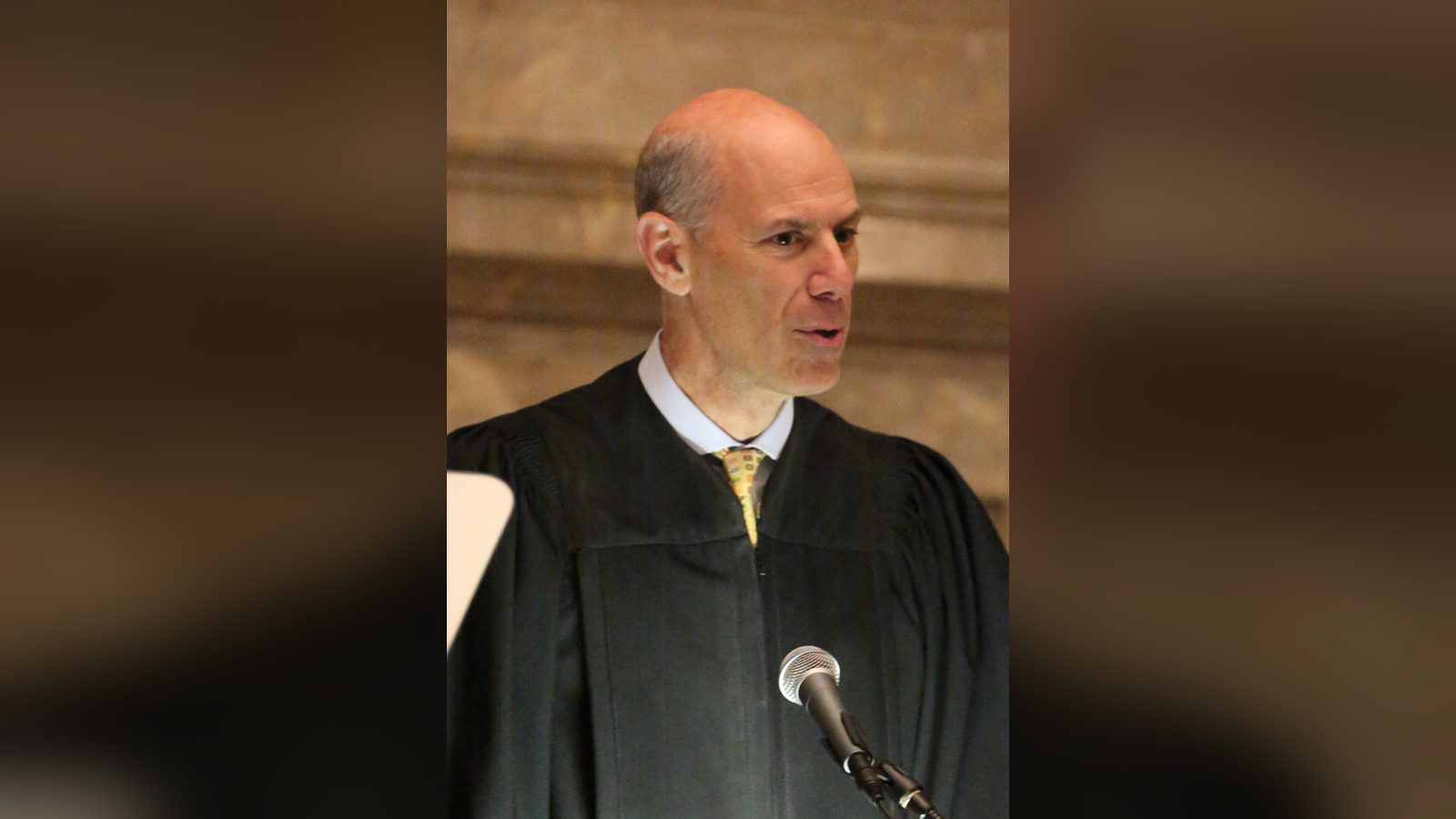
Last updated: 14 November 2026. Career details are from the US District Court for the District of Columbia and the Federal Judicial Center. Case developments were checked against court records summarised by Just Security, the Civil Rights Litigation Clearinghouse, NPR, The Daily Record and the judges’ own published orders. Where a matter is still pending, we say so and give the latest step we could confirm.
Short answer: Judge Boasberg is James E. “Jeb” Boasberg, Chief Judge of the US District Court for the District of Columbia since March 2023. He became a political target over his March 2025 order to halt Alien Enemies Act deportation flights, the contempt inquiry that followed, and gag orders he signed in 2023 in the “Arctic Frost” investigation. As of 14 November 2026 the contempt fight is before the full D.C. Circuit.
Key takeaways
- Boasberg was appointed to the D.C. Superior Court by George W. Bush in 2002 and to the federal bench by Barack Obama in 2011, confirmed 96 to 0.
- His 15 March 2025 order in J.G.G. v. Trump, and the contempt inquiry that followed, is still unresolved: the full D.C. Circuit heard argument on 29 September 2026 and had not ruled by 14 November.
- Two impeachment resolutions filed against him in the House have stayed in committee, and a Justice Department misconduct complaint was dismissed by the Sixth Circuit’s chief judge.
- The federal courts’ administrative office says chief judges routinely sign nondisclosure orders without being told whose phone numbers are involved, which is central to the Arctic Frost criticism.
Who is Judge James Boasberg?
Boasberg was born in San Francisco in 1963 and grew up in Washington, D.C., where he attended St. Albans School. According to his official court biography, he took a history degree at Yale College in 1985, an M.St. in modern European history at Oxford in 1986 and a J.D. from Yale Law School in 1990.
He clerked for Judge Dorothy W. Nelson of the Ninth Circuit, a route explained in our guide to what a law clerk does, then worked as a litigation associate at Keker & Van Nest in San Francisco and Kellogg, Huber, Hansen, Todd & Evans in Washington. In 1996 he joined the US Attorney’s Office for D.C., where he spent about five and a half years prosecuting mainly homicide cases.
The appointments that matter for understanding his later profile are these:
| Role | Dates | How appointed |
|---|---|---|
| Associate Judge, D.C. Superior Court | September 2002 to 2011 | Nominated by President George W. Bush |
| US District Judge, District of Columbia | Commissioned 17 March 2011 | Nominated by President Obama, confirmed 96 to 0 on 14 March 2011 |
| Judge, Foreign Intelligence Surveillance Court | May 2014 to May 2021 (Presiding Judge January 2020 to May 2021) | Designated by Chief Justice John Roberts |
| Chief Judge, Alien Terrorist Removal Court | 2020 to 2025 | Designated by the Chief Justice |
| Chief Judge, District of Columbia | Since 17 March 2023 | By seniority under the federal rules for chief judges |
Sources: D.C. District Court biography and the Federal Judicial Center’s judges database.
What did Boasberg do on the FISA court?
The Foreign Intelligence Surveillance Court (FISC) approves surveillance applications in national security cases and reviews the rules agencies use to search data collected under Section 702 of FISA. As presiding judge, Boasberg wrote the court’s 18 November 2020 opinion approving that year’s Section 702 certifications. The opinion, declassified in April 2021 and summarised by Lawfare, approved the programme but described “apparent widespread violations” of the FBI’s querying standard and imposed new reporting requirements.
In January 2021 he also sentenced former FBI lawyer Kevin Clinesmith, who had altered an email used in a surveillance application, to probation and community service rather than the prison term prosecutors sought. Critics still cite that sentence, while supporters point to the 2020 opinion as evidence he was willing to rebuke the FBI.
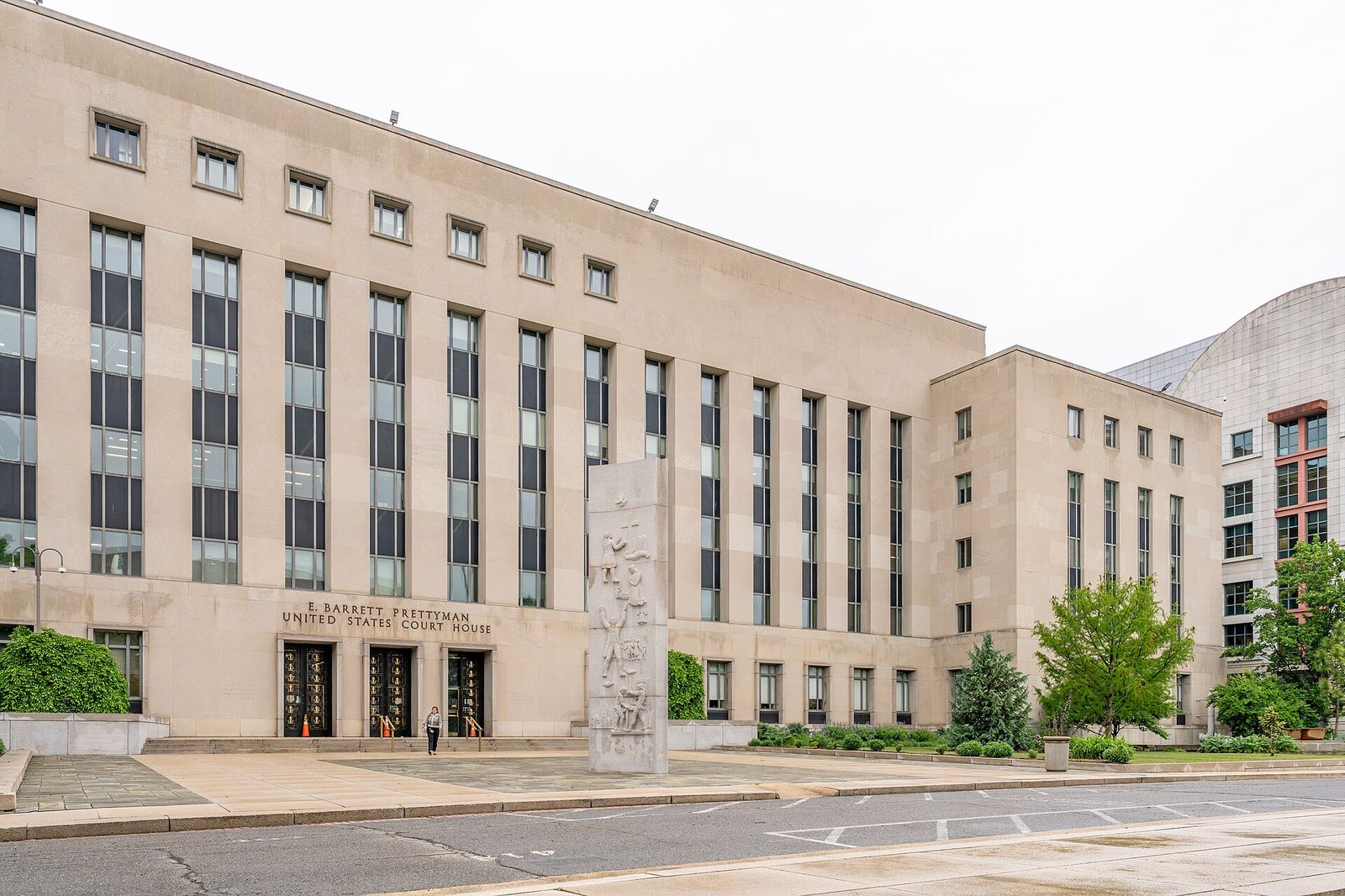
What happened in J.G.G. v. Trump?
This is the case that made Boasberg a household name. On 14 March 2025 President Trump signed a proclamation invoking the Alien Enemies Act of 1798 against members of the Venezuelan gang Tren de Aragua. Early on 15 March the ACLU and Democracy Forward sued on behalf of five Venezuelan detainees, and the case was assigned to Boasberg.
That evening he provisionally certified a class and, at about 6.45 pm, told government lawyers orally that any planes carrying class members should be turned around. A written minute order followed at 7.25 pm. The flights continued to El Salvador, where the men were taken to the CECOT prison.
The Supreme Court vacated Boasberg’s temporary restraining orders on 7 April 2025 by 5 votes to 4, holding that challenges of this kind must be brought as habeas corpus petitions in the district where a detainee is held. It did not rule on whether the Act had been lawfully invoked, and it said detainees must get notice and a chance to seek habeas relief.
Boasberg kept the case for the men already in El Salvador. On 22 December 2025 he ruled that this class “was denied their due-process rights” and ordered the government either to facilitate their return or to give them hearings, NPR reported. By then the men had been sent home to Venezuela in a July 2025 prisoner exchange. A follow-up order of 12 February 2026 set out how returns would work; the government appealed it in March 2026 and Boasberg stayed it pending that appeal, which was still listed as open on the court docket in November 2026.
Where does the contempt inquiry stand?
On 16 April 2025 Boasberg found probable cause that the government had committed criminal contempt by not turning the planes around. The fight over that finding has gone back and forth for 19 months:
- 8 August 2025: a D.C. Circuit panel granted mandamus and vacated the probable cause order by 2 votes to 1, with Judge Cornelia Pillard dissenting.
- 14 November 2025: the full court declined to rehear that ruling, but several judges wrote that Boasberg could continue to inquire into what happened. He ordered sworn declarations from the government that month.
- Declarations: then Homeland Security Secretary Kristi Noem stated that she decided on 15 March 2025 to continue the transfers, relying on legal advice that, according to the filings analysed by Just Security, came from then Deputy Attorney General Todd Blanche and his principal associate deputy, Emil Bove, relayed through the department’s acting general counsel. Bove is now a Third Circuit judge.
- 14 April 2026: a second panel (Judges Neomi Rao and Justin Walker, with Judge J. Michelle Childs dissenting) ordered Boasberg to end the criminal contempt proceedings, calling them a clear abuse of discretion because the order was not clear and specific enough.
- June 2026: the full D.C. Circuit agreed to rehear the case, vacating the April panel decision.
- 29 September 2026: the en banc court heard argument. The Justice Department argued that Boasberg should refer Noem for contempt and had no authority to widen the inquiry to anyone else. According to a report of the hearing in The Daily Record, a majority of the 11 active judges appeared willing to let him ask who else was involved.
As of 14 November 2026 no en banc decision has been published. Criminal contempt is normally prosecuted by the Justice Department, and a court may appoint another prosecutor if it declines; that question has not been reached.
Why was Boasberg targeted over Arctic Frost?
Arctic Frost was the FBI investigation that became part of Special Counsel Jack Smith’s inquiry into efforts to overturn the 2020 election. In 2023 prosecutors used subpoenas to obtain phone toll records, including records for a group of Republican members of Congress. As chief judge, Boasberg signed nondisclosure orders that stopped the phone carriers from telling customers about the subpoenas for a year.
When those records were released by Senate Judiciary Committee Chairman Chuck Grassley in autumn 2025, Republicans accused Boasberg of approving surveillance of the legislative branch. Rep. Brandon Gill’s press release lists ten senators and one House member whose records were sought. The Administrative Office of the US Courts answered on his behalf: its director, Robert Conrad Jr., told Grassley that the D.C. chief judge routinely signs such orders when prosecutors ask, and that applications typically identify an account only by a phone number, so the judge would likely not have known it belonged to a member of Congress, as Fox News reported on 3 December 2025. Grassley put the blame on Smith’s team for not flagging the issue. The Justice Department changed its policy after a 2024 inspector general report to require prosecutors to tell the court when a gag order involves a member of Congress.
Has Judge Boasberg been impeached?
No. Impeachment needs a majority vote of the House followed by a two-thirds conviction vote in the Senate, and neither has happened. The record so far:
- March 2025: after the deportation flights, President Trump called for Boasberg’s impeachment and Rep. Gill filed H.Res. 229. Chief Justice Roberts responded publicly that impeachment is not an appropriate response to disagreement with a judicial decision.
- 4 November 2025: Gill filed H.Res. 858 over the Arctic Frost orders, with 11 co-sponsors at launch. It was referred to the House Judiciary Committee and, on the public bill record, has had no further action.
- November 2025: six Republican senators, led by Eric Schmitt, asked D.C. Circuit Chief Judge Sri Srinivasan to suspend Boasberg while Congress considered impeachment. He was not suspended.
- 7 January 2026: Senator Ted Cruz chaired a Judiciary subcommittee hearing titled “Impeachment: Holding Rogue Judges Accountable” and called for Boasberg’s removal. Later that month Speaker Mike Johnson said of impeaching Boasberg, “I’m for it.”
The politics have since shifted. Democrats were projected to win control of the House in the 3 November 2026 midterm elections, and the new Congress sits from January 2027. Resolutions that are not adopted lapse at the end of the 119th Congress, so any new attempt would have to start again.
What happened to the DOJ misconduct complaint?
In July 2025 the Justice Department filed a judicial misconduct complaint over remarks Boasberg was reported to have made at a closed Judicial Conference meeting on 11 March 2025, suggesting concern that the administration might not obey court orders. The complaint was transferred out of the D.C. Circuit to avoid conflicts. Chief Judge Jeffrey Sutton of the Sixth Circuit dismissed it in December 2025, and the order was made public at the end of January 2026. As the Volokh Conspiracy summarised, Sutton found the evidence insufficient because the department never supplied the document it cited, that the remark would not have been misconduct in any event, and that complaints about case rulings belong on appeal, not in the misconduct process.
What else is on Boasberg’s docket?
His caseload goes well beyond immigration:
- FTC v. Meta: after a trial that began in April 2025, he ruled on 18 November 2025 that the Federal Trade Commission had not proved Meta currently holds a monopoly in personal social networking. The FTC said in January 2026 that it would appeal.
- Signal chats: he was randomly assigned American Oversight v. Hegseth in March 2025 and ordered officials to preserve messages from the group chat that included a journalist.
- Sealed warrants: as chief judge he handles grand jury and sealed warrant matters. Media organisations and Judicial Watch have asked him to unseal the warrant for the 12 October 2026 search of Rep. Ilhan Omar’s Washington home, and he set a hearing for 17 November 2026.
Why does the Boasberg fight matter beyond one judge?
The contempt case tests a basic question about the separation of powers: what a trial judge can do when the executive branch is accused of ignoring an order. If the en banc court lets the inquiry continue, Boasberg could identify the officials responsible and refer them for prosecution. If it ends the inquiry, the lesson is that oral directions from the bench need a clear written order fast.
Federal judges hold office during good behaviour and, by long practice, are removed only for serious misconduct rather than for their rulings. So far every formal process aimed at Boasberg has ended without action against him.
This article is general information based on court records and reporting available on 14 November 2026. Several of the matters described are pending and may change. It is not legal advice.
Frequently asked questions
Who appointed Judge Boasberg?
President Barack Obama nominated him to the US District Court for the District of Columbia, and the Senate confirmed him 96 to 0 in March 2011. President George W. Bush had earlier appointed him to the D.C. Superior Court in 2002.
Is Judge Boasberg still the chief judge?
Yes. He became Chief Judge of the D.C. District Court on 17 March 2023 and still held the post on 14 November 2026. Federal chief judges serve up to seven years, subject to age limits.
Was Judge Boasberg impeached?
No. Two House resolutions were filed by Rep. Brandon Gill, in March 2025 and November 2025, but neither left the House Judiciary Committee. Resolutions not adopted lapse when the 119th Congress ends in January 2027.
Did Judge Boasberg hold Trump officials in contempt?
He found probable cause of criminal contempt in April 2025 but has not made a final contempt finding. D.C. Circuit panels twice stopped the inquiry, and the full court reheard the case on 29 September 2026. A decision was pending on 14 November 2026.
What is the Arctic Frost controversy about Judge Boasberg?
In 2023 he signed nondisclosure orders attached to subpoenas for phone records in the Jack Smith investigation, some of which turned out to concern members of Congress. The federal courts’ administrative office says the applications did not show that, and Senator Grassley blamed Smith’s team.
What happened to the Venezuelans deported in March 2025?
They were held at CECOT in El Salvador and returned to Venezuela in a July 2025 prisoner exchange. In December 2025 Boasberg ruled they had been denied due process and ordered the government to facilitate hearings or returns; an appeal of his follow-up order is pending.
Featured image: Photo: US National Archives (archivesnews) via Wikimedia Commons, public domain, adapted
Where the legal industry reads first.
Enjoyed this article? Get the biggest legal industry updates, deals, appointments, insights and expert interviews in your inbox, free.
No spam. Unsubscribe anytime.From Legal Desire
Is your firm the one being cited, or the one being skipped?
We ran the test. On several everyday legal questions, software companies are answering and law firms are not. We help firms fix that, and we build the technology behind the practice.
Lawyers and firms: get featured on Legal Desire
Share your deals, lateral moves, firm news and insights with 1M+ monthly readers: founders, law firm partners, general counsel and practising lawyers across the US, UK, EU and GCC.
Get featuredSubmit a press release