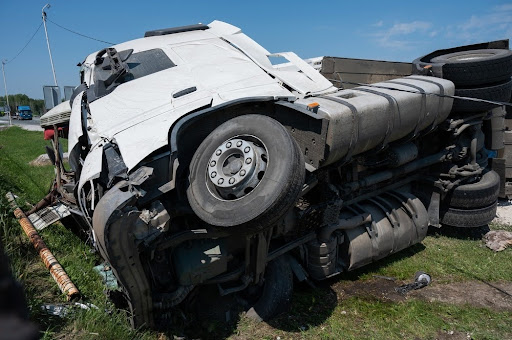
A passenger car colliding with another passenger car is one kind of event. A passenger car colliding with a loaded tractor-trailer or a charter bus is something else entirely, even when the paperwork looks similar at first glance. The vehicles weigh more, the companies behind them carry different insurance, and the rules that govern their drivers come from federal law as well as state law. Florida roads see plenty of both, from interstate freight corridors to tour buses moving visitors along the Gulf Coast.
Why Commercial Vehicle Crashes Are Handled Differently
Size is the obvious starting point. A fully loaded truck needs far more distance to stop than a sedan, and a bus carrying dozens of passengers can turn a single collision into an event with many injured people. Injuries tend to be more severe, which raises the stakes for every decision made in the days afterward.
Readers who want a local starting point on injury claims can look at Dixon Injury Law, whose site describes personal injury matters in Miramar Beach and nearby Gulf Coast communities. Beyond that kind of general reading, the practical difference lies in who is responsible. With a private car, liability usually lands on one driver and one insurer. With a commercial vehicle, the driver, the employer, a leasing company, a maintenance contractor, and a cargo loader can all be part of the picture, and each of them keeps records and has its own reasons for describing those records in a particular way.
Federal oversight adds another layer. Motor carriers operating across state lines answer to rules on driver qualifications, hours of service, and vehicle inspection, which means a crash can generate a paper trail that a normal fender bender never would. Those requirements do not decide a civil claim on their own. They do give investigators something concrete to compare against what actually happened on the road.
Evidence That Disappears Quickly
Commercial vehicles often carry electronic logging devices, engine control modules, and sometimes dash cameras. Data from these sources can be overwritten or discarded under routine retention schedules, so timing matters more than most people expect. Here’s the kicker though, the most useful records usually belong to the company rather than the injured person, and nobody outside the company knows they exist until someone asks for them.
Preservation letters are the usual tool for that problem. A written request sent early asks the carrier to keep driver logs, maintenance files, inspection reports, and telematics data intact. Carriers are not always quick to comply, and a letter by itself guarantees nothing, but it creates a record showing the material was requested before it was lost.
Physical evidence deserves the same urgency. Skid marks fade, damaged vehicles get repaired or sold for parts, and bus seating or restraint damage can be cleaned up within days. Photographs taken at the scene, witness names, and the condition of the roadway all help rebuild what no camera recorded. Passengers on a bus sometimes forget that the other riders are potential witnesses, so contact details gathered on the spot tend to be worth the awkwardness of asking for them.
Bus Accidents and the Question of Who Runs the Vehicle
Bus crashes raise a question that truck cases rarely do, which is who actually operates the vehicle. People who search for miramar beach bus accident lawyer are often trying to sort out exactly that, since a bus may belong to a private charter company, a tour operator, a school contractor, or a public transit agency. The answer decides which insurance policy responds, which deadlines apply, and whose employees will be interviewed first.
Public entities follow different procedures. Claims involving a government-run bus system can come with notice requirements and limits on recovery that do not apply to private companies, so the identity of the operator affects the whole timeline. The specifics vary and are worth confirming with the agency or an attorney before anything is assumed. Private carriers, meanwhile, usually hold commercial policies larger than a personal auto policy, though those policies are defended by insurers with plenty of experience in these claims.
Passengers face their own set of issues. A rider hurt on a bus is rarely at fault for the crash itself, yet the other driver, the bus driver, and the bus company may all point at one another. On that note, injured passengers sometimes have claims against more than one party, and the order in which those claims are presented can change how evidence gets gathered. Children, older riders, and people with existing conditions often have injuries that look minor at the scene and turn out to need long treatment.
Florida Rules That Shape Every Claim
Two features of Florida law touch almost every injury case that follows a commercial crash. The first is modified comparative negligence. Under the 2023 reform known as HB 837, a plaintiff found more than 50 percent at fault is barred from recovering, which gives defense teams a strong reason to argue that the injured person contributed to the crash. A car driver who changed lanes near a truck’s blind spot, for example, may hear exactly that argument.
The second is the filing deadline. For general negligence claims that arose after March 24, 2023, the limitations period was cut from four years to two. Wrongful death follows its own statute, and its details are worth checking rather than assuming. Two years sounds generous until medical treatment, records requests, and insurer negotiations eat into it.
Florida’s no-fault system adds a third piece for people hurt while driving a private vehicle. Personal injury protection provides up to $10,000 in emergency medical and disability benefits, and medical benefits are tied to starting treatment within 14 days of the crash. Drivers hurt in a collision with a truck can lose access to those benefits simply by waiting too long to see a doctor, even when the other party is clearly responsible.
What Truck Crash Claims Usually Turn On
Truck cases tend to turn on a handful of questions: whether the driver was rested, whether the load was secured, whether the brakes and tires were maintained, and whether anyone at the company pressured the driver to hurry. A summary at https://dixoninjuryattorney.com/miramar-beach-truck-accident-lawyer describes truck accident claims in the Miramar Beach area. Reading about the process before a crisis tends to make the first conversations with an insurer less confusing.
Cargo is its own subject. Overweight or poorly balanced loads change how a truck brakes and handles, and the party that loaded the trailer may not be the party that drove it. Shippers and third-party loaders therefore sometimes belong in the liability analysis. That is one reason truck claims take longer to sort out than car claims, since each added party brings another insurer and another set of documents.
Recovery itself deserves attention too. Spinal injuries, fractures, and head trauma from heavy-vehicle collisions can require months of treatment, and the full cost is often unclear when the first settlement offer arrives. Accepting early money can close the door on expenses that surface later, which is why adjusters tend to move quickly with an offer while injuries are still being diagnosed.
Commercial crashes reward the people who act quickly and write things down. Florida’s recent changes to fault and filing deadlines mean small delays carry more weight than they once did. A phone full of scene photos, a few witness phone numbers, and a prompt medical visit often end up mattering more than anyone expected during the first week.
Where the legal industry reads first.
Enjoyed this article? Get the biggest legal industry updates, deals, appointments, insights and expert interviews in your inbox, free.
No spam. Unsubscribe anytime.From Legal Desire
Is your firm the one being cited, or the one being skipped?
We ran the test. On several everyday legal questions, software companies are answering and law firms are not. We help firms fix that, and we build the technology behind the practice.
Lawyers and firms: get featured on Legal Desire
Share your deals, lateral moves, firm news and insights with 1M+ monthly readers: founders, law firm partners, general counsel and practising lawyers across the US, UK, EU and GCC.
Get featuredSubmit a press release