
Last updated: 26 November 2026. Sources: the US federal judiciary’s statements on its AI Task Force, Senator Grassley’s release of judges’ letters, the Fifth Circuit’s October 2026 ruling as reported by JURIST, the AI guidance and position statement of the judiciary of England and Wales, California Rule of Court 10.430, New York’s interim court AI policy and Annex III of the EU AI Act.
Short answer: Yes, judges can use AI, but only as an assistant. The court rules issued so far allow approved tools for tasks such as summarising and administration, require judges to check the output and keep them responsible for it. US federal courts, England and Wales and New York also forbid handing the decision itself to AI. Federal guidance is still interim.
Key takeaways
- US federal courts have worked under interim AI guidance since 31 July 2025. It warns against delegating “core judicial functions” such as deciding cases to AI, and the judiciary’s task force has said final guidance could come by the end of 2026.
- Two federal judges, Julien Neals in New Jersey and Henry Wingate in Mississippi, withdrew error-filled orders in July 2025 and later admitted that staff had used generative AI. On 22 October 2026 the Fifth Circuit vacated Wingate’s injunction and reassigned the case.
- Judges in England and Wales may use approved tools for summaries and admin, but the guidance says AI is not recommended for legal research or legal analysis, and an October 2026 position statement says AI “must not determine the outcome of a case”.
- California and New York require court AI policies, approved tools, verification and confidentiality safeguards. The EU AI Act classes AI that helps judges research and apply the law as high-risk.
Can judges use AI?
They can, within limits that are now written down in most major court systems. The rules share four principles. A judge or court employee must use approved or secure tools, must not put confidential case material into public chatbots, must check everything the tool produces and, in most systems, must not hand the decision itself to a machine.
What differs is the legal force of those rules. Some are binding court rules, some are internal policies and some are guidance. None of them bans judicial AI outright, and none allows AI to decide a case. The debate over AI in court has mostly focused on lawyers, whose filings with invented citations fill our AI hallucination sanctions table. The rules for judges are newer and less well known.
What does the US federal judiciary allow?
In 2025, Judge Robert Conrad, Director of the Administrative Office of the US Courts, appointed an advisory AI Task Force, chaired by Ninth Circuit Judge Sidney Thomas. The task force produced interim guidance that was sent to federal courts on 31 July 2025. The judiciary declined to release the document when asked in October 2025, but Judge Conrad described it in a letter to Senator Chuck Grassley. According to that description, the guidance:
- allows use of and experimentation with AI tools, while cautioning against delegating “core judicial functions to AI, including decision-making or case adjudication”;
- recommends extreme caution when AI is used on novel legal questions, and independent verification of all AI output;
- reminds users that they “are accountable for all work performed with the assistance of AI”;
- asks users to consider whether AI use should be disclosed, without requiring it; and
- encourages each court to define the tasks for which locally approved tools may be used.
On 17 September 2026 the Judicial Conference received an update from the task force, which has identified more than 60 distinct issues and split its work among seven subgroups. The Conference took no AI-specific action. Judge Thomas told Bloomberg Law the same day that final guidance could come as soon as the end of 2026.
What happened when judges’ AI-drafted orders went wrong?
Two cases from July 2025 turned judicial AI from a theory into a scandal.
New Jersey. On 23 July 2025, Judge Julien Neals withdrew his opinion denying a motion to dismiss in In re CorMedix Inc. Securities Litigation. A day earlier, the company’s lawyers had written to point out misstated case outcomes and quotations that did not appear in the decisions they were attributed to.
Mississippi. Judge Henry Wingate had issued a temporary restraining order blocking a state law that restricts diversity, equity and inclusion programmes in public schools and universities. The order referred to parties who were not in the case and to declarations from people not in the record, and it quoted language that is not in the statute. After the state flagged the errors, the judge replaced the order and called the mistakes clerical.
In October 2025 both judges answered questions from Senator Grassley, who released their letters on 23 October 2025. Both said members of their staff had used generative AI to draft the orders. Judge Wingate said he now requires a second independent review of every draft and printed copies of every cited case. Judge Neals adopted a written policy barring law clerks and interns from using AI to draft opinions or orders.
The Mississippi case did not end there. On 22 October 2026, a Fifth Circuit panel in Jackson Federation of Teachers v. Fitch vacated the preliminary injunction and ordered the case reassigned to a different district judge. Judge Jerry Smith called the district court proceedings “a botch job, to say the least”. According to JURIST, the panel also found that the replacement order still cited a 1974 Fourth Circuit case that does not exist.
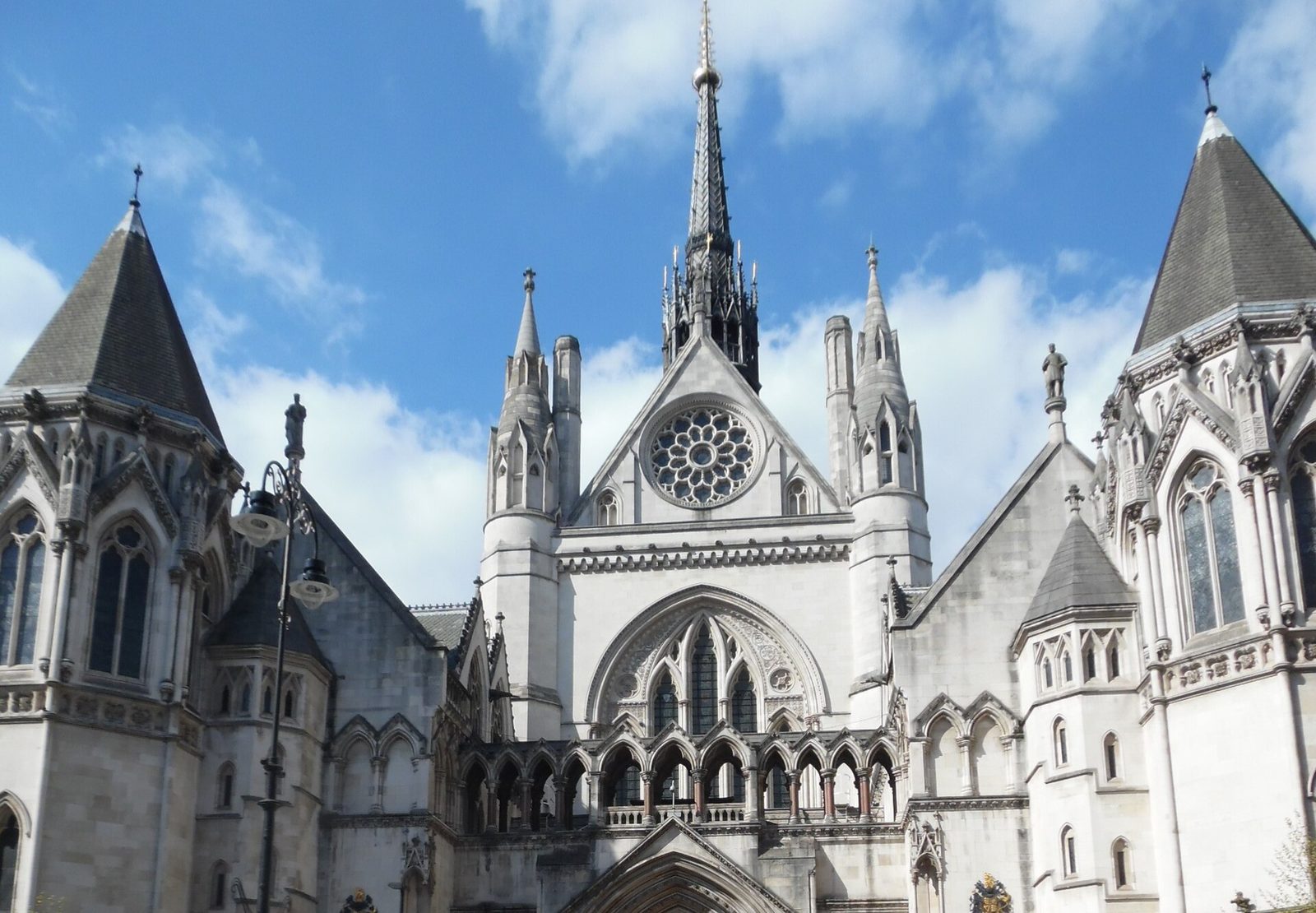
What rules apply to judges in England and Wales?
The judiciary first issued AI guidance for judicial office holders in December 2023 and updated it in April and October 2025. It applies to judges, their clerks, judicial assistants, legal advisers and other support staff. The main points are:
- Confidentiality. Do not enter anything that is not already public into a public AI chatbot, and treat anything typed into one as “published to all the world”.
- Accuracy. Check any AI output before relying on it, because tools can invent cases, citations and quotations.
- Responsibility. Judicial office holders are “personally responsible for material which is produced in their name”, and “Judges must always read the underlying documents.”
- Useful tasks. Summarising large bodies of text, suggesting topics for presentations and administrative work such as emails and meeting summaries.
- Tasks not recommended. Legal research to find information the judge cannot verify, and legal analysis, because public chatbots “do not produce convincing analysis or reasoning”.
The guidance also lists warning signs that a litigant’s submission was written by AI: unfamiliar citations, often from the US, American spelling, persuasive prose with obvious errors, and leftover prompt text. It warns judges about deepfakes and “white text”, meaning hidden prompts placed in documents.
On 9 October 2026 the judiciary added a position statement signed by Sir Colin Birss, its lead judge for AI. It says AI “will be adopted to support but not replace judicial decision-making”, that only approved tools with UK data residency may be used, and that AI “must not displace reasoning, evaluation of evidence or the exercise of judicial discretion”. New tools must go through a central steering group before wider use. For the parallel rules on solicitors, see our guide to SRA AI guidance for law firms.
How are US state courts handling judicial AI?
California adopted Rule of Court 10.430, which applies to the superior courts, the Courts of Appeal and the Supreme Court. Any court that does not ban generative AI had to adopt a use policy by 15 December 2025. Each policy must bar confidential or personal information from public AI systems, prohibit unlawful discrimination, require staff and judicial officers to verify accuracy and correct hallucinated output, and require disclosure when work given to the public consists entirely of AI output. The rule covers judicial officers for tasks outside their adjudicative role, and a separate standard, 10.80, covers their use of AI within their adjudicative role.
New York announced its Interim Policy on the Use of Artificial Intelligence on 10 October 2025. It applies to all judges and non-judicial staff of the Unified Court System. Users may use only approved tools, must complete training before using any of them and may not put confidential information, or any filed court document, into a tool that does not run on a private model. The policy adds that general-purpose AI programs “are not suitable for legal writing and legal research”, and that judges must make sure AI is never “actually engaged in the decision-making tasks a judge is ethically obligated to perform”.
| Court system | Instrument | Status | Can AI decide or draft the decision? | Key requirements |
|---|---|---|---|---|
| US federal courts | AI Task Force interim guidance (31 July 2025) | Interim, unpublished | No delegation of core judicial functions | Verification, accountability, discretionary disclosure, local task lists |
| England and Wales | AI judicial guidance (October 2025) and position statement (9 October 2026) | Judicial guidance | No: AI must not determine the outcome | Approved tools, confidentiality, checks, personal responsibility |
| California | Rule 10.430 and Standard 10.80 | Court rule, policies due 15 December 2025 | Adjudicative use covered by Standard 10.80 | Confidentiality, anti-bias, verification, disclosure of fully AI-generated public work |
| New York | Interim Policy on the Use of AI (October 2025) | Internal policy | No delegation of decision-making | Approved tools only, mandatory training, private models for confidential material |
| European Union | EU AI Act, Annex III, point 8(a) | Regulation | Judicial support AI classed as high-risk | High-risk system obligations for providers and deployers |
Does the EU AI Act treat court AI as high-risk?
Yes. Annex III, point 8(a) lists AI systems “intended to be used by a judicial authority or on their behalf to assist a judicial authority in researching and interpreting facts and the law and in applying the law to a concrete set of facts”, including similar use in alternative dispute resolution. That puts court research and drafting tools in the high-risk category, with obligations on risk management, human oversight and documentation. The timing of those obligations has been caught up in the EU’s Digital Omnibus changes; see our explainer on the EU AI Act after the Digital Omnibus.
What should lawyers do if a judge may have used AI?
- Check every order you receive. Read the cited cases and quotations, as you would check an opponent’s brief. In both 2025 cases, it was the parties’ lawyers who flagged the errors.
- Raise errors promptly and politely. A letter or a motion to clarify, as in CorMedix and the Mississippi case, puts the problem on the record without accusing the judge of anything.
- Read the standing orders. Some judges set rules on how parties may use AI, and our guide to ABA Formal Opinion 512 covers a lawyer’s own duties.
- Watch the evidence rules too. AI-generated evidence raises separate questions, covered in our update on proposed Federal Rule of Evidence 707.
If you are choosing tools for your own practice, our legal AI tools directory lists the main products by category.
This article is general information about court policies on artificial intelligence as of 26 November 2026, not legal advice. Individual courts and judges may have their own orders, so check the rules of the court you appear in.
Frequently asked questions
Are judges allowed to use ChatGPT?
Public chatbots are restricted. In England and Wales, judges must not enter anything that is not already public into a public chatbot. New York allows only approved tools and bars confidential information from tools that do not run on a private model.
Can AI decide a court case?
No court system covered here allows it. US federal guidance warns against delegating decision-making to AI, and the judiciary of England and Wales says AI must not determine the outcome of a case.
Do judges have to disclose that they used AI?
Usually not. US federal guidance asks users to consider disclosure, and the English guidance says judges need not describe their preparatory work. California requires disclosure when work given to the public consists entirely of AI output.
Which judges used AI to draft orders with errors?
Judge Julien Neals of the District of New Jersey and Judge Henry Wingate of the Southern District of Mississippi. Both withdrew orders in July 2025 and later told Senator Grassley that staff had used generative AI.
What did the Fifth Circuit do in the Mississippi case?
On 22 October 2026 it vacated Judge Wingate’s preliminary injunction against Mississippi’s law restricting DEI programmes and ordered the case reassigned to a different district judge.
Is there a federal rule on judges using AI?
Not yet. Federal courts follow interim guidance from July 2025. The judiciary’s AI Task Force has said final guidance could come by the end of 2026.
Where the legal industry reads first.
Enjoyed this article? Get the biggest legal industry updates, deals, appointments, insights and expert interviews in your inbox, free.
No spam. Unsubscribe anytime.From Legal Desire
Is your firm the one being cited, or the one being skipped?
We ran the test. On several everyday legal questions, software companies are answering and law firms are not. We help firms fix that, and we build the technology behind the practice.
Lawyers and firms: get featured on Legal Desire
Share your deals, lateral moves, firm news and insights with 1M+ monthly readers: founders, law firm partners, general counsel and practising lawyers across the US, UK, EU and GCC.
Get featuredSubmit a press release