

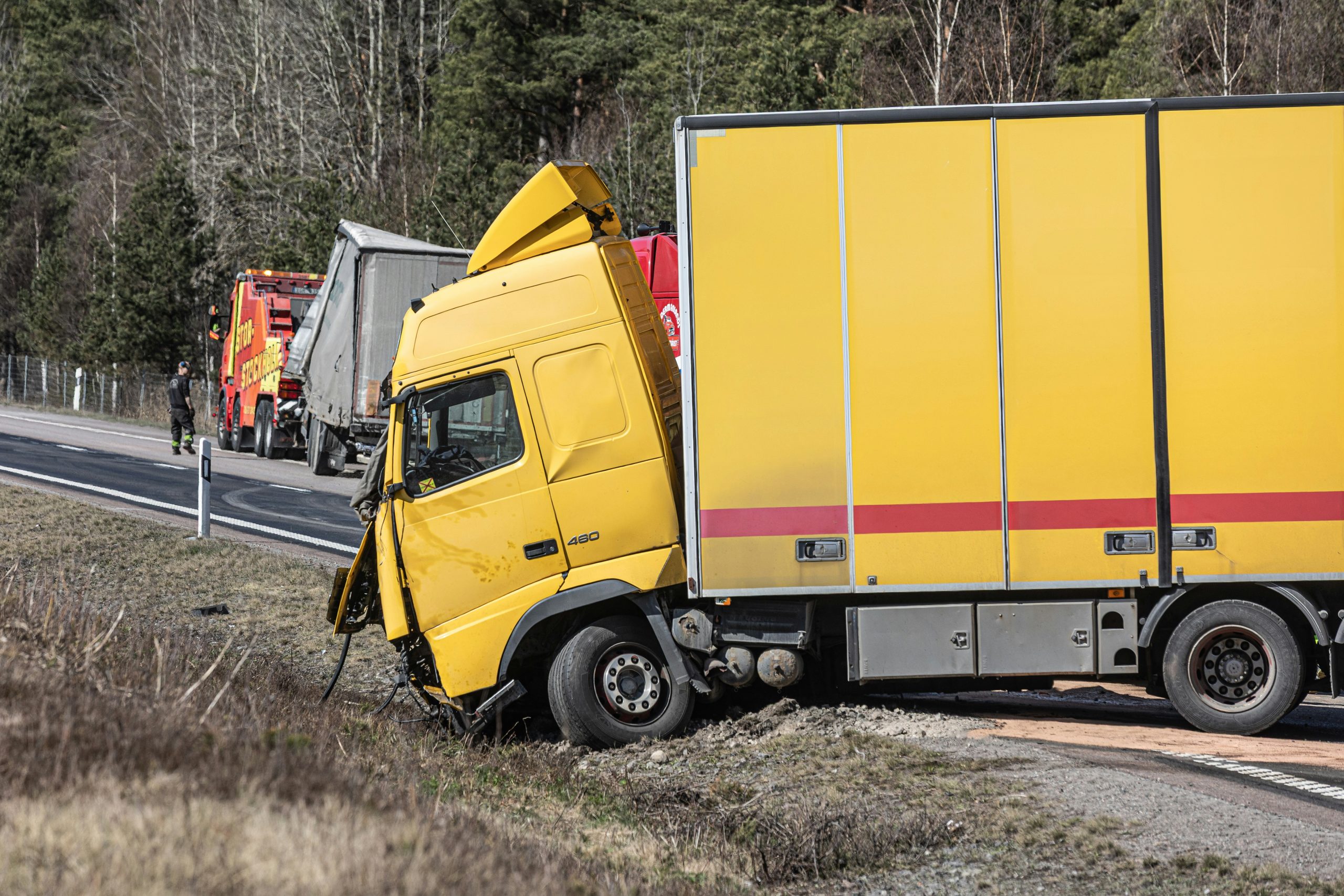
Commercial vehicle accidents are among the most catastrophic events that can occur on Long Island’s roads. From the congested stretches of the Long Island Expressway to the busy commercial corridors of Nassau and Suffolk Counties, large trucks, delivery vehicles, and tractor-trailers share the road with everyday commuters every single day. When these massive vehicles are involved in collisions, the consequences are rarely minor, and the legal landscape that follows is anything but straightforward.
Understanding why these cases require a higher level of legal expertise is essential for any victim seeking fair compensation after a crash.
The Unique Dangers of Commercial Vehicles on Long Island Roads
Size, Weight, and the Physics of Destruction
A fully loaded tractor-trailer can weigh up to 80,000 pounds, roughly 20 to 30 times the weight of a standard passenger vehicle. When a vehicle of that mass collides with a car at highway speed, the results are often devastating. Victims frequently suffer traumatic brain injuries, spinal cord damage, multiple fractures, internal organ trauma, and, in the worst cases, fatal injuries.
Long Island’s road infrastructure adds another layer of complexity. Many local roads were not designed with heavy commercial traffic in mind. Narrow lanes, low-clearance bridges, and high-density residential areas create conditions where truck accidents can quickly become multi-vehicle disasters. The region’s heavy traffic volume, particularly around major freight corridors and distribution hubs, means that commercial vehicles are a constant presence, and the risk of serious accidents is ever-present.
Common Causes of Commercial Vehicle Accidents
Truck accidents rarely happen for a single reason. In most cases, a combination of factors contributes to the crash. Some of the most frequently identified causes include:
- Driver fatigue: Federal Hours of Service regulations exist precisely because fatigued driving is a leading cause of truck accidents. When carriers pressure drivers to meet tight delivery windows, rest requirements are sometimes ignored.
- Improper cargo loading: Overloaded or improperly secured cargo can cause a truck to tip, jackknife, or shed debris onto the roadway.
- Mechanical failures: Brake failures, tire blowouts, and steering defects are common in trucks that have not been properly maintained.
- Distracted or impaired driving: Commercial drivers are not immune to the same distractions that affect all motorists, and substance use remains a documented problem in the industry.
- Inadequate driver training: Not all carriers invest in thorough training programs, leaving drivers unprepared for the demands of operating large vehicles in dense traffic environments like Long Island.
Understanding the root cause of a crash is not just an academic exercise; it directly determines who can be held legally responsible.
Why These Cases Are Legally More Complex Than Standard Car Accidents
Multiple Parties May Share Liability
One of the defining characteristics of commercial vehicle litigation is the potential for multiple liable parties. Unlike a typical two-car accident, where liability generally falls on one driver or the other, a truck accident case may involve:
- The truck driver, whose negligence or recklessness may have directly caused the crash
- The trucking company, which may be liable for negligent hiring, inadequate training, or pressuring drivers to violate safety regulations
- The cargo loading company, if the freight was improperly secured, contributed to the accident.
- The vehicle manufacturer, if a defective part, such as faulty brakes or a defective tire, played a role
- Maintenance contractors, if third-party mechanics failed to identify or repair a known mechanical issue
Identifying all potentially liable parties requires a thorough investigation, one that goes far beyond reviewing a police report.
Federal and State Regulations Govern the Industry
The trucking industry is one of the most heavily regulated sectors in the United States. The Federal Motor Carrier Safety Administration (FMCSA) sets standards for driver qualifications, hours of service, vehicle maintenance, cargo securement, and more. New York State adds its own layer of regulations on top of federal requirements.
Building a strong case often means demonstrating that one or more of these regulations were violated. This requires attorneys who are not only familiar with general personal injury law but who also have a working knowledge of the FMCSA’s regulatory framework and how violations translate into legal liability. For a deeper look at how trucking accidents are handled from a legal standpoint, resources like the comprehensive trucking accident legal guide from Super Lawyers provide valuable context on the complexity of these claims.
Evidence Is Time-Sensitive and Specialized
In a standard car accident, the primary evidence is usually the vehicles themselves, witness statements, and the police report. In a commercial vehicle case, the evidentiary landscape is far broader and far more perishable.
Critical evidence in truck accident cases includes:
- Electronic Logging Device (ELD) data, which records a driver’s hours of service and can reveal fatigue-related violations
- Black box data (the truck’s Event Data Recorder), which captures speed, braking, and other operational data in the moments before a crash
- Driver qualification files, including licensing history, training records, and prior violations
- Maintenance and inspection logs, which can reveal whether known mechanical issues were ignored
- Cargo manifests and loading records
- Surveillance footage from nearby businesses or traffic cameras
Trucking companies and their insurers know the value of this evidence, and they move quickly to preserve it in ways that favor their defense. Victims who delay in retaining experienced legal counsel risk losing access to this critical documentation before it can be properly preserved and analyzed.
The Insurance Dimension: Why Settlements Are Rarely Simple
Commercial Carriers Carry High-Value Policies and Aggressive Defense Teams
Commercial trucking companies are required to carry significantly higher insurance coverage than private motorists. While this means there is theoretically more money available to compensate victims, it also means that insurers have a strong financial incentive to minimize payouts. Large carriers often retain specialized defense firms and experienced adjusters whose sole job is to reduce or deny claims.
Victims who attempt to navigate these negotiations without experienced legal representation are at a serious disadvantage. Insurance adjusters may contact accident victims shortly after a crash, often before the full extent of injuries is known, and attempt to secure a quick, low-value settlement. Accepting such an offer can permanently bar a victim from seeking additional compensation, even if their injuries turn out to be far more serious than initially apparent.
Calculating the True Value of a Truck Accident Claim
Properly valuing a commercial vehicle accident claim requires accounting for a wide range of damages, including:
- Current and future medical expenses, including surgeries, rehabilitation, and long-term care
- Lost wages and diminished earning capacity
- Pain and suffering, both physical and emotional
- Property damage
- Loss of consortium for affected family members
- Punitive damages, in cases where the defendant’s conduct was particularly reckless or egregious
Arriving at an accurate figure requires collaboration between legal professionals, medical experts, vocational rehabilitation specialists, and economic analysts. This is not the kind of work that can be done effectively without a legal team that has handled complex commercial vehicle litigation before.
What to Look for in Legal Representation After a Long Island Truck Accident
Experience With Commercial Vehicle Litigation Specifically
Not every personal injury attorney has the background needed to handle a truck accident case effectively. Victims should look for attorneys who have a demonstrated track record in commercial vehicle litigation, who understand the FMCSA regulatory framework, and who have the resources to conduct a thorough independent investigation.
The recognized attorneys at Levine and Wiss PLLC have built a reputation in the New York legal community for handling serious injury cases with the depth and dedication these matters require.
Acting Quickly to Protect Your Rights
New York’s statute of limitations for personal injury claims is generally three years from the date of the accident. While that may seem like ample time, the reality is that the most critical investigative work must happen as soon as possible after a crash. Evidence disappears, witnesses’ memories fade, and trucking companies begin building their defense from day one.
Victims of commercial vehicle crashes on Long Island should consult with the truck accident lawyers in Long Island at Levine and Wiss as early as possible to ensure that their rights are protected and that no critical evidence is lost.
Conclusion
Commercial vehicle accidents on Long Island are not ordinary traffic incidents. They involve complex liability questions, federal regulatory frameworks, time-sensitive evidence, and well-funded insurance defense teams. Victims deserve legal representation that matches the complexity of their situation, attorneys who understand the full scope of what these cases demand and who have the experience to pursue maximum compensation on their behalf.
If you or a loved one has been injured in a truck or commercial vehicle accident on Long Island, do not wait to seek qualified legal counsel. The decisions made in the days and weeks immediately following a crash can have a lasting impact on the outcome of your case.
About the author: Irma C. Dengler

With a BA in communications and paralegal experience, Irma C. Dengler decided to make the best of her writing skills. She decided to turn complicated legal matters into something more palatable for the masses. Therefore, Irma became a law communicator who writes about everyday problems so everyone can understand them and take the appropriate action. She specializes in personal injury cases, as they are more common than anyone thinks, but her areas of expertise also include civil law, criminal law, insurance-related issues, and more.
Where the legal industry reads first.
Enjoyed this article? Get the biggest legal industry updates, deals, appointments, insights and expert interviews in your inbox, free.
No spam. Unsubscribe anytime.From Legal Desire
Is your firm the one being cited, or the one being skipped?
We ran the test. On several everyday legal questions, software companies are answering and law firms are not. We help firms fix that, and we build the technology behind the practice.
Lawyers and firms: get featured on Legal Desire
Share your deals, lateral moves, firm news and insights with 1M+ monthly readers: founders, law firm partners, general counsel and practising lawyers across the US, UK, EU and GCC.
Get featuredSubmit a press release