

Marxist Theory of State: 2026 Exam Prep Guide
What Are the Key Takeaways for the Marxist Theory of State?
- The state is not a neutral arbiter but an instrument of class rule designed to protect the bourgeoisie and suppress the proletariat.
- Society is divided into the economic base, which dictates production, and the superstructure, which includes the legal and political systems built to protect that base.
- Modern applications of Marxist theory highlight corporate influence in politics, gig economy labor exploitation, and class disparities in criminal justice.
- Advanced legal analysis requires understanding the Miliband-Poulantzas debate regarding the relative autonomy of the state.
- A successful proletarian revolution is theorized to eventually lead to the withering away of the state once class antagonisms are abolished.
Why is Understanding Marxist Jurisprudence Essential for 2026 Exams?
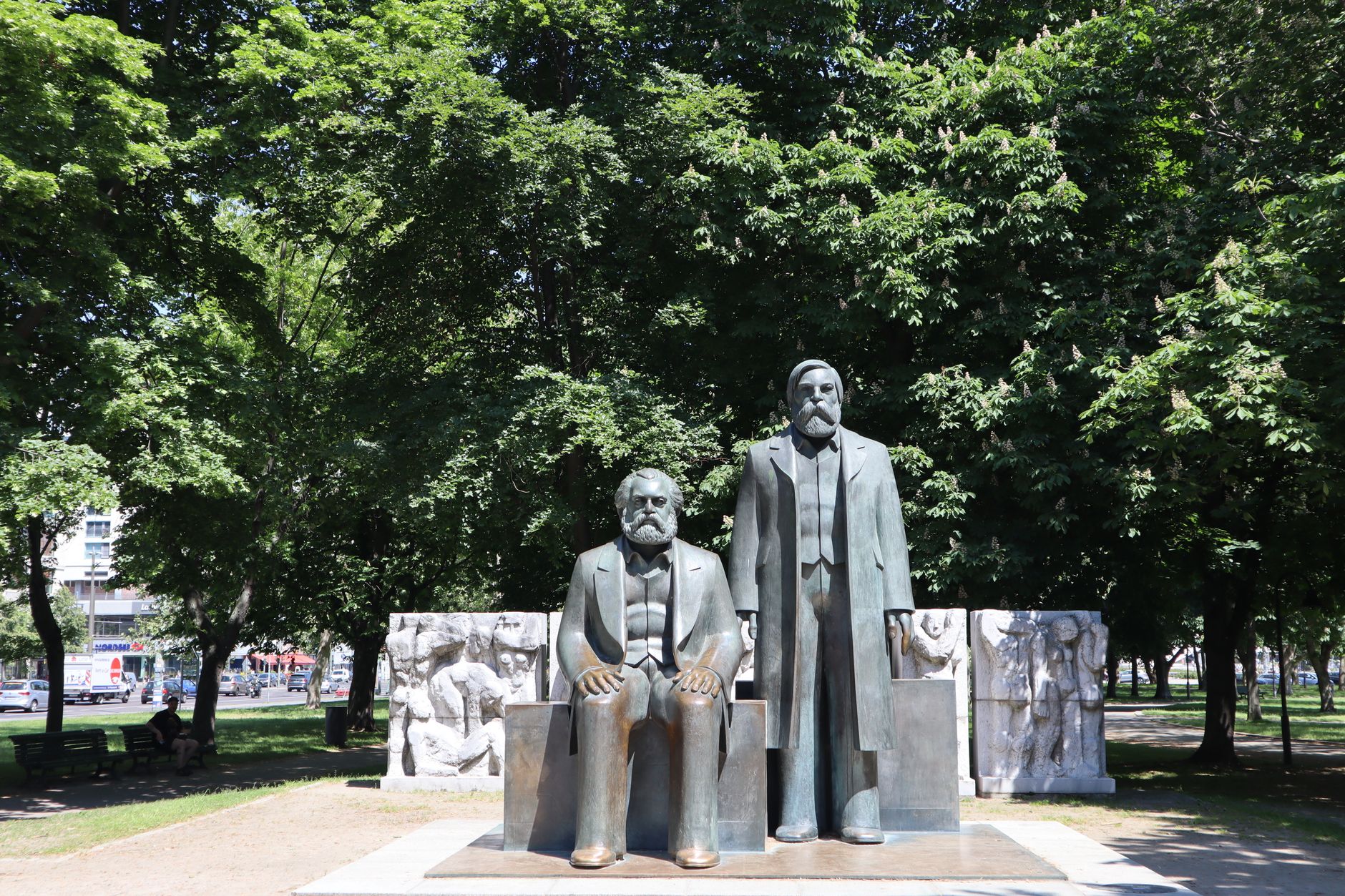
Welcome to the 2026 exam preparation guide focusing on the marxist theory of state. For law students studying jurisprudence, political theory, and legal sociology, understanding how Karl Marx and Friedrich Engels conceptualized the state is absolutely essential. Unlike classical liberal theories that view the state as a neutral arbiter of justice born from a social contract, the marxist theory of state posits that the state is fundamentally an instrument of class rule. It is designed to enforce and legitimize the dominance of the bourgeoisie over the proletariat. Mastering this theory requires moving beyond basic definitions and understanding its application to contemporary legal frameworks, labor disputes, and constitutional law.
What Are the Core Principles of the Marxist Theory of State?
Base and Superstructure
At the heart of the marxist theory of state is the architectural metaphor of the base and the superstructure. The economic base comprises the forces and relations of production. This essentially dictates how a society organizes its material wealth, technology, and labor. The superstructure encompasses everything built upon that economic foundation, including culture, religion, politics, and crucially, the law and the state apparatus.
According to Marxist jurisprudence, the state does not exist independently of the economic base. Instead, the legal system is constructed specifically to protect the property rights and economic interests of the ruling class. The law is not viewed as a reflection of universal moral truths or divine justice, but rather as a direct reflection of the prevailing capitalist economic order.
The State as an Instrument of Class Oppression
Classical liberal theory suggests that the state emerges to protect individual rights and maintain social harmony. In stark contrast, Marxist theory argues that the state is historically a product of irreconcilable class antagonisms. When society split into distinct classes with opposing economic interests, namely the bourgeoisie who own the means of production and the proletariat who sell their labor, the state emerged as a mechanism to manage this inherent conflict.
However, the state manages this conflict by systematically favoring the property-owning class. The police, the courts, the penal system, and the military function as the coercive arm of the state, ensuring that the existing property relations remain undisturbed and that capital accumulation can continue unimpeded.
The Withering Away of the State
A unique aspect of the marxist theory of state is the concept of the state withering away over time. Marxists argue that because the state exists solely to manage class conflict, a successful proletarian revolution that abolishes private property and class distinctions will ultimately render the state obsolete. Once class antagonisms disappear in a fully communist society, the coercive machinery of the state will no longer be necessary. The governance structure will transition from the political control of people to the mere administrative management of resources and production.
How Has the Marxist State Theory Evolved Among Key Thinkers?
To excel in your 2026 jurisprudence exams, you must differentiate between the classical and neo-Marxist interpretations of the state. Understanding the evolution of these ideas demonstrates a high level of academic rigor.
- Karl Marx and Friedrich Engels laid the foundational groundwork. Engels, in his work The Origin of the Family, Private Property and the State, traced the historical emergence of the state directly to the rise of private property. Students can explore their foundational texts through the Marxist Internet Archive, which provides comprehensive access to original historical manuscripts.
- Vladimir Lenin expanded on these ideas in his seminal text, The State and Revolution. Lenin emphasized the necessity of a revolution to dismantle the bourgeois state apparatus, arguing that the working class cannot simply inherit the existing state machinery and wield it for their own emancipatory purposes.
- Antonio Gramsci introduced the concept of cultural hegemony to Marxist political theory. Gramsci observed that the state maintains control not only through physical coercive force but through ideological dominance. The ruling class normalizes its values through education, media, and the legal system, making their dominance seem like inevitable common sense. Consequently, the oppressed classes unconsciously consent to their own subjugation.
- Louis Althusser expanded on Gramsci by dividing the state into Repressive State Apparatuses, such as the police and military, and Ideological State Apparatuses, which include schools, churches, and the family unit. For Althusser, the law functions simultaneously in both realms, punishing dissent while teaching citizens to obey the capitalist order. For a deeper philosophical context, students can review the Stanford Encyclopedia of Philosophy entry on Karl Marx.
What is the Miliband-Poulantzas Debate on Relative Autonomy?
A critical area for advanced legal study is the debate between instrumentalist and structuralist Marxism. Ralph Miliband argued from an instrumentalist perspective, demonstrating that the individuals occupying elite state positions, such as judges, politicians, and top civil servants, overwhelmingly come from the same privileged economic backgrounds as the capitalist class. Therefore, the state acts in the interests of capital because it is literally staffed by capitalists.
Nicos Poulantzas, representing the structuralist view, argued that the personal class background of state officials is largely irrelevant. The state functions to protect capitalism because of its structural position within the capitalist mode of production. Poulantzas introduced the concept of the relative autonomy of the state. He argued that the state must have enough independence from individual corporate interests to make necessary concessions to the working class, such as passing minimum wage laws or workplace safety regulations. These legal concessions prevent a full-scale working-class revolution, thereby ensuring the long-term survival of the capitalist system. This concept is a crucial analytical tool for law students analyzing modern welfare state legislation.
How Can Law Students Apply Marxist Theory in the 2026 Legal Context?
Examiners in 2026 look for law students who can bridge classical political theory with contemporary legal issues. The marxist theory of state provides a powerful analytical lens for critiquing modern jurisprudence across various domains of law.
Corporate Influence and the State Apparatus
Instrumentalist Marxists argue that the state is directly manipulated by the capitalist class. This perspective is highly relevant when analyzing campaign finance laws, corporate lobbying, and legislative capture. A prime example is the landmark United States Supreme Court decision in Citizens United v Federal Election Commission. By ruling that political spending is a form of protected speech, the court effectively allowed unlimited corporate wealth to flood the political process. Statistics show that outside political spending skyrocketed, surpassing $2.9 billion in the decade following the ruling. From a Marxist perspective, this case perfectly illustrates the state legalizing the bourgeoisie’s ability to purchase political power, thereby ensuring that legislative outcomes heavily favor corporate interests over those of the working class. You can read the comprehensive case details and oral arguments on Oyez.
Labor Law and the Gig Economy
The modern platform and gig economy offers an excellent case study for applying the marxist theory of state. With recent estimates indicating that gig workers now comprise up to 12 percent of the global labor market, technology companies utilizing algorithmic management often classify workers as independent contractors rather than employees. This legal categorization strips workers of traditional labor protections, minimum wage guarantees, and collective bargaining rights. The UK Supreme Court case Uber BV v Aslam is a critical touchstone here.
The court ruled that drivers must be classified as workers rather than independent contractors. While this was widely celebrated as a victory for labor rights, a Marxist legal analysis would point out that the protracted legal battle itself highlights how the bourgeoisie continually innovates new legal fictions to extract surplus value from labor. The state, through its appellate courts, only intervened when the exploitation became so egregious that it threatened broader social stability, acting to preserve the legitimacy of the capitalist system as a whole rather than dismantling the exploitative wage-labor relationship entirely. For official records of such pivotal labor decisions, the UK Supreme Court official website serves as a primary resource.
Property Rights and Criminal Jurisprudence
Another fertile ground for applying the marxist theory of state is criminal jurisprudence. Marxist criminologists argue that the criminal justice system disproportionately targets the working class and marginalized communities while largely ignoring or accommodating white-collar crime. For instance, the state mobilizes immense police and judicial resources to prosecute petty theft or minor property damage. In contrast, corporate crimes such as massive wage theft, environmental degradation, and financial fraud are often treated as civil administrative matters. They are frequently punished with manageable fines that corporations simply write off as the cost of doing business. Data from organizations like the Economic Policy Institute routinely highlights how wage theft costs US workers an estimated $50 billion annually, which is significantly more than all physical robberies combined, yet it rarely results in criminal incarceration. This stark disparity underscores the Marxist claim that the criminal law’s primary function is to discipline the working class while protecting bourgeois capital accumulation.
What Are the Best 2026 Exam Preparation Strategies for Law Students?
When tackling an essay question on the marxist theory of state, structure your answer to demonstrate both theoretical depth and practical, modern application. Follow these strategic steps to maximize your marks:
- Always begin by clearly defining the state according to Marxist principles before contrasting it with liberal or social contract theories. Clearly articulate the base and superstructure model.
- Trace the historical development of the theory. Do not treat Marxism as a monolith. Acknowledge the nuanced debates between instrumentalists and structuralists regarding the relative autonomy of the state.
- Integrate modern legal examples. Use contemporary cases involving campaign finance, algorithmic labor disputes in the gig economy, or disparities in white-collar criminal sentencing to show that you understand how Marxist critiques apply to the 2026 legal landscape.
- Acknowledge the historical criticisms of the theory. Mention how Marxist states in the twentieth century failed to wither away, instead becoming highly bureaucratic and authoritarian. A balanced essay that critically evaluates both the capitalist state and the historical implementations of Marxism demonstrates superior academic judgment.
What Are the Most Frequently Asked Questions About Marxist Theory?
What is the Marxist theory of state in simple terms?
The Marxist theory of state argues that the state is not a neutral entity that serves the common good or acts as an impartial referee. Instead, it is a tool created and controlled by the ruling capitalist class to protect their private property, maintain their economic power, and legally suppress the working class.
How does the base and superstructure model apply to law?
In Marxist theory, the economic system is the base of society, while law, politics, and culture form the superstructure. The legal system does not exist independently; it is shaped directly by the economic base to legitimize and protect the interests of those who own the means of production.
What did Marx mean by the withering away of the state?
Marx and Engels believed that the state only exists to manage and suppress class conflict. Once a successful proletarian revolution abolishes private property and creates a classless society, the need for a coercive state apparatus will vanish, causing the state to naturally wither away into a purely administrative body.
How is Marxist theory relevant to modern jurisprudence in 2026?
Modern jurisprudence uses Marxist theory to critically analyze how contemporary laws consistently favor corporate interests. It is highly relevant for examining labor classification in the gig economy, the outsized influence of corporate lobbying on legislation, and the severe disparity in how white-collar crime is punished compared to street crime.
What is the difference between instrumentalist and structuralist Marxism?
Instrumentalist Marxism argues that the state is directly controlled by elite capitalists who manipulate laws for their immediate benefit. Structuralist Marxism argues that the state operates with relative autonomy to protect the long-term survival of the capitalist system, even if it means occasionally passing progressive laws that benefit the working class to prevent social rebellion.
Sources
- Marxist Internet Archive – The Communist Manifesto and original manuscripts.
- Stanford Encyclopedia of Philosophy – Comprehensive philosophical overview of Karl Marx.
- Oyez – Supreme Court case archives including Citizens United v FEC.
- UK Supreme Court – Official judgments on labor classification and the gig economy.
- Economic Policy Institute – Empirical data on wage theft and corporate accountability.
Where the legal industry reads first.
Enjoyed this article? Get the biggest legal industry updates, deals, appointments, insights and expert interviews in your inbox, free.
No spam. Unsubscribe anytime.From Legal Desire
Is your firm the one being cited, or the one being skipped?
We ran the test. On several everyday legal questions, software companies are answering and law firms are not. We help firms fix that, and we build the technology behind the practice.
Lawyers and firms: get featured on Legal Desire
Share your deals, lateral moves, firm news and insights with 1M+ monthly readers: founders, law firm partners, general counsel and practising lawyers across the US, UK, EU and GCC.
Get featuredSubmit a press release