

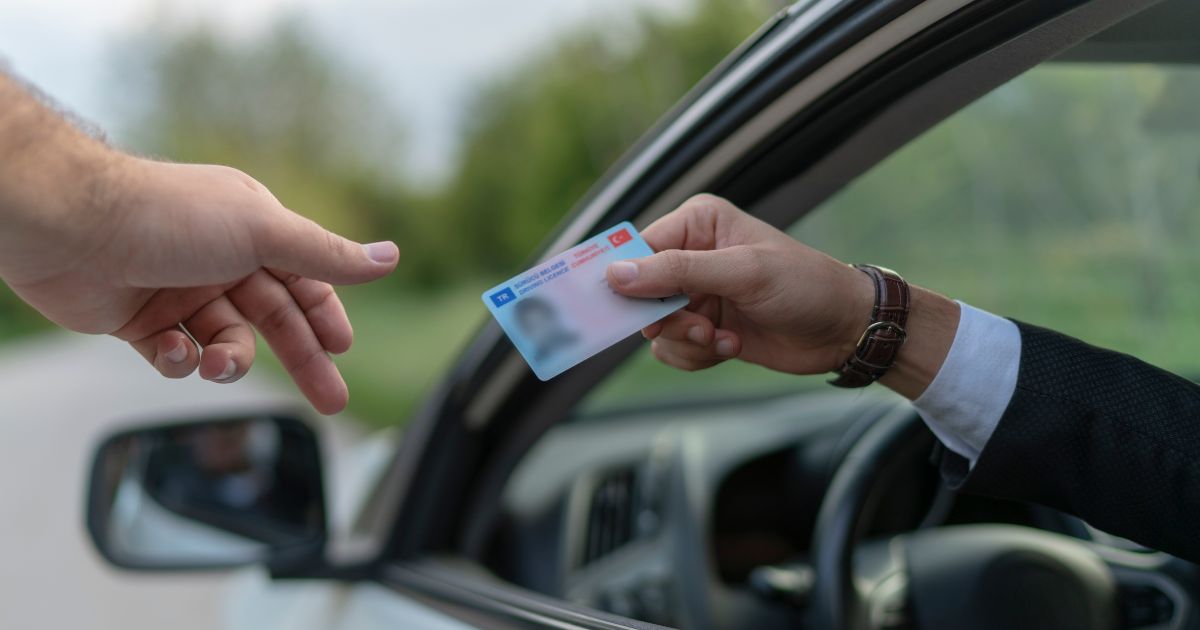
A stranger taps a button on their phone and a $40,000 car unlocks in a parking lot. No clerk, no counter, no handshake. That’s the deal modern mobility makes with its users, and it only holds together if the platform actually knows who just took the keys. Carsharing membership sat near 84.8 million people at the close of 2024, and forecasts push that figure toward 138 million by 2029. Every one of those accounts is a question: is this person allowed to drive?
The money at stake answers why anyone cares. Auto lending fraud losses hit $9.2 billion in 2024, climbing 16.5% from the year before. Those losses don’t shrink on their own. They grow until someone builds a wall, and for transportation services the first brick in that wall is checking the license.
This guide walks through what license checks involve, where they show up across mobility, the tech doing the work, and the parts that still trip platforms up.
One thing worth saying up front: the check isn’t really about the plastic card. It’s about the gap between a name on a screen and a real person who can be held responsible if a vehicle ends up wrapped around a lamppost. Close that gap and the rest of the business works. Leave it open and every other safeguard leaks.
What driver’s license verification actually means
Verifying a license means confirming three things at once: the document is genuine, it’s still valid, and it belongs to the person handing it over. Miss any one of those and the check is theater.
For a ride-hailing app or a car club, this isn’t paperwork for its own sake. It’s the line between a legitimate user and a fraudster running stolen credentials. A forged license can look convincing to a tired human at a desk. Pair a synthetic identity with a doctored document and basic eyeballing falls apart fast. Real verification digs past the surface and catches the fakes before they cost anyone a vehicle.
Where mobility platforms run license checks
Roughly 1.644 billion people held a driver’s license heading into 2026, and some counts put the real figure closer to 2 billion. More licensed drivers means more accounts to screen, and the services screening them increasingly run with no human in the loop at all. Here’s how the check plays out across the sector.
Carsharing fleets
Apps that let people book a car and drive off in minutes have a glaring gap: nobody is standing there to ask for ID. License verification fills it. Without that step, anyone could reserve a vehicle and disappear with it, never having proven they’re cleared to drive. The check protects the fleet and shields the operator from liability when something goes wrong.
Ride-hailing and peer-to-peer rentals
A full-time rideshare driver and a one-time renter borrowing someone’s hatchback both need vetting, just for different reasons. The driver has to prove a valid license before picking up a single fare. In peer-to-peer setups, the owner handing over their personal car wants confidence the renter is road-legal. The check builds trust between two people who’ve never met.
Mopeds, scooters, and e-bikes
Plenty of micro-mobility rides need no license, but mopeds and faster electric vehicles often do. Several EU countries and US states like California require a specific license class for them. Where that rule applies, the platform has to confirm the rider qualifies before unlocking anything.
Traditional car rentals
Rental desks have eyeballed licenses for decades. Self-service kiosks and app-based pickup changed the game, pushing companies toward remote checks that clear a renter before they ever reach the lot. A driver verifies in advance, then unlocks the car with a phone. One rental operator launching in Estonia cut onboarding to under two minutes this way while holding to EU data and road-safety rules.
Commercial and corporate fleets
Logistics outfits and company car programs lean on the same checks when bringing drivers aboard. Confirming each driver holds the right license class, and that it hasn’t lapsed or been pulled, keeps insurance valid and the operation compliant.
Why the check is worth the friction
License verification guards users, vehicles, and the brand itself in a business that gets more digital and more targeted every year. A few forces drive the need.
Consider what happens when the check is missing. A fraudster buys a stolen identity package online, pairs it with a passable forged license, and registers three accounts on a carsharing app in an afternoon. Each one books a premium vehicle. None of the cars come back. By the time the operator’s fraud team notices the pattern, the loss is already booked and the plates are in another country. A working license check kills that scheme at account one.
- Fraud prevention. Mobility apps draw identity thieves, synthetic identities, and account takeovers like flies. Skip the license check and a fraudster registers under a fake name, drives off, and vanishes, leaving the company to eat the loss.
- Account sharing. Most platforms ban sharing accounts outright. Verified identities keep users safe, keep liability clear, and keep insurance intact. One person passing their login to another wrecks all three and counts as a serious fraud risk.
- Safety and liability. Hand a vehicle to an unlicensed or suspended driver and the fallout lands on everyone. If there’s a crash and the driver was never properly checked, insurance can evaporate and the platform can end up holding the bill.
- Legal compliance. In most countries, letting someone drive without confirming their license breaks transportation law. Across the EU, KYC and driving-eligibility rules reach almost every form of transport, micromobility included.
- Age checks. The license confirms the driver is old enough to legally be behind the wheel.
- User trust. When riders know everyone clears a real identity check, they relax into the service. That matters most in peer-to-peer models, where one person literally hands their car to another.
- Speed. Manual checks drag. Automated ones onboard a user in minutes, any hour, anywhere, without staff standing by to approve.
How the verification runs, step by step
Snap a photo and you’re in, right? Not quite. Underneath that single tap sits a stack of checks built to confirm identity, sniff out fraud, and satisfy regulators. The strongest platforms run all of it in real time so the user barely notices. Here’s the sequence.
- Document capture. The user photographs their license in the app or uploads a scan. Many flows ask for a separate ID alongside the license.
- OCR and data extraction. Optical character recognition reads the image and pulls the key fields: name, license number, expiry, issuing country, document type. It has to cope with wildly different layouts and languages.
- Authenticity screening. The system hunts for forgery by checking document templates, holograms, fonts, and layout against government standards.
- Liveness and face matching. A selfie or liveness prompt confirms the license belongs to the person holding it. The system matches the live face to the license photo and checks it’s a real person rather than a photo or video spoof.
- Decision. Pass and the user gets access. Hit a red flag, like an expired or tampered license, and they’re rejected or routed to manual review.
The parts that still go wrong
Digital checks have come a long way, but nobody should call them bulletproof. Technical, regulatory, and fraud-side problems still snag the process.
Fake and altered documents
Counterfeit and doctored licenses are the headline threat. The trade in fake licenses runs as high as $500 million a year. Some pass a glance but crack under scrutiny, betrayed by wrong fonts, missing holograms, or data that doesn’t line up. Catching them takes document forensics plus machine learning trained on license templates from around the world.
Bad photos and worse lighting
A blurry shot taken in a dim garage can sink the whole check. Glare washes out watermarks and barcodes, and OCR chokes on what it can’t read. In places where it’s allowed, non-document verification lets a user submit just an ID number when the image won’t cooperate, so they still get through quickly.
Regional formats that never match
There’s no single global license design. Countries, states, and provinces all differ in fields, languages, and security features. A US license might carry a magnetic stripe while a German one packs an MRZ or NFC chip. The system has to recognize all of it.
Data privacy obligations
Holding license data drags heavy compliance duties behind it, especially under GDPR in Europe and CCPA in California. Platforms have to encrypt sensitive data, keep it only as long as needed, and never repurpose it. Slip up and the fines and reputational hits sting.
Manual review backlogs
Automation can’t catch everything, and flagged documents land on a human’s desk. When the review team is small or scattered across time zones, those cases pile up, users wait, and some give up and leave. Stronger systems keep that queue short.
The tech doing the heavy lifting
A modern license check is several technologies working in concert to stay accurate, secure, and compliant. These are the core pieces.
Optical character recognition
OCR reads the license image and turns printed text into structured data, capturing name, date of birth, license number, and expiry. To work globally it has to be trained on formats everywhere, since a German license shares almost nothing visually with one from Japan or the US.
AI template and format matching
Models trained on thousands of genuine documents spot the inconsistencies that mark a fake. They examine layout, embedded features like barcodes and MRZ zones, and font details down to the microprint. A missing security watermark rarely slips past them.
Liveness detection
Liveness confirms the selfie shows a living person. Active liveness asks for a blink, a smile, or a head turn. Passive liveness runs quietly in the background, reading texture, depth, and how light hits skin.
NFC chip scanning
Some newer licenses, mostly in the EU, embed NFC chips holding encrypted personal data. Where the hardware supports it, the platform prompts a phone scan, the same move you’d make with an e-passport.
Database and watchlist lookups
Many platforms pair the document check with external lookups: government license registries where they’re reachable, plus traffic-violation and revocation databases.
Best practices that keep users from bailing
How a platform handles verification decides whether a user sticks around or rage-quits the signup. A few habits keep things safe without driving people off.
- Build fallback flows. Not everyone clears on the first try. A blurry photo or sun glare shouldn’t mean instant rejection. Offer a second path instead. One ride platform lifted its pass rate by 25% after adding smarter verification.
- Apply local age and license rules. The legal driving age is 18 across most of the EU but 16 in many US states, with some pushing toward 15. The system needs logic that respects each jurisdiction and only clears users who actually qualify.
- Keep data lean. Collect only what the check requires and hold it only as long as needed. Delete biometric inputs once verification wraps, unless the law says otherwise.
- Stack multiple checks. Don’t lean on the license alone. Add phone validation, liveness, and selfie matching to blunt account takeovers and stolen-credential abuse.
- Keep watching. Verification shouldn’t end at signup. Re-check users who’ve been dormant for a year or who suddenly log in from a new country or device. Reverification also flags a license that’s quietly expired.
What automation buys you
Manual checks can’t match the speed or scale today’s platforms demand. Picture two scooters at the same curb: one rider waits while staff eyeball a license, the other unlocks and rolls in seconds because software already cleared them. That gap is the whole argument for automation. It onboards users in seconds, slashes fraud and human error, and trims operating cost.
Lean on AI, biometric matching, and document authentication and the process stays accurate and compliant without piling work on the user. Strong driver license verification turns a counter queue into a two-minute phone tap, and that’s the experience riders now expect by default.
Here’s how the two approaches stack up.
| Feature | Manual verification | Automated verification |
| Speed | Minutes to hours | Seconds, often under one minute |
| Scalability | Capped by staff on hand | Handles high volume around the clock |
| Fraud detection | Vulnerable to fatigue and error | AI flags fakes, edits, and deepfakes |
| User experience | Waiting and friction | Fast, mobile-first self-service |
| Cost | High, needs trained staff | Lower, minimal manual review |
| Document support | Often local templates only | Hundreds of formats and languages |
| Compliance | Paper-based, inconsistent | Fully logged, regulation-ready |
| Face matching | Manual matching is shaky | Biometrics block impersonation |
Where the legal industry reads first.
Enjoyed this article? Get the biggest legal industry updates, deals, appointments, insights and expert interviews in your inbox, free.
No spam. Unsubscribe anytime.From Legal Desire
Is your firm the one being cited, or the one being skipped?
We ran the test. On several everyday legal questions, software companies are answering and law firms are not. We help firms fix that, and we build the technology behind the practice.
Lawyers and firms: get featured on Legal Desire
Share your deals, lateral moves, firm news and insights with 1M+ monthly readers: founders, law firm partners, general counsel and practising lawyers across the US, UK, EU and GCC.
Get featuredSubmit a press release