


Introduction
The office of the Public Prosecutor is one of the most important institutions in the criminal justice system. A Public Prosecutor is not merely an advocate representing the Government. He is an officer of the Court, entrusted with the solemn duty of ensuring that justice is done. His responsibility is not to secure convictions at any cost but to assist the Court in arriving at the truth.
The quality of criminal justice delivered by Sessions Courts depends substantially upon the competence, independence and integrity of Public Prosecutors. Unfortunately, the existing method of appointing Public Prosecutors in Sessions Courts has repeatedly attracted criticism for alleged political influence, lack of transparency and absence of objective standards.
The Bharatiya Nagarik Suraksha Sanhita, 2023 has substantially retained the earlier system under the Code of Criminal Procedure, 1973. Consequently, many of the defects pointed out by constitutional courts continue to exist.
Statutory Scheme under the BNSS
Appointment of Public Prosecutors – Section 18 BNSS
Section 18 of the BNSS empowers the Central Government and the State Government to appoint Public Prosecutors and Additional Public Prosecutors.
For every District, the State Government appoints one or more Public Prosecutors for conducting prosecutions before the Court of Session.
The appointments are ordinarily made from a panel prepared in consultation with the District Magistrate (District Collector) and the District Judge.
A person is eligible only if he has practiced as an advocate for not less than seven years.
Appointment of Assistant Public Prosecutors – Section 19 BNSS
Section 19 provides for appointment of Assistant Public Prosecutors for Magistrate Courts.
Unlike Public Prosecutors in Sessions Courts, Assistant Public Prosecutors generally belong to a regular prosecuting service and are selected through a structured recruitment process.
This ensures comparatively greater transparency and professional standards.
Public Prosecutor – An Officer of the Court
The Supreme Court has consistently held that a Public Prosecutor is not a Government servant whose sole duty is to defend the Government.
His duty is:
- to present the truth,
- to place all relevant evidence before the Court,
- to ensure a fair trial,
- to protect the rights of both the victim and the accused.
A Public Prosecutor must remain completely independent from political influence.
Supreme Court Principles
The Supreme Court has repeatedly emphasized these principles.
Shiv Kumar v. Hukam Chand (1999)
The Court held that a Public Prosecutor occupies a unique position.
He represents the administration of justice and not merely the investigating agency.
Sheonandan Paswan v. State of Bihar (1987)
The Constitution Bench observed that the Public Prosecutor must act independently and in the interest of justice.
He cannot become an instrument of political or executive pressure.
Mukul Dalal v. Union of India (1988)
The Supreme Court observed that criminal prosecution is a public function.
Appointments should therefore inspire public confidence.
Centre for Public Interest Litigation v. Union of India
Although relating to appointments in another context, the Supreme Court reiterated that appointments to important public offices must satisfy the constitutional requirements of fairness, transparency and non-arbitrariness under Articles 14 and 16.
The same constitutional philosophy applies equally to appointments of Public Prosecutors.
Kerala High Court on Appointment of Public Prosecutors
The Kerala High Court has on several occasions emphasized that Public Prosecutors should be selected solely on merit.
The Court has observed that:
- competence is more important than political loyalty;
- appointments should inspire confidence in the administration of justice;
- consultation with the District Judge should be meaningful and not merely ceremonial;
- the opinion of the judiciary deserves substantial weight.
The High Court has also recently considered issues concerning the existing appointment procedure in a Public Interest Litigation and reportedly suggested that the process requires reform to reduce political influence and strengthen the role of the District Judiciary. The outcome of those proceedings will have significant implications for prosecutorial independence.
Weaknesses in the Present System
Although Section 18 BNSS prescribes consultation with the District Judge, in practice several concerns are frequently raised by members of the Bar:
- Political Patronage
Appointments are often alleged to be influenced by political considerations rather than professional merit.
- Lack of Transparency
No written examination.
No structured interview.
No objective marking system.
No publicly disclosed evaluation criteria.
- Executive Dominance
The panel is prepared through a process in which the executive has substantial influence.
Many legal experts argue that the views of the District Judge should receive greater weight because the judiciary is better placed to assess an advocate’s legal competence, ethics and courtroom ability.
- Public Confidence
Even where appointments are legally valid, perceptions of political favouritism may reduce public confidence in criminal prosecutions.
Justice must not only be done but must also appear to be done.
Why Merit Matters in Sessions Courts
Sessions Courts deal with:
- murder,
- rape,
- NDPS offences,
- corruption cases,
- offences against children,
- organized crime,
- offences punishable with life imprisonment and death sentence.
These prosecutions require advocates possessing:
- exceptional knowledge of criminal law;
- mastery over the Bharatiya Sakshya Adhiniyam;
- cross-examination skills;
- constitutional knowledge;
- ethical independence.
Appointment based on considerations other than merit may adversely affect the quality of prosecutions and the administration of justice.
Comparison with Assistant Public Prosecutors
Assistant Public Prosecutors are generally appointed through a structured recruitment process.
Selection is based upon merit.
Political recommendations ordinarily play a limited role.
Ironically, comparatively less serious cases in Magistrate Courts are prosecuted by professionally recruited prosecutors, whereas the most serious Sessions cases are often handled by Public Prosecutors appointed through a process that has been criticized for lacking objective evaluation standards.
This contrast calls for legislative reconsideration.
Constitutional Perspective
Articles 14 and 21 of the Constitution require fairness in every stage of criminal justice.
A fair trial depends not only upon an independent Judge but also upon an independent Public Prosecutor.
Political interference in prosecutorial appointments, if established, is inconsistent with the constitutional ideal of equal justice and the rule of law.
Suggested Reforms
The appointment procedure under Section 18 BNSS requires substantial reform.
The following measures deserve consideration:
- A transparent State-level selection process with published eligibility criteria.
- Written examination on criminal law, BNSS, BSA and BNS.
- Structured viva voce before an independent Selection Committee.
- Allocation of significant weight to the opinion of the District Judge regarding professional competence and integrity.
- Publication of marks, evaluation criteria and reasons for selection.
- Fixed tenure with protection from arbitrary removal.
- Mandatory annual performance evaluation based on objective parameters.
- Mandatory training through the Kerala Judicial Academy or Directorate of Prosecution.
- Appointment of prosecutors strictly on merit irrespective of political affiliation.
- Establishment of an independent State Prosecution Commission to oversee recruitment and promotions.
Conclusion
The office of the Public Prosecutor is indispensable to the criminal justice system. Public confidence in criminal trials depends significantly upon the independence, competence and impartiality of prosecutors.
While Section 18 of the Bharatiya Nagarik Suraksha Sanhita, 2023 continues the existing appointment mechanism, growing concerns regarding transparency and political influence underscore the need for reform. Any appointment process should be guided by constitutional values of fairness, merit and institutional independence.
Strengthening the role of the judiciary in the selection process, introducing objective selection criteria, and ensuring transparency would help secure the confidence of litigants, the Bar and society at large.
The ultimate objective must be simple: the office of Public Prosecutor should belong to the most competent advocate, not to the most politically influential one. Only then can the criminal justice system truly uphold the constitutional promise that justice shall be administered fairly, impartially and without fear or favour.
Important authorities to cite
Section 18, Bharatiya Nagarik Suraksha Sanhita, 2023 (Public Prosecutors).
Section 19, Bharatiya Nagarik Suraksha Sanhita, 2023 (Assistant Public Prosecutors).
Shiv Kumar v. Hukam Chand, (1999) 7 SCC 467.
Sheonandan Paswan v. State of Bihar, (1987) 1 SCC 288.
Mukul Dalal v. Union of India, (1988) 3 SCC 144.
State of U.P. v. Johri Mal, (2004) 4 SCC 714 (independence and standards for appointment of government counsel/public prosecutors).
Kumari Shrilekha Vidyarthi v. State of U.P., (1991) 1 SCC 212 (government counsel appointments must satisfy Article 14 and cannot be arbitrary).
Relevant Kerala High Court decisions concerning the role, appointment, and independence of Public Prosecutors, including the pending PIL on reform of the appointment process (subject to the final outcome of the proceedings).
Author: Salil Kumar P
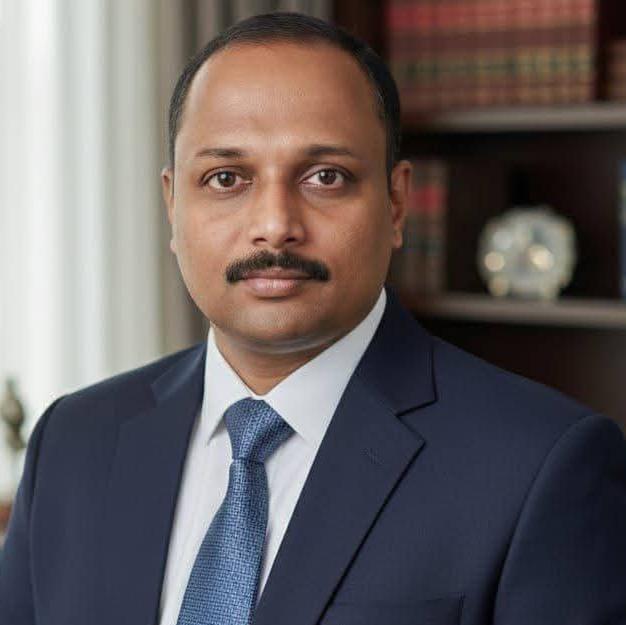
Advocate
Thalassery District Courts-670101
Kannur District.
Where the legal industry reads first.
Enjoyed this article? Get the biggest legal industry updates, deals, appointments, insights and expert interviews in your inbox, free.
No spam. Unsubscribe anytime.From Legal Desire
Is your firm the one being cited, or the one being skipped?
We ran the test. On several everyday legal questions, software companies are answering and law firms are not. We help firms fix that, and we build the technology behind the practice.
Lawyers and firms: get featured on Legal Desire
Share your deals, lateral moves, firm news and insights with 1M+ monthly readers: founders, law firm partners, general counsel and practising lawyers across the US, UK, EU and GCC.
Get featuredSubmit a press release