
Now Reading: Emilio Nuzzolese: “We Need More Forensic Dental and Anthropological Autopsies So That the Unnamed Dead Are Not Forgotten”
-
01
Emilio Nuzzolese: “We Need More Forensic Dental and Anthropological Autopsies So That the Unnamed Dead Are Not Forgotten”
Emilio Nuzzolese: “We Need More Forensic Dental and Anthropological Autopsies So That the Unnamed Dead Are Not Forgotten”

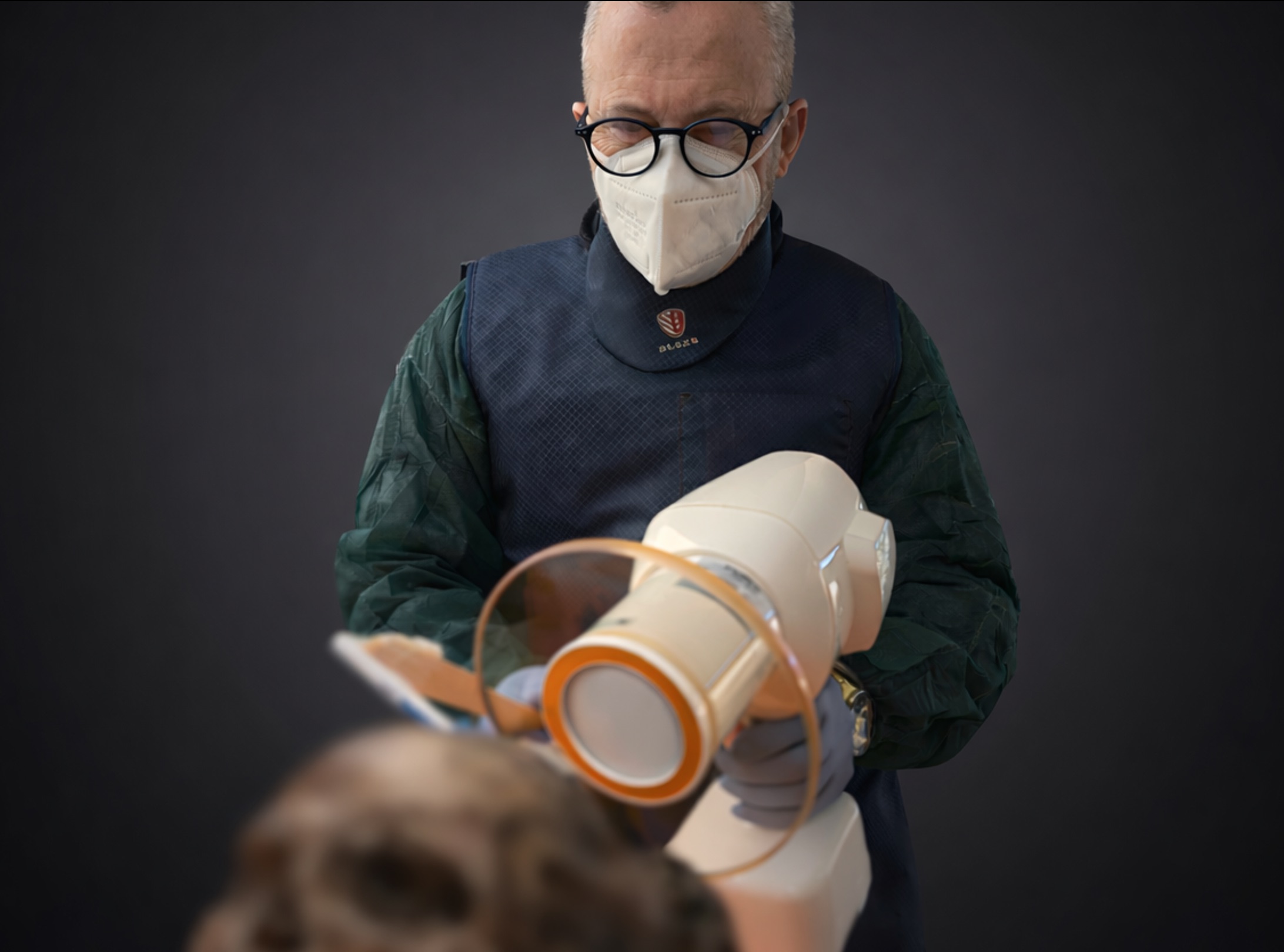
At the latest meeting of the American Academy of Forensic Sciences, amid highly technical roundtables and case studies spanning several continents, Emilio Nuzzolese chose a statement that was striking in its simplicity—almost uncomfortable in its clarity: “We need more forensic dental and anthropological autopsies so that the unnamed dead are not forgotten.”
He said it to an audience of American colleagues, yet the message resonates well beyond the United States. It also speaks to Italy, where identifying the “invisible” dead—migrants, homeless individuals, people living in isolation, and victims of social marginalization—often depends more on the perseverance of a few dedicated professionals than on a fully structured national system.
Nuzzolese, who leads the Research Laboratory for Personal Identification and Forensic Odontology (LIPOF) at the University of Turin, has spent years working to bring forensic odontology out of the margins and into the center of public discourse on human identification. The discipline does not merely help put a name to a body when other methods fail. It also reminds forensic medicine of a fundamental truth: every cadaver tells a life story, even when no one seems able to read it anymore.
The Tooth as Record, the Body as Biography
Within the international forensic community, Nuzzolese’s remark reflects a growing awareness: studying human remains also cultivates empathy. Similar reflections have emerged among professionals who work daily with autopsies and human identification—the dead, in an intimate way, “tell” the story of their lives, and that narrative ultimately serves the living, for justice, public health, and prevention.
A forensic dental autopsy, often perceived as a purely technical procedure, is in reality a profoundly civic act. Teeth endure. They retain traces of dental treatments, trauma, habits, lifestyle patterns, and anthropological characteristics. When combined with forensic anthropology, the picture becomes clearer: age estimation, biological sex, skeletal features, indicators of labor, malnutrition, disease, and evidence of violence. Together, these disciplines first construct a biological profile and can then lead to a confirmed identity when visual recognition is impossible or misleading.
This is why Nuzzolese insists on the word “more.” More autopsies, more protocols, more integrated and multidisciplinary expertise. Not to inflate statistics or feed curiosity, but to reduce identification errors, prevent mistaken identities, shorten the waiting time for families seeking answers, and above all, ensure that there are no “first-class” and “second-class” victims.
From Child Abuse Detection to the Via Poma Case
In Italy, Nuzzolese has become known to the wider public through two distinct yet coherent paths.
On the one hand, he has been a strong advocate within the dental community—among dentists and dental hygienists—for recognizing the signs of child abuse and neglect, a commitment that led him to serve a three-year term as an honorary juvenile judge. The mouth can often reveal what remains hidden elsewhere: injuries, dental fractures, untreated decay, or patterns of trauma inconsistent with reported histories. These signs may become crucial indicators of abuse that might otherwise go unnoticed.
On the other hand, he gained national attention for his involvement in the long-running Via Poma murder case—a cold case of homicide that occurred in Rome in 1990. When the case was reopened in 2007, investigators sought to reassess a patterned injury on the victim’s breast, believed to be a bite mark. Nuzzolese served as a consultant for the defense of the only suspect, Raniero Busco, the victim’s ex-fiancé, demonstrating that the injury could not be classified as a bite mark. Busco was ultimately acquitted. That chapter highlighted—both positively and critically—how delicate the relationship between forensic science, courts, expert witnesses, and public communication can be.
Perhaps for this reason, when speaking to an international audience, Nuzzolese deliberately shifts the focus away from high-profile cases toward everyday forensic practice. Unidentified bodies rarely attract headlines, yet they represent the true test of a country’s forensic and judicial credibility.
Humanitarian Forensic Odontology: Two Associations, One Idea of Justice
The most defining aspect of Nuzzolese’s work, however, is its humanitarian dimension. He has helped establish two organizations dedicated to humanitarian forensic odontology: the National Association of Dental Team DVI Europe and the International Association of Forensic Odontology and Human Rights. Both are registered in Italy as “Organizzazioni di Volontariato“ (OdV), a legal designation for volunteer organizations under Italian law—a detail that underscores the fact that this work is carried out not for profit, but out of conviction.
These organizations mobilize forensic odontologists to support the identification of unknown remains in contexts ranging from mass disasters to chronic caseloads of unidentified bodies. Without a name, there can be no complete mourning, no inheritance procedures, no reliable certification of death, and often no proper investigation. When a body remains unidentified—when someone becomes “nobody”—their story risks never being reconstructed.
A Perspective from Inside the Laboratory
Mario Torreggianti, a forensic odontologist and external collaborator at LIPOF, directed by Professor Nuzzolese, offers a perspective grounded in over fifteen years of experience in the field: “I can confirm the need to integrate dental autopsy systematically into the identification procedures for unnamed bodies and human remains. It is a fundamental step in collecting dental data that can then be compared with records of missing persons. In Italy, unlike other European countries, forensic odontology remains poorly recognized and is often regarded as a niche discipline—even by the institutions involved in personal identification, from universities to judicial bodies—which consequently fail to draw adequately on this specialized branch of dentistry. This would bring undeniable benefits, not least to those involved in missing persons cases—investigators, certainly, but above all the families living in a limbo of uncertainty and human suffering, with no knowledge of the fate of their missing loved ones.”
Volunteering and the “Invisible”: Red Cross and Penelope
Nuzzolese’s commitment extends well beyond academic conferences. He continues to volunteer with the Italian Red Cross and collaborates with Penelope associations in the regions of Puglia and Piedmont, organizations that support families of missing persons.
This is a field where science meets grief directly, without institutional distance. Parents are waiting for news. Families searching for an object, a detail, a fragment of certainty. Here, autopsies, forensic odontology, and anthropology cease to be merely procedures. They become forms of public responsibility—practical tools that allow the living to begin again, and that allow justice to continue.
“More Autopsies” Is Not a Technical Obsession—It Is a Civil Choice
When Nuzzolese calls for an increase in dental and anthropological autopsies, he is not advocating for blind acceleration or procedural excess. He is asking for a change in mindset: identification should be treated as a systemic duty, not as an effort reserved for the most visible cases.
In an era marked by migration, urban isolation, and new forms of poverty, unidentified bodies represent one of the clearest signs of what societies prefer not to confront. Forensic science, when guided by rigor and restraint, can do something essential: restore identity—and therefore dignity—to those who have lost both.
Conducting more autopsies does not bring us closer to death. It protects the living—those who remain, those who search, and those who need even the most invisible among us to be called, at last, by name.