
Now Reading: Silent Witnesses: The Role of Wildlife Forensics in Combating the Illegal Wildlife Trade
-
01
Silent Witnesses: The Role of Wildlife Forensics in Combating the Illegal Wildlife Trade
Silent Witnesses: The Role of Wildlife Forensics in Combating the Illegal Wildlife Trade

The illegal wildlife trade (IWT) has evolved into a sophisticated, multi-billion-dollar global criminal enterprise, ranking alongside the trafficking of drugs, arms, and humans.1 Beyond the immediate loss of biodiversity, IWT fuels organized crime, destabilizes local economies, and increases the risk of zoonotic disease emergence.2 Traditional law enforcement often struggles to intercept these illicit goods because traffickers frequently process biological materials into nondescript forms, such as powders, carved trinkets, or processed skins, making visual identification impossible. This article examines the transformative role of wildlife forensics—the application of scientific methodologies to legal questions involving non-human biological evidence—in addressing these challenges.
Unlike human forensics, which focuses on a single species, wildlife forensics must navigate the identification of thousands of potential species across diverse taxonomic groups. This paper explores the “Genetic Toolkit,” specifically DNA barcoding for species identification and microsatellite analysis for determining whether an animal was wild-caught or captive-bred. It further investigates the use of stable isotope analysis, a biogeochemical technique that utilizes chemical signatures in animal tissues to pinpoint geographical origins. A primary case study on the African elephant ivory trade illustrates how genetic mapping of poaching “hotspots” has enabled law enforcement to dismantle transnational criminal syndicates.3 Finally, the article discusses the critical transition of laboratory findings into admissible courtroom evidence, highlighting the necessity for international standardization (ISO 17025) and global collaboration. By integrating advanced science into the judicial process, wildlife forensics acts as a “silent witness,” providing the objective evidence needed to secure convictions and protect the planet’s most vulnerable species.
Introduction
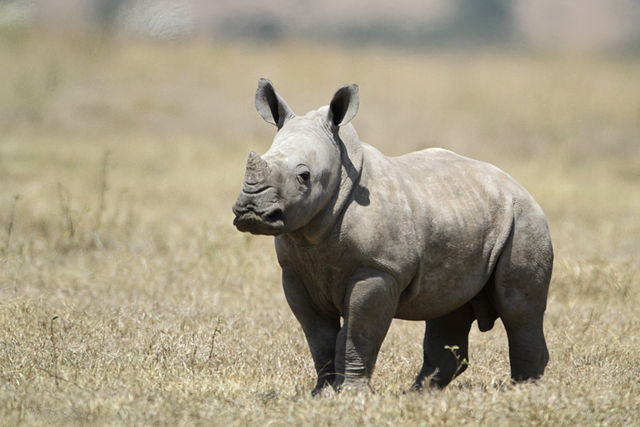
The global biodiversity crisis is no longer just an environmental issue; it is a criminal one.4 The illegal wildlife trade (IWT) is estimated to be worth up to $23 billion annually, orchestrated by highly organized transnational syndicates that exploit porous borders and weak judicial systems. From the pangolins of Southeast Asia to the rhinos of Southern Africa, species are being extracted from their habitats at rates that far exceed their ability to recover.
Historically, the primary hurdle for law enforcement was the absence of definitive evidence. A customs agent might seize a shipment of “traditional medicine” containing powdered bone or a crate of “leather scraps.” Still, without the ability to prove these items originated from protected species, prosecution was impossible. Wildlife forensics has emerged as the scientific vanguard in this fight. By applying the rigors of chemistry, biology, and physics to animal remains, forensic scientists provide the evidence necessary to bridge the gap between a seizure and a successful conviction.
The Complexity of the Non-Human Crime Scene
Wildlife forensics differs fundamentally from human forensics in its scope. While a human forensic scientist asks, “Who did this?” a wildlife forensic scientist must first ask, “What is it?” The field encompasses thousands of species, many of which are poorly studied or lack comprehensive reference data.
Furthermore, forensic evidence in wildlife cases is rarely “clean.” Traffickers intentionally degrade or alter evidence to evade detection. Ivory is painted to look like wood; timber is processed into sawdust; and skins are chemically treated.5 The forensic scientist must be able to extract high-quality data from these degraded samples. This requires specialized protocols for DNA extraction and chemical analysis that can withstand the scrutiny of a courtroom.
The Genetic Revolution: DNA Barcoding and Beyond
DNA is the most powerful tool in the wildlife forensic arsenal. Because every living organism contains a unique genetic blueprint, DNA can provide answers that visual inspection cannot.
- Species Identification (DNA Barcoding)
When morphological features are lost—such as in a bowl of shark fin soup or a vial of rhino horn powder—scientists turn to DNA barcoding. This technique focuses on a standardized gene region, typically the cytochrome c oxidase I (COI) in mitochondrial DNA. By sequencing this “barcode” and comparing it to global databases like the Barcode of Life Data System (BOLD), scientists can identify a species with near-certainty.6 This is essential for upholding CITES (Convention on International Trade in Endangered Species) regulations, which protect specific species based on their vulnerability.
- Determining Origin and Captive-Breeding Fraud
One of the most common tactics used by traffickers is “laundering” wild-caught animals through legal captive-breeding facilities.7 By using microsatellite markers—similar to human paternity testing—forensic scientists can determine if a bird, reptile, or mammal is actually the offspring of the claimed parents. If the genetic profiles do not match, this provides evidence that the animal was illegally taken from the wild, providing grounds for prosecution.
Stable Isotope Analysis: The Geography of an Element
While DNA can tell us what a species is, it cannot always tell us where an individual animal lived. This is where stable isotope analysis becomes invaluable. Chemical elements such as carbon, nitrogen, oxygen, and strontium occur in various isotopic forms that vary with local geology, rainfall, and diet.8
As an animal grows, it incorporates these local “chemical signatures” into its tissues—teeth, hair, feathers, or tusks. For instance, the oxygen isotopes in an elephant’s tusks reflect the isotopic composition of the water it drank. By comparing the isotope ratios in a seized tusk to an “isoscape” (an isotopic map of a region), scientists can pinpoint the animal’s geographic origin.9 This method is particularly effective for timber forensics, helping to identify whether a log was harvested from a protected national park or a legal concession.
The Ivory War: A Case Study in Forensic Impact
The most famous application of wildlife forensics involves the African elephant. For decades, ivory poaching was treated as a series of local incidents. However, pioneering work by Dr. Samuel Wasser at the University of Washington revolutionized the global response.
By creating a DNA map of elephant populations across Africa using dung samples, Wasser’s team analysed seized ivory shipments.10 Their research revealed that the vast majority of poached ivory was coming from just two primary “hotspots.” This shifted the narrative from blaming local poverty to identifying massive, organised crime rings. Forensic analysis linked tusks from the same elephant found in two shipments seized months apart, demonstrating that the same criminal syndicates were behind multiple large-scale smuggling operations. This intelligence allowed INTERPOL and national agencies to target the “kingpins” rather than just the low-level poachers.
Morphological Expertise and Modern Tech
While high-tech lab work is essential, traditional morphology remains the first line of defence. Forensic specialists train customs officers to identify “Schreger lines”—the unique cross-hatching patterns found only in elephant ivory—thereby distinguishing it from cheaper substitutes such as bone or mammoth ivory.11
In recent years, this has been augmented by Artificial Intelligence. Mobile apps now allow rangers to take a photo of a piece of skin or a plant and receive an instant probability of its species identity based on machine-learning algorithms. While not yet a substitute for lab-grade forensics, these tools act as an “early warning system” for law enforcement.
Challenges in the Judicial System
The path from the laboratory to the courtroom is fraught with challenges. For scientific evidence to lead to a conviction, it must meet strict legal standards of admissibility. This includes:
- Chain of Custody: Documenting every hand that touched the evidence from the moment it was seized.12
- Standardization: Using validated methods that are recognized globally.
- Expert Testimony: Scientists must be able to explain complex genetic or chemical data to judges and juries who may have no scientific background.13
The Society for Wildlife Forensic Science (SWFS) has been instrumental in developing these standards and in advocating for laboratory accreditation under ISO 17025. Without these standards, even the most sophisticated science can be dismissed on a technicality, allowing traffickers to go free.
The Future of Wildlife Forensics
As we look toward the future, the integration of “Omics” technologies (genomics, proteomics, and metabolomics) promises even greater precision. Proteomics, the study of proteins, is particularly exciting because proteins are often more stable than DNA and can survive in highly processed or ancient samples.
Additionally, there is a desperate need for “in-country” capacity building. Many of the most biodiverse countries—those hit hardest by poaching—lack the laboratory infrastructure to process their own evidence. International cooperation, involving the sharing of reference databases and the training of local scientists, is the only way to create a genuinely global forensic network.
Conclusion
Wildlife forensics is the “silent witness” that gives a voice to the voiceless. It turns biological remains into data, and data into justice. In an era where biodiversity is declining at an unprecedented rate, the ability to scientifically prove the origin and identity of illicit goods is one of our most potent weapons against the extinction crisis. By dismantling the financial and logistical networks of wildlife traffickers through scientific methods, we move one step closer to ensuring that the world’s iconic species survive for generations to come.
References
- Baker, C. S., et al. (2000). Hierarchical gene diversity and conservation unit boundaries in the endangered North Pacific right whale. Conservation Biology, 14(6).
- Cerling, T. E., et al. (2016). Stable isotopes in forensic terrestrial and marine systems. Annual Review of Earth and Planetary Sciences, 44.
- Hebert, P. D., et al. (2003). Biological identifications through DNA barcodes.14 Proceedings of the Royal Society B: Biological Sciences, 270(1512).
- Linacre, A., & Tobe, S. S. (2011). Wildlife forensics and the investigative approach. Investigative Genetics, 2(1).
- Ogden, R., et al. (2009). Wildlife DNA forensics—bridging the gap between conservation genetics and law enforcement. Endangered Species Research, 9(3).
- Skaff, N. K., et al. (2020). The use of DNA in the fight against the illegal wildlife trade. Forensic Science International: Genetics.
- TRAFFIC. (2020). Wildlife Trade Report: Assessing the scale of the illegal trade. Cambridge, UK.
- UNODC. (2020). World Wildlife Crime Report: Trafficking in protected species. United Nations Office on Drugs and Crime.
- Wasser, S. K., et al. (2015). Genetic assignment of large seizures of elephant ivory reveals Africa’s major poaching hotspots. Science, 349(6243).
- Withler, R. E., et al. (2004). Forensic DNA analysis of wildlife samples: The case of the poached abalone. Journal of Forensic Sciences, 49(5).