
Now Reading: Cannabis Sativa in Forensic Investigation: Types, Products, and Analytical Approaches
-
01
Cannabis Sativa in Forensic Investigation: Types, Products, and Analytical Approaches
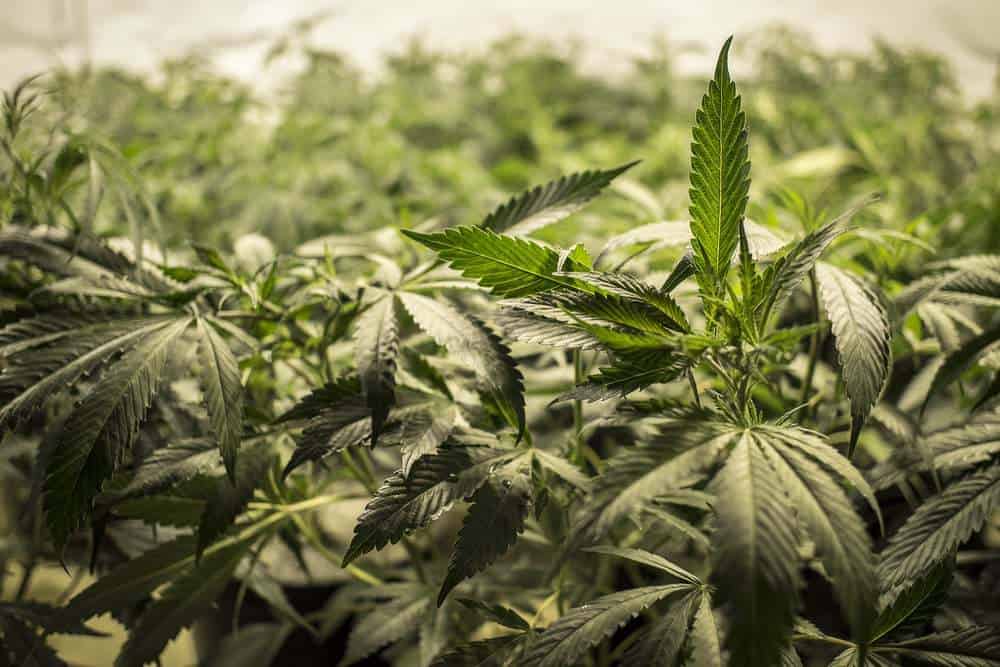
Cannabis Sativa in Forensic Investigation: Types, Products, and Analytical Approaches

Introduction
Cannabis sativa is an essential aspect of forensic science, especially in drug enforcement, toxicology and regulatory compliance cases. The plant is a source of many bioactive compounds called cannabinoids, with the main psychoactive effect of Δ9-tetrahydrocannabinol (THC), and cannabidiol (CBD), which is not psychoactive.
The increment in the legalization of cannabis in many parts has complicated the forensic investigation processes, as it necessitates distinguishing between legal hemp products and drug-type cannabis that is illicit. The development of analytical methods has enhanced the quality of cannabinoid detection and measurements, which are used to make forensic and legal decisions.
Cannabis sativa in Forensics.
There is a general distinction between drug-type cannabis and fibre-type cannabis (hemp), depending on their chemical composition and purpose of use. High in THC drug-type cannabis is associated with psychoactive effects and is often used for industrial and commercial purposes, whereas low in THC hemp is used for industrial and commercial purposes.
They are further categorized as chemovars, which are THC-dominant, CBD-dominant, and balanced cannabinoid. Such differences play a critical role in forensic investigations in order to ascertain whether a sample is within the legal boundaries. The genetic, environmental, and cultivation factors influence variations in chemical composition, and accurate profiling is a key aspect of forensic analysis.
Cannabis Drugs and Their Forensic Importance.
In forensic work, cannabis is found in various forms, such as classic preparations and modern processed goods. Some of the most popular traditional types are Ganja, Charas, and Bhang, especially in South Asia.
Ganja is the dried flower tops of the female cannabis plant and usually has moderately high to high levels of THC. A resinous extract of the plant is called charas (hashish) and is usually more powerful as it contains a high concentration of cannabinoids. Bhang is made of cannabis leaves and seeds, and it is commonly used in drinks or edibles; it typically has lower THC concentrations than Ganja and charas, but is still forensically significant because of its cultural and legal significance.
Other cannabis products are hash oil, which is a highly concentrated extract of high THC concentration, and modern preparations, which comprise edibles, capsules, and vaping liquids. Moreover, products derived from hemp, such as CBD oils, fibres, and seeds, are most commonly used and just have to be separated based on THC thresholds between drug-type cannabis and hemp-type products.
The broad range of cannabis products poses a problem in forensic identification as they can only be identified by accurate chemical analysis to ascertain composition and legality. The variations in cannabinoid content and the form of the product are one of the main factors influencing the classification and legal interpretation.
Forensic Identification Analytical Techniques.
The discovery and description of Cannabis sativa depend on the sophisticated methods of analysis. The gold standard of cannabinoid detection is considered the gas chromatography-mass spectrometry (GC-MS), based on its sensitivity and specificity. Also common is the high-performance liquid chromatography (HPLC), especially in the analysis of thermally sensitive compounds that do not need to be derivatised.
Fourier-transform infrared spectroscopy (FTIR) and thin-layer chromatography (TLC) are commonly used as preliminary screening methods in order to identify the compound quickly. Moreover, more complex methods like DNA profiling and metabolomic analysis can be used to distinguish cannabis strains and give information about the geographic origin.
The interplay of various analytical methods increases the reliability and accuracy of forensic determination, particularly in complicated cases with processed or mixed cannabis products.
Challenges and Limitations
Regardless of the improvement in forensic approaches, there are still a number of challenges in the analysis of cannabis. The genetic factors, environmental conditions, and cultivation practices have a great influence on the chemical composition of Cannabis sativa and can be difficult to interpret.
The rising number of cannabis products, such as edibles and synthetic cannabinoids, complicates forensic investigations. Also, different legal jurisdictions have different legal THC limits, which pose challenges in standardization and legal classification.
The difference between hemp-derived and drug-type products is still a significant issue, especially in the states that have fledgling cannabis laws. These concerns suggest the necessity to implement uniform analytical procedures and global cooperation.
Future Perspectives
The next generation in forensic cannabis testing is likely to be based on sophisticated methods of molecular and computational techniques. Methods like metabolomics, isotope ratio, and machine learning will most likely enhance the precision of cannabis profiling and source attribution.
The comparison analysis will be improved through the development of extensive databases where chemical and genetic profiles of cannabis samples will be stored, which will facilitate the work of law enforcement. With the spreading of legalization around the world, forensic science is going to be crucial in making sure that cannabis products are properly identified, regulated, and controlled.