

Now Reading: Role of Diatoms in Forensic Science
-
01
Role of Diatoms in Forensic Science

1. Introduction
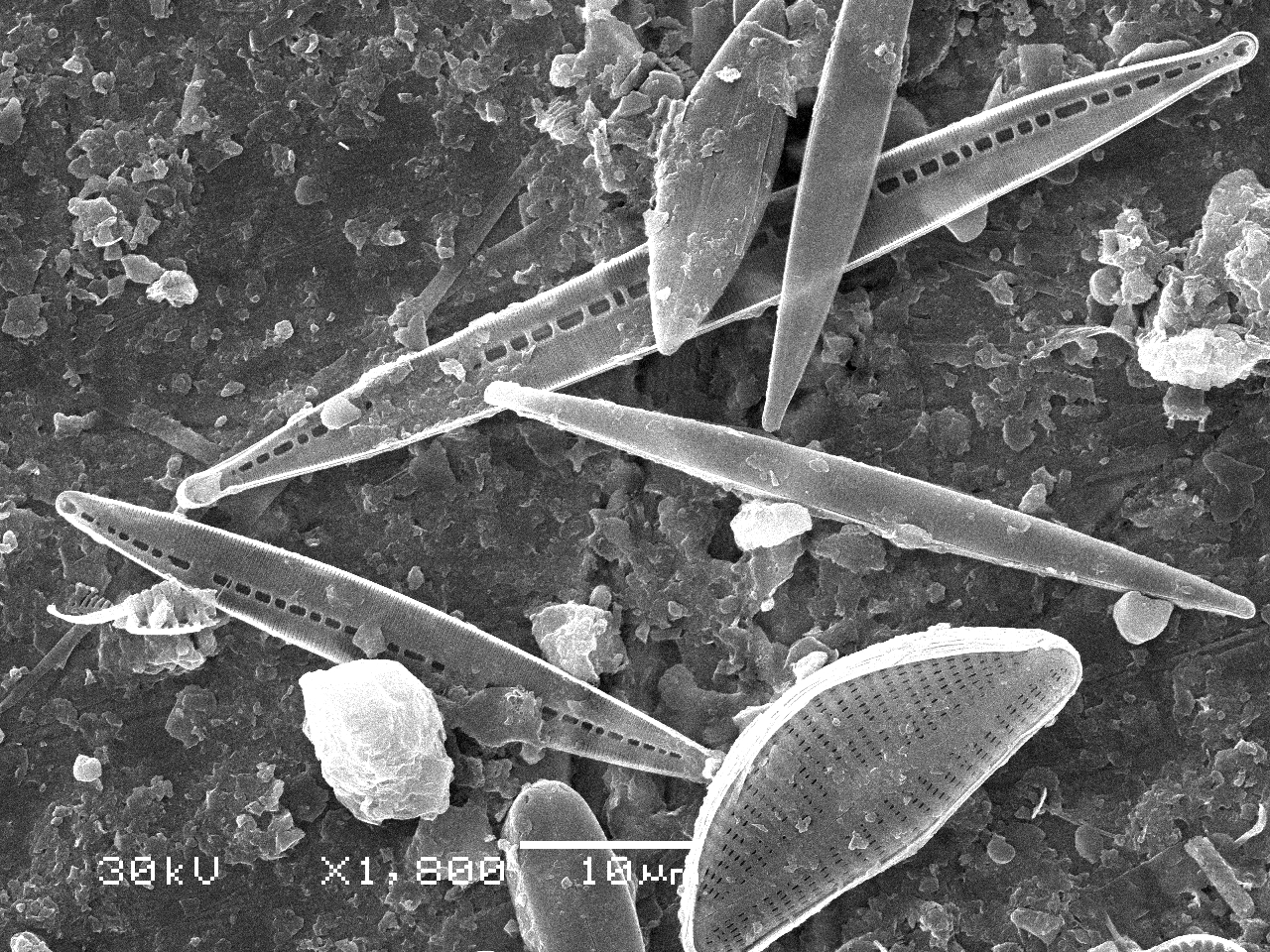
The problem of death caused by ante-mortem drowning or post-mortem drowning is a serious issue in forensic medicine. Such classical autopsy evidence as frothy fluid in the airways, overinflated lungs, and washerwoman skin can be missing or nonspecific, especially in a decomposed body. As a result, auxiliary laboratory tests were created to aid in the diagnosis of drowning. The most well-established and controversial methods are the diatom test among them. Diatoms are microscopic, silica-based photosynthetic algae, having silica-based cell walls referred to as frustules. They are resistant to chemical degradation, and thus, these structures can remain in tissues even when they are in a state of decomposition. Their occurrence in internal organs has been suggested as the supportive evidence of vital drowning, which is the scientific basis of forensic diatom analysis.
2. Scientific justification of the Diatom Test.
The diatom analysis principle lies in the physiological processes that take place during ante-mortem drowning. The aspiration process enables water with suspended diatoms to get into the alveoli when a living person inhales water. These diatoms can enter the bloodstream under high intrathoracic pressure, and as a result of the disruption of the alveolar-capillary membrane. They can then be transported by circulatory means to other isolated organs, such as the liver, kidneys, brain, and especially, bone marrow.
The finding of diatoms in closed internal organs, most notably bone marrow, is thought to be a sign of active circulation during the time of water entry, thus proving ante-mortem drowning. However, where there is no circulation due to post-mortem immersion, there is a confined distribution of diatoms to the system, but passive contamination may occur.
The latest systematic analysis in the International Journal of Legal Medicine highlights that, although the fact that there are diatoms in remote organs can be used to diagnose drowning, it cannot be viewed independently. The article under review points out that medico-legal conclusions should combine the results of the autopsy, toxicology, histopathology, and the context of the investigation in order to be accurate.
3. Some methodological approaches in Diatom Detection.
- The standard method of acid digestion was used in this study
Historically, the detection of diatoms is done through acid digestion of tissue samples, which are usually lung or bone marrow. Organic material is destroyed by using concentrated nitric acid, and silica frustules are preserved. The residue can be centrifuged, and under a microscope, diatom identification and count can be done.
Although this method is common, it has certain shortcomings such as environmental pollution, possible extinction of delicate species and inter-observer error in the microscopic examination.
- Modern Analytical Advances
Improvements in the forensic techniques have brought about enhancements in detection techniques, which include:
- Scanning Electron Microscopy (SEM): This can be used to view the morphology of the diatoms in high resolution.
- DNA-based techniques (PCR and metabarcoding): The genetic identification of species based on DNA can be performed, thereby minimising subjective interpretation.
- Automated systems of image analysis: Improve objectivity and repeatability.
- Methods of microwave digestion: Provide safer and more effective sample digestion.
4. Limitations
The diatom test is controversial, even though it has long been used. False positive results can be a result of environmental effects, intake of aerosolised particles, or laboratory contamination. Also, diatoms have been occasionally observed in non-drowning fatalities, and this makes it difficult to interpret.
One of the key issues of systematic reviews is that there is no universally accepted set of quantitative thresholds of diagnostic interpretation. The simple presence of diatoms is not enough; the comparison of species of organ samples and the water sample at the suspected site of drowning is deemed essential to enhance the value of evidence.
Ecological analysis and comparison of strict laboratory procedures, prevention of contamination, and strict ecological rules are therefore important to guarantee reliability and admissibility in court.
5. Forensic Applications of Ecology.
In addition to aiding in the verification of drowning, the analysis of diatoms has new uses in the ecology of the state of the corpse. Due to geographical and seasonal variation of species, the profiling of species can be used to aid in the identification of a body being moved or a drowning incident in fresh water or seawater. Reconstructive accuracy in the forensic investigation drives the environmental water sample ecological matching with the tissue samples.
6. Future Directions
Further studies in forensic diatomology ought to be aimed at:
- Setting up uniform quantitative benchmarks.
- Formulation of international standardised laboratory guidelines.
- Developing molecular databases for identifying diatom species.
- Bringing in artificial intelligence in morphological recognition.
- Enhancing the interdisciplinary cooperation between forensic pathologists, microbiologists and ecologists.
Further methodological refinement and validation research will further enhance the scientific validity of the use of the diatom analysis in forensics.
7. Conclusion
Diatom analysis is still a good auxiliary method of drowning when used in a complex medico-legal context. Although there are methodological constraints and issues of interpretation, the current technological progress and formal scientific testing have enhanced its dependability. The standardisation, control of contamination, and interpretation within the context form key factors in ensuring that the discovery of diatoms can play a significant role in forensic studies and the court of law. With the advancement of the research, the diatom analysis is becoming a stronger, objective, and scientifically approved element of forensic science.
References:
- Tyr, A., Lunetta, P., Zilg, B. et al. The medico-legal interpretation of diatom findings for the diagnosis of fatal drowning: a systematic review. Int J Legal Med 139, 729–746 (2025). https://doi.org/10.1007/s00414-024-03397-8
- Diatoms a Conclusive Report for Drowning: A Review. (2025). International Journal of Forensic Sciences, 8(1), 1-3. https://doi.org/10.23880/ijfsc-16000290
- Verma, B. Mali, A. Rathore, S. Singh, and N. Awasthi, “A Review on Significance of Diatoms in Drowning Cases”, IJRESM, vol. 7, no. 8, pp. 86–88, Sep. 2024, Accessed: Mar. 05, 2026. [Online]. Available: https://journal.ijresm.com/index.php/ijresm/article/view/3161