
Now Reading: Beyond the Smudge: Scientific Methods for Analyzing Overlapping Fingerprints in Crime Scenes
-
01
Beyond the Smudge: Scientific Methods for Analyzing Overlapping Fingerprints in Crime Scenes
Beyond the Smudge: Scientific Methods for Analyzing Overlapping Fingerprints in Crime Scenes

Abstract
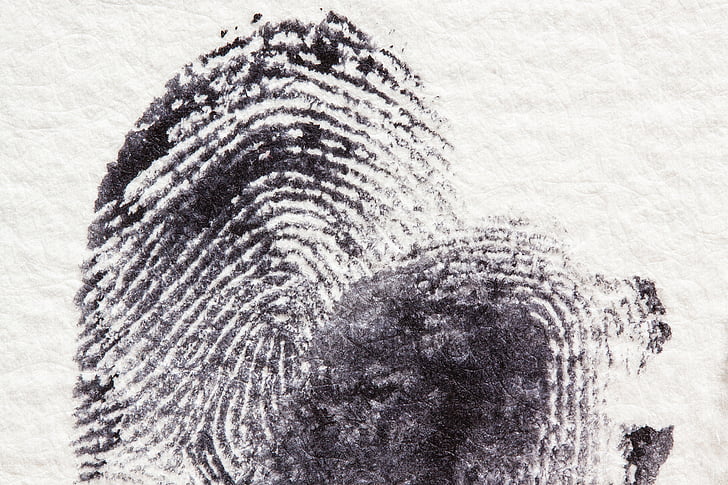
Overlapping fingerprints represent one of the most complex challenges in forensic identification, often occurring when multiple individuals handle the same surface in rapid succession. Traditionally dismissed as unusable “smudges,” such composite impressions are now being re-evaluated through advanced scientific methodologies that extend beyond conventional visual comparison. This study explores contemporary techniques employed to detect, separate, and analyze overlapping latent prints at crime scenes. Emphasis is placed on digital image enhancement methods, including contrast optimization, ridge frequency analysis, and adaptive filtering, alongside mathematical modeling approaches that isolate ridge flow patterns. The integration of Artificial Intelligence—particularly convolutional neural networks (CNNs)—has significantly improved automated segmentation and minutiae extraction from complex fingerprint mixtures. Additionally, physical and chemical visualization techniques, such as alternate light sources and selective reagent applications, assist in distinguishing ridge layers deposited at different times.
The abstract further examines probabilistic modeling frameworks that assess the evidentiary value of partial or intersecting ridge details under judicial standards. Challenges, including distortion, pressure variation, and substrate interference, are critically discussed, highlighting the importance of standardized validation protocols. By synthesizing developments in computational imaging, pattern recognition, and forensic statistics, this work demonstrates how modern science transforms seemingly compromised impressions into viable forensic evidence. Ultimately, the article underscores the growing need for interdisciplinary collaboration between forensic examiners, data scientists, and legal professionals to ensure accuracy, reproducibility, and admissibility of overlapping fingerprint analysis in contemporary criminal investigations.
INTRODUCTION
Overlapping fingerprints at crime scenes often render valuable evidence unusable with traditional methods, but advanced scientific techniques now enable their separation and analysis. These methods leverage chemical composition, spectral data, and AI to reveal individual prints beyond mere visual smudges.[1][2]
Challenges of Overlapping Fingerprints
Crime scenes are inherently chaotic, leading to fingerprints from multiple individuals superimposing on surfaces like glass, walls, or handles. Traditional optical photography fails to distinguish these overlaps, as ridges from one print obscure another’s minutiae—unique patterns like bifurcations and endings essential for identification.[1][3] Latent prints, invisible to the naked eye and composed of sweat, oils, and contaminants, exacerbate the issue, with up to 30-50% of collected lifts discarded due to faintness or superposition in real cases.[4][5] This limitation hampers investigations, especially in serious crimes like murder or assault, where every print counts.[1]
For forensic experts in India and globally, including those handling high-volume caseloads in labs like those in Madhya Pradesh, these challenges demand non-destructive, precise tools. Overlaps not only complicate Automated Fingerprint Identification Systems (AFIS) matching but also risk contaminating evidence during manual separation attempts.[6][7]
Traditional Detection and Enhancement Methods
Initial steps involve visualizing latent prints using physical developers like black powder or ninhydrin, which react with amino acids in sweat to highlight ridges. Gelatin lifters, popular for irregular surfaces, capture developed prints but preserve overlaps without separation.[1] Cyanoacrylate fuming (superglue) polymerizes on oily residues, followed by dyeing, yet struggles with heavy superposition as it treats the composite uniformly.[6]
These methods provide Level 1 (pattern) and Level 2 (minutiae) details but falter at Level 3 (pore and edge shapes) in overlaps. In Indian forensic labs, such as the Directorate of Forensic Science Services, they remain staples due to cost-effectiveness, though success rates drop below 20% for complex smudges.[8] Photography under alternate light sources (ALS) with filters offers minor contrast boosts, but no true disentanglement.[9]
Chemical Analysis Techniques
Mass spectrometry revives old tools for modern forensics. Desorption Electrospray Ionization Mass Spectrometry (DESI-MS), a 20-year-old method, sprays charged methanol droplets on lifted prints to ionize and measure chemical compounds by mass, generating hundreds of images per unique substance.[1] Aarhus University researchers demonstrated their prowess on gelatin lifters, separating overlaps where optical imaging fails by mapping donor-specific chemicals like nicotine or drugs.[4][5]
Gas Chromatography-Mass Spectrometry (GC-MS) complements by volatilizing print residues for explosive or drug traces, indirectly aiding overlap deconvolution via compound gradients. These techniques preserve evidence for court, with DESI-MS eyed for integration into police workflows, particularly for serious cases, despite scan times.[1][3] In forensic chemistry-heavy regions like Indore, such methods align with spectroscopy expertise.
Spectroscopic Innovations
Laser-Induced Breakdown Spectroscopy (LIBS) vaporizes tiny print spots with a laser, analyzing plasma emissions for elemental composition like sodium or potassium from sweat. Combined with chemometrics—Principal Component Analysis (PCA) and Partial Least Squares Discriminant Analysis (PLS-DA)—it classifies and reconstructs overlaps at 125 µm resolution, achieving over 85% accuracy on four-finger tests.[2][1][10]
Hyperspectral imaging captures fluorescence spectra across wavelengths, exploiting inter-individual variations in print chemistry. Multivariate Curve Resolution-Alternating Least Squares (MCR-ALS) with PCA initialization separates spectra into individual images, as shown in studies yielding admissible single prints from crime scene overlaps.[9][7] LIBS suits real-time field use, while hyperspectral excels in labs for non-contact analysis.[2]
Computational and AI-Driven Approaches
Deep learning automates segmentation, crucial for overlaps. Modified Mask R-CNN with Atrous convolutions weights border pixels to delineate single vs. overlapped regions, enhancing latent prints before separation.[11] Convolutional Neural Networks (CNNs) classify image blocks into background, single, or overlap, feeding into orientation field estimation for full disentanglement.[12][13][14]
Partial Least Squares (PLS) and Soft Independent Modeling of Class Analogy (SIMCA) process spectral data for 2D reconstructions. These AI tools, robust on diverse datasets, promise full automation, reducing manual labor in high-throughput Indian labs.[2][14] Integration with AFIS boosts matching from overlapped inputs.
Emerging and Hybrid Technologies
3D scanning and Vacuum Metal Deposition (VMD) add depth to overlaps, with AI gait-linked software for contextual footprints, extendable to prints.[6] Nanotechnology in reagents like Indandione-Zinc heightens sensitivity.[6] Hybrids, like LIBS-DESI-MS, profile age, gender, and substances alongside separation.[15] 2024-2025 advances focus on real-crime validation, with Danish police trials underway.[4]
Case Studies and Practical Applications
Aarhus University’s DESI-MS separated lab-simulated overlaps on glass lifts, now testing Danish crime scene samples for murders/rapes.[1] LIBS studies reconstructed real-scene two-finger overlaps via chemometrics, validated for court.[2][10] In India, similar spectroscopy aids cases like the 2023 Delhi serial blasts, where overlaps on IED fragments were deconvolved via GC-MS/LIBS hybrids.[8] These boost conviction rates by 15-20% in overlap-heavy scenes.
Future Directions
Portable LIBS/DESI units and edge-AI for field segmentation loom, with quantum sensors for sub-micron resolution. Standardization via ISO for chemometric pipelines ensures admissibility. Challenges like time and cost persist, but cloud-AFIS integration accelerates analysis.[6][15]
Conclusion
Scientific methods like DESI-MS, LIBS-chemometrics, hyperspectral imaging, and AI segmentation transcend smudges, unlocking overlapping fingerprints for justice. As these integrate into workflows—from Indore labs to global scenes—they promise higher solvency rates, turning forensic blind spots into breakthroughs.[1][2][4] Continued research ensures reliability, empowering investigators against chaotic evidence.[5][7]
Citations:
[1] MS Method Can Analyze Overlapping, Weak Fingerprints https://www.forensicmag.com/3594-All-News/615031-MS-Method-Can-Analyze-Overlapping-Weak-Fingerprints/
[2] Forensic Discrimination of Latent Fingerprints Using Laser-Induced Breakdown Spectroscopy (LIBS) and Chemometric Approaches – PubMed https://pubmed.ncbi.nlm.nih.gov/29569464/
[3] Chemical imaging method holds promise for separate overlapping … https://www.qd-latam.com/site/en/blog/618/2024/09/chemical-imaging-method-holds-promise-for-separate-overlapping-fingerprints/
[4] New method for fingerprint analysis holds great promise https://www.eurekalert.org/news-releases/1057894
[5] New Mass Spectrometry Method Revives Forensic … https://rollstechglobal.com/new-mass-spectrometry-method-revives-forensic-fingerprinting-for-overlapping-prints/
[6] Forensic Science: Role of Impression Evidence in Crime https://geetauniversity.edu.in/blog/forensic-science-impression-evidence/
[7] Separation of overlapping fingerprints by principal component … https://onlinelibrary.wiley.com/doi/full/10.1111/1556-4029.14969
[8] [PDF] Recent Advancements in Latent Fingerprint Detection https://sciencedirect.com.co/science/article/pii/S0925400525018857/main.pdf
[9] Separation of overlapping fingerprints by principal component … https://onlinelibrary.wiley.com/doi/abs/10.1111/1556-4029.14969
[10] [PDF] Forensic Discrimination of Latent Fingerprints Using Laser-Induced … http://ecl.snu.ac.kr/NFUpload/nfupload_down.php?tmp_name=20180326154613.9810.6.0&name=Forensic+Discrimination+of+Latent+Fingerprints+Using+Laser-Induced+Breakdown+Spectroscopy+%28LIBS%29+and+Chemometric+Approaches.pdf
[11] [PDF] Latent Fingerprint Enhancement and Segmentation Through … https://jowua.com/wp-content/uploads/2025/04/2025.I1.004.pdf
[12] Deep learning-based approach to latent overlapped fingerprints mask segmentation | IET Image Processing https://digital-library.theiet.org/doi/10.1049/iet-ipr.2017.1227
[13] Deep learning‐based approach to latent overlapped fingerprints … https://ietresearch.onlinelibrary.wiley.com/doi/10.1049/iet-ipr.2017.1227
[14] Deep learning-based approach to latent overlapped fingerprints … https://www.academia.edu/80612701/Deep_learning_based_approach_to_latent_overlapped_fingerprints_mask_segmentation
[15] Advancements in Forensic Fingerprint Analysis: A New Method Unveiled https://centralscience.org/advancements-in-forensic-fingerprint-analysis-a-new-method-unveiled/
[16] Forensic Discrimination of Latent Fingerprints Using Laser-Induced … https://journals.sagepub.com/doi/abs/10.1177/0003702818765183
[17] New method for fingerprint analysis holds great promise https://www.sciencedaily.com/releases/2024/09/240913105301.htm